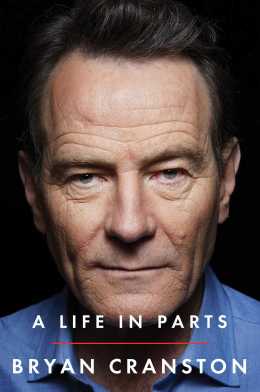
 Bryan Cranston, A LIFE IN PARTS (Simon & Schuster)
Bryan Cranston landed his first role at seven, when his father, a struggling actor and director, cast him in a commercial. Soon Bryan was haunting the local movie theater, reenacting scenes with his older brother. Acting was clearly his destiny – until one day his father disappeared.
As a young man on a classic cross-country motorcycle trip, he found himself stranded at a rest area in the Blue Ridge Mountains. To pass the time, he read a tattered copy of Hedda Gabler, and in a flash he found himself face-to-face with his original calling. Suddenly he thought this was what he would do with the rest of his life. Act.
In his riveting memoir, A Life in Parts, Cranston traces his journey from chaotic childhood to his dramatic epiphany to megastardom and a cultlike following by revisiting the many parts he’s played on camera (astronaut, dentist, candy bar spokesperson, president of the United States, etc.) and off (paperboy, farmhand, dating consultant, murder suspect, son, brother, lover, husband, father).
With great humour and humility, Cranston chronicles his unlikely rise from a soap opera regular to a recurring spot on Seinfeld. He recalls his run as the well-meaning goofball, Hal, on Malcolm in the Middle, and he gives a bracing account of his challenging run on Broadway as President Lyndon Johnson, pushing himself to the limit as he prepared for a tour de force that would win him a Tony to accompany his four Emmys. And, of course, Cranston dives deep into the grittiest, most fascinating details of his greatest role, explaining how he searched inward for the personal darkness that would help him create one of the most riveting performances ever captured on screen: Walter White, chemistry teacher turned drug kingpin in Breaking Bad.
Discussing his failures as few men do, describing his work as few actors can, Cranston has much to say about innate talent and its benefits, challenges and proper maintenance, but ultimately A Life in Parts is about the necessity and transformative power of hard work.
This was a fantastic memoir. Brilliantly narrated by the author, of course. He’s had a pretty interesting life, coming to acting relatively late, and working his way up from small parts, to recurring parts, to the epic smash that was Breaking Bad. Not as much of the book was dedicated to the latter show, and was better for it — Cranston is a great storyteller, and his life has been pretty interesting. Readers will learn of his process, his dedication to his work (though also lack of pretension), his confidence in his colleagues, and also plenty of the vagaries of the entertainment industry. A Life in Parts is a really good, engaging biography. Highly recommended (even if you’re not that familiar with his work).
Published in print by Scribner (US)/Orion (UK)
On Audible
*
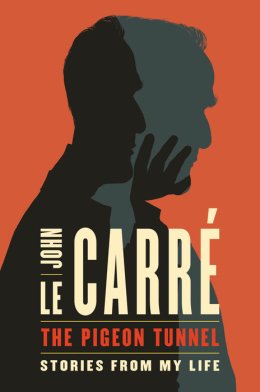 John le Carré, THE PIGEON TUNNEL (Penguin)
‘Out of the secret world I once knew, I have tried to make a theatre for the larger worlds we inhabit. First comes the imagining, then the search for reality. Then back to the imagining, and to the desk where I’m sitting now.’
The Pigeon Tunnel, John le Carré’s memoir and his first work of nonfiction, is a thrilling journey into the worlds of his ‘secret sharers’ — the men and women who inspired some of his most enthralling novels — and a testament to the author’s extraordinary engagement with the last half century. The listener is swept along not just by the chilling winds of the Cold War or by the author’s frightening journeys into places of terrible violence but, most importantly, by the author’s inimitable voice.
In this astonishing work, we see our world, both public and private, through the eyes of one of this country’s greatest writers.
This was (perhaps predictably) really interesting. It took me a little while to get into the book, though: to get used to his accent, which is a rather interesting mixture of RP and peculiar versions of words, and also because he didn’t seem to keen on the exercise of narrating in the introduction. However, as he warmed to the task, The Pigeon Tunnel fast became a very engaging, entertaining memoir. The book is filled with interesting insights into the times that inspired his novels, and also his experiences that resulted from his success — not least the strained relationship he ended up having with the secret services (who he never claimed to speak for). He writes/speaks of his abiding love for writing and travel. It is a welcoming audiobook, and feels like you’re having a chat with the great author, perhaps sat in a living room, in front of a fire and drinking brandy or red wine. Definitely recommended for all fans of le Carré’s work.
Published in print by Penguin (UK)/Viking (US)
On Audible
*
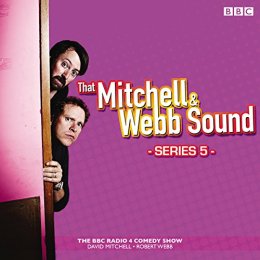 That Mitchell & Webb Sounds, Series 5 (BBC)
Comedy from the lopsided world of David Mitchell and Robert Webb, with Olivia Colman and James Bachman.
The radio sketch series which spawned BBC TV’s That Mitchell and Webb Look returns with five brand-new episodes. Among the topics given the unique Mitchell and Webb treatment are the future of farming (battery penguins); Thomas Hardy’s exciting idea to make his books even sadder; the very confusing goings on in a cash-register shop; a horror story for slugs; the Escalator brothers inventing the world’s first horseless staircase; and the very last programme the BBC ever does….
I’m a big fan of That Mitchell & Webb Sound, and before I listened to this, I binge-listened to the first four series again. While Series 5 did make me laugh and chuckle on occasion, I’m afraid it wasn’t as good as the first four. It’s perhaps unfair to compare it to their classic sketches (“Are we the baddies?”, the original recording of Tennyson, etc.), but some of Series 5 dragged. I couldn’t help but think that maybe the writing was a little rushed, or unenthusiastic. I did enjoy the Old Lady Interview with Mitchell & Webb, and there were a few other chuckles, but previous series have had me in stitches. If you’re a fan of the series, I would still certainly recommend it, but newcomers should start at the beginning for bigger and more laughs.
On Audible
*
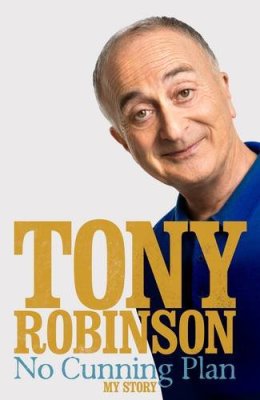 Tony Robinson, NO CUNNING PLAN (Macmillan)
Sir Tony Robinson is a much-loved actor, presenter and author with a stellar career lasting over 50 years. Now, in his long-awaited autobiography, he reveals how the boy from South Woodford went from child stardom in the first stage production of Oliver!, a pint-size pickpocket desperately bleaching his incipient moustache, to comedy icon Baldrick, the loyal servant and turnip aficionado in Blackadder.
It wasn’t all plain sailing, though. Along the way he was bullied by Steve Marriott, failed to impress Liza Minnelli and was pushed into a stinking London dock by John Wayne. He also entertained us with Maid Marion and Her Merry Men (which he wrote and starred in) and coped manfully when locked naked outside a theatre in Lincoln during the live tour of comedy series Who Dares Wins. He presented Time Team for 20 years, watching countless gardens ruthlessly dug up in the name of archaeology, and risked life and limb filming The Worst Jobs in History.
Packed full of incident and insight, No Cunning Plan is a funny, self-deprecating and always entertaining listen.
I’d had high hopes for this memoir, but it sadly didn’t quite live up to my expectations. Naturally, I was very interested in hearing about the Blackadder years, but they made up a surprisingly small portion of the book. It felt, at times, like Robinson was trying very hard to not write about the Blackadder years. True, that is far from the only thing he has done — and we hear/read about pretty much everything — but it nevertheless felt like it got short shrift. He’s an interesting man, who has done some interesting and often entertaining work. He writes about his upbringing, his early career in entertainment, the struggles in his personal life, and his progressive politics. He is perhaps most enthusiastic about his Time Team work, and his passion for archaeology comes through very clearly. But, ultimately, I was left with a feeling that I still didn’t really know much about Robinson. It was a little strange, perhaps distantly told. Sure, his narration was excellent (he has also done the audiobooks for Terry Pratchett’s series). I can’t quite put my finger on it. I’d thought I would have liked this more.
Published in print by Macmillan
On Audible
*
 Let’s start with an introduction: Who is Brent Weeks?
 I have the devil’s own luck when it comes to titles, at least as far as that there Jonathan Oliver at Solaris is concerned.
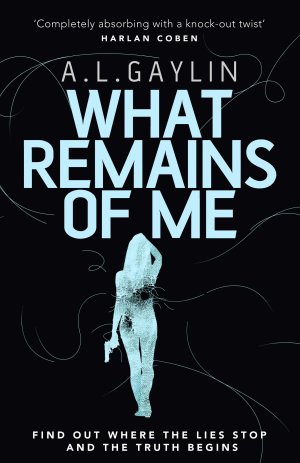 Today, we have a short extract from
 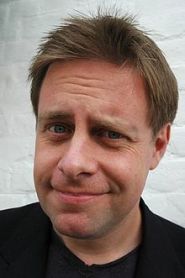 Let’s start with an introduction: Who is Paul Cornell?
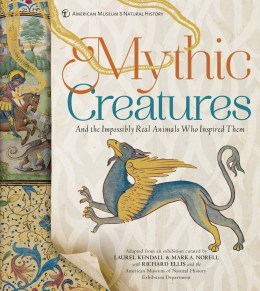 MYTHIC CREATURES: AND THE IMPOSSIBLY REAL ANIMALS WHO INSPIRED THEM by Laurel Kendall & Mark A. Norell, w. Richard Ellis
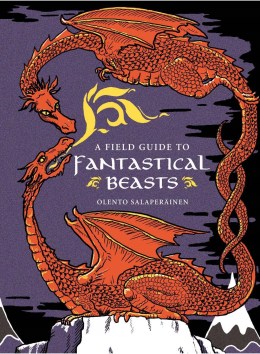 A FIELD GUIDE TO FANTASTICAL BEASTS by Olento Salaperäinen
  Let’s start with an introduction: Who is Anna Smaill?
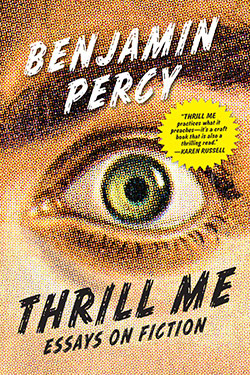 An excellent writing memoir and book of advice
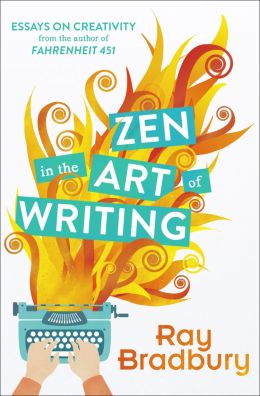 A collection of articles and essays from the author of Fahrenheit 451
 Civilian Reader