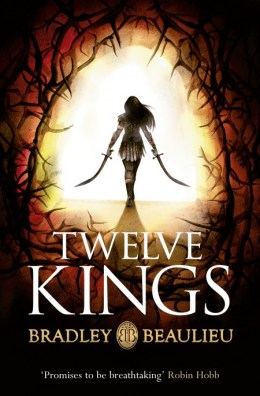
Quick Review: TWELVE KINGS by Bradley P. Beaulieu (Gollancz/DAW)

BeaulieuB-1-TwelveKingsUKA fascinating new fantasy series

In the cramped west end of Sharakhai, the Amber Jewel of the Desert, Çeda fights in the pits to scrape a living. She, like so many in the city, pray for the downfall of the cruel, immortal Kings of Sharakhai, but she’s never been able to do anything about it. This all changes when she goes out on the night of Beht Zha’ir, the holy night when all are forbidden from walking the streets. It’s the night that the asirim, the powerful yet wretched creatures that protect the Kings from all who would stand against them, wander the city and take tribute. It is then that one of the asirim, a pitiful creature who wears a golden crown, stops Çeda and whispers long forgotten words into her ear. Çeda has heard those words before, in a book left to her by her mother, and it is through that one peculiar link that she begins to find hidden riddles left by her mother.

As Çeda begins to unlock the mysteries of that fateful night, she realizes that the very origin of the asirim and the dark bargain the Kings made with the gods of the desert to secure them may be the very key she needs to throw off the iron grip the Kings have had over Sharakhai. And yet the Kings are no fools — they’ve ruled the Shangazi for four hundred years for good reason, and they have not been idle. As Çeda digs into their past, and the Kings come closer and closer to unmasking her, Çeda must decide if she’s ready to face them once and for all.

I’m a fan of Beaulieu’s work. I haven’t read as much of it as I would like, but I’ve enjoyed what I’ve read so far. Twelve Kings is no exception: it offers a big, sprawling new fantasy world and series, populated by interesting and diverse characters — with shades of the horrific to add extra flavour.
Continue reading

Guest Post: “Writing Novels vs. RPGs” by F. Wesley Schneider

SchneiderFW-AuthorPicWriting a novel, you’re telling your story. Writing an RPG adventure, you’re telling a thousand stories, none of which are yours. They’re both fantastic mediums, but they’re nothing alike.
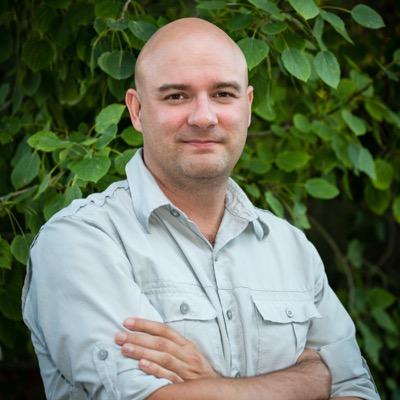
I’ve been writing stories for roleplaying games like the Pathfinder RPG and Dungeons & Dragons for more than fifteen years, and as the editor-in-chief at Paizo Inc., my team and I create the former. While RPG players always love new options for their games, published adventures stand at a pinnacle of tabletop RPG design. These adventures look something like a giant outline, detailing monsters, settings, and the behavior of a story’s minor players. But main characters, those run by the game’s players, are complete mysteries. As the writer of an RPG adventure, you’re telling a story without knowing the main characters and have to predict various outcomes for every scenario. It sounds crazy — and it sort of is — but these stories are designed to allow players to create any characters they want and send them in to experience the adventure. Adding to the challenge, the adventure’s author isn’t the one telling players the story, that’s the Game Master’s responsibility. So, on top of these stories’ complexity, the author ultimately hands the story off to someone else to tell. It’s a challenging way to tell a story — and that’s before you even factor in that you have to include game rules. Continue reading

Interview with MICHAEL LIVINGSTON

LivingstonM-AuthorPicLet’s start with an introduction: Who is Michael Livingston?

I’m someone who wears a lot of hats.

In my day job, I wear the hat of being a professor of English at The Citadel in Charleston, SC. I teach courses mostly in medieval literature — Beowulf, Chaucer, and such — but I publish far more widely in literature and history. Most of my colleagues refer to me as a cultural historian specializing in the Middle Ages, and that fits well enough — except that I also publish a fair amount on the works of Tolkien and other modern fantasists.

And now, thanks to The Shards of Heaven, I get to add the Hat of Novel Writerness, much to my great astonishment and glee!

Your debut novel, The Shards of Heaven, will be published by Tor this month. It looks rather fabulous: How would you introduce it to a potential reader? Is it part of a series?

The Shards of Heaven is the first novel in a trilogy of the same name. It’s the story of fantasy and history colliding at the rise of the Roman Empire, as the children of Caesar fight to find and control the legendary artifacts of gods both old and new, and a new myth is born in the struggle. Continue reading

Review: GUNS OF THE DAWN by Adrian Tchaikovsky (Tor)

TchaikovskyA-GunsOfTheDawnAn excellent stand-alone novel about war, family and sacrifice

Denland and Lascanne have been allies for generations, but now the Denlanders have assassinated their king, overthrown the monarchy and marched on their northern neighbour. At the border, the war rages; Lascanne’s brave redcoats against the revolutionaries of Denland.

Emily Marshwic has watched the war take her brother-in-law and now her young brother. Then comes the call for more soldiers, to a land already drained of husbands, fathers and sons. Every household must give up one woman to the army and Emily has no choice but to join the ranks of young women marching to the front.

In the midst of warfare, with just enough training to hold a musket, Emily comes face to face with the reality: the senseless slaughter; the weary cynicism of the Survivor’s Club; the swamp’s own natives hiding from the conflict.

As the war worsens, and Emily begins to have doubts about the justice of Lascanne’s cause, she finds herself in a position where her choices will make or destroy both her own future and that of her nation.

This is a superb novel. I haven’t read nearly as much of Tchaikovsky’s work as I would like, but this is a fantastic place to start. A fantasy war novel, but one that is focused on the impact of war more than battle itself. After a slightly slow start, this really grabbed hold of my attention and didn’t let up until the very end. Continue reading

Interview with MICHAEL R. UNDERWOOD

UnderwoodMR-AuthorPic2Let’s start with an introduction: Who is Michael R. Underwood?

I’m a geek-turned-professional – sales & marketing manager by day (for Angry Robot) and author by night (or really, whenever I can scrape together some spare time), writing books from geeky Urban Fantasy (Geekomancy) to weird fantasy supers (Shield and Crocus) and more. I keep up with my geekdom by reading comics, gaming, and following as many cool TV shows as time permits.

Your next book, Genrenauts: The Absconded Ambassador, will be published by Tor.com. How would you introduce it and the Genrenauts series to a potential reader?

Genreauts is like Leverage-meets-Jasper Fforde – the titular Genrenauts are interdimensional travelers – each world they visit is the home of a narrative genre – Romance, Science Fiction, Western, and so on. They find and fix broken stories in order to protect their own world. If they fail, the dissonance ripples back to their home world and causes disasters. I’m writing the series in novellas – with six episodes per season a la TV. The Absconded Ambassador is the second episode in the series, so I’d suggest readers start with The Shootout Solution. Continue reading

Interview with TOM TONER

TonerT-PromiseOfTheChildUKLet’s start with an introduction: Who is Tom Toner?

Hello! Tom Toner is a 29 year-old debut novelist from Somerset with a very patchy beard. Thanks very much for having me.

Your debut novel, The Promise of the Child, is published by Gollancz. It’s already generating quite a bit of attention and praise: How would you introduce it to a potential reader? Is it part of a series?

The Promise of the Child is the first of a six part series called the Amaranthine Spectrum. It’s set in the closing years of the 147th century, over twelve and half thousand years from now, and I suppose you could call it an epic blend of space opera and fantasy. The book has a huge cast of characters, very few of them human in the traditional sense: on the Old World giants live in paper fortresses and singing sea monsters haunt the coasts, while up in the stars of the magisterial Firmament the remains of immortal mankind are slowly going mad. The Promise of the Child has a lived-in, antiquated feel: pure fantasy on one hand and the most ridiculous and frenetic of space operas on the other. Continue reading

Excerpt: ECKO ENDGAME by Danie Ware (Titan)

WareD-3-EckoEndgameToday, we have an excerpt from Danie Ware‘s third novel, Ecko Endgame. Published by Titan Books, it’s the third volume in the author’s Ecko trilogy, a critically acclaimed blend of multiple genres. Here’s the synopsis…

Winter has come to the Varchinde – and with it, the fatal spread of the blight. The grass is dead, and the plains’ cities are falling to the loss of crops and trade.

Now, the Kas take their chance to rise from Rammouthe. Overmatched, betrayed and abandoned by his own forces, Rhan takes the ultimate gamble – he will abandon Fhaveon to lure the Kas into a final confrontation.

But the world’s memory is returning. And, as the battle rages round him, Ecko begins to realise that everything they have done has been for a purpose. If they can fit the pieces together, then they might just win the war. 

Yet, even if they do defeat the Kas, the blight is still there. And to save both the Varchinde and himself, Ecko must face the worst fear of all – the one that has come from his own world.

Read on for the first chapter… Continue reading

Guest Post: “Conflict Drives a Story” by Michelle Hauck

HauckM-AuthorPicConflict drives a story. It’s what makes the excitement. It provides the obstacles for character motivation. It’s what makes a reader care. Without conflict, a book has nothing but dull words on a page. Who would want to read a story where everything was happy and good? Where everything went the main character’s way? It might be nice to live, but not so entertaining to read about.

Ever read a story that should have been great, but it felt kind of flat? Possibly some of the types of conflict are missing.

Without all sorts of conflict and tension, readers will yawn. It needs to be ongoing and in every scene. There are many types of conflict and the smart writer includes all of them into the page. If they build in only one type, the story will still be dull. Continue reading

Upcoming: THE TIGER AND THE WOLF by Adrian Tchaikovsky (Tor)

TchaikovskyA-Tiger&TheWolfUK

This post could just as easily be titled “Yay! More Tchaikovsky!” The Tiger and the Wolf is Adrian Tchaikovsky‘s next stand-alone fantasy novel, and it not only has a striking, gorgeous cover (by Neil Lang), but it also sounds pretty interesting:

In the bleak northern crown of the world, war is coming

Maniye’s father is the Wolf clan’s chieftain, but she’s an outcast. Her mother was queen of the Tiger and these tribes have been enemies for generations. Maniye also hides a deadly secret. All can shift into their clan’s animal form, but Maniye can take on tiger and wolf shapes. She can’t disown half her soul, so escapes – with the killer Broken Axe in pursuit.

Maniye’s father plots to rule the north, and controlling his daughter is crucial to his schemes. However, other tribes also prepare for strife. It’s a season for omens as priests foresee danger, a time of testing and broken laws. Some say a great war is coming, overshadowing even Wolf ambitions. But what spark will set the world ablaze?

The Tiger and the Wolf is due to be published in the UK on February 11th, 2016. I’m really looking forward to it.

Tchaikovsky’s two most recent novels are Gun of the Dawn and Children of Time, both of which are published in the UK by Tor Books. Both of which, also, I need to get caught up on! I think they will be perfect for the imminent, very-damned-cold Canadian winter…

TchaikovskyA-StandAlones2015

Review: THE GAMESHOUSE Trilogy by Claire North (Orbit)

A magnificent, linked trilogy of novellas

It’s tricky to review these novellas without spoiling events across the series. So, I’m keeping these as brief as possible, which has meant the reviews are a bit more vague than I would usually like. Really, the take away should be: this is a fantastic series, and a must read.

NorthC-GH1-SerpentTHE SERPENT

In seventeenth century Venice exists a mysterious establishment known only as the Gameshouse.

There, fortunes are made and fortunes are broken over games of chess, backgammon and every other game under the sun.

But those whom fortune favours may be invited to compete in the higher league… a league where the games played are of politics and empires, of economics and kings. It is a league where Capture the Castle involves real castles, where hide and seek takes place on a scale as big as the British Isles.

Not everyone proves worthy of competing in the higher league. But one woman who is about to play may just exceed everyone’s expectations.

Though she must always remember: the higher the stakes, the more deadly the rules…

In this first novella, North introduces us to the Gameshouse, and offers a relatively small-scale game. We follow Thene, a woman trapped in an enforced marriage to a drunken waster. After a while frequenting the Gameshouse, and engaging in “standard” contests and games, she is eventually approached by the umpires and invited to play in the higher league. Rather than duelling with an opponent over a chessboard or other table-top game, Venice itself becomes the board, and its inhabitants the pieces. Each player is given a selection of… well, I suppose you could call them “trumps”: specific pieces who have become indebted to the Gameshouse for a variety of reasons.

The Serpent is a quick read, and follows an interesting protagonist — the story is told somewhat from afar, as if we are watching Thene’s play and the directed actions of her pieces from the audience. She’s an interesting character, made cold and emotionless by her difficult childhood and unhappy marriage, but given new life and focus by the Gameshouse.

Through Thene’s first higher league game, we learn of the various ways the Gameshouse operates, how the pieces work, and so forth. Along the way, North also gives us a few hints about the institution’s history — which, as it turned out, would be further elaborated on in the second and third books. The author never info-dumps on the reader, though, much to my relief. The momentum of the story never lets up, while never being rushed.

It’s an excellent introduction to the series. The only weird decision was using em-dashes to indicate dialogue, rather than quotation marks. The only other time I’ve seen this used was in Lavie Tidhar’s The Violent Century.

*

NorthC-GH2-ThiefTHE THIEF

The Gameshouse is an unusual institution.

Many know it as the place where fortunes can be made and lost though games of Chess, Backgammon — every game under the sun.

But a select few, who are picked to compete in the higher league, know that some games are played for higher stakes — those of politics and empires, of economics and kings…

In 1930s Bangkok, one higher league player has just been challenged to a game of hide and seek. The board is all of Thailand — and the seeker will use any means possible to hunt down his quarry — be it police, government, strangers or even spies…

This second instalment was even better than the first. Pre-Second World War Thailand is brought wonderfully to life on the page — since I was born there, I’m always interested to see how people recreate the city on the page (at any time), and I think North did a wonderful job of creating such a rich and colourful city, and also doing the wilder regions of the country justice.

Our player is a more established player, with centuries of experience. A drunken evening has led him into a game of hide-and-seek against a rival with an unusual determination. As he first flees the city, Remy Burke ends up struggling through the jungle, occasionally benefiting form the kindness of strangers and sometimes suffering betrayals. North does a great job of showing us how difficult Remy’s ordeal is. The two sides of the game are interesting and very different. The solution and tactics of our hero are ingenious, and I gave a little cheer at the end.

We get a little bit more detail of the Gameshouse’s history and origins, while also hints at possible future events. Given a similar event in both The Serpent and The Thief, we’re led to clues for The Master, and after finishing this one I couldn’t wait to see how North brought it all together: the moments that seemed disconnected from the specific games in Venice and Thailand. Luckily, I didn’t have to wait, and dove right into the final novella…

*

NorthC-GH3-MasterTHE MASTER

The Gamehouse is an unusual institution. 

Many know it as the place where fortunes can be made and lost though games of Chess, Backgammon — every game under the sun.

But a select few, who are picked to compete in the higher league, know that some games are played for higher stakes — those of politics and empires, of economics and kings…

And now, the ultimate player is about to step forward.

The final novella in the series brings us up to the present, as the ultimate player decides its time to start the Great Game. The player in question (who I shall not name, in order to not spoil things), has appeared in each of the previous novellas. The Gameshouse has continued to evolve with the times, adjusting what it has to offer with each new generation and era in which it endures.

“New games too: Cluedo, Settlers of Catan, Age of Empires, Mario Kart, Mortal Kombat Whatever fought between a shrieking bishop and a deputy mayor. A judge, a police commissioner, a gangster, a congressman, a chief of staff, a general, a consulting doctor, a research fellow, a professor, a hit-man, a pharmaceutical king, an oil magnate, a seller of used cars and cheap cocaine – all the men and women who think they are someone, could be something more – they all come here as they have come through the centuries, across the world.”

As with the previous two books, The Master is a tightly-plotted action thriller, as the Great Game is writ larger than ever: where first it was a city, then a country, now it is the whole world, and North makes full use of the effectively-limitless resources the two players have to hand. The game, chess, is quite insane, as everything from the NSA and MI5 to entire national armies are deployed, not to mention hackers and assassins. It’s over-the-top, yes, but it never feels as ridiculous as it might in another author’s hands. I was completely hooked, and blitzed through. The ending was powerful, and only gradually was the truth revealed. The way one previous character is used was a great surprise. A superb conclusion to the trilogy. Absolutely magnificent.

Across all three novellas, North continues to show an incredibly gift for writing characters, dialogue and exposition: the people are three-dimensional, even when minor characters; the plots are tight and focused; the atmosphere and environs colourfully described and brought to life, while never in excess.

I’ve said it before in two previous reviews, but Claire North is fast becoming my favourite author.

Absolutely recommended to all, this are must-reads.

*

The SerpentThe Thief and The Master are all out now, published in the UK and US by Orbit Books.

Also on CR: Reviews of The First Fifteen Lives of Harry August and Touch