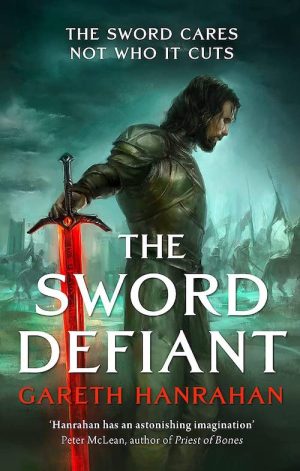
 On May 4th, Orbit Books are due to publish The Sword Defiant, the first novel in Gareth Hanrahan‘s new series. Before we get hand things over to the author, here’s the official synopsis:
Set in a world of dark myth and dangerous prophecy, this thrilling fantasy launches an epic tale of daring warriors, living weapons, and bloodthirsty vengeance.
Many years ago, Sir Aelfric and his nine companions saved the world, seizing the Dark Lord’s cursed weapons, along with his dread city of Necrad. That was the easy part.
Now, when Aelfric – keeper of the cursed sword Spellbreaker – learns of a new and terrifying threat, he seeks the nine heroes once again. But they are wandering adventurers no longer. Yesterday’s eager heroes are today’s weary leaders – and some have turned to the darkness, becoming monsters themselves.
If there’s one thing Aelfric knows, it’s slaying monsters. Even if they used to be his friends.
And now, over to Gareth…
This is Chapter 2 of The Sword Defiant. In Chapter 1, we’re introduced to Alf, aka Sir Aelfric Lammergeier, and his talking sword Spellbreaker, but this chapter starts to get into the backstory of Aelfric’s heroic youth and currently less-than-heroic state.
Part of the original conception of The Sword Defiant was a line in Tolkien’s introduction to The Lord of the Rings, where he says that if the plot had followed the course of World War II, then the Ring would not have been destroyed but used against Sauron, and Barad-Dur not destroyed but occupied. That’s essentially what happened here – the Nine Heroes captured the dread sword Spellbreaker and turned it on its maker, the necromancer Lord Bone, and then they ended up occupying the evil city of Necrad.
Alf left Necrad two years ago, and now a dream has drawn him to the hidden valley where his friend Jan dwells.
 Let’s start with an introduction: Who is G.R. Matthews?
 Let’s start with an introduction: Who is Devin Madson?
 Welcome back to Civilian Reader. For new readers, let’s start with an introduction: Who is Django Wexler?
 Let’s start with an introduction: Who is Ed McDonald?
 Whilst I don’t like to stereotype, I’m going to assume that if you’re reading this then there’s a fair chance you’re familiar with the sitcom The Big Bang Theory. In one of the earlier episodes Penny asks Leonard “What did you do today?”, to which he responds, “Well, I’m a physicist, so I, y’know… thought about stuff.” Although I wouldn’t want to imply that the complexities of writing fiction are of a similar order to particle physics, writers, like physicists, do spend a considerable amount time thinking about stuff. When it comes to inspiration thinking time is crucial. When I count all the stories I actually wrote, compared to those I thought about writing, I come up with a ratio of approximately one in ten, i.e. only about 10% of my ideas actually turn into stories and then only after a lengthy period percolating in the confused teapot of my imagination.
  Let’s start with an introduction: Who is David Mealing?
 Write what you know, it’s the first piece of advice a writer will get. It’s sometimes useful too. After eight years and almost a decade as a published novelist, I was starting a new series and so I asked myself what I’d learned, what I liked and what I wanted for the next few years. But this time round I wasn’t some newbie, I was a wise and skilled crafter of words who utters profound witticisms as he works the room of industry types, right?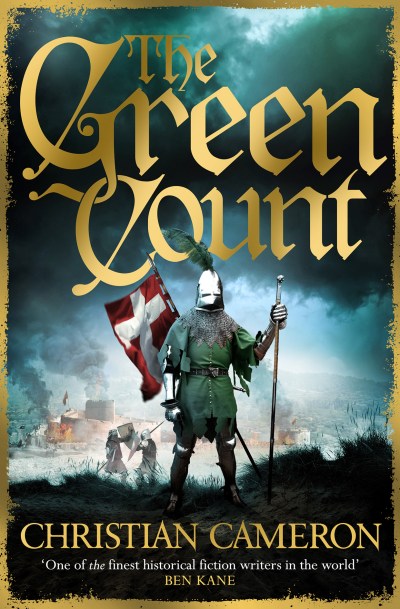
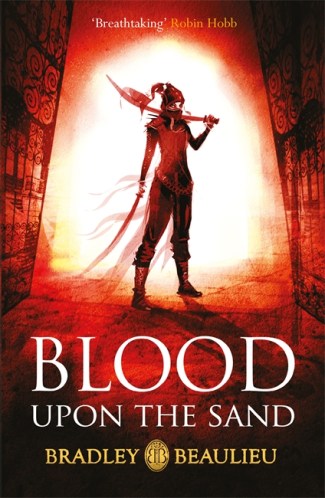 Today, we have an excerpt from Brad Beaulieu‘s highly-anticipated Blood Upon the Sand, the next novel in his Song of the Shattered Sands epic fantasy series. First, the synopsis:
 Civilian Reader