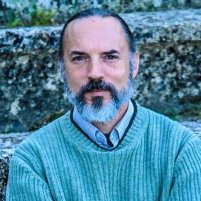
 Book four of the Traitor Son series, A Plague of Swords is out this week. Instead of talking to you about the book, I thought I’d discuss how I write, or more particularly, how I do research. To me, research is the very sinew of writing; learning things, and learning skills, is what fires my passion to write and also what allows me to fill pages not just with character, motivation, and plot, but with detail and incident that feel ‘real.’ (Or, gosh, I really hope you think it feels real…) Continue reading
Guest Post
Guest Post: “On Worldbuilding” by Rhonda Mason
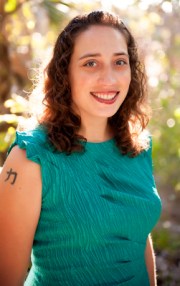 In the beginning, there was the protagonist, and the author saw that it was good.
My worldbuilding process starts after the creation of the protagonist, never before. I write novels to tell the story of a person, not the story of a world, and all of my novels have sprung from a first impression of the main character. For The Empress Game trilogy it was an image of Kayla holding a kris dagger in each hand, fighting another woman in a pit while criminals cheered her on.
Once I have that first impression of a character, the worldbuilding begins. Who is she? (The exiled princess from a rival planet) Where is she? (Hidden on the slum side of her hated enemy’s border planet) Why is she there? (Trying to raise credits to buy passage back to her homeworld) And, most importantly, why is she special? Why are we telling her story, and not someone else’s? Continue reading
Guest Post: “New Voices” by Mark Morris
 The horror genre is in fine fettle at the moment. In fact, I can’t remember a time when the work being produced has been more wide-ranging, inventive and exciting. This is not only due to the fact that established names like Stephen King, Ramsey Campbell, Tim Lebbon, Joe R. Lansdale, Adam Nevill and Stephen Volk are continuing to produce excellent work, but is also because a huge influx of new writers has ensured that if the genre was a bar or a club, then it would be the coolest, most vibrant place in town in which to hang out.
Some of the genre’s newer writers seem to have become instantly successful, and it’s wonderful to see the likes of Josh Malerman’s BirdBox, Andrew Michael Hurley’s The Loney, Catriona Ward’s Rawblood, Nick Cutter’s The Troop and The Deep, and Sarah Lotz’s The Three and Day Four on sale in supermarkets and piled up on promotional display tables in Waterstones.
What’s also heartening is that writers who have been around for a while, their work illuminating the small presses and gaining praise, honours and fans along the way, now seem to be breaking through into the mainstream too. Continue reading
Guest Post: “If We Met Aliens Tomorrow, Would We Notice?” by D. Nolan Clark
 Ever since we realized there were other stars out there — and other planets — we’ve been obsessed with the possibility of extraterrestrial life. Stories of meeting beings from other worlds fill up the box office and the bestseller lists, and pretty much everyone on Earth agrees, there must be life out there somewhere. As years go by with no contact, however, some are starting to wonder why it’s taking so long.
The answer may simply be that like anything involving the huge distances and faint signals of space, meeting aliens is hard. In fact, it’s quite possible we’ve already been contacted — and we didn’t notice. Here are four scenarios that could lead to us missing out on the greatest moment in human history. Continue reading
Guest Post: “Pushing The Envelope In Fiction; Navigating A PC-Centric Media Universe” by Edward Lazellari
 So you’re going to be a writer? Awesome. You are never going to please everyone, so own it; the thin-skinned have no business being authors (or auteurs). Words have put the most popular and successful authors on the painful side of a controversy (Sometimes it’s intentional.) That said… keep an open mind to the opinions of critics and friends. If you are going to create fictional scenarios that skirt the edge of mass acceptance, know why you are writing those actions. When George R.R. Martin decided to have brother and sister lovers in Game of Thrones, he was setting up the premise of the entire series. The question of legitimate authority and unraveling of Westeros as a society came out of that relationship. Everything that happens in your story, no matter how taboo, should serve the narrative. Continue reading
Guest Post: “Some Thoughts on Fantasy Series & Stand Alones” by Blake Charlton
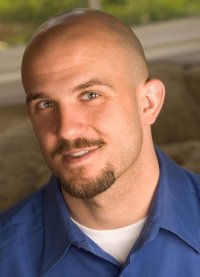 “Is this book a standalone or the third in your trilogy?” A question that I’ve had to address since the publication of my latest book, Spellbreaker. The answer, perhaps confusingly, is yes. When justifying this answer, I’ve done a lot of thinking about the way stories are told in series, particularly in epic fantasy.
I don’t think too many will disagree that in the traditional conception of epic fantasy, the use of a series of books is a logistical necessity, not an aesthetic choice. The Lord of the Rings, of course, was written as one book (to rule them all?) and broken into three only because the printing, binding, and shipping costs would have been prohibitive. This precedent created the current expectation that every book in an epic fantasy series will be the immediate continuation of the last. Since the 1980s, the majority of successful fantasy series have done exactly that. There are many, well-known advantages to this approach; it allows for intricate exploration of subplots; it proves continuous and detailed character development; it creates an experience in which the reader traverses an epic number of pages that mirrors the characters’ journey across and among an epic number of landscapes and cultures. The grandmasters do so effortlessly and with style. Continue reading
Guest Post: “Behind the Scenes of Chasing Embers” by James Bennett
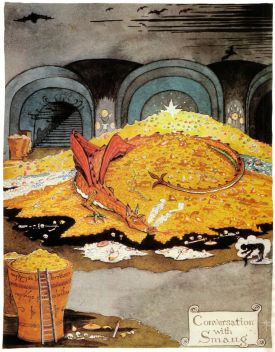 Smaug. It must’ve started with Smaug. Smaug the Magnificent. As a boy of 8, I think that’s the first time I heard a dragon talk. A Conversation with Smaug by J.R.R. Tolkien is still one of my favourite illustrations. ‘Well, thief! I smell you and I feel your air’, isn’t that how it went? And that was also, I think, the first time that the 8-year-old me heard about a dragon being able to talk. Smaug was red, of course. To this day, it’s my favourite colour.
As an adult, I’m pleased to note that Professor Tolkien also drew on ancient sources, from the ‘night-scather’ in Beowulf to the talking dragon Fafnir of the Völsunga Saga. Fafnir, as it happens, used to be a man, but his greed for gold eventually turned him into a dragon, so one could argue that the seed of Smaug, in a way, was entirely human. Here you see the roots of the myth you’re tapping, a vein that stretches back to the elemental serpents of Ancient China, those noble god-beasts who were often depicted in human form, and one that will surely stretch on long into the future. Continue reading
Guest Post: “Writing Strong Women” by M.R. Carey

My latest novel, Fellside, had its UK release in April and it’s just come out in paperback. To commemorate this fact I’m spending the week running around on other people’s blogs (thanks, Civilian Reader!) shouting “look at me.”
It’s a time-honoured tradition, and to keep you from saying the same thing ten times over your publisher will usually come up with a list of possible themes or titles. On the list in front of me right now, about two-thirds of the way down, the following phrase appears:-
“Writing Strong Women”
It immediately made me wonder whether or not that’s something that I do. Continue reading
Guest Post: “The Ties That Bind” by Brad Beaulieu
 When I first started writing Of Sand and Malice Made, I didn’t have a small novel in mind, or even a set of interconnected novellas. It began only with a single story, “Irindai”, which eventually sold to Ragnarok Publications for their Blackguards anthology. But as I developed that first story I knew it wouldn’t be the last in the series. I started having more and more thoughts about where I could take the story’s primary mover, a djinni-like creature name Rümayesh. I thought more about the sons of the trickster god that were working against her. I thought more about the new character, Brama, a two-bit thief who got pulled into something much larger and more dangerous than he ever expected. And I thought about what it could all mean for the heroine of the series, Çeda. Continue reading
Guest Post: “Why Not Zombies…?” by K.S. Merbeth
 My debut novel, Bite, recently hit the shelves. When I give people a run-down of the book, as soon as they hear “post-apocalyptic,” the first question is always an inevitable: “So, are there zombies?” After saying, “nope, only cannibals” at least a dozen times, I started to wonder – why didn’t I include zombies? Because honestly, the thought had never crossed my mind until people began to ask.
Don’t get me wrong, zombies are awesome. I’ve happily watched every gore-filled “X of the Dead” Romero film to date, mowed down the shambling hordes in the Left 4 Dead games, and studied up on the Zombie Survival Guide. I’ve spent family dinners discussing our zombie-slaying weapons of choice, and which pets we’d eat first in the event of an outbreak. Continue reading
 Civilian Reader