 I have long been a fan of James Fallows‘s journalism — I first read his work in The Atlantic, back in 2007 when he was still living in China (some of his articles from that time have been collected in the excellent Postcards From Tomorrow Square, which I’m reading at the moment). This year, Pantheon will publish Fallows’s latest book, co-written with his wife, Deborah Fallows, Our Towns. Here’s the synopsis:
A vivid, surprising portrait of the civic and economic reinvention taking place in America, town by town and generally out of view of the national media. A realistically positive and provocative view of the country between its coasts.
For the last five years, James and Deborah Fallows have been traveling across America in a single-engine prop airplane. Visiting dozens of towns, they have met hundreds of civic leaders, workers, immigrants, educators, environmentalists, artists, public servants, librarians, business people, city planners, students, and entrepreneurs to take the pulse and understand the prospects of places that usually draw notice only after a disaster or during a political campaign.
The America they saw is acutely conscious of its problems — from economic dislocation to the opioid scourge — but itis also crafting solutions, with a practical-minded determination at dramatic odds with the bitter paralysis of national politics. At times of dysfunction on a national level, reform possibilities have often arisen from the local level. The Fallowses describe America in the middle of one of these creative waves. Their view of the country is as complex and contradictory as America itself, but it also reflects the energy, the generosity and compassion, the dreams, and the determination of many who are in the midst of making things better. Our Towns is the story of their journey — and an account of a country busy remaking itself.
I received an ARC of this book recently, and I’m really looking forward to reading it. (I’ll probably start it either after finishing Postcards…, or after my next non-fiction read.)
Follow the Authors: Goodreads — James/Deborah; Twitter — James/Deborah
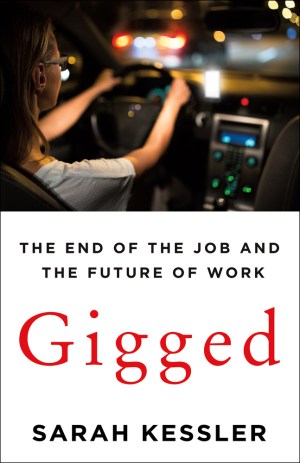 Sarah Kessler‘s upcoming book looks really interesting. The gig economy has come to dominate a few sectors, and seems to be spreading. To someone who is an accidental freelancer (I didn’t expect to be one so soon in my career), Gigged therefore looks really interesting and relevant. Even though the book is focused on the gig economy in the United States, I think it will resonate with readers in other countries, where gigging is fast becoming a wider experience of life and work. Here’s the synopsis:
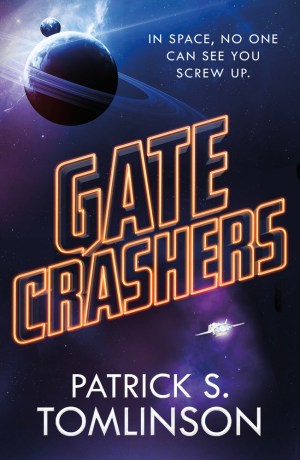 There is a growing number of authors writing more humorous and lighter science fiction and fantasy, suggesting we are going through one of the cyclical tonal shifts within the genres (I think it’s fair to say that many were feeling wearied by the grimdark influence on the SFF genres). Patrick S. Tomlinson‘s next novel, Gate Crashers sounds like it will be a lot of fun. Published on June 26th by
  Maria Dahvana Headley‘s latest novel sounds really interesting. It is a “modern retelling of the literary classic Beowulf, set in American suburbia as two mothers — a housewife and a battle-hardened veteran — fight to protect those they love”. The Mere Wife is due to be published by MCD/Farrar, Straus & Giroux in July 2018. Here’s the synopsis:
 Next week,
  Let’s start with an introduction: Who is Simon R. Green?
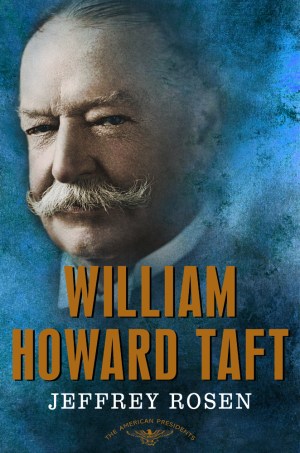 An excellent, short introduction to the life and career of the 27th president
 As the author of Team of Rivals and other fantastic history books, Doris Kearns Goodwin needs little introduction. This year, Goodwin’s latest book will be published by Simon & Schuster: Leadership in Turbulent Times. The title is pretty self-explanatory, and the book draws from the presidencies of four men she is most familiar with: Abraham Lincoln (
 Edgar Cantero‘s latest novel, Meddling Kids has been widely praised. As a result, interest in his next work is understandably high. We do not have long to wait: This Body’s Not Big Enough for Both of Us is due to be published by
 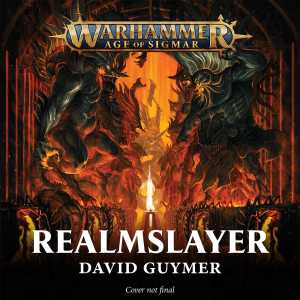 I was first introduced to Gotrek Gurnisson and Felix Jaegar in a short fiction snippet in (I think) the fifth edition of Warhammer Armies: Empire book by William King — this was, I believe, their first appearance, too. After that, I read King’s short stories featuring the pair in the early Warhammer anthologies Wolf Riders, Red Thirst and Ignorant Armies. This was all before Black Library was established, and the
  Civilian Reader