Civilian Reader is 10yrs Old… A Look Back at the First Review

Happy10thBirthdayTen years ago today, I posted my first fiction review on Civilian Reader. It’s very weird to think I’ve been writing reviews, etc., for a decade. It was not my first ever book review, though: the first novel I reviewed was Richard Morgan’s excellent Market Forces, for my university newspaper. A review that was, sadly, completely butchered by the editor. Maybe that’s one reason I decided to start my own book review website…

I’ve thought about shutting the website down a number of times over the years — sometimes more seriously than others. And yet, I keep getting drawn back into writing for it. It’s taken up a lot of my free time. I’m of two minds about whether or not this has been a good or bad thing.

And so, to mark the ten-year anniversary, here’s the first review I posted to CR…

*

THE BLACK SUN by James Twining (Harper Collins)

TwiningJ-2-BlackSunUKSequel to The Double EagleThe Black Sun is a fine sophomore novel from a truly talented British author.

In London, an Auschwitz survivor is murdered in his hospital bed, his killers making off with a macabre trophy – his severed left arm.

In Fort Mead, Maryland, a vicious gang breaks into the NSA museum and steals a World War II Enigma machine, lynching the guard who happens to cross their path.

Meanwhile, in Prague, a frenzied and mindless anti-Semitic attack on a synagogue culminates in the theft of a seemingly worthless painting by a little known Czech artist called Karel Bellak.

A year has passed since Tom Kirk, the world’s greatest art thief, decided to put his criminal past behind him and embark on a new career, on the right side of the law . Then three major thefts occur, and suddenly Tom is confronted with a deadly mystery and a sinister face from the past.

James Twining has managed to write a twisting tale of historical intrigue and action, while not falling foul to the cliches and pot-holes that affect Dan Brown. There’s no dubious religious connotations or huge leaps into left field to help his arguments and premises. True, he’s clearly made some of the background up, but then that’s why this book is found in the “Fiction” section of Waterstone’s… Continue reading

Quick Review: ROGUE LAWYER by John Grisham (Doubleday/Hodder)

GrishamJ-RogueLawyerUSAn interesting new character

On the right side of the law. Sort of.

Sebastian Rudd is not your typical street lawyer. He works out of a customized bulletproof van, complete with Wi-Fi, a bar, a small fridge, fine leather chairs, a hidden gun compartment, and a heavily armed driver. He has no firm, no partners, no associates, and only one employee, his driver, who’s also his bodyguard, law clerk, confidant, and golf caddy. He lives alone in a small but extremely safe penthouse apartment, and his primary piece of furniture is a vintage pool table. He drinks small-batch bourbon and carries a gun.

Sebastian defends people other lawyers won’t go near: a drug-addled, tattooed kid rumored to be in a satanic cult, who is accused of molesting and murdering two little girls; a vicious crime lord on death row; a homeowner arrested for shooting at a SWAT team that mistakenly invaded his house. Why these clients? Because he believes everyone is entitled to a fair trial, even if he, Sebastian, has to cheat to secure one. He hates injustice, doesn’t like insurance companies, banks, or big corporations; he distrusts all levels of government and laughs at the justice system’s notions of ethical behavior.

Rogue Lawyer is a pretty good novel. It’s not Grisham’s best, but he manages to cover a lot of ground. The author does this by writing a series of loosely-connected cases, each touching upon a hot-button topic in American law and politics: warrior cops, tort reform, MMA fights, child custody, prison policy, and a few others. It’s an interesting novel, but flawed and not as gripping as some of his previous work. Continue reading

Turn Back 10: HORUS RISING by Dan Abnett (Black Library)

TurnBackTimeClockIn the third instalment of “Turn Back 10”, we take a look at the third review I posted on CR.

Dan Abnett’s Horus Rising is the first novel in Black Library’s long-running, at-one-time New York Times-bestselling Horus Heresy series, chronicling the beginning of what would become the Warhammer 40,000 game and fiction universe. If you’ve been following CR for even a short while, you’ll have seen that I have been an avid, loyal reader of this series — I’ve posted many reviews of the novels, short stories, novellas and audio-dramas. I haven’t reviewed all the books, though, but probably a majority have featured in some way.

The series has experienced some ups-and-downs. The first three novels — Horus Rising, Graham McNeill’s False Gods and Ben Counter’s Galaxy In Flames — form a fantastic opening story-arc that sets the scene brilliantly, and introduces us to some of sci-fi’s most interesting characters. Sadly, the novels afterwards were of varying quality, but the series picked up again with McNeill’s A Thousand Sons, and maintained a very strong run until everything screeched to a halt with the events on Calth…

Anyway, here’s the review…

*

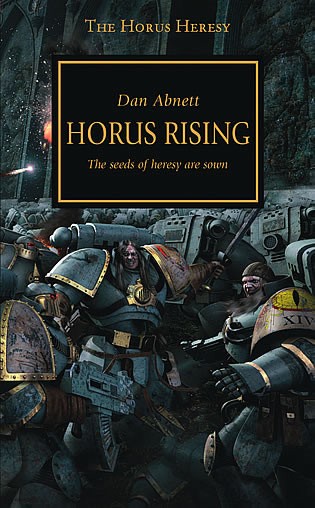
HORUS RISING by Dan Abnett (Black Library)

Abnett-HH1-HorusRisingThe seeds of heresy are sown

At the dawn of the 31st millennium, the Imperium of Man has reasserted its dominance over the galaxy. It is a golden age of rediscovery and conquest, and the Emperor’s Great Crusade has placed his superhuman primarch sons at the head of the mighty Space Marine Legions – the most powerful military force ever assembled. Newly promoted to serve as the Emperor’s Warmaster, the idealistic Horus now stands above his brothers, even as the Crusade enters what must surely be its final stages and dark, cosmic truths begin to reveal themselves. Far beyond the alien threat of malignant xenos breeds or rogue human civilisations, a war now looms that could threaten the final extinction of mankind… The first novel in the epic series, detailing the fall of mankind at the peak of the Great Crusade. Warmaster Horus leads his Legion in the name of the Emperor… but for how long?

Horus Rising is the first book in a trilogy from Black Library that chronicles the events of the Horus Heresy, a time when humanity was ripped apart in an intergalactic civil war, under the leadership of Warmaster Horus, one of the Emperor’s Primarchs and formerly the Emperor’s favourite. Continue reading

Quick Review: LUCKIEST GIRL ALIVE by Jessica Knoll (Simon & Schuster)

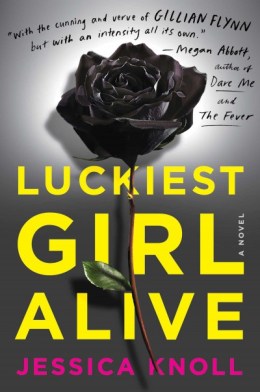
KnollJ-LuckiestGirlAliveAn interesting, but flawed novel

Her perfect life is a perfect lie.

As a teenager at the prestigious Bradley School, Ani FaNelli endured a shocking, public humiliation that left her desperate to reinvent herself. Now, with a glamorous job, expensive wardrobe, and handsome blue blood fiancé, she’s this close to living the perfect life she’s worked so hard to achieve.

But Ani has a secret.

There’s something else buried in her past that still haunts her, something private and painful that threatens to bubble to the surface and destroy everything.

With a singular voice and twists you won’t see coming, Luckiest Girl Alive explores the unbearable pressure that so many women feel to “have it all” and introduces a heroine whose sharp edges and cutthroat ambition have been protecting a scandalous truth, and a heart that’s bigger than it first appears.

The question remains: will breaking her silence destroy all that she has worked for — or, will it at long last, set Ani free?

This was an interesting read. The hype surrounding it was considerable, and as far as I could tell everyone was pegging it in the same sub-genre as Gone Girl. Which… isn’t really where it belongs. I read this pretty quickly, and did enjoy reading it. But, given the hype and synopsis, I kept expecting some momentous twist. Which never arrived. While it’s well-written, the novel is flawed, and ultimately didn’t satisfy as much as I’d hoped. Continue reading

Guest Review: A NATURAL HISTORY OF DRAGONS by Marie Brennan (Tor/Titan)

BrennanM-LT1-ANaturalHistoryOfDragonsUSThe first Memoir of Lady Trent

You, dear reader, continue at your own risk. It is not for the faint of heart — no more so than the study of dragons itself. But such study offers rewards beyond compare: to stand in a dragon’s presence, even for the briefest of moments — even at the risk of one’s life — is a delight that, once experienced, can never be forgotten…

All the world, from Scirland to the farthest reaches of Eriga, know Isabella, Lady Trent, to be the world’s preeminent dragon naturalist. She is the remarkable woman who brought the study of dragons out of the misty shadows of myth and misunderstanding into the clear light of modern science. But before she became the illustrious figure we know today, there was a bookish young woman whose passion for learning, natural history, and, yes, dragons defied the stifling conventions of her day.

Here at last, in her own words, is the true story of a pioneering spirit who risked her reputation, her prospects, and her fragile flesh and bone to satisfy her scientific curiosity; of how she sought true love and happiness despite her lamentable eccentricities; and of her thrilling expedition to the perilous mountains of Vystrana, where she made the first of many historic discoveries that would change the world forever. 

Reviewed by Ryan Frye

A Natural History of Dragons is set in a Victorian-era-esque, male-dominated world where women, particularly those like Isabella (of noble birth) are meant to host teas, plan dinners and keep their interaction with the natural world limited to gardening. Obviously, Isabella wants none of that life and instead yearns to be accepted into the scholarly life as a Natural Historian who studies dragons. As luck would have it, she winds up marrying possibly the one man in all of Scirland who is willing to help her achieve her goals. Through her husband’s connections, she finagles her way into an expedition that is set to study dragons in a far-off land. Upon arrival, they are attacked by one of the region’s dragons, (attacks of this sort are a rare occurrence), and from there, the expedition continuously veers away from its original purpose. Continue reading

Quick Review: THE EMPEROR’S RAILROAD by Guy Haley (Tor.com)

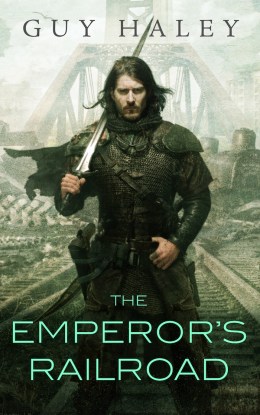
HaleyG-EmperorsRailroadAn interesting new post-apocalyptic series
Global war devastated the environment, a zombie-like plague wiped out much of humanity, and civilization as we once understood it came to a standstill. But that was a thousand years ago, and the world is now a very different place.

Conflict between city states is constant, superstition is rife, and machine relics, mutant creatures and resurrected prehistoric beasts trouble the land. Watching over all are the silent Dreaming Cities. Homes of the angels, bastion outposts of heaven on Earth. Or so the church claims. Very few go in, and nobody ever comes out.

Until now…

This is an interesting novella, and one that shows a lot of potential for expansion. (According to the author, it is first in a possible/planned series of stories.) The story is told from the perspective of Abney, one of the travellers to whom the knight on the cover attaches himself. The three are travelling cross-country: the mother and son are trying to reach Winfort, an outpost in which a distant relative lives. Quinn, the knight’s motivation is shrouded in mystery, and pretty much remains so at the end of the novella. This is no bad thing, as it gives us a little hint as to what we should expect from upcoming stories in this setting. Abney recounts their journey, and offers us an introduction to the setting and characters — we don’t get too much, but we start to see their characters take shape, and in the process some tantalizing hints about how the world got to this state.

The biggest surprise for me was that the railroad in the title was… pretty much absent from the story. Not strictly speaking a bad thing, but an odd decision, given the title. The story does, however, have angels, dragons and some excellent tension. It’s a somewhat slow-burn, and is clearly setting things up for future adventures. It’s pretty satisfying, though.

If you enjoy post-apocalyptic stories, then this is a must-read. Very good.

The Emperor’s Railroad is published by Tor.com in April 2016.

Also on CR: Interview with Guy Haley

Turn Back 10: BETRAYAL by Aaron Allston (Arrow)

TurnBackTimeClockIn this second edition of Turn Back 10, I’m taking a look at an early Star Wars novel review. In the first few months of CR, I read and reviewed a lot of Star Wars fiction. Not long before I started the blog, I had picked up a couple of newer novels in the series, having stepped away for quite some time. I can’t remember what it was that made me re-start, but I did and I got sucked into it in a big way.

They were among some of the first novels I received from a publisher for review. I think this may have coloured my reviews — I didn’t lie about what I liked, but I think I did (in the very early months) focus more on what I liked than what I didn’t. I don’t think I am alone among reviewers to have done that, not that I would ever recommend it. I also think I read many of the Star Wars novels while still in the glow of renewed fandom. This loyalty would slowly wane as ever-more novels in ever-more convoluted series-within-series were published. My interest in reading SW novels cratered in 2013, as I tried four and finished none. With the The Force Awakened behind us, and a new era in SW fiction and movies upon us, though, who knows if my interest will be reignited?

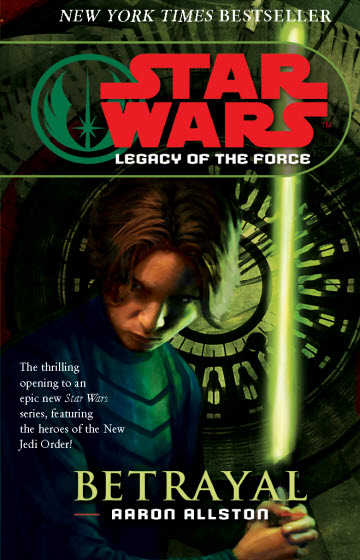
Anyway, here’s my review of Betrayal by Aaron Allston — the first in the nine-book Legacy of the Force series — from a time when the now-“Legends” novels were still pretty great…

*

AllstonA-LotF1-BetrayalBETRAYAL by Aaron Allston (Arrow)

This is the era of Luke Skywalker’s legacy: the Jedi Master has unified the order into a cohesive group of powerful Jedi Knights. However, as this era begins, planetary interests threaten to disrupt this time of relative peace and Luke is plagued by visions of an approaching darkness.

Melding the galaxy into one cohesive political whole after the savage war with the Yuuzhan Vong is not the easiest task, and already some worlds are chafing under the demands of the new government. Civil war may be brewing, and the Skywalker-Solo clan find that they might not all be on the same side. Meanwhile, evil is rising again — out of the best intentions — and it looks like the legacy of the Skywalkers may come full circle…

Betrayal is the beginning of the latest Star Wars series, which ushers in (yet another) dark time for Luke Skywalker and his expanding clan of family and friends. This time, the darkness doesn’t come from beyond the galactic rim. This time, its source is far closer to home. Continue reading

Quick Review: WHY WE CAME TO THE CITY by Kristopher Jansma (Viking)

JansmaK-WeCameToTheCityUSA moving story of friendship, loss and life in New York
December, 2008. A heavy snowstorm is blowing through Manhattan and the economy is on the brink of collapse, but none of that matters to a handful of guests at a posh holiday party. Five years after their college graduation, the fiercely devoted friends at the heart of this richly absorbing novel remain as inseparable as ever: editor and social butterfly Sara Sherman, her troubled astronomer boyfriend George Murphy, loudmouth poet Jacob Blaumann, classics major turned investment banker William Cho, and Irene Richmond, an enchanting artist with an inscrutable past.

Amid cheerful revelry and free-flowing champagne, the friends toast themselves and the new year ahead — a year that holds many surprises in store. They must navigate ever-shifting relationships with the city and with one another, determined to push onward in pursuit of their precarious dreams. And when a devastating blow brings their momentum to a halt, the group is forced to reexamine their aspirations and chart new paths through unexpected losses.

I wasn’t sure what to expect, when I started Why We Came to the City. I had picked up Jansma’s previous novel a couple of years back, but hadn’t had the chance to read it, yet. There was something about this one, though, that caught my attention and never really let go. I started reading the novel very shortly after I received a review copy from the publisher, and despite taking just a little while to get used to the style and rhythm, I was hooked. Continue reading

Introducing “Turn back 10” & Another Look at WAY OF SHADOWS by Brent Weeks (Orbit)

TurnBackTimeManOnClockApril 8th will mark the tenth anniversary of Civilian Reader. Which is a surprise. I thought it might be interesting to post one old review per week, working back to the first — which I will re-post on April 8th. I’m going to call these “Turn Back 10” posts. The first three don’t feature content that is actually ten years old — I only wrote three reviews in 2006, after all, which would make this a pretty short exercise. Not to mention a bit dull. Each post will feature a review from the first three years of CR (2006-08). And it’s a nifty title, so I’m sticking with it. The reviews are, of course, mostly terrible in terms of style — I was still figuring out how I wanted to write them. They are often rather more hyperbolic than I would like now.

I will do some minor editing and adjusting, in order to make them fit in with the current style, and fix typos, but other than that they are re-posted as they first appeared. If I enjoy posting them, I may continue the practice after the anniversary, but try to feature reviews more relevant to what I might be reading at the time, or what I’m posting about.

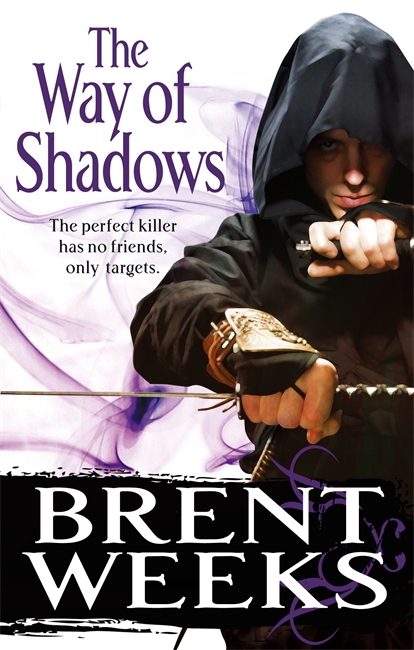
Brent Weeks’s The Way of Shadows was the first fantasy novel I had read in a very long time, which wasn’t set in a shared universe or Discworld. I remember it blowing me away, too: it did things that I had thought one wouldn’t find in fantasy novels (remember, I barely read any fantasy at the time). It was, to use words that have fallen completely out of favour, grim and quite gritty. (Especially the ending, and one storyline in the second book.) Certainly, more grim and gritty than I was familiar with. I remember noticing it because Amazon recommended it because I had also bought Scott Lynch’s The Lies of Locke Lamora.

It was also the first fantasy novel I received from a publisher for review — up until that point, it had been predominantly non-fiction and Star Wars novels. It also marked the point when Civilian Reader started to take off — in terms of readership and also how much time and effort I poured into the site. I also remember, after publishing the review, incessantly pestering Orbit’s publicist for the next two novels in the series… (Thankfully, the then-publicist has the patience of a saint.)

WeeksB-NA1-WayOfShadowsTHE WAY OF SHADOWS by Brent Weeks (Orbit)

The start of something truly fantastic

The perfect killer has no friends. Only targets. 

For Durzo Blint, assassination is an art. And he is the city’s most accomplished artist, his talents required from alleyway to courtly boudoir.

For Azoth, survival is precarious. Something you never take for granted. As a guild rat, he’s grown up in the slums, and learned the hard way to judge people quickly — and to take risks. Risks like apprenticing himself to Durzo Blint.

But to be accepted, Azoth must turn his back on his old life and embrace a new identity and name. As Kylar Stern, he must learn to navigate the assassins’ world of dangerous politics and strange magics — and cultivate a flair for death.

Fantasy fiction has undertaken a shift in tone and style in recent years. It’s darker, more realistic (oddly), and the characters are less polished, more flawed and human. The fairy-tale feel of older fantasy fiction has been purged from much the genre’s new writing, and the world is better for it. Brent Weeks’ new series not only fits perfectly into this new genre, but it surpasses much of what’s already available. Continue reading

Quick Review: VANISHING GAMES by Roger Hobbs (Corgi/Knopf)

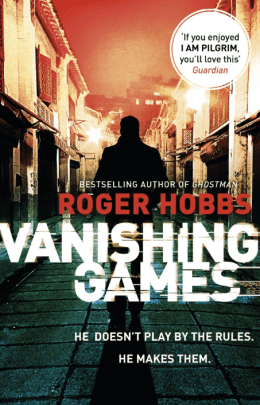
HobbsR-G2-VanishingGamesUKPBThe Ghostman returns, to save his mentor…

I work alone. 

I may be the best thief in the world but no one will ever know a single thing about me. Well, almost no one. 

A lifetime ago I had a mentor, Angela. She taught me how to be a criminal, how to run a heist. 

And now, six years after she vanished and left me high and dry on a job in Kuala Lumpur, she’s sent me an SOS.

Or at least I think it’s her. If it is, then I’ve got to go. I owe her that much.

So soon I’ll be on a plane to Macau, either to see a friend or walk into a trap. Or both. 

But that’s the way I like it. Sometimes the only thing that makes me happy is risking my life. 

Time to go.

I very much enjoyed Roger Hobbs’s debut, Ghostman: it was fast-paced, entertaining and offered an interesting twist on the international, high-tech thief genre. In this sequel, Hobbs gives readers more of the same. For the main, this is a very good thing, and I blitzed through Vanishing Games. Continue reading