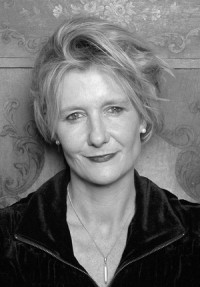
Interview with BRUCE McCABE

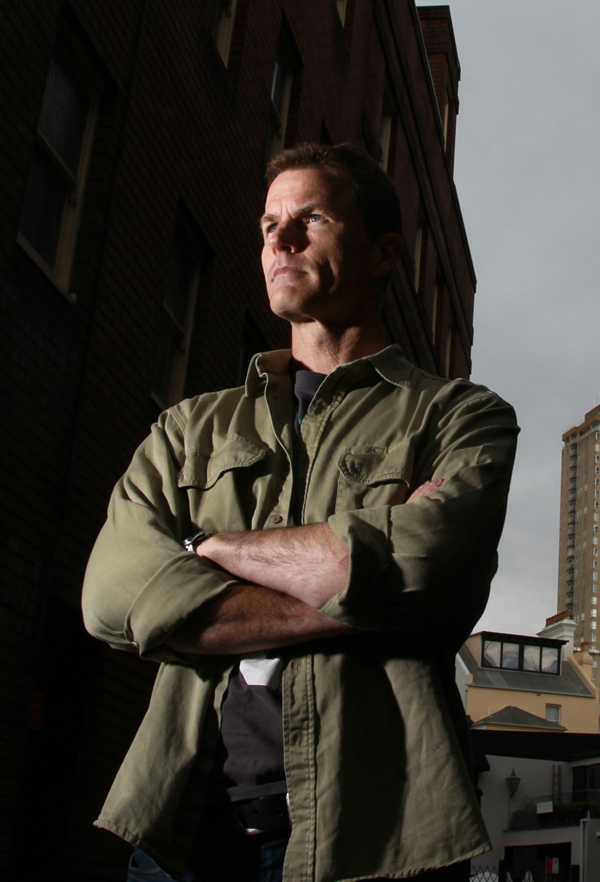
McCabeBruce-AuthorPicCropLet’s start with an introduction: Who is Bruce McCabe?

The ‘official version’ is I’ve spent a career researching, writing about, and advising on, human factors in technology innovation and adoption and now I write fiction. The unofficial version is, I’m an incorrigible explorer, and if I don’t spend time meeting people smarter than myself and poking and prodding new ideas and daydreaming about what they might mean, I go nuts!

Your debut novel, Skinjob, will be published in paperback by Transworld in January 2015. How would you introduce the novel to a potential reader? Is it the beginning of a series?

A frantic roller-coaster ride of a techno-thriller, set over just six days. Lots of action and provocative themes. A series? Maybe. My next book follows the fortunes of another protagonist, but I love the characters in Skinjob and if the right ‘what if?’ comes along I will be bringing them back. Continue reading

Interview with SARA B. ELFGREN and MATS STRANDBERG

?????????????????????????????????????????????????????????????????????????????????????????????????????

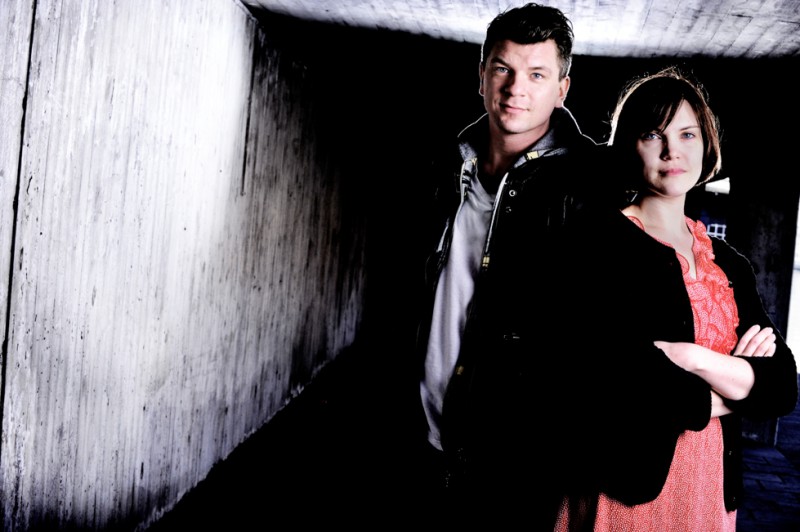
Let’s start with an introduction: Who are Sara B. Elfgren and Mats Strandberg?

Sara: I was born in 1980 in Stockholm, Sweden and I still live here. I surround myself with books. I tend to rant about stuff I love, and stuff that annoys me. What We Do in the Shadows made me laugh and I saw it twice in the cinema. I like people who are empathetic and sarcastic.

Mats: Well, I am 38. I grew up in a small town with some similarities to Engelsfors, minus the apocalypse. I now live in Stockholm. I watch way too much reality TV. I am horrible at remembering people’s names and it’s very embarrassing. I never finish books that I don’t like after 100 pages.

The third novel in your Engelsfors trilogy, The Key, will be published in the UK by Hammer in January 2015. How would you introduce the series to a potential reader, and what can fans of the first two novels expect here?

Mats: The trilogy is about six very different girls, who find out that they are witches, and have to work together to stop the apocalypse.

Sara: Meanwhile, they have do deal with the problems of their everyday lives: parents, partners, friends, bullies and homework. In The Key, the fans can expect answers to all the big, and many of the little, questions. The plot will thicken… Continue reading

Quick Chat with DAVE BARA

BaraDave-AuthorPicLet’s start with an introduction: Who is Dave Bara?

Honestly, I’m a just guy who was pretty much born to write science fiction. My earliest memories are of watching the Gemini and Apollo missions on TV, plus Star Trek, Lost In Space, Outer Limits, Twilight Zone. I was always fascinated with space and science fiction, so it seems like it was my destiny to write it.

Your debut, IMPULSE, will be published by DAW Books in February in the US. How would you introduce the novel to a potential reader? Is it part of a series?

It is part of a series, of which Starbound will be the second volume in early 2016 and Defiant will be the third. If I was introducing it I’d say it’s character-driven SF/action-adventure, the kind of thing I like to read. If you’re into space opera and military SF, you’ll probably love Impulse. Continue reading

Q&A with MELISSA PIMENTEL

PimentelM-AuthorPic2Although Love By The Book is a novel, the premise comes from an experiment that you conducted in your own life, that you turned into a blog called “Love by the Book.” What made you want to try this and how did you come up with the idea?

The idea came after a year of semi-successful dating in London. I’d come out of a serious relationship the year before (a marriage, in fact) so I wasn’t looking for anything remotely serious… and yet every time I tried to convey that to a guy, they seemed to think I was trying to trick them. It was getting annoying, so when the idea came to me to try these different dating guides – and effectively turn my love life into a science experiment – it instantly appealed. I’ve always thought that dating should be fun – when I was in college, I used to play a game called “wrong or funny” with my roommate in which we’d get ourselves in slightly awkward/controversial situations with guys and then ask each other if the situation was wrong or funny (the best ones were both) – so this felt like killing two birds with one stone: making a game out of dating and also (maybe, hopefully) learning something about male behavior along the way.

Why did you decide to write this as a novel and not as a memoir?

In truth, I ran out of material! The real-life experiment was going really well for a few months. It was fun (if exhausting) and the blog was starting to get some traction… but then lo and behold, I went on a first date with one of the test subjects and fell in love. It was sort of a double-edged sword: on the one hand, I was happy to have met the love of my life (we’re now engaged) but on the other, I was kind of annoyed that I had to give up the project. I actually tried to keep it going for the first month we were together, but it was getting too weird. An editor at Penguin who had been following the blog suggested a try to fictionalize it, and here we are! Continue reading

Interview with ANDY McNAB

Let’s start with an introduction, just in case there are people who haven’t heard of you: Who is Andy McNab? 

I was in the army for 18 years. Eight years in the infantry and the remainder in the Special Air Service. The first book I wrote was about my experience during the first Gulf War, Bravo Two Zero. It became the biggest selling war book of all time. So that then kicked off a second career as a writer, then a script writer and film producer. The books are doing well – they have now sold just over 30 million copies worldwide.

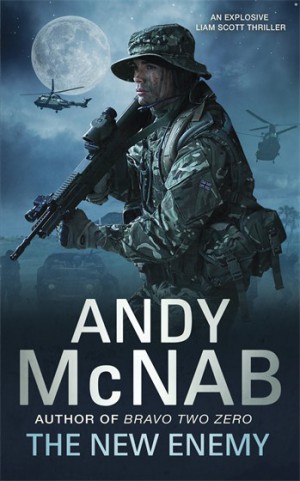
McNabA-LS3-NewEnemyUKYour third Liam Scott novel, The New Enemy, will be published by Random House in the UK, in January. How would you introduce the series to a new reader, and what fans of the first two books expect?

Liam is a typical 16-year-old who joins the army as a Junior Soldier. As well as all the normal things 16-year-olds start to experience – drink, girls and mates – he goes through his infantry training and eventually to Afghanistan. There his experiences include not only the “bang bang” that you would expect from a story set in a war zone but also his own worries and fears around all this. Will he let himself down when he has to step up to the plate and do what he’s trained and paid to do? Or worse, will he let his mates down and look weak when he’s under fire? Continue reading

Q&A with CATHERINE BAILEY

BaileyCatherine-AuthorPicCatherine Bailey is the author of The Secret Rooms and Black Diamonds — both histories of the British aristocracy. She read history at Oxford University and is an award-winning television producer and director, making a range of critically acclaimed documentary films inspired by her interest in twentieth century history. Bailey’s US publisher, Penguin, organised this Q&A…

In THE SECRET ROOMS, you explain what drew you to the story of the Rutland family, that you were researching a book on World War I and asked to see the Rutland archives and when there were obvious gaps in the records you decided to devote your attention on uncovering what the family was trying to hide. What brought you to write about Wentworth House and the Fitzwilliam family, and how did you discover that they also had secrets they were trying to keep buried?

I first saw Wentworth House in the late 1990s when I was researching a documentary film in Yorkshire. The size of the house – the largest in Europe – was breathtaking. Here, it seemed, was England’s forgotten palace. Unlike comparable houses, such as Chatsworth or Blenheim, it was closed to the public. Outside its locality, few knew of its existence. Seeing it for the first time, it looked empty and abandoned. The shutters were drawn; its 18th century façade was black with grime and in a poor state of repair. The image was haunting: I wanted to know what had happened there over the centuries, and what had led to its abandonment.

Over the next few years, whenever I could find the time from my work as a television producer, I researched the twentieth century story of Wentworth House. From architectural journals and newspaper articles, I was able to piece together a narrative. In 1900, the house had belonged to William, the 6th Earl Fitzwilliam, the richest man in Britain. His fortune came from coal. Within a 30-mile radius of Wentworth, tens of thousands of men worked in mines in which he had an interest. The Fitzwilliams had powerful connections; in the first decades of the 20th century, the newspapers listed the names of guests at their lavish house parties. They included Kings and Queens, Prime Ministers and politicians, famous musicians, writers and artists. Later, there was a connection to the American Kennedy family. In 1948, Peter, the 8th Earl Fitzwilliam, had been killed in a plane crash with Kathleen Kennedy, the sister of the President. But the details were tantalizingly sketchy; very little appeared to have been written about Wentworth or the Fitzwilliam family. Particularly intriguing, was a photograph, taken in the 1940s, which showed the landscape around the house blighted by open cast mining. Soon after, the Fitzwilliams had moved out. Continue reading

Video: Joe Haldeman Discusses THE FOREVER WAR

Here is a video of Joe Haldeman discussing his classic sci-fi novel, The Forever War, courtesy of Open Road Media:

The publisher is in the process of publishing a number of novels in Joe Haldeman’s back catalogue in eBook, including The Forever War, the Worlds trilogy (the first of which I have for review), Tool of the Trade and more.

An Interview with EDWARD COX

CoxE-RG1-RelicGuild2014

Let’s start with an introduction: Who is Edward Cox?

EdwardCox-AuthorPicI am a woefully undereducated village idiot, with gladness for blood and nothing but sunshine in my head. Every day I try – really hard – to be a cool and moody writer, but every day I fail. I have eternal faith in the human race, which some might say comes from naivety, but I do not care; I refuse to give up on us. Outside of my obsession for writing, I simply don’t know what I’m doing, and I’m always the last to understand what’s going on. I am also a husband and a father to two ladies who I love beyond measure.

However… If I ever do discover the secret to cool and moody, I will change my name to Thundermaster Volcanofists, and all shall fear me.

I thought we’d start with your fiction: Your debut novel, The Relic Guild, will be published by Gollancz in September 2014. How would you introduce the novel to a new reader?

A balls out fantasy adventure! Or, to be more professional, I like to think of The Relic Guild as a story about people doing the right thing even when they’ve been given every reason not to. Also, I’ve been trying to refine a pitch for the book, and this is what I’m currently down to:

At the centre of a gigantic labyrinth, in a sprawling city trapped behind walls one hundred feet high, young Clara is about to become the unwitting participant in the machinations of higher magic. It falls to her to reunite the last of a secret band of magickers called the Relic Guild. Together they must find a way to save one million humans from an age old menace that is about to return. Continue reading

Interview with ERIKA JOHANSEN & Giveaway!

JohansenE-AuthorPicErika Johansen’s The Queen of the Tearling has been getting some great press ever since WFC 2013 (at least, that’s when I heard of it). The novel finally hits shelves in the UK today, and to celebrate its release, not only do I offer the interview that follows (organised by Transworld), but I also have one copy of the novel to give away to a UK reader! Details at the end. But first, the interview…

Can you give us a brief introduction to The Queen of the Tearling?

A 19 year-old girl, Kelsea Glynn, is the heir to the throne of a degenerate kingdom. Having been raised far from the capital city, she’s not prepared to be the Queen, but she will need to learn quickly. Both the neighboring ruler and Kelsea’s own uncle would like to see her dead. Her kingdom is a mess, drowning in corruption and inequality. All Kelsea has are a strong moral compass, a lot of courage, an unwieldy temper and two hereditary sapphires which may or may not be magical in her hands.

Who are the main characters of the book?

The main characters include Kelsea, the Queen; Mace, her Captain of Guard; the Red Queen, who rules the neighboring kingdom; Javel, a guard in the Tear castle; and Father Tyler, a priest in the Tearling’s central church. Please don’t ask me to explain in a nutshell how they intersect.

JohansenE-1-QueenOfTheTearling

UK Cover

What is the one thing you hope the reader will take away after reading the novel?

This is fairly presumptuous of me, but ideally, I would hope to instill some sense of civics, of the social contract. I can’t speak for the rest of the world, but there is certainly a large and vocal contingent in my own country that believes it’s perfectly reasonable to grab whatever one can for oneself, and worry about the broader effects on society later, if at all. But I consider America’s subtle moral acceptance of this “I got mine” philosophy to be absolutely toxic to the creation of a healthy society. I’m no philosopher, and I certainly don’t have the intellectual depth to tackle this subject properly. Writing fiction is really the only way I can engage with ideas. At its most basic level, The Queen of the Tearling is about a young woman who has been raised to think about the impact of her actions, not just on herself and her nearest and dearest, but on everyone. Sometimes we simply have to take care of each other: neighbors, strangers, even enemies. This is the only way for a community to succeed. My heroine, Kelsea, is often confused about the “right” thing to do, but when she acts, she consistently tries to choose what’s right for her kingdom as a whole, rather than for herself. If even a tiny fraction of the energy that individuals currently expend on self could be redirected toward the community, I think it would be an extraordinary thing to see.

Kelsea Glynn is the novel’s protagonist – a strong, intelligent character with her own insecurities. Can you tell us a little bit more about the inspiration behind Kelsea, and what sets her aside from other protagonists in the genre?

I have grown extremely tired of reading books in which the female protagonist – even if she’s a strong character – is driven by her love life. I’m also tired of books in which the attractiveness of the heroine is a central plot point, a factor that changes the entire landscape of the novel. Such women can be good entertainment, but to my mind, many of them also make poor role models. I’ve been longing for a book in which a woman can be a strong central character without everything revolving around her looks or her romantic life. Kelsea Glynn is not good-looking, and like many teenage girls, she is tormented by all of the feelings of inadequacy that go with that realization, particularly since it seems to put the man she loves out of her reach. But Kelsea does not let her insecurities control her destiny, or even pay them much mind most of the time. She’s a Queen, and she has more important things to worry about than being pretty. This is not to say that Kelsea is unique; I’m sure there are plenty of similar heroines out there and I’ve simply been reaching for the wrong books. But many of the book’s early reviews have specifically referenced deep pleasure – not to mention surprise – that in a book with a female protagonist “there is no romance!” So I guess I’m not the only one fed up with the formula.

Who are your favourite authors? Were you inspired by them when writing The Queen of the Tearling?

My three favorite authors are Stephen King, William Faulkner and Sara Paretsky. Of the three, I can’t really say that any of them directly inspired this trilogy, except perhaps for Stephen King’s The Eyes of the Dragon, a wonderfully plotted dark fantasy that I have always admired. The Tearling probably drew more inspiration from individual books that I love: Frank Herbert’s Dune; Marion Zimmer Bradley’s The Mists of Avalon; Richard Adams’s Watership Down; and Terry Brooks’s Heritage of Shannara series all spring to mind. And, of course, anyone who writes any fantasy, ever, should probably toss an amorphous thank-you in the direction of J.R.R. Tolkien, who showed us how it should be done.

JohansenE-1-QueenOfTheTearlingUS

US Cover (Harper Collins)

Setting is hugely important in The Queen of the Tearling, what’s most interesting is how the kingdom feels very ‘Medieval’ even though it’s set in the future. Could you talk a little more on why you chose this setting?

This kingdom is essentially medieval; no electricity, little technology, a lot of superstition. But I chose to set it in the distant future for a pretty prosaic reason: because I wanted my kingdom – and my heroine in particular – to have access to earth’s history, to past nations’ mistakes. The age-old wisdom that there’s nothing new under the sun is in heavy play in the Tearling; all of the mistakes my characters make have certainly been made before. I wanted the ability to shed historical perspective, particularly since my fictional Queen was raised by a historian.

You’ve described yourself as a “Horror reader, Fantasy writer” – can you expand a little on this, and why you chose to write Fantasy and not Horror?

I can’t write good horror. I’ve tried for years; horror is by far my favorite genre to read, and I would love to be able to give any reader the kind of joy I’ve received from King and Straub and Matheson and Lovecraft and the rest. I had youthful dreams of writing a great haunted house novel, of creating an utterly damned edifice to rival Hill House or the Overlook Hotel. But all of my attempts at writing horror have been uniformly terrible, and I finally had to admit to myself that I just don’t have any talent for it. But I wasn’t willing to return to writing about the real world, so next I tried fantasy. Interestingly enough, I’m not that much of a fantasy reader, at least in terms of breadth. I like several fantasy authors quite a bit, and The Lord of the Rings is my all-time favorite book, but the vast bulk of my reading material comes from other genres. So in writing this trilogy, I’m often flying blind, not always sure of the parameters of fantasy. There’s a point at which idea becomes trope, and sometimes I fail to recognize it. Thank god I have an attentive editor, though even she can’t always save me from myself.

How much involvement have you had thus far in the film adaptation of The Queen of the Tearling?

Very little, all on the writing end. The book has been given to a screenwriter who is not only talented but – as any reader will quickly see – extremely courageous in the undertaking. This book constantly refuses to answer the reader’s questions, because I wrote it specifically for readers like myself. I love a book that doesn’t tell me everything I want to know, one that gives me sufficient information to follow the plot but still keeps me constantly questioning. But one of my first thoughts when the word “film” came up was that the book would be a nightmare to adapt for screen, precisely because so many questions will not be answered until either the first or second sequel. Readers have far more patience with this sort of multiple-installment ambiguity than viewers do. So my involvement with the film thus far has consisted of trying to help the screenwriter maintain consistency in this incredibly secretive world, while not giving away anything I want to keep secret. It’s a rough balance to strike, and should the film ever come to fruition, the screenwriter will likely deserve a medal of some sort…perhaps for artistic bravery, certainly for saintly patience with the source.

***

You can find an excerpt from The Queen of the Tearling over on Tor.com.

Giveaway Details: As I mentioned at the top, I have one copy of the novel to give away. I’ll leave this open for the weekend, and pick at random one commenter to receive the book. Just to repeat, the giveaway is UK only. (Sorry everyone else!)

A Quick Chat with CARRIE PATEL

PatelC-AuthorPicLet’s start with an introduction: Who is Carrie Patel?

I’m an expatriate Texan living in California where I work as a narrative designer for Obsidian Entertainment. In my free time, I write books!

Your debut novel, The Buried Life, is due to be published by Angry Robot Books in July 2014. How would you introduce the novel to a new reader? Is it part of a series?

It’s the first in a series about a stratified underground society that forms after a world-shaking catastrophe. The Buried Life follows two different characters – an inspector and a laundress – trying to unravel a series of murders surrounding the wealthy and powerful.

Patel-1-TheBuriedLife2014

What inspired you to write the series? And where do you draw your inspiration from in general?

For me, inspiration is about taking these quick, impressionistic mental snapshots of different places, moments, and people, and remixing them into something different. A lot of the inspiration for The Buried Life came from a study trip to Argentina, but it’s not the kind of thing that would necessarily be apparent from reading the book.

How were you introduced to reading and genre fiction?

My parents are both readers, so I developed a habit early. They always encouraged leisure reading when I was young, and having a good school library went a long way, too. Picking out the books I wanted to read was an important act of expression and freedom at that age.

How do you enjoy being a writer and working within the publishing industry?

Now that I have external deadlines, balancing writing with everything else is a greater challenge, but it’s rewarding, too. After spending years as an unpublished author, selling work feels incredible.

PatelC-2-CitiesAndThrones2015

Do you have any specific working, writing, researching practices?

Scheduling time is key. I’m a morning person, so I make regular time before work every day to write. Research is important, but I’ve found that it can also be a convenient way to put off the actual writing, so I make sure that I spend some of my time every day actually drafting and revising.

When did you realize you wanted to be an author, and what was your first foray into writing? Do you still look back on it fondly?

As a reader, writing was always in the back of my mind, but working myself up to committing to a story in 90,000 words was another matter!

My very first effort was a short story about a medieval battle that I wrote in sixth grade. It’s not something I’d want to put up on the refrigerator now, but I had a blast writing it back then. For an early effort, the thrill and satisfaction are probably what matter most.

What’s your opinion of the genre today, and where do you see your work fitting into it?

Speculative fiction is expanding and bringing us a wider set of stories from a wider array of authors, which is wonderful. We’ve got more novels like Saladin Ahmed’s Throne of the Crescent Moon that tell great adventure stories in settings that aren’t explored as often. And then we’ve got novels like China Miéville’s The City and the City, which is also a fantasy but unlike anything else in the genre. It’s an exciting time to be writing!

PatelC-GenreBreakingSFF

I’d like to see my work push at the boundaries of the genre, too, which is one reason I’m thrilled to be published by Angry Robot. The Buried Life is part fantasy, part mystery, and part something else, and it’s not something that would traditionally fit in a really clear subcategory of speculative fiction, either.

What other projects are you working on, and what do you have currently in the pipeline?

Right now, I’m working on Cities and Thrones, which is the sequel to The Buried Life. I’ve got another project on hiatus right now that’s very different but that I’m also very excited about – it’s a near-future science fiction novel about colonizing Mars with “bare branches” youths from India and China.

What are you reading at the moment (fiction, non-fiction)?

Since I can never make up my mind between fantasy and sci-fi, I’m reading N.K. Jemisin’s The Hundred Thousand Kingdoms and George Wright Padgett’s Spindown.

PatelC-Reading

What’s something readers might be surprised to learn about you?

I have gone bungee jumping from the Bloukrans Bridge in South Africa, which is the highest bungee bridge in the world! I did it hours before my phone interview with Obsidian.

***

For more on Carrie Patel’s writing, be sure to check out her website and follow her on Twitter. You can also check out an extract from The Buried Life here.