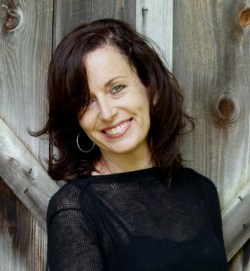
Q&A with ELIZABETH GILBERT

Recently, Penguin Books organised a Q&A with Elizabeth Gilbert, the mega-selling author of Eat, Pray, Love. With the recent publication of her latest book, the novel The Signature of Things, I’m sharing some excerpts from that long Q&A…

GilbertE-AuthorPic (JenniferBailey)After the incredible dual successes of your memoirs Eat, Pray, Love and Committed, the safer, more obvious choice for you would have been to continue in nonfiction. What was it that prompted you to return to writing novels with THE SIGNATURE OF ALL THINGS?

I needed to come home to my roots as a writer. Fiction is where I began my writing journey, and all I ever wanted to be was a pure novelist. Fate intervened and led me into the world of memoir (and believe me, I am grateful for my success there!) but the next thing I knew, a dozen years had passed since I’d written a word of fiction. I simply couldn’t let another year go by, so I embarked on this novel.

How difficult is it for you to shift gears between genres?

I thought it would be more difficult than it was. I feared I had lost the skill of fiction entirely (almost the way you can lose a foreign language if you don’t practice it often) and so I was intimidated by the prospect of returning to the form of a novel. As a result of my fear, I over-prepared for this book ridiculously. I did ten times the research I actually needed, just to feel covered and safe. Up till the very day I put down the research and began actually writing the novel, I honestly wasn’t sure if I could do it. But as soon as I began, the moment Alma was born, I realized, “Oh! I was so wrong! Fiction isn’t a foreign language; it’s my mother tongue!” I had forgotten nothing, except the joy of it. It felt like a homecoming.

GilbertE-SignatureOfAllThingsUSPB

THE SIGNATURE OF ALL THINGS opens in 1800 and spans much of the 19th century as its heroine Alma Whittaker comes into her own as an accomplished botanist. Why did you choose to set your novel during this particular time? And what aspects of this era are important for us to remember in modern times?

The nineteenth century fascinated me because of its intellectual accessibility. I could never write a story about modern science, because the comprehension of modern science is far out of reach to anyone except modern scientists (and each of them can only understand the specifics of their own narrow fields). The nineteenth century was the last moment in history when a relatively educated layperson could follow what was going on in the world of science and invention to a wide degree. Also, there were no “professionals”, such as we know them today. This was a time when amateur explorers, naturalists and enthusiasts were are still making major contributions to progress. Alma is a woman who would have been up-to-date on all the latest thinking in the world, across many different fields of study. With her own well-tended library, her private offices, and her brilliantly cultivated mind, she could easily have come up with botanical theories to rival those of any man. This idea of such open access to history-changing ideas fascinated me more than anything. That, and an inherent attraction to the gorgeous language of the day. With apologies to the Elizabethans, I think nobody ever wrote or spoke better English than during the nineteenth century. We could use a little more of that.

GilbertE-EatPrayLove&CommittedUS

Eat, Pray, Love and Committed – US Covers

The novel’s story soars across the globe – from London, to Peru, to Philadelphia, to Tahiti, to Amsterdam and beyond. You are famous for being an ardent traveler – from Italy, India and Indonesia in Eat, Pray, Love; to Vietnam, Thailand and Cambodia in Committed – so readers will surely be looking forward to the armchair travel of THE SIGNATURE OF ALL THINGS. Can you discuss why you chose any of these particular settings for the story?

I think of this story in some respects as a mystery novel (in that everyone is seeking to solve or find something of great importance to their fates) so I felt the need to follow the mystery wherever it led me, anywhere on the planet, as long as the search remained historically accurate. For Henry to have made his fortune in the quinine trade, for instance, I needed him to explore Peru and then set up business in the Dutch East Indies, before settling down in Philadelphia, which was in fact the birthplace of the American pharmaceutical industry. Ambrose’s search for rare orchids would naturally have led him to the jungles of South America. As for the section of the novel that takes place in the South Seas, well… no self-respecting nineteenth century adventure story would be complete without a journey to the South Seas! That was just a nod to Kipling, Melville and Robert Louis Stevenson – as well as a nod to Captain Cook himself. Finally, Alma’s search for an independent and dignified life could only have brought her back to Amsterdam, which has always been a progressive and intellectually welcoming city. As somebody who herself has found great answers to life through travel, I wanted my characters (especially Alma) to be afforded the same privilege. (And if researching this novel forced me to travel to places like London, Amsterdam and Tahiti in order to get my facts straight… well, that is simply the sacrifice I am willing to make for my work!)

GilbertE-EatPrayLove&CommittedUK

Eat, Pray, Love and Committed – UK Covers (Bloomsbury)

The title of your novel alludes to a theory set forth by a sort of scientific mystic from the 1500s, Jacob Boehme, who argued that the entire natural world is a divine code, crafted and encrypted by God for the betterment of humankind. Boehme was a pretty weak scientist but a highly inspirational thinker. Why did you choose his phrase “the signature of all things” as the name of your novel?

First of all, the phrase itself is simply beautiful. But I also felt that Boehme’s theory speaks to a common longing which unites scientists, the religious and the artistic – namely an urge to break the code, to look behind the veil, to be shown the secret answers. I feel as though all the main characters in the novel are, in their own ways, searching for the Signature of All Things. They don’t merely want some of the answers: they want the answer.

Your book has much of the feel of a novel written in the nineteenth century. How, as a writer, did you go about establishing the authenticity of your novel’s mood?

I completely immersed myself in nineteenth-century prose and ideas. Fortunately this was fun for me; I have always had a particular love for writers like Dickens, Trollope, Eliot, Austen, and James. I went back and re-read many of those great novels, and, of course, I also sought out as much information as I could on the botanical exploration and history of the day. But mostly I read letters – not only letters of great naturalists, but also the letters of common people. Those unguarded everyday letters are where I could best hear people’s common speech, and that helped me fall down the rabbit hole of time and language.

Henry Whittaker, your heroine’s father, dominates the first fifty pages of the book, and he rules much of his daughter Alma’s life thereafter. He’s a bit like a pre-modern Gatsby: an uncultured roughneck who parlays his I’ll-show-them attitude into an incredible fortune. Do you see his story as a commentary on the temptations and pitfalls of the American Dream?

I didn’t intended for Henry to be a commentary on the American Dream, to be honest… partially because I don’t totally see Henry as American, and partially because I don’t see his trajectory as being tragic in the manner of Gatsby. Henry doesn’t have enough self-doubt or self-awareness to be a tragedy, and he never really fails, either. There is nothing he longs for that he does not achieve – except immortality, of course. I see Henry more as a countryless force of nature, as a creature who is, from birth to death, comprised of pure and unstoppable will.  It was exhilarating for me to write Henry Whittaker, because he is so huge and relentless and shameless. It was so fun to write of his galloping ascent and his stubborn endurance. He’s the power source whose energy fuels the whole first half of the book. I think of him like the booster rocket who eventually thrusts Alma out into the stratosphere. Yes, he is domineering, but he also loves and challenges his daughter, and without the example of his ruthless might, Alma could never have been the force that she turns out to be.

Your heroine, Alma Whittaker, may be one of the most fully developed characters in all of American fiction. Were there real-life nineteenth-century women to whom you referred in creating her?

I looked closely at the lives of such women as Mrs. Mary Treat (a New Jersey-based expert on carnivorous plants who was a correspondent of Darwin’s), and Elizabeth Knight Britton (a respected moss expert who founded the New York Botanical Gardens along with her husband), and Marianne North (a wonderful and fearless botanical illustrator who, like Alma, set out alone to explore the world quite late in life)… And many more besides! In the nineteenth-century, botany was considered the only science that was truly open to women (flowers and gardens being “feminine” topics, you know) so I found no shortage of brilliant and tireless female researchers from whom to draw inspiration for Alma’s work. Emotionally, though, Alma is my own creation. From the very first page, I simply felt that I knew her in my bones, and that I had an obligation to tell her story as honorably and thoroughly as I could.

For each of the friends, marriage turns out to be, to one degree or another, a catastrophe. You have reflected a great deal about marriage in your other writings, especially in the memoir Committed. What do you think your characters’ errors might teach us about the rather tricky business of matrimony?

I think, to be honest, the depiction of their marriages is a bit more realistic and accurate than the model that most romantic novels would have us believe! I didn’t intentionally set out to make these women suffer, but I wanted to show what would really and truly have happened in these mismatched unions. None of their husbands are bad men (in fact, there is not a villain of any kind in the entire novel) but they are simply not the right fit. We all know that this can happen. Poor Retta Snow is the only one who is really undone by matrimony (though I suspect her mind would have unraveled over time anyhow, no matter whom she had married.) Prudence and Alma both survive their marriages with dignity. As their mother teaches them early on, dignity is the only thing that matters, and time will reveal who has it. I feel proud that, by the end of the novel, they both have earned their dignified lives.

The mass popularity you achieved with Eat, Pray, Love has probably changed your definition of success. As you go forward, what does it mean to you now to succeed as a writer?

I’m lucky in that pressure for success is completely off for me – at least as far as I’m concerned. Fortunately, there’s no way to match the phenomenon of Eat, Pray, Love, so I don’t even have to attempt it! What Eat, Pray, Love did for me was to give me the liberty (both artistically and financially) to pursue my own private literary passions in whatever direction I wanted. There could be no The Signature of All Things without the beneficence of Eat, Pray, Love. That book has been my great enabler, my great patron. My notion of success now is simply to keep following my interests, wherever they may take me.

What are you working on now?

Absolutely nothing! I am resting. I am deeply at rest. This book was a long journey and I think I may have to catch my breath a bit before launching into another.

***

The paperback edition of The Signature of All Things was published by Penguin in the US last week, and will be published in the UK by Bloomsbury tomorrow.

Author Photo Credit: Jennifer Bailey

An Interview with RACHEL POLLACK

PollackRachel-2014Let’s start with an introduction: Who is Rachel Pollack?

I’m a 68 year old writer living in the Hudson Valley of New York, after 19 years living in Europe primarily Amsterdam. THE CHILD EATER is my 36th book, coming right on the heels of 35, a non-fiction guide to a new oracle card deck, called The Burning Serpent, conceived and developed with artist Robert M. Place. This is fitting, since my first novel, Golden Vanity, was published at the same time, summer of 1980 as my first Tarot book, 78 Degrees of Wisdom. Golden Vanity is available now from Gollancz as an e-book (along with all my previous SF books), but otherwise long out of print. 78 Degrees has never been out of print, and is sold all around the world. My novel Unquenchable Fire won the Arthur C. Clarke Award, while Godmother Night won the World Fantasy Award. Temporary Agency was short-listed for the Nebula. I’ve published seven novels, plus two collections of short stories, one of reprints and one of all-new stories. I’ve also had a chapbook of poetry published, and created a Tarot deck, The Shining Tribe, drawing all the cards myself. A few years ago I co-translated the ancient Greek play Oedipus Rex, working with a scholar of ancient languages named David Vine. Our version is called Tyrant Oidipous.

Your next novel, The Child Eater, is published in July by Jo Fletcher Books. How would you introduce the novel to a new reader? Is it part of a series?

THE CHILD EATER moves back and forth between two worlds – a medieval style fantasy world dominated by powerful magicians, called Masters, and present-day small town America. In each, we find a boy enmeshed in magic. In the first, Matyas, poor and terribly abused by his father, runs away to become the greatest Master of his age, only to fall and become a helpless beggar who cannot even remember his own name. In the second, Simon Wisdom, son of a loving father, tries to suppress his powerful psychic abilities, knowing only that his father fears and hates them, and they seem to have killed his mother. What unites them – even though they will never know each other – is the terrifying figure of a gray man with an ancient stone knife. This is the Child Eater, who kills children and uses their heads in a ritual even the magicians have tried to banish from memory.

Though I found this world an incredibly rich place to explore and develop, I have no plans at the moment to make it a series. But now that I write this…

PollackR-ChildEaterUK

What inspired you to write the novel? And where do you draw your inspiration from in general?

The novel comes from the final two stories in my collection of original tales, The Tarot Of Perfection. They told the story of Matyas and Simon, but in a much simpler form. I kept thinking there was much more to these people, and these worlds that seemed so different and yet were entwined together. Beyond that immediate cause, the novel comes from my intense interest in magic, myth, and folklore of many cultures, most of all Jewish. For many years I have been fascinated by certain tales from the Talmud and the Middle Ages. In this case the seed story was a belief that magicians would cut off the heads of boys who were about to be bar mitzvahed and use them to gain secret knowledge. Another important source was an essay by Peter Lamborn Wilson about the 18th century French visionary Charles Fournier. Wilson’s descriptions gave me a sense of magic that was ecstatic and real, beyond spells and power. Almost my favorite scene in the book is the moment Matyas, still an apprentice, sees a vision of the greater cosmos, and all the wizards, and even the spirits, gather round him in awe.

How were you introduced to reading and genre fiction?

Various-BigBookOfScienceFictionI loved fairy tales as a child (and still do), so it seemed a natural move to fantasy and science fiction. I remember reading anthologies like Big Book Of Science Fiction when I should have been sleeping, and giving 1, 2, or 3 checks to my favorite stories.

How do you enjoy being a writer and working within the publishing industry?

The industry is in a difficult state at the moment, which makes everything difficult, but the people I’ve worked with, particularly in the SF field, are a wonderful group – dedicated and enthusiastic.

Do you have any specific working, writing, researching practices?

Like many writers, I try to write 1,000 words a day. I write everything longhand and then type it into my computer for the second draft. I often write in cafes, or the library.

When did you realize you wanted to be an author, and what was your first foray into writing? Do you still look back on it fondly?

Moorcock-NewWorldsQuarterly2I began writing when I was about 7 or 8 years old. My family went on a trip and to keep me occupied my parents gave me a Big Eagle Tablet and a pencil. I promptly began a fantasy epic. It didn’t get very far but I kept writing. My first published story was “Pandora’s Bust” in Michael Moorcock’s New Worlds Quarterly. This was in 1971. Back then, of course, you had to include a return envelope for your manuscript if they rejected it, and I was so used to those large envelopes coming back that when I got a regular size envelope, with Michael Moorcock as the return envelope, I wondered why he would be writing to me. Then I realized and tore open the envelope.

What’s your opinion of the genre today, and where do you see your work fitting into it?

The genre seems to me to have opened up in some very exciting ways. There’s a new emphasis on wild and very speculative ideas. At the same time, characters are more vivid and real. It’s always hard to say where one’s own work fits in, but I’m definitely in the ideas camp, but also very much try to create characters who are real within their worlds.

What other projects are you working on, and what do you have currently in the pipeline?

Fantasy&ScienceFiction-201207Novels are often slow for me, but I’m currently writing a series of novellas about a kind of private eye shaman (called a Traveler) named Jack Shade. As with everything I do, I’ve been making up my own magical world and lore rather than, say, adapting some existing tradition.

[The first Jack Shade story – “Jack Shade in the Forest of Souls” – appeared in Fantasy & Science Fiction July/August 2012]

What are you reading at the moment (fiction, non-fiction)?

In non-fiction I’m reading an amazing collection of essays about magic – both stage magic and ritual/shamanic magic – called Magiculum. Possibly the best novel I’ve read in the past couple of years was Boneland, by Alan Garner. Remarkably, it was the third book in a trilogy, the first two of which were published fifty years ago. I just finished The Girl On The Road, by Monica Byrne, which I liked. Now I’m reading Lexicon, by Max Barry.

PollackRachel-Reading

What’s something readers might be surprised to learn about you?

As well as writing my books longhand, I use antique fountain pens, some 100 years old.

What are you most looking forward to in the next twelve months?

First of all, the publication of THE CHILD EATER. Beyond that, I have a trip to Australia and China coming up that I’m very excited about.

PollackR-ChildEaterAnimated

An Interview with ALISON GAYLIN

GaylinA-AuthorPicLet’s start with an introduction: Who is Alison Gaylin?

Hmm, I’m still trying to figure that one out.  For the purposes of this blog, I am a suspense writer and reader of all sorts of things.

Your next novel, Stay With Me, the third in your Brenna Spector Trilogy, is due to be published in June by Harper. How would you introduce the novel to a new reader? What can fans of the series expect?

Stay With Me is the third book in the Brenna Spector suspense series, and the culmination of what readers of the series would know as the “Clea Trilogy.” Brenna is a private investigator blessed – and cursed – with hyperthymesia (perfect autobiographical memory.) It makes her pretty great at her job, but it wreaks havoc on her relationships with others. (How can you forgive and forget when you can never forget?) She specializes in missing persons cases, but the one missing person she’s never been able to find is her older sister Clea, who got into a blue car 28 years ago when she was 17, never to appear again. That event triggered Brenna’s hyperthymesia at the age of 11 and has haunted her ever since. In Stay With Me, Brenna’s life is turned upside down when her 13-year-old daughter, Maya, disappears. Also in the book, the mystery of Clea – which plays a major role in the first two books, And She Was and Into the Dark – is finally solved. Continue reading

An Interview with KENDRA LEIGHTON

LeightonK-AuthorPicLet’s start with an introduction: Who is Kendra Leighton?

I’m a YA writer and chocolatier living in Cambridge. I run an organic chocolate company called Rawr Chocolate with my partner during the day, and the rest of the time I’m either reading or writing YA (usually whilst eating chocolate).

Your debut novel, Glimpse, is due to be published tomorrow by Much-In-Little. How would you introduce the novel to a new reader?

Glimpse is a YA paranormal novel inspired by Alfred Noyes’ classic poem “The Highwayman”. It isn’t a retelling, but relies on the events of the poem to tell a whole new story. The main character, Liz, is a seventeen year old girl with numerous problems, the biggest being the ability to see things that shouldn’t exist. When her grandfather dies, she inherits his home – the five-hundred year old Highwayman Inn – and moves there with her dad, hoping for a fresh start. Her problems only get worse…

LeightonK-GlimpseUK

What inspired you to write the novel? And where do you draw your inspiration from in general?

I’ve always loved gothic fiction, from the classic novels I studied at university to modern-day paranormal. It was a given that my first book would be somewhat gothic in tone. When I decided I wanted to write a ghostly love story, I thought instantly of the “The Highwayman” poem – it’s already the perfect romantic ghost story – and from there the idea for Glimpse was born.

Classic poems are my current favourite source of inspiration, but ideas can come to me from anywhere – documentaries, books, the news, you name it.

How were you introduced to reading and genre fiction?

I’d always been a big reader, but after university I fell off the reading-wagon. I struggled to find modern books I enjoyed as much as the classic gothic fiction I’d studied. Then my teenage sister persuaded me to read some of her YA paranormal novels, and I fell in love – they had a similar combined darkness and innocence as gothic novels, but updated to the present day. Since then, I’ve read almost solely YA, and branched out into every possible genre within it.

How do you enjoy being a writer? Do you have any specific working, writing, researching practices?

I love writing, it’s my absolute passion. As for specific practices, I’m not too fussy about how I write since my days are pretty unpredictable! The main constants are that I need it to be quiet, I always start by rereading what I wrote the time before, and I write better in the mornings.

When did you realize you wanted to be an author, and what was your first foray into writing? Do you still look back on it fondly?

Unlike a lot of authors, I didn’t always want to be a writer – it was only after discovering YA that the desire sparked. As for my first foray into writing, Glimpse is it! I’ve re-written it so many times in the last five years, however, that it feels more like my fourth novel than my first.

What’s your opinion of the genre today, and where do you see your work fitting into it?

YA paranormal romance as a lot of people think of it – vampires, werewolves, angels, love triangles – seems to be have passed its peak. There’s still a readership for dark romantic fiction, though, it just needs to be a bit more creative, which is something I strove for with Glimpse.

What other projects are you working on, and what do you have currently in the pipeline?

That would be telling! I’ve completed another novel and a half since finishing Glimpse – one a sci-fi and one based on another classic poem – so we’ll see what happens with them.

What are you reading at the moment (fiction, non-fiction)?

I’m reading Raging Star, the final novel in Moira Young’s Dustlands trilogy. I don’t read much non-fiction other than writing books, but I am trudging through one book at the moment for research purposes: Merchant Seamen, Pirates and the Anglo-American Maritime World, 1700-1750 by Marcus Rediker.

LeightonK-Reading.jpeg

What’s something readers might be surprised to learn about you?

Despite loving paranormal and gothic novels, I have a low threshold for horror. I easily wimp out when faced with scary films and books!

What are you most looking forward to in the next twelve months?

The obvious answer is Glimpse’s release, but since that’s happening this week I’ll pick something else too! I’m really looking forward to next month’s YA Literature Convention at London Film and Comic Con. It’s the UK’s first YA convention, and I can’t wait to geek out with other YA authors, bloggers and readers.

***

For more on her writing and thoughts, be sure to follow Kendra on Goodreads, Facebook, and Twitter.

Glimpse is published tomorrow in the UK by Much-In-Little.

An Interview with BEN PEEK

ben peekLet’s start with an introduction: Who is Ben Peek?

I’m an author who lives in Sydney, Australia with my partner, Nikilyn Nevins, who is a photographer.

THE GODLESS – the first book in my Children Trilogy – is my fifth book. My previous books are Black Sheep, Twenty-Six Lies/One Truth, and Above/Below, with Stephanie Campisi. My collection, Dead Americans and Other Stories, was released earlier this year. In addition to that, I’ve done a few other things, such as a psychogeography pamphlet, an autobiographical comic, and lectured and taught at various places.

I also may, or may not, be listening to the Velvet Underground as I reply to this.

Your next novel, The Godless, is published in July by Tor UK and St. Martin’s Press in the US. How would you introduce the novel to a new reader?

The book is the first in a fantasy trilogy, and takes place in a world where, fifteen thousand years ago, a war between the gods took place. In its aftermath, the sun was broken into three, the ocean turned black with blood and rose, and the bodies of the gods fell to the ground, where they lay in a state best described as both dead and dying. In the centuries that followed, their powers seeped into the world, altering it, and altering some of the people who lived there. Continue reading

Interview with GRAEME SHIMMIN

ShimminG-AuthorPicLet’s start with an introduction: Who is Graeme Shimmin?

I’m spy thriller novelist, and the author of the award-winning novel A Kill in the Morning. I also run a website where I review spy thrillers and advise aspiring authors about writing and getting published.

Your debut novel, A Kill in the Morning, is due to be published in June by Transworld. How would you introduce the novel to a new reader?

A Kill in the Morning is an action-packed, fun spy thriller that has been compared to Robert Harris’s Fatherland and Ian Fleming’s Thunderball – if you like classic spy thrillers, you’ll love it.

ShimminG-AKillInTheMorning

What inspired you to write the novel? And where do you draw your inspiration from in general?

Specifically, I’d had an image in my head for years of hanger doors grinding open to reveal an amazing super-weapon that I could never quite see. Generally, all the classic spy novels I’d read inspired me. When I started writing A Kill in the Morning, all those ideas just seemed to flood out. About halfway through, I suddenly realised how the story had to end and that it was really going to work. I sat back and just thought, “This is the story I was born to write.” It was an amazing moment. I felt like a sculptor, chipping away and finding the sculpture was already there inside the marble.

How were you introduced to reading and genre fiction?

I was brought up reading classic spy thrillers like From Russia With Love, Ice Station Zebra, and The Ipcress File: fast-paced, action-packed and fun. My mum used to take me to the library every Thursday and I worked my way through practically every thriller and sci-fi novel they had, reading two or three a week.

ShimminG-IntroToThrillers

How do you enjoy being a writer? Do you have any specific working, writing, researching practices?

Being a writer gives me the opportunity to write exactly the sort of thing I like to read, and that’s massively enjoyable – almost like a choose-your-own-adventure!

I try to write first thing in the morning. Get up, have a cup of tea and write for a couple of hours. Writing first thing in the morning whilst still half asleep is good for imagining things. I write at home, mostly, although I have done some good work on long train journeys.

My strategy for research is to have ‘research days’ and ‘writing days’. That avoids getting sidetracked. On a ‘writing day’, if I’m unsure of a fact I just make a note to check it later.

When did you realize you wanted to be an author, and what was your first foray into writing? Do you still look back on it fondly?

I worked in IT for fifteen years. It was very lucrative, but practically everything I ever worked on was cancelled. I realised I wanted to create something lasting. I’d always written a bit, but I resigned in order to write full time. The first page I wrote is still in the novel, but it has been edited a lot.

What’s your opinion of the genre today, and where do you see your work fitting into it?

I’m aware that “Nazi victory” had been used as a setting for several novels, notably Fatherland and that some people feel it “has been done before”, but I think there’s plenty of room for more stories in what is becoming a sub-genre. After all, every story has been done before, and no one criticises a new crime novel because it’s not the first story with a detective in it!

In A Kill in the Morning, the Nazis haven’t achieved “victory”, anyway. Britain and the Soviet Union are still opposing them, but not in open warfare – instead there’s a three-way Cold War. That gave me a lot of scope to write the kind of classic spy story that was written during the Cold War, but with the Nazis as antagonists, and after all the Nazis are the ultimate bad guys!

What other projects are you working on, and what do you have currently in the pipeline?

I’m editing a novel called Angel in Amber at the moment, and hoping to bring that out next year. Angel in Amber is a thriller set in the near future, with Britain trapped between a feuding USA and Europe. It’s written in the same all-action style as A Kill in the Morning.

After that, there will be sequels to A Kill in the Morning. I’ve worked out how the series will continue and I’ve already written the first chapter of the next book.

Also, every month I write a free short story for my friends and the people who like my writing. You can sign up for it on my website.

What are you reading at the moment (fiction, non-fiction)?

The novel I’m reading is Ministry of Fear by Graham Greene. I’m rereading all his spy-related novels to review them on my website. A non-fiction book I’ve been reading is Inside the Third Reich by Albert Speer, as part of my research for the sequel to A Kill in the Morning.

ShimminG-Reading

What’s something readers might be surprised to learn about you?

I have never been a spy! People ask me this all the time, which I think has to be a compliment to the amount of research I’ve done.

What are you most looking forward to in the next twelve months?

Seeing A Kill in the Morning on the shelves in bookshops, and talking to people who have read it.

***

A Kill in the Morning will be published in the UK on June 19th, 2014.

An Interview with CRAIG CORMICK

CormickC-AuthorPicLet’s start with an introduction: Who is Craig Cormick?

To misquote Miley Cyrus, “I’m just a guy.” Well, my kids think I’m just a guy, but they don’t know that I actually live a secret life creating wild new worlds, and sword-fighting evil villains and saving them from catastrophic harm.

Otherwise, I’m an author and science communicator. I’ve published over 20 books and over 100 short stories and about 20 academic journal papers and I love playing with genres, mixing fiction and non-fiction, playing with history and creating new things out of it.

I have several different lives and I know some people have Googled me and then asked, “Hey do you know this other Craig Cormick guy who has been to Antarctica/writes about biotechnology/is a social scientist/won this prize/etc.?” They are all me.

Your novel, The Shadow Master, is due to be published by Angry Robot Books in July 2014. How would you introduce the novel to a prospective reader? Is it part of a series?

I’d tell them that it’s a kick-arse tale of alternative history, love and conflict, madness and magic.

Yes, it is going to be part of a series, and I’m just completing book two right now.

For a bit more info on the book, imagine a city something like Florence. A walled city, to protect it from the plague that is ravaging the countryside. Then imagine two warring houses, the Medicis and the Lorraines. Both are battling for control of the city. And next imagine each House has in its employ a learned man – Galileo and Leonardo, who are versed in the arcane arts of science, that can control time and space and the very laws of nature. So science works like magic in this world.

Then imagine two lovers – Lorenzo and Lucia, who discover that together they too can change the natural laws of the world. But each belongs to a different warring house that refuse to let them be together.

And amongst all this there is a mysterious stranger – the Shadow Master. He is a hooded man that carries technologies not known in this world. He seems to understand all the mysteries of the Walled City, and even the long-lost secrets of the ancients, who built the walled city. And he possesses the knowledge as to how Lorenzo can save Lucia – and save all of civilisation while he is at it.

It’s got sword fights and mad clerics and bombs and magical shape-changing people and an army of plague victims and fire and water and a wise-arse mystery figure. It has everything except a car chase!

Gee – I’d read it.

CormickC-1-TheShadowMaster

What inspired you to write the series? And where do you draw your inspiration from in general?

I have been lucky enough to have travelled a lot in my work as a Science Communicator, and I was a conference in Florence a few years back, and while walking around the Galileo museum that I got this idea – what if science behaved like magic. So what if when Galileo invented the telescope it actually transported you across to what you were looking at – and what if the early chronometers actually slowed down time? And it all started forming out of that magical moment.

GalileoMuseumFlorence

How were you introduced to reading and genre fiction?

For most of my life I’ve been what might be described as a writer of ‘Literary Fiction’ – but I crossed over from the dark side after meeting people who were writing SF, and attending some of their conferences – and I have to tell you the SF or genre fiction community is a lot less bitchy and more supportive than the literary crowd (oops – did I say that out loud?)

How do you enjoy being a writer and working within the publishing industry?

Like many authors I think it fair to say that I love writing a whole lot more than she loves me back. I’ve had some good successes, publishing over 20 books, but I’ve had a few spectacular failures too. The publishing industry itself is an arcane beast, I find, that is best kept on a chain, for you need to keep an eye on it, but if you get too close you’ll not only see the ugly side up close, but you might even get gobbled up and spat out.

Do you have any specific working, writing, researching practices?

Good question, though I find that each different book I’m writing seem to have a different path to completion. Some I’ve just sat down and started toying with ideas and seen where they take me, and others I’ve meticulously planned and plotted out. I had a rough idea where I was going with the Shadow Master and let it take me on a bit of a voyage, but the sequel has been more carefully plotted out.

My general writing plan is to just get the words down first. (Novels are written by doing a few pages a day.) And then, when I’ve got those words down I can look at them and start reworking them. My general claim is that I’m not a great writer – but I’m a really great rewriter!

When did you realize you wanted to be an author, and what was your first foray into writing? Do you still look back on it fondly?

I still have my first book – it was called The End of the Second Eon and was a hand-written fantasy book, that I wrote and illustrated when I was about ten-years old. It had knights and ravens and magic and… hmmm, I’d better go and dig it out and look it over and see if it was truly atrocious as I fear, or whether there might actually be the gem of a good idea in there.

What’s your opinion of the genre today, and where do you see your work fitting into it?

I actually don’t spend too much time dwelling on the genre, nor the sub-genres and where things fit into it, as I think that can get in the way a bit of what you’re working on – striving to fit a genre rather than let the story wander a bit.

What other projects are you working on, and what do you have currently in the pipeline?

There’s always quite a bit in my pipeline and I’ll probably need to call a plumber around to clear it out – but there’s Shadow Master and the Floating City (the sequel), a novel about Adolf Hitler having been found hiding in a small fishing village in Australia during the Falkland’s War, and I’m also finishing up a book on the science of the Australian Bushranger Ned Kelly. I’m editing a collection of pieces from all the different scientists who have worked on identifying Ned Kelly’s bones and remains that were recently located at a prison cemetery. It involves forensic pathology and DNA testing and archaeology and detective work through the records and is absolutely fascinating story. Watch this space!

What are you reading at the moment (fiction, non-fiction)?

Next to my bed are several books calling out to me, “Read me! Read me! Please read me!” Those calling the loudest are Gillian Flynn’s Gone Girl, Robin Hobb’s The Royal Assassin, and a Smurf comic book.

CormickC-Reading

What’s something readers might be surprised to learn about you?

I have a twin brother (“My Evil Twin” we both describe the other as). He’s a medical doctor, I’m a PhD doctor. We both have fairly similar tastes, though like many twins – when we’re living close to each other we tend to be buying different clothes and books and things – but when we aren’t in close contact it is like we revert to type rather than try and assert our differences, and start buying the same types of things as each other.

I’m sometimes asked, what’s it like to be a twin – but I have to ask, “What’s it like not to be?” (And it’s nice to have someone who will NEVER forget your birthday!)

***

The Shadow Master will be published in North America and in eBook on June 24th 2014, and in the UK on July 3rd 2014, by Angry Robot Books.

An Interview with JAMES A. MOORE

Photographs of my brother, author James A. Moore, taken 16 November 2012 at his home in Marietta, Georgia.Let’s start with an introduction: Who is James A. Moore?

I’ve been a professional writer for a little over 20 years. I started in comic books worked my way over to role playing games and then decided to try my luck with horror fiction. I’ve also written some science fiction and a few fantasy pieces. I’m currently working on a weird western, a fantasy series, a crime novel and a few other projects, including a science fiction apocalyptic piece.

Your next novel, The Blasted Land, is due to be published by Angry Robot Books in July 2014. It is the sequel to Seven Forges. How would you introduce the series to a new reader, and what can fans of the first expect?

Good question. I’d like to say it’s something different, and maybe that’s true but I imagine almost everyone makes that claim. It’s a sword and sorcery series. But one where I’ve set aside the legends and creatures I’ve read about before to come up with new dangers and, hopefully, a unique setting. I like to think of the series as a clash of cultures and a clash of theologies. Ultimately, however, it’s a story about an aging empire facing a threat that seems absolutely relentless and unstoppable.

I have always believed that every book should be able to stand alone. That said, I love a good cliffhanger. So the story starts off in this case EXACTLY where Seven Forges left off. I fill in the gaps, but I also try to do that without burying the previous readers in older details. It’s a bit of an interesting challenge as I haven’t really worked on a direct series before though I’ve had a few occasions where the characters I’ve written about in the past have shown up in new adventures.

What I’m working in, and hopefully I’ll get a chance to explore it in greater depth, is the differences between the two cultures and the dangers of dealing with a tide of fanatical warriors on a holy quest.

MooreJA-2-TheBlastedLands2014

What inspired you to write the series? And where do you draw your inspiration from in general?

Honestly, I normally don’t know what sort of story I want to write until I have an idea that won’t leave me alone. That was very much the case here. I wanted to write something different and in this case the only setting that really seemed to work was a fantasy setting.

I’ve always loved a good fantasy novel but one of the things I wanted to do was avoid a lot of the tropes I’ve seen pop up over the years. So I decided to start up a fantasy series after taking a pretty long hiatus from reading any fantasy.

Most of my inspiration comes from the news. The world is a fascinating and terrifying place, I let it inspire me whenever possible.

How were you introduced to reading and genre fiction?

I’ve always been a voracious reader. When I was younger it was mostly comic books, and later I expanded into fantasy, then science fiction and then horror. I sort of worked in the reverse order when it came to writing.

MooreJA-1-SevenForges2013

How do you enjoy being a writer and working within the publishing industry?

I love being a writer. It’s really very much my dream job. It’s always a strange challenge because the industry is changing in so many ways and because no matter how much time I spend writing, I would like to have more time.

Do you have any specific working, writing, researching practices?

I have a full time job in addition to writing. I work in retail because the hours are flexible and can accommodate my often chaotic writing schedules. My first rule is that I write every day. The only exception is if I am at a convention, then I TRY to write every day and I normally fail. When it comes to research, I tend to study whatever strikes my fancy and let it percolate in the back of my brain. At least half of my ideas come from articles I’ve run across in magazines or online.

When did you realize you wanted to be an author, and what was your first foray into writing? Do you still look back on it fondly?

Well, I originally wanted to draw comic books. I wanted to be an illustrator. Turns out that you actually have to know how to draw for that to happen. After I’d spent a good amount of time working up several comics from beginnig to end I showed them to an editor from Marvel Comics who told me that my artwork was lousy, but that he could see the story I was telling despite the bad anatomy and weak backgrounds. He’s the one who suggested I try writing and as he was the editor for Clive Barker’s Hellraiser comic book (out from Epic comics, which was a branch of Marvel) I tried my luck with a Hellraiser story. He bought it a few months later. That was my very first sale, a story called “Of Love, Cats and Curiosity” That showed up in the 15th issue I believe.

What’s your opinion of the genre today, and where do you see your work fitting into it?

My firm belief is that genre is what publishers make of it. I’ve worked horror, science fiction, crime and fantasy but to me they are ultimately all just different places where I try to sell my stories. I write the stories I want to write and worry about where to sell them afterward. I think that’s really the best way to go with it. First and foremost I have to love the story I’m writing or I can’t very well expect anyone else to like it.

What other projects are you working on, and what do you have currently in the pipeline?

Well, I’m going to pitch the next couple of books in the SEVEN FORGES series soon. But I’m also working on two novellas with the character Jonathan Crowley, who is one of my recurring characters. Both of the stories I’m working on with him are supernatural westerns. I’m working on a straight crime novel with a frequent co-author named Charles R. Rutledge. I’m working on a horror-fantasy novella called Bloodstained Wonderland with Christopher Golden. I’m working on a science fiction/apocalyptic novel for Earthling Publications. I have a mostly finished Jonathan Crowley novel called Boomtown that I intend to finish by year’s end. I’m also currently outlining a dark fantasy trilogy with Charles R. Rutledge that we intend to try to write this year as well. I tend toward the prolific side. Or at least the ambitious side.

What are you reading at the moment (fiction, non-fiction)?

I just finished reading Cat’s Cradle by Kurt Vonnegut. It’s a phenomenal book. I also just finished reading White Knight a novella by Bracken MacLeod that I would recommend very highly. And I’m researching away on both the Old West and Mushrooms for entirely unrelated stories.

MooreJA-Reading

What’s something readers might be surprised to learn about you?

I’m a widower. I lost my wife of 20 years a few years ago. In fact I’ve got a very long series of essays about that very subject (decidedly nonfiction) available at my website.

***

The Blasted Land is due to be published by Angry Robot Books in June 2014. Seven Forges is available now. For more on Moore’s writing and novels, be sure to follow him on Twitter and visit his website.

An Interview with STEPHEN HUNT

HuntStephen-AuthorPicLet’s start with an introduction: Who is Stephen Hunt?

Him? He’s me, he is! Professionally, I was usually found knocking around the publishing world (albeit with side-ventures into pharmaceuticals, banking and the computing industry at Apple). I set up one of the first websites for a magazine, Nature.com, back when nobody apart from scientists knew what the Web was. I worked for the Financial Times as an editor and publisher and ran a swathe of their online operations for a while. Now, I guess I’m just the geek with seven genre novels behind him.

Your next novel, In Dark Service, is due to be published by Gollancz in May 2014. It’s the first in a new series, no? How would you introduce the series to new readers?

The new series is called The Far-Called Sequence. The first novel, In Dark Service, has at its heart the tale of two families – the Carnehans and Landors – stuck in the nub-end of a backward, rural kingdom. Slavers attack the town they live in and carry away all the youngsters to sell. The town mounts a rescue expedition, hampered by the fact that the world, Pellas, is an amazingly large one, and their lost people could be anywhere in it. Those taken have to survive as slaves in a hellish environment. Those in the rescue expedition face their own kind of hell as they struggle to track down their missing loved ones.

HuntS-FCS1-InDarkServiceUK

What inspired you to write the series? And where do you draw your inspiration from in general?

I often take a comic-book series called the Trigan Empire (which I grew up with) as my starting point for inspiration. It has gorgeous illustrations – each panel like an oil painting in its own right – by Don Lawrence, and stories by Mike Butterworth. Every issue they would go off to some distant, exotic land, and the characters would have marvellous adventures that blew my young impressionable mind. If I can achieve even half of that feeling for my readers with the new Far-Called series, then it’s ‘job done’ as far as I’m concerned.

How does this novel (in terms of story and approach) differ from your previous series, The Jackelian Novels?

The main difference between the Jackelian series and the Far-Called sequence is that the Jackelian books were structured in a similar way to Sir Terry’s Discworld novels – all set in the same world, but each novel’s plot standing alone on its own, with a motley crew of characters who would dip in an out of the books. The Far-Called sequence is closer to Lord of the Rings or Game of Thrones – you’ll need to start with the first book, and move on through the books sequentially to get the most from it. Same characters and a single, coherent plot arc.

HuntS-JackelianSeries

How were you introduced to reading and genre fiction?

My father is a massive fantasy and science fiction reader, so I was very lucky in that I grew up with a library filled with all the post-war pulps and genre classics. Arthur C. Clarke, Clifford D. Simak, Heinlein, Isaac Asimov, E.E. Doc Smith, Fritz Leiber, Jack Williamson, Robert E. Howard, Tolkien, Harry Harrison. You name it, we had it, and I read it!

How do you enjoy being a writer and working within the publishing industry?

It’s better than working for a living!

What’s it like, being a professional author? Is it what you expected? Do you have any specific working, writing, researching practices?

Because I had twenty years of service in white collar open plan offices, I find I can write best somewhere like a museum or a coffee shop, where there are other people and a bit of a buzz to surround me as I write. The lack of human contact and interaction is the thing that gets to me the most, compared to my previous career(s). Of course, you have social networking, which you can kid yourself doubles as your ‘marketing’ – but the world of online distraction is a bit too disruptive to the task of writing a novel, so I try and resist being over-attached to the web, either by phone or laptop.

When did you realize you wanted to be an author, and what was your first foray into writing? Do you still look back on it fondly?

I actually started writing fiction in university, encouraged by actually being published in print in various eighties game magazines – computer and RPG, mainly. I thought: “Well, if they’ll pay for my articles, why not my fiction?” No training or academic background in the field. I just went out and did it.

What’s your opinion of the genre today, and where do you see your work fitting into it?

It’s interesting times, with the many changes brought about by online book-selling, the failing real-world retail, and the advent of e-books. As far as the genre goes, I’d be happy if my work’s just slotted into whatever corner is labelled, “Fantasy – not many Elves, Halflings or Dragons.”

What are you reading at the moment (fiction, non-fiction)?

I always have about ten books on the go at any one point. I’ve just finished How to Fail at Almost Everything and Still Win Big: Kind of the Story of My Life by Scott Adams, which was very amusing. I’ve nearly finished One Summer: America 1927 by Bill Bryson, and The Black Dahlia by James Ellroy, not to mention the thought-provoking Who Owns The Future? by Jaron Lanier.

HuntStephen-Reading

What’s something readers might be surprised to learn about you?

That I’m a failed comic-book illustrator who once studied part-time at Saint Martins but dropped out when I changed employer, and the new bunch wouldn’t allow me the time off to continue my studies.

What are you most looking forward to in the next twelve months?

Why, starting the next novel of course!

***

In Dark Service is published on May 15th 2014, by Gollancz. It is included as part of the Gollancz 2014 Debuts eBook promotion, and will be available for just £1.99 from now until the end of the first week of publication.

For more on Stephen Hunt’s writing, be sure to follow him on Twitter and check out his review website, SF Crowsnest.

Charles Cumming’s A COLDER WAR Mole Hunt

CummingC-ColderWarMoleHuntBannerSo, Harper Collins are running a special competition to celebrate the release of Charles Cumming’s latest international spy thriller, A COLDER WAR. For those of you who don’t know who he is or haven’t read his work (shame on you!), he is an absolutely fantastic author, and one of my favourites (of any genre).

The competition involves a mole hunt. The name of the mole has been hidden amongst blog posts around the internet (see the banner, right).

In each post, there are a couple of questions (mine are below). The first letter in each answer is in the name of the mole. Collect all the answers, and email your answer to killerreads[at]harpercollins.com. The winner gets a Kindle!

*

So, let us get on. Here are the two videos, and their corresponding questions…

1. Who does America have a so-called “Special Relationship” with?