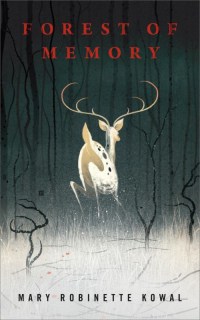
 An intriguing, thought-provoking near-future story
Katya deals in Authenticities and Captures, trading on nostalgia for a past long gone. Her clients are rich and they demand items and experiences with only the finest verifiable provenance. Other people’s lives have value, after all.
But when her A.I. suddenly stops whispering in her ear she finds herself cut off from the grid and loses communication with the rest of the world.
The man who stepped out of the trees while hunting deer cut her off from the cloud, took her A.I. and made her his unwilling guest.
There are no Authenticities or Captures to prove Katya’s story of what happened in the forest. You’ll just have to believe her.
This is the first thing by Mary Robinette Kowal that I’ve ever read. I wasn’t sure what to expect, but I really liked what I found. This won’t be the last thing of Kowal’s that I read.
The synopsis above really tells you everything you need to know about the story — it’s not only short enough that any more detail would spoil everything, but Kowal’s world-building within the text is sparse and sometimes vague. At times, I really wanted to learn more; but for the purposes of the story, it’s actually unnecessary. For example, we never learn any specifics about Katya’s employers, or the motivations of a person she stumbles across in the forest. If we had, then the story might have felt a little bit more substantial, true, but it’s still a satisfying read.
The novella is presented as a typed account by Katya (typos and all), and she has an interesting voice. If you take the purposeful typos out of the equation, this is very well-written, and Kowal’s prose is excellent. Unwittingly, Katya’s writing highlights the complete dependence her society has developed on mobile and networked technology. It’s a nicely-composed critique, perhaps, of today’s ever-increasing addiction to cell phones, tablets, the internet and, especially, social media. There are references to “captures” and feeds, painting a picture of willful, conscious abdication of privacy. The subject is well-presented, and lacks the heavy-handedness of, for example, David Eggers’s The Circle — a novel that practically bludgeons the reader with a critique that borders on technophobia. I’d be interested in reading more fiction in this setting.
If you like your near-future sci-fi thoughtful and thought-provoking, then Forest of Memory is for you. Recommended.
*
Forest of Memory is published by Tor.com next month. For more, check out the author’s website, and follow her on Twitter, Facebook and Goodreads. The author’s next novel is Ghost Talkers, due to be published by Tor Books in July 2016.
 You’re in trouble. On a mission of international importance and life-saving significance that only you can complete, you have been set adrift in space. Your heroic attempt to repair a crucial bit of satellite technology has gone awry, and now you’re drifting further and further away from your buddies — who, you’re convinced, are already preparing their tearful yet stoic remarks to the news media about how you died furthering the cause of space science. What do you do?
 Let’s start with an introduction: Who is S.K. Dunstall?
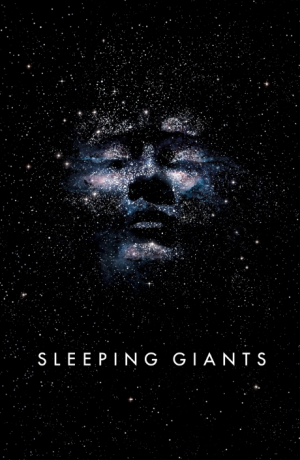 I stumbled across this title on Penguin UK’s website, while looking for information on another book. It caught my eye first because of the interesting cover, but then I read the synopsis and my interest was even more piqued: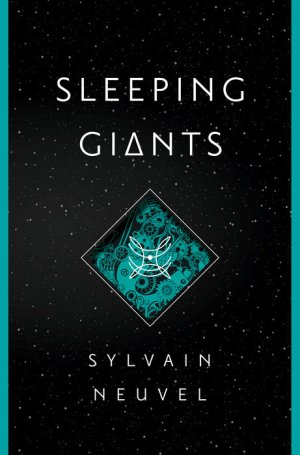
 I first heard of Ken MacLeod‘s Dissidence when browsing Orbit’s catalogue a while back, and it caught my attention because it sounded superb. Today, the publisher
 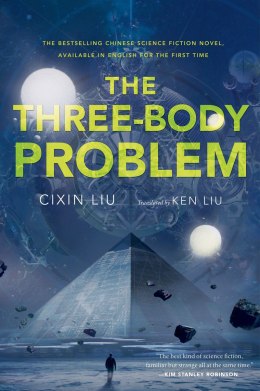 A satisfying start to a Hugo Award-winning Sci-Fi trilogy
 Ok, I already have this, and featured it in a Books Received post a couple months back. But, today Tachyon unveiled that superb new cover, above, for Lavie Tidhar’s highly-anticipated new book,
 One of the most anticipated novels of the year… fizzles
 Let’s start with an introduction: Who is Jacey Bedford?
 Civilian Reader