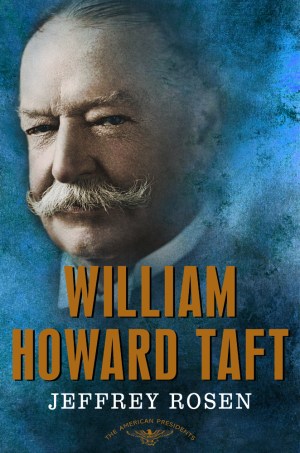
 An excellent, short introduction to the life and career of the 27th president
The only man to serve as president and chief justice, who approached every decision in constitutional terms, defending the Founders’ vision against new populist threats to American democracy
William Howard Taft never wanted to be president and yearned instead to serve as chief justice of the United States. But despite his ambivalence about politics, the former federal judge found success in the executive branch as governor of the Philippines and secretary of war, and he won a resounding victory in the presidential election of 1908 as Theodore Roosevelt’s handpicked successor.
In this provocative assessment, Jeffrey Rosen reveals Taft’s crucial role in shaping how America balances populism against the rule of law. Taft approached each decision as president by asking whether it comported with the Constitution, seeking to put Roosevelt’s activist executive orders on firm legal grounds. But unlike Roosevelt, who thought the president could do anything the Constitution didn’t forbid, Taft insisted he could do only what the Constitution explicitly allowed. This led to a dramatic breach with Roosevelt in the historic election of 1912, which Taft viewed as a crusade to defend the Constitution against the demagogic populism of Roosevelt and Woodrow Wilson.
Nine years later, Taft achieved his lifelong dream when President Warren Harding appointed him chief justice, and during his years on the Court he promoted consensus among the justices and transformed the judiciary into a modern, fully equal branch. Though he had chafed in the White House as a judicial president, he thrived as a presidential chief justice.
William Howard Taft is one of the lesser-known presidents. For many, if he is known at all, it is due to the fact that he was quite large. It’s unfortunate that his story has been boiled down into a punch-line. A life-long Republican who was enamoured with the Constitution and those who crafted it, he spent his career judiciously adhering to what he saw as the tenets laid down by the Founding Fathers. He was meticulous, he was extremely intelligent and well-read. He placed principle above party at almost all times. In his contribution to the excellent American Presidents Series, Rosen gives readers a very good, short and engaging introduction to Taft’s life and career. Continue reading
 As the author of Team of Rivals and other fantastic history books, Doris Kearns Goodwin needs little introduction. This year, Goodwin’s latest book will be published by Simon & Schuster: Leadership in Turbulent Times. The title is pretty self-explanatory, and the book draws from the presidencies of four men she is most familiar with: Abraham Lincoln (
 Political intrigue and machinations surrounding a SCOTUS nomination. And a killer looking for revenge…
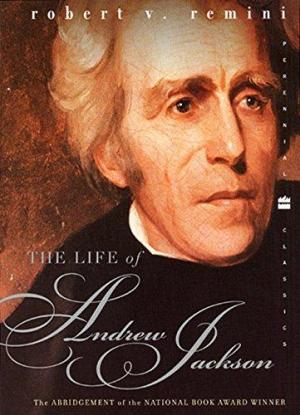 A very useful, infuriating single-volume biography of the seventh president
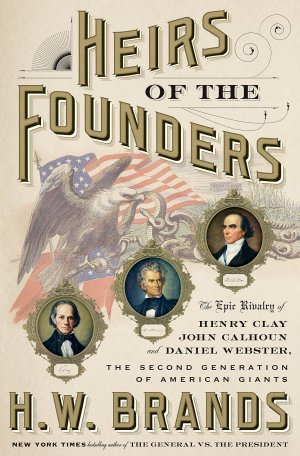 In H.W. Brands‘s latest book, the acclaimed historian turns his attention to the three men whose political careers had lasting impact on the United States after the Founding generation had left the stage: Henry Clay, John Calhoun and Daniel Webster. (Sort of — they were all active during some of the founding administrations, but they outlasted them all.) As contemporary politics devolves into horrifying farce, there has rarely been a better time in which to revisit the early years of American politics: messy, contentious, often violent, and yet fascinating. Heirs to the Founders is due to be published by
 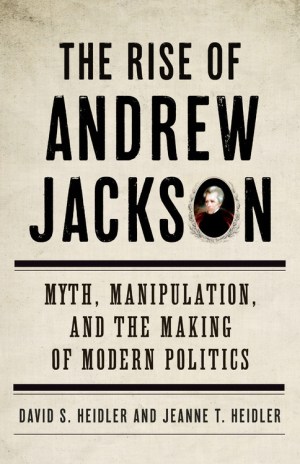 In October,
 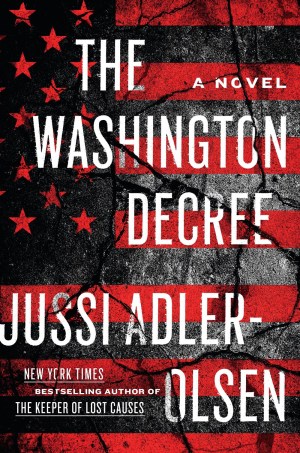 Best known for his Department Q thrillers, Jussi Adler-Olsen‘s next novel is a stand-alone political thriller set in Washington. Tapping into the current political climate in the States, I’m sure this is going to get a lot of attention. Here’s the synopsis…
 So you’re going to be a writer? Awesome. You are never going to please everyone, so own it; the thin-skinned have no business being authors (or auteurs). Words have put the most popular and successful authors on the painful side of a controversy (Sometimes it’s intentional.) That said… keep an open mind to the opinions of critics and friends. If you are going to create fictional scenarios that skirt the edge of mass acceptance, know why you are writing those actions. When George R.R. Martin decided to have brother and sister lovers in Game of Thrones, he was setting up the premise of the entire series. The question of legitimate authority and unraveling of Westeros as a society came out of that relationship. Everything that happens in your story, no matter how taboo, should serve the narrative.
  An interesting novella of future politics and society
