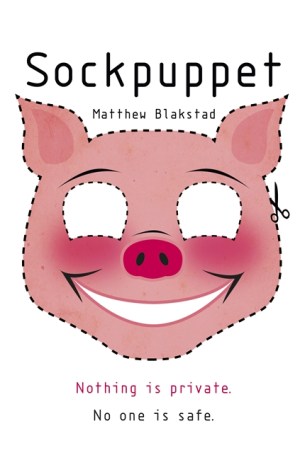
Upcoming: SOCKPUPPET by Matthew Blakstad (Hodder)

BlakstadM-SockpuppetUKThis sounds really good. Society is becoming increasingly dominated by social media. And, with an online society often run amok (see, for example, US political “discussion”, endless misogynist internet trolls, and countless other examples), not to mention ever-more reports of cyber-crimes, maybe Sockpuppet is the novel we need? Here’s the synopsis:
You shared your life online. Now how will you get it back?

Twitter. Facebook. Whatsapp. Google Maps. Every day you share everything about yourself – where you go, what you eat, what you buy, what you think – online. Sometimes you do it on purpose. Usually you do it without even realizing it. At the end of the day, everything from your shoe-size to your credit limit is out there. Your greatest joys, your darkest moments. Your deepest secrets.

If someone wants to know everything about you, all they have to do is look.

But what happens when someone starts spilling state secrets? For politician Bethany Leherer and programmer Danielle Farr, that’s not just an interesting thought-experiment. An online celebrity called sic_girl has started telling the world too much about Bethany and Dani, from their jobs and lives to their most intimate secrets. There’s just one problem: sic_girl doesn’t exist. She’s an construct, a program used to test code. Now Dani and Bethany must race against the clock to find out who’s controlling sic_girl and why… before she destroys the privacy of everyone in the UK.

Matthew Blakstad’s Sockpuppet is published in the UK by Hodder, on May 19th, 2016. For more on the author’s writing and novels, be sure to check out his website, and follow him on Twitter and Goodreads. Check back on May 4th for an interview with the author.

[This is the first of four Hodder Upcoming posts, today.]

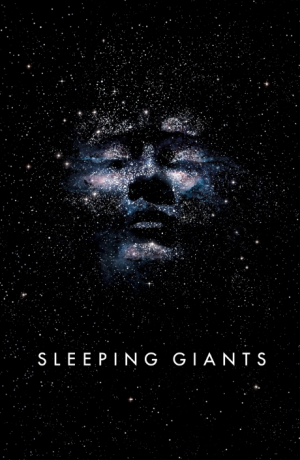
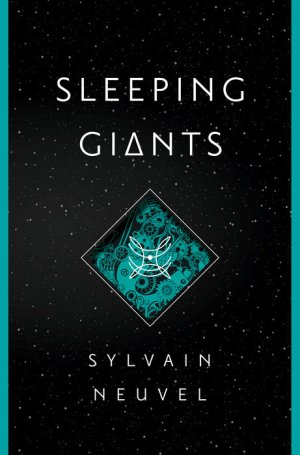
Upcoming: SLEEPING GIANTS by Sylvain Neuvel (Michael Joseph)

NeuvelS-SleepingGiantsUKI stumbled across this title on Penguin UK’s website, while looking for information on another book. It caught my eye first because of the interesting cover, but then I read the synopsis and my interest was even more piqued:
Deadwood, USA. A girl sneaks out just before dark to ride her new bike. Suddenly, the ground disappears beneath her. Waking up at the bottom of a deep pit, she sees an emergency rescue team above her. The people looking down see something far stranger…

“We always look forward. We never look back.”

That girl grows up to be Dr. Rose Franklyn, a brilliant scientist and the leading world expert on what she discovered. An enormous, ornate hand made of an exceptionally rare metal, which predates all human civilisation on the continent. 

“But this thing… it’s different. It challenges us. It rewrites history.”

An object whose origins and purpose are perhaps the greatest mystery humanity has ever faced. Solving the secret of where it came from — and how many more parts may be out there — could change life as we know it.

“It dares us to question what we know about ourselves.”

But what if we were meant to find it? And what happens when this vast, global puzzle is complete…?

“About everything.”

My interested grew again when I learned that Neuvel is Canadian — as a recent immigrant, I’m rather keen on discovering more authors from Canada.

Sylvain Neuvel‘s Sleeping Giants, the first in the Themis Files series, is due to be published by Michael Joseph in the UK, on April 7th, 2016; it is due to be published by Del Rey in the US (cover below), on April 26th, 2016.

NeuvelS-SleepingGiantsUS

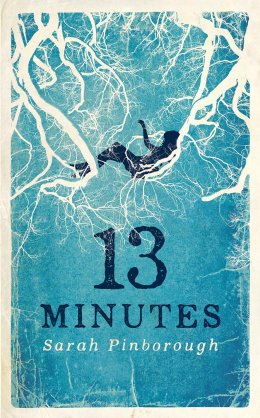
Review: 13 MINUTES by Sarah Pinborough (Gollancz)

PinboroughS-13MinutesUKAn excellent new thriller from one of Britain’s best authors
Natasha was dead for 13 minutes. And it changed her world completely…

I was dead for 13 minutes.

I don’t remember how I ended up in the icy water but I do know this — it wasn’t an accident and I wasn’t suicidal.

They say you should keep your friends close and your enemies closer, but when you’re a teenage girl, it’s hard to tell them apart. My friends love me, I’m sure of it. But that doesn’t mean they didn’t try to kill me. Does it?

13 MINUTES by Sarah Pinborough is a gripping psychological thriller about people, fears, manuiplation and the power of the truth. A stunning read, it questions our relationships — and what we really know about the people closest to us…

Sarah Pinborough’s latest thriller is both an excellent thriller and an insightful examination of what it means to be a teenager in the social media age. It blends these two facets together perfectly, creating one of the first must-read novels of the year. Continue reading

Interview with VAUGHN ENTWISTLE

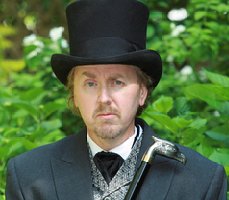
EntwistleV-AuthorPicLet’s start with an introduction: Who is Vaughn Entwistle?

I was born in Weston, Ontario, Canada to British parents, but I grew up in Northern England where the Entwistle tribe hails from.

Later, I lived in Seattle, Washington for close to twenty years (and loved it), but when I landed the book deal my wife and I seized the chance to move back to England. As a writer who specializes in historical fiction (much of which takes place in England) it is much easier to carry out research and actually walk the ground of the places I write about.

Currently, my and wife and I live in the ancient city of Wells in the county of Somerset. Most days I take a break from the keyboard to walk the dog on a route that takes us past the 11th century cathedral, through the market place, and along the moat that surrounds the Bishop’s palace, returning home through Vicar’s Close, the oldest street in Europe with all its medieval houses intact. Wells is a wonderful place for a writer to live. Beyond the obvious history, I find something very calming and deeply spiritual about the place.

Your new novel, The Dead Assassin will be published by Titan Books this month. It’s the second book in the series, The Paranormal Casebooks of Sir Arthur Conan Doyle. What can fans of the first book expect for this new book, and how would you introduce it to new readers?

Fans of the first novel, The Revenant of Thraxton Hall, will find themselves on familiar territory. But as many reviewers have noted, it’s not necessary to have read the first book. I constructed the opening of second novel in such a way that new readers are brought up to speed in just a few paragraphs. That said, anyone expecting a straightforward mystery might be knocked a bit off balance. Both novels feature elements of the paranormal and are written to be funny and scary and slightly over the top. (Reviewers often describe them as “a romp.”) Wilde is there to provide wit and a bon vivant’s skewed outlook on the proceedings, while Conan Doyle’s Holmesian mind keeps the plot anchored in reality. Continue reading

Guest Post/Excerpt: HOUSE OF SHATTERED WINGS by Aliette de Bodard

deBodard-AuthorPicThe Great Houses war is a central part of the book, though by necessity it’s always seen in flashbacks, as it took place sixty years before the events of the novel. It’s left marks on everyone, and of course it has also devastated Paris and given rise to the city in the book, a dystopic place where people cling to the Great Houses as their only source of safety. This scene is one of the strongest reminiscences from Philippe, who actually fought in it.

It also contains what is possibly my favourite lines in the book: the “magicians turned into soldiers… our best men turned into corpses”, which was one of those gifts from the muse: it came straight into the first draft and hasn’t really moved since.

The war. Philippe thought of the clamor of explosions; of huddling in the doorways of ruined buildings, peering at the sky to judge the best moment to rush out; of his lieutenant in House colors, urging them to lay down their lives for the good of the city; of his squad mates buried in nameless graves, on the edge of Place de la République. Ai Linh, who had had a laughter like a donkey, and always shared her biscuits with everyone else; Hoang, who liked to gamble too much; Phuong, who told hair-raising stories in the barracks after all lights had been turned off. “I don’t know what the war was like, inside the Houses,” he said, and it was almost the truth. Continue reading

Guest Post: “My Audiobooks…” by Mark Ellis

EllisM-AuthorPicThe experience of having my first two Frank Merlin books, Princes Gate and Stalin’s Gold, which are set in World War 2 London, turned into audiobooks was very straightforward and enjoyable. Audible, Amazon’s audiobook arm, got in touch with me through my publishers in the latter part of 2014. There are different ways in which audiobooks are published on Audible. Sometimes the book publisher remains the main publisher but is given access to the Audible platform at various levels. Alternatively Audible themselves become the publishers. In my case it was agreed that Audible would buy the audio rights to the books from me and be the publishers. This, I learned, was the best outcome as my audiobooks would then have the full weight and support of the Audible and Amazon organisations behind them. Continue reading

Cover Reveal and Q&A: THE WATCHERS by Neil Spring (Quercus)

watchers.inddOn September 24th, Quercus Books will publish Neil Spring’s THE WATCHERS. To the right you can see the rather excellent cover. Here’s the synopsis:

At the height of the Cold War, officials at the Ministry of Defence conducted a highly secret investigation into unusual events that occurred along a strip of rugged coastline within the Pembrokeshire National Park nicknamed ‘The Broad Haven Triangle’.

The events made national headlines: lights and objects hovering in the sky, ghostly figures peering into farmhouse windows, cowering animals, and poltergeists plaguing a terrified family of witnesses.

Thirty years later, official files pertaining to these occurrences were finally released for public scrutiny at the National Archives. The disclosure prompted a new witness to come forward to speak of what he knew. His testimony rocked the very foundations of the British Government.

This is his story.

As a bonus, JFB have provided a quick Q&A with Neil. Read on for more about the novel, Neil’s writing and more… Continue reading

An Interview with ALISON GAYLIN

GaylinA-AuthorPicLet’s start with an introduction: Who is Alison Gaylin?

Hmm, I’m still trying to figure that one out.  For the purposes of this blog, I am a suspense writer and reader of all sorts of things.

Your next novel, Stay With Me, the third in your Brenna Spector Trilogy, is due to be published in June by Harper. How would you introduce the novel to a new reader? What can fans of the series expect?

Stay With Me is the third book in the Brenna Spector suspense series, and the culmination of what readers of the series would know as the “Clea Trilogy.” Brenna is a private investigator blessed – and cursed – with hyperthymesia (perfect autobiographical memory.) It makes her pretty great at her job, but it wreaks havoc on her relationships with others. (How can you forgive and forget when you can never forget?) She specializes in missing persons cases, but the one missing person she’s never been able to find is her older sister Clea, who got into a blue car 28 years ago when she was 17, never to appear again. That event triggered Brenna’s hyperthymesia at the age of 11 and has haunted her ever since. In Stay With Me, Brenna’s life is turned upside down when her 13-year-old daughter, Maya, disappears. Also in the book, the mystery of Clea – which plays a major role in the first two books, And She Was and Into the Dark – is finally solved. Continue reading

An Interview with GEOFFREY GUDGION

GudgionG-SaxonsBane

Let’s start with an introduction: Geoff Gudgion?

In one paragraph; I was a scholarship boy who was never bright enough to realise I’d have been happier as a writer than a businessman. Until, that is, I had a spectacular row with my boss and stepped off the corporate ladder. Long before that epiphany, I left school at 17 to join the Royal Navy, who later sponsored me to read Geography at Cambridge University. Both experiences were formative in teaching me to string words together.

Your debut novel, Saxon’s Bane, is published by Solaris. How would you introduce the novel to a potential reader? Is it part of a series?

Saxon’s Bane is a thriller with a supernatural twist; past and present collide during the excavation of a Saxon warrior’s grave. The writing challenge, and the fun, was to interweave the present day with a Dark Ages legend, and to bring the two stories together in a plausible climax. Although it’s not part of a series, the main characters will probably reappear in a future book. There’s a fey, fit archaeologist who develops a preternatural understanding of her project. Her character has, ahem, legs.

GudgionG-SaxonsBane

What inspired you to write the novel? And where do you draw your inspiration from in general?

I’ve always been fascinated by the history hidden in the landscape, ever since a crusty old professor at university showed me how to analyse English place names. “Allingley,” he might have said, waving a chalk-dusted arm and breathing a whiff of college port, “Saxon name. Aegl-ingas-leah, the clearing of Aegl’s people.” So I took the Saxon legend of Aegl, the warrior, and his love Olrun, the Swan Maiden, and set the Saxon’s Bane in the village of Allingley, on the banks of the Swanbourne.

Inspiration? It can come from anywhere. That sense of otherness you find in ancient woodland. A mossy ring of standing stones. A church. And just the odd glass of red wine.

Tolkien-LOTR-1-TheFellowshipOfTheRingHow were you introduced to genre fiction?

Tolkien! As a child, I devoured Lord of the Rings. I didn’t end up writing epic fantasy, but Middle Earth was the first believable fantasy world I encountered. I was enchanted!

How do you enjoy being a writer and working within the publishing industry? Do you have any specific working, writing, researching practices?

I love being a writer. I’m living the dream, but I’d say I’m still learning about the publishing industry, and about how to stand out from the crowd. It’s a bit like opening a door, thinking you’re joining a party in a room, only to find yourself in the middle of a football stadium where everyone is shouting.

I tend to write early, and research late in the day. I built an arbour in my garden, which is a wonderfully peaceful and productive place to write, when the weather’s good. It’s also out of reach of the Wi-Fi, so there are fewer distractions! If I have to work indoors, I play a recording of birdsong in my study. I find that helps to tune the brain into a creative space.

When did you realize you wanted to be an author, and what was your first foray into writing? Do you still look back on it fondly?

GudgionG-AuthorPicWhen I found I actually enjoyed English homework at school! I made my first attempts at writing a book during long deployments in warships. Those attempts were dire, and I cringe at their memory. The first piece of writing that made me proud was a short story, “Muse”, which won the Get Writing Conference prize in 2011. It’s on my web site.

What’s your opinion of the genre today, and where do you see your work fitting into it?

I think I’m too new to have an opinion about the genre, particularly when I think genre labels are too confining in any case. They seem to be designed for the publishing machine’s convenience rather than the readers’ benefit.

In terms of where I fit, I’m incredibly honoured when reviewers compare me to Robert Holdstock or Alan Garner. Last week Saxon’s Bane was described as “Good old fashioned mythic stuff; Wicker Man by way of John Fowles,” and I can live with that!

What other projects are you working on, and what do you have currently in the pipeline?

I’m about 80,000 words into a time-slip historical novel, also with a supernatural twist, which is set on a crumbling country estate that has been in the same family for over 600 years. In the 14th Century, the founder of the dynasty swears a terrible oath; in the present day his descendants have forgotten the oath, but perhaps the oath has not forgotten them…

What are you reading at the moment (fiction, non-fiction)?

My last book was Chocolat by Joanne Harris. I love her gentle way of weaving mystery and a little magic into the real world. I’m currently reading Bring Up The Bodies by Hilary Mantel. After that, I’m going to immerse myself into the 14th Century with Chaucer’s Canterbury Tales and Ian Mortimer’s brilliant Time Traveller’s Guide to Medieval England.

Gudgion-Reading

What’s something readers might be surprised to learn about you?

I’m a bit of a lunatic on horseback. A good friend lets me ride a horse that I’ve known and loved for years. I can get stale staring at a screen, and the adrenalin-fuelled madness of a gallop, or the surge and soar over a jump, is the perfect antidote.

What are you most looking forward to in the next twelve months?

Seeing Saxon’s Bane take off, I hope. Then finishing the next book to a standard where it’s accepted by my agent (Ian Drury at Sheil Land). And within twelve months? Who knows, it’s not impossible for that book to be acquired by a publisher. My head is starting to buzz with ideas for the book that will follow, and I’d like those to be thoroughly fleshed out by this time next year, and taking shape on paper. No pressure, then.

Guest Post: “Don’t Build Worlds on Your Doorstep” by Geoff Gudgion

GudgionG-SaxonsBaneEvery novelist, in every genre, builds worlds. Mine aren’t on a distant galaxy but close to home, perhaps a little too close to home. I like to ground the reader in a world that they’ll recognise, then tilt the board slightly so that as the menace emerges they think, “This could happen to me.” It seems, though, that not everyone is happy with this twisting of rules they hold dear.

In Saxon’s Bane, I started by creating an English village that could trace is foundation to a Saxon warlord, Aegl. Back then, there were deer and boar to hunt in the woods, fresh water in the stream, and the ground would be fertile. It was a place for Aegl to ground his spear and plant his generations. Allingley was founded.

“Where is Allingley?” I’m sometimes asked. Readers seem to finish the book knowing the place, and want to go there. They’re disappointed when I tell them it’s imaginary. World-building comes easier to me, you see, when I take elements that I know and blend them into something fresh. The scent of an otherness, for example, in the depths of an ancient wood. Even the old language is recognisable in the traces of Anglo-Saxon that linger in modern English. Allingley would have been Aegl-ingas-leah in Anglo-Saxon, the clearing of Aegl’s people. I can also borrow from established legend, in this case the warrior Aegl or Egil and his wife Olrun, the Swan Maiden. I brought their story to life in this sleepy village on the banks of the Swanbourne, where, nearly one and a half millennia later, the peat-preserved body of a ritually-slaughtered Saxon warrior is uncovered.

World-building from legend and folklore also allows me to weave threads of reality or literature into the plot, for example the Old Norse epic poem Hávamál, when the God Odin talks of the power of runes:

Ef ek sé a tré uppi váfa virgilná,
Svá ek rist ok i rúnum fák,
At sá gengr gumi ok mælir viđ mik.

If I see a corpse hanging in a tree
I can carve and colour the runes
So that the man can walk and talk with me.

Runes are a rich source material, both as script and faith-laden symbols. I’m not a pagan, but I’ve always been fascinated by the old faiths, when people lived close to their gods, at one with nature rather than being given dominion over nature. I created a character in Saxon’s Bane, a fresh-faced, bright-eyed young pagan woman, who is part of a tradition of healers that has survived in this remote area despite the witch-finding pogroms of King James. I think by the end of the book I was a little in love with her. I researched pagan traditions and crafted a belief system around her that I called the ‘Old Way’. She is a counterbalance to an archaeologist who becomes obsessed with her project, and who doubts her sanity as she struggles to reconcile her academic discipline with her growing, preternatural understanding. Their story unfolds through the eyes of a car crash survivor, a man on his own journey to healing, who does not know whether what he saw at the edge of death was real or a product of his own traumatised mind.

So far, so good. My world-building rang true. I had a location, I had characters, I had the catalyst for a plot. I could start to bring the Dark Ages to life in present-day England, but always keeping to my principle of plausibility; a car that crashes as it swerves to avoid a stag, for example, and the discovery of a stag tattoo on the peat-preserved forehead of the Saxon warrior.

I find there’s a risk in making worlds too plausible. If you write on the principle of letting the reader think ‘that could be me’, it’s a short step to the reader thinking ‘that is me’. There’s a character in the book who finds the ‘Old Way’ too mild, and who experiments with some seriously nasty ideas of his own. As the past begins to echo in the present, he comes to believe in his own power and slides from reprobate to psychopath. All too plausible, apparently, for one practicing Wiccan. There’s an emotional rant on Goodreads from someone who is “nauseated” at the suggestion that any follower of the Horned God could be anything other than sweetness and light.

Oops. It seems I’ve blundered across someone else’s world. Perhaps I’d better start building a little further away. Gallifrey, for example. It might be safer. Meanwhile, I’ll send this off to Civilian Reader before I’m turned into a frog.

*  *  *

Geoff Gudgion is the author of SAXON’S BANE, published by Solaris Books. Here’s the synopsis, to whet your appetite further…

Fergus’ world changes forever the day his car crashes near the remote village of Allingley. Traumatised by his near-death experience, he stays to work at the local stables as he recovers from his injuries. He will discover a gentler pace of life, fall in love – and be targeted for human sacrifice.

Clare Harvey’s life will never be the same either. The young archaeologist’s dream find – the peat-preserved body of a Saxon warrior – is giving her nightmares. She can tell that the warrior was ritually murdered, and that the partial skeleton lying nearby is that of a young woman. and their tragic story is unfolding in her head every time she goes to sleep. Fergus discovers that his crash is linked to the excavation, and that the countryside harbours some dark secrets. as Clare’s investigation reveals the full horror of a Dark age war crime, Fergus and Clare seem destined to share the Saxon couple’s bloody fate.