 Like a great many people, I grew up fascinated by dinosaurs. I loved reading about them, and also playing with my set of unpainted, hard-plastic dinosaur toys. (My grandfather collected special coupons from his Weetabix boxes for months before sending off for the set. Probably my happiest childhood memories of him.) There seems to be a bit of a resurgence in dino-interest in publishing — for example, Steve Brusatte’s The Rise and Fall of the Dinosaurs was recently released to much fanfare (I’ll be reading it pretty soon). Also, in movies, we have the incredible success of Jurassic World and its sequel, which will no doubt be a blockbuster success as well. This September, Hachette will release Paige Williams’s debut non-fiction book, The Dinosaur Artist. It sounds really interesting:
The first time Eric Prokopi saw T. bataar bones he was impressed. The enormous skull and teeth betrayed the apex predator’s close relation to the storied Tyrannosaurus rex, the most famous animal that ever lived. Prokopi’s obsession with fossils had begun decades earlier, when he was a Florida boy scouring for shark teeth and Ice Age remnants, and it had continued as he built a thriving business hunting, preparing, and selling specimens to avid collectors and private museums around the world. To scientists’ fury and dismay, there was big money to be made in certain corners of the fossil trade. Prokopi didn’t consider himself merely a businessman, though. He also thought of himself as a vital part of paleontology — as one of the lesser-known artistic links in bringing prehistoric creatures back to life — and saw nothing wrong with turning a profit in the process.
Bone hunting was expensive, risky, controversial work, and he increasingly needed bigger “scores.” By the time he acquired a largely complete skeleton of T. bataar and restored it in his workshop, he was highly leveraged and drawing quiet scorn from peers who worried that by bringing such a big, beautiful Mongolian dinosaur to market he would tarnish the entire trade. Presenting the skeleton for sale at a major auction house in New York City, he was relieved to see the bidding start at nearly $1 million — only to fall apart when the president of Mongolia unexpectedly stepped in to question the specimen’s origins and demand its return. An international custody battle ensued, shining new light on the black market for dinosaur fossils, the angst of scientists who fear for their field, and the precarious political tensions in post-Communist Mongolia. The Prokopi case, unprecedented in American jurisprudence, continues to reverberate throughout the intersecting worlds of paleontology, museums, art, and geopolitics.
In this gorgeous nonfiction debut, Williams uncovers an untold story that spans continents, cultures, and millennia as she grapples with the questions of who we are, how we got here, and who, ultimately, owns the past.
The Dinosaur Artist is due to be published in North America and in the UK by Hachette.
 As the author of Team of Rivals and other fantastic history books, Doris Kearns Goodwin needs little introduction. This year, Goodwin’s latest book will be published by Simon & Schuster: Leadership in Turbulent Times. The title is pretty self-explanatory, and the book draws from the presidencies of four men she is most familiar with: Abraham Lincoln (
 A very useful, infuriating single-volume biography of the seventh president
 In H.W. Brands‘s latest book, the acclaimed historian turns his attention to the three men whose political careers had lasting impact on the United States after the Founding generation had left the stage: Henry Clay, John Calhoun and Daniel Webster. (Sort of — they were all active during some of the founding administrations, but they outlasted them all.) As contemporary politics devolves into horrifying farce, there has rarely been a better time in which to revisit the early years of American politics: messy, contentious, often violent, and yet fascinating. Heirs to the Founders is due to be published by
  In October,
  Jill Lepore is one of my favourite historians. Ever since discovering her work in the
  I’ve only recently started to read Paul French‘s books. I’ve been aware of his stuff for a long while, but this past Christmas I went on a Penguin China Special reading-binge, which meant I finally read two of French’s titles:
  This is the first novel in David Mack’s Dark Arts series, and I’m really looking forward to giving it a try. I think I’ve only read one other (urban) fantasy set during one of the World Wars — Andy Remic’s very good
 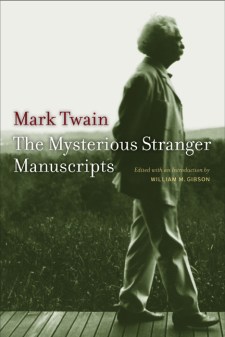 In an 1895 notebook, Samuel Clemens (who you might better know by his pen name: Mark Twain) wrote,
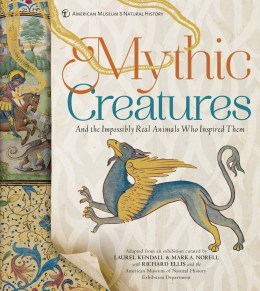 MYTHIC CREATURES: AND THE IMPOSSIBLY REAL ANIMALS WHO INSPIRED THEM by Laurel Kendall & Mark A. Norell, w. Richard Ellis
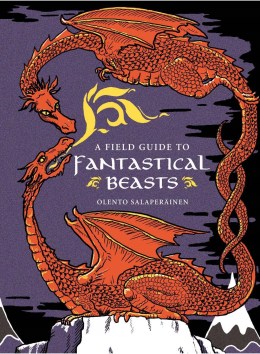 A FIELD GUIDE TO FANTASTICAL BEASTS by Olento Salaperäinen
