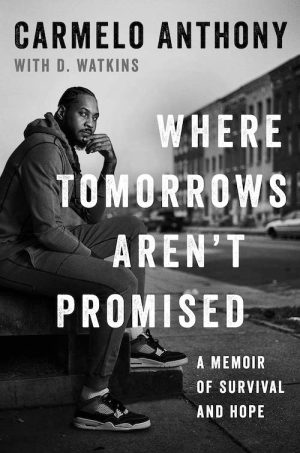
 An interesting memoir about family, struggle, and basketball
A raw and inspirational memoir about growing up in the housing projects of Red Hook and Baltimore — a brutal world Where Tomorrows Aren’t Promised.
For a long time, Carmelo Anthony’s world wasn’t any larger than the view of the hoopers and hustlers he watched from the side window of his family’s first-floor project apartment in Red Hook, Brooklyn. He couldn’t dream any bigger than emulating his older brothers and cousin, much less going on to become a basketball champion on the world stage.
He faced palpable dangers growing up in the housing projects in Red Hook and West Baltimore’s Murphy Homes (a.k.a. Murder Homes, subject of HBO’s The Wire). He navigated an education system that ignored, exploited, or ostracized him. He suffered the untimely deaths of his closely held loved ones. He struggled to survive physically and emotionally. But with the strength of family and the guidance of key mentors on the streets and on the court, he pushed past lethal odds to endure and thrive.
By the time Carmelo found himself at the NBA Draft at Madison Square Garden in 2003 preparing to embark on his legendary career, he wondered: How did a kid who’d had so many hopes, dreams, and expectations beaten out of him by a world of violence, poverty, and racism make it here at all?
Carmelo’s story is one of perseverance and determination; of dribbling past players bigger and tougher than him, while also weaving around vial caps and needles strewn across the court; where dealers and junkies lined one side of the asphalt and kids playing jacks and Double Dutch lined the other; where rims had no nets, and you better not call a foul — a place Where Tomorrows Aren’t Promised.
I didn’t know that much about Carmelo Anthony before reading Where Tomorrows Aren’t Promised. As someone who follows the NBA, I’d of course heard his name and that he was a star. In January 2020, shortly before the pandemic rolled in, he snatched victory away from the Toronto Raptors in the last live game I saw. (It was a superb, albeit frustrating, shot.) So, when I had the opportunity to read his new memoir, I jumped at the chance. And I’m glad I did — this wasn’t the memoir I was expecting, but it it is an excellent glimpse into the mind and early life of a basketball All-Star. Continue reading
 A timely, illuminating, necessary, but strangely limited book
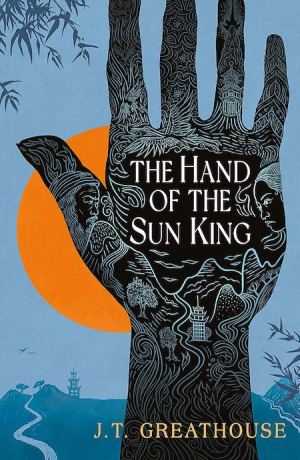 Today, we have an excerpt from The Hand of the Sun King — J. T. Greathouse‘s debut fantasy novel, and the first in the Pact & Pattern series. Pitched as perfect for fans of
  Next month, Head of Zeus are due to publish The Silence of Scheherazade by Defne Suman, a historical novel set at the beginning of the 20th century. Along with that eye-catching cover, it sounds really interesting, too. Here’s the synopsis:
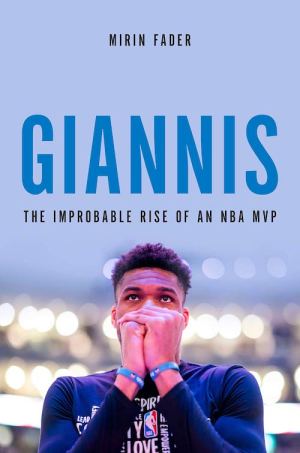 The Improbable Rise of an NBA MVP
  Welcome
  It is impossible to ignore the influence of social media. In the years since Facebook and Twitter, in particular, have exploded onto our browsers and mobile devices, many millions have found themselves spending more and more time watching their feeds update. “Doomscrolling” became a common word during the Trump years. Social media has connected us with people across the world with shared interests and hobbies. In too-many instances, it has also allowed the worst aspects of human nature to flourish. In Social Warming, Charles Arthur takes a deep dive into the ways in which social media has changed the world and today we have an excerpt for you. First, though, here’s the synopsis:
 Today, we have an annotated excerpt from Bradley P. Beaulieu‘s A Desert Torn Asunder — the final book in the author’s Song of the Shattered Sands series. Before we get to that, though, here’s the official synopsis for the novel:
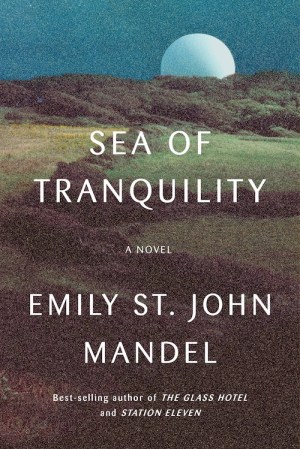 Like many people, I thoroughly enjoyed Emily St. John Mandel‘s 2014 novel,
 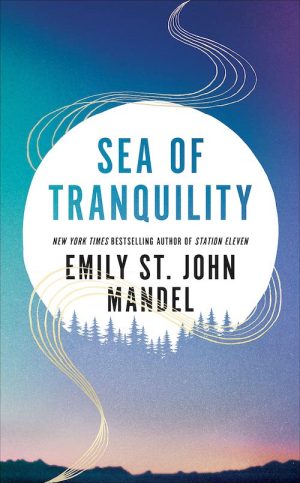 Two centuries later a famous writer named Olive Llewellyn is on a book tour. She’s traveling all over Earth, but her home is the second moon colony, a place of white stone, spired towers, and artificial beauty. Within the text of Olive’s bestselling pandemic novel lies a strange passage: a man plays his violin for change in the echoing corridor of an airship terminal as the trees of a forest rise around him.
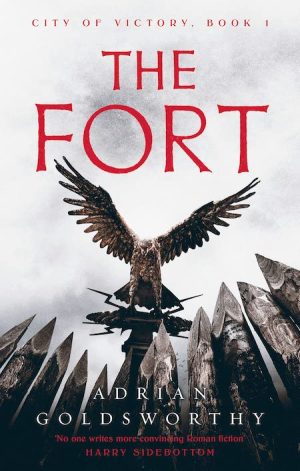 I have always loved history, was lucky enough to study it at the highest level, and after teaching for a while have been even luckier to make a living writing non fiction history books. At the same time, I have always loved historical novels. At their best they give a flavour and feel for a place and an era much faster than reading conventional history. So when I came to write historical novels, accuracy was very important to me. A novel will only work if readers get caught up in the plot and want to spend time with the characters, but the world it conjures up has to feel real, at least on its own terms, and that is as true of fantasy or science fiction as it is for stories set in the past. The world of the story has to be convincing enough for readers to visit it in their imagination. Many readers and authors do not care too much if that world bears little or no relation to the reality of the past as long as it is consistent. That is fine, after all, reading should be about pleasure and we all have different tastes. However, I am a professional historian and find it hard to switch off, which makes me an unrepresentative reader, and I only stick with a novel if I feel that the research behind it and the author’s sensitivity for the period are good. Since, like most authors, I write books – whether novels or non fiction – that I would like to read, that is how I try to write my stories. So each novel begins with research.
  Civilian Reader