Interview with ALISON LITTLEWOOD

LittlewoodA-AuthorPicLet’s start with an introduction: Who is Alison Littlewood?

Ah, the hardest question of all… I’m a probably slightly odd person who writes probably slightly odd books! I’ve been writing dark fantasy and horror for several years now, and was lucky enough a while back to get a three-book deal from Jo Fletcher Books at Quercus. A Cold Season was picked for the Richard and Judy book club, and it went from there.

Your next novel, The Unquiet House, is due to be published by Jo Fletcher Books in April 2014. How would you introduce the novel to a new reader?

It’s a ghost story set in a rather dour Yorkshire house, following the fates of different generations of the same family. There are sections set in the present day as well as the seventies and the thirties, which each shed light on each other. It’s probably the oddest of my odd books, and in a way it’s perhaps best to read it knowing nothing at all, so I will leave it at that…!

LittlewoodA-UnquietHouseUK

What inspired you to write the novel, and where do you draw your inspiration from in general?

The first thing that made me want to write a haunted house story was seeing the house! The one in the story is based on an actual place, one that looked rather forbidding, but which I fell in love with a little bit too. I find that locations can be incredibly inspirational – some places just seem to sing to me. This house sang very, very loudly, though it wasn’t long before parts of other places I’d seen found their way into the book too: a bench with a strange carving on the back, a cupboard with nothing but an old suit hanging inside… they came together and started to have an impact on the plot. Researching the different historical periods was inspiring too, bringing new influences to bear.

Excerpt: The Unquiet House

How were you introduced to reading and genre fiction? What about horror in particular attracts you – in terms of reading and writing?

When I was younger I read anything and everything I could lay my hands on. It was only after I started writing that I began to focus more on genre fiction. My first exposure to writing horror came with a BBC writing competition, and once I’d tried it, I just found that darker ideas, those around the mysteries in life and death and somewhere in between, were the ones that got my fingers tingling. I find it an exciting genre; it looks at the big questions, the ones we’ll never be able to quite explain, and yet it seems that continuing to ask them is an integral part of being human.

How do you enjoy being a writer and working within the publishing industry?

I can’t really imagine doing anything else! I got made redundant from my regular job in the same week as I got a publishing contract, so it all came together at just the right time. It’s great to be able to concentrate on what I love. Of course, it feels a little different writing a novel when you know someone’s waiting for it at the end of the line, but then I’ve always been fairly disciplined about getting the words down. The main difference is that I know I can’t just write a novel and stick it away in a dusty file any more – someone’s actually going to read it! That’s rewarding but kind of scary at the same time.

LittlewoodA-ColdSeason&PathOfNeedles

Do you have any specific working, writing, researching practices?

Not really – I always start the day with a long walk, mainly because I have a big and energetic dog who would scratch the walls down if I didn’t, but now it feels natural to blow away the cobwebs before I sit down to work. I used to have a nice ergonomic desk and chair, but these days I tend to be on the sofa with my laptop and the dog curled up next to me trying to rest his head on my keyboard.

When did you realize you wanted to be an author, and what was your first foray into writing? Do you still look back on it fondly?

I think deep down it’s something I’ve always wanted, mainly because I fell in love with books when I was a child, but I didn’t try it for a long time because I’d built it up to be something that other people did. I eventually forced myself to join a local writing course, just to get started, and I remember being so nervous I could hardly get the top off my pen! After that, though, I had the bug; I knew I wouldn’t stop.

What’s your opinion of the genre today, and where do you see your work fitting into it?

I think the horror genre is bigger and wider and more imaginative than people believe. Many people unfortunately have their perception shaped by horror films of the slasher variety. Horror novels do look at fear and death, but they tend to do it in much more depth and with greater sensitivity. In many ways, they’re really about love: how do we deal with losing the people and things we care about? It’s a part of life, and the novels we often define as horror are a response to that. When I started out, I felt I was on the fringe of horror, because my books are more about psychological chills than blood and guts, but now I better understand the breadth of work going on in the genre, I’m happy to call myself a part of it.

What other projects are you working on, and what do you have currently in the pipeline?

I’m working on the first draft of my next novel – a return to some dark territory, in line with the soul-snatching theme of A Cold Season. I’m also busy editing a script, along with a writer friend and a film-maker, for a potential short to be filmed this year. I’m also working on some short stories on the theme of feathers – I always find it surprising how often birds crop up in my work – for a slightly different project, a combination of mini short story collection and art book, in collaboration with an illustrator friend.

What are you reading at the moment (fiction, non-fiction)?

I’m reading The Uninvited by Liz Jensen – it’s intriguing, with a wonderful main character and a sense of the world being out of joint, with the folkloric meeting quantum physics and the modern world. I’m completely hooked. I don’t always have non-fiction on the go but I’m also reading Gossip from the Forest by Sarah Maitland, all about the tangled roots of forests and fairy tales. I find fairy tales and folklore completely fascinating. There’s something about that little possibility of magic in the world that is a part of the horror genre too.

LittlewoodA-Reading

What’s something readers might be surprised to learn about you?

I really don’t know! What people usually find surprising about me is that I’m a writer, and more so that I write horror fiction. There’s that ‘oh, but you seem nice’ reaction, as if horror writers are all like the monster in the closet rather than the kid hiding under the bed. It’s that slasher movie perception rearing its ugly head again!

What are you most looking forward to in the next twelve months?

Hopefully moving house, mainly because I’ll be getting a bigger library. I have the shelves all planned out; the rest of the move, not so much. One track mind, me…?

Interview with SARAH LOTZ

SarahLotz-AuthorPicLet’s start with an introduction: Who is Sarah Lotz?

I’m a genre-crossing pulp-fiction writer based in South Africa. I’m addicted to coffee and collaborating, and write horror novels with author Louis Greenberg under the name S.L Grey; a ‘choose-your-own’ erotica series with authors Helen Moffett and Paige Nick (as Helena S. Paige), and a YA series co-written with my daughter under the name Lily Herne.

Your next novel, The Three, is due to be published by Hodder in May. How would you introduce the novel to a new reader?

I’m tempted to say it’s about plane crashes and (possibly) evil children – but I hope there is more to it than that! Here’s a brief description:

Four devastating plane crashes. Three child survivors. A fanatic who insists the survivors are possessed by the harbingers of the apocalypse. What if he’s right?

I’m fascinated by how quickly fear and paranoia can spread throughout society – especially during the aftermath of a devastating event – and the novel attempts to explore how this could potentially influence the political landscape. Continue reading

Review: THE THREE by Sarah Lotz (Hodder)

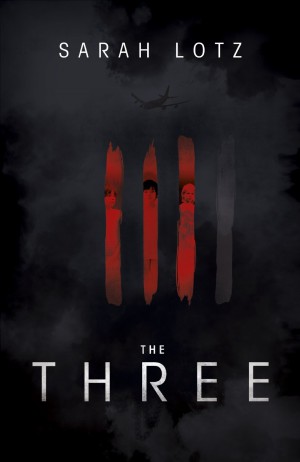
LotzS-TheThreeA brilliant thriller. A must-read. And one of my new favourite books.

“They’re here… The boy. The boy watch the boy watch the dead people oh Lordy there’s so many… They’re coming for me now. We’re all going soon. All of us. Pastor Len warn them that the boy he’s not to­­—”

The last words of Pamela May Donald (1961-2012)

Black Thursday. The day that will never be forgotten. The day that four passenger planes crash, at almost exactly the same moment, at four different points around the globe.

There are only four survivors. Three are children, who emerge from the wreckage seemingly unhurt. But they are not unchanged.

And the fourth is Pamela May Donald, who lives just long enough to record a voice message on her phone.

A message that will change the world.

The message is a warning.

This wasn’t what I was expecting. I think I saw a positive comment from Lauren Beukes on Twitter, but other than that, didn’t know too much about it. So it was with great anticipation that I started reading it. And I loved it. It’s unusual, brilliantly written and expertly constructed, utterly gripping, frequently chilling, and always fascinating. It’s also really difficult to review, but very easy to praise. Continue reading

Excerpt: “The Unquiet House” by Alison Littlewood (Jo Fletcher Books)

Alison Littlewood’s latest novel, THE UNQUIET HOUSE, is due to be published in the UK by Jo Fletcher Books on April 24, 2014. Here, for your reading pleasure, is an excerpt…

LittlewoodA-UnquietHouseUKChapter Seven

Emma didn’t know when the house had changed. She had been sleeping, but when she awoke she had a sense that she had been listening to it all along, or if not listening, sensing it with her body, finding its rhythm, attuning herself to its ways.

She pushed the covers away, feeling too hot under them, but outside, the air was bitter. There was a sharp barrier between the two and once she’d crossed it, it was too late; the chill delved inside, embracing her skin, furrowing along her body, finding her spine, her legs, her feet. The room was dark, everything grainy and silver. The ceiling looked a long way off and the corners were dark, as if a child had sketched the room in stark black lines. She sat up and realised that the cupboard door was hanging open once more. How ridiculous, she thought. Monsters in the cupboard, like in a story. And then she saw the man standing quietly next to it.

He was half-dressed. He had hunched shoulders and a stocky body and slightly bowed legs, and she opened her mouth but the only sound she could make was a dry gasp. He didn’t move but she knew that he was watching her. She couldn’t see his eyes but she could just make out his rumpled vest and then she knew: the suit was his – he had come looking for it but he wouldn’t find it because she had thrown it away. Now he’d come to see where it was and instead, he had found her.

Her hands flexed. She could feel the tainted material on her skin, that shiny-musty fabric. She could see again the way she’d thrown it down in disgust, just as if it wasn’t wanted, wasn’t needed any longer.

You’re being fanciful, Emma.

She took a deep breath. She was in a strange house and there was nothing there, only an unfamiliar room full of shadows. But he was there. He didn’t move but continued to stand there, and she could feel his gaze on her, though she still couldn’t see his eyes. She could sense the hostility in his look. She became conscious of the cold on her own face, a bone-deep cold. She was alone, and for a moment that was the worst thing of all. She didn’t know why she had come here, but then she remembered Charlie, sleeping at the other end of the house. He would banish this thing. He’d grin at her and laugh, his very presence denying the possibility of its existence.

Panic took her and she pushed herself to her feet and ran, hoping – hoping – that the man wouldn’t stretch out his arm and grasp her shoulder as she passed. Then she was in the corridor and heading for Charlie’s room. The worn carpet was no protection from the hard boards beneath and her steps rang out loudly. She banged on the door, and the moment she did, she felt ridiculous. If she was so scared, why didn’t she just go in? There were no locks on the doors, nothing to stop her. And if she wasn’t, why was she at his door?

He opened it, his face full of concern. She reached for his arm and started to cry. She wanted to be held and yet a part of her didn’t want to touch him, this stranger in a strange house – in her house. Then he opened the door wider and put a hand on her arm and brought her out of the corridor, drawing her inside.

Charlie didn’t switch on the light but a slanting glow lit the room anyway and she realised his room didn’t have any curtains. There was nothing to shut out the moon which shone down, silvering the ancient carpet and the mound of his makeshift bed. She hugged herself. What must he think of her?

But he didn’t touch her. He took a step back and waited. She no longer knew what she was going to say. She was no longer sure she’d seen anything at all.

‘What is it?’ he asked at last. ‘A bad dream?’

‘No. I woke up. I thought – I thought I saw someone in my room.’

He turned towards the door. ‘There’s someone in the house? Now? All right, I’ll go and check. Have you heard him moving about – do you think he’s still in your room? Should we call someone?’

Instinctively she grabbed his arm. She felt cool skin, the roughness of his hair, and she realised he was wearing only T-shirt and shorts. He must be freezing. ‘No, don’t – I don’t think— that wasn’t it, Charlie. No one’s broken in. At least, I don’t think they have. I— it’s hard to explain, but it didn’t feel like that.’

He frowned. ‘What do you mean? Did you dream it, Emma, or should I go looking?’

She paused. ‘No, I didn’t dream it.’ Her voice faltered. ‘He was real. I saw someone. I felt him looking back at me. I had to go straight past him to get out of the room. I was scared he’d touch me when I went past.’

‘And did he? Did he try to grab you?’

She shook her head. It hadn’t been like that, not someone who could grab and hold on. But someone trying to touch her would have been bad enough. She just wasn’t sure if she’d have felt it as a physical thing, a real thing. Now she didn’t know which would be worse, her feeling it or not feeling it. She reached out for him again. This time it felt more intimate, chosen rather than a reflex. She closed her fingers over his arm. ‘I’m sorry,’ she said. ‘It wasn’t a dream – or I don’t think it was – but it wasn’t real either. I knew he wasn’t real even while he was looking straight at me. Don’t ask me how I knew that. I just knew. He wasn’t there, not like we are, but he was still real.’

He looked at her and she replayed her words in her head, realising how stupid it sounded.

But Charlie didn’t tell her she was being fanciful. He didn’t tell her there was nothing there and he didn’t try to reason with her or name her fear. He simply twisted around so that he was standing at her side and he put his arm around her. After a while he squeezed her shoulders and he said, ‘I’ll go and take a look.’

She couldn’t see his expression as he walked out of the room. His footsteps receded, steady and sure, and there came the faint creak of a door opening and then silence. Emma listened to the sound of her own breathing. She tried to remember if she’d heard him breathing, the man in her room; she didn’t think so. She wasn’t sure what it would mean if she had. She still didn’t think he had been a real person.

After a time she heard footsteps again but they didn’t come back to this room. Instead they faded into another, and then came louder on the landing and then rhythmic on the stairs. After a time the same rhythm sounded, getting louder this time, and before the thought had fully formed in her mind that it might not be Charlie, it might be him, the door swung wide and she saw the outline of Charlie’s hair. He walked in and smiled reassuringly. ‘There’s no one there,’ he said. ‘I had a good look around – I even looked under the bed and in the cupboard, and in the other rooms and downstairs. Unless someone kept slipping into a different room while my back was turned, we’re on our own.’

She took a deep breath. ‘No, I— I didn’t think there would be. Sorry, Charlie.’

He frowned as the words sank in, and he tensed. Now he would say it: There’s nothing there, Emma. You’re just being fanciful. She could already hear the note of contempt that would be in his voice when he said it.

But he didn’t say that. Instead, she heard a low chuckle. ‘Well, you know what this means.’

I’m crazy, she thought. That’s what it means.

‘This house is even more interesting than you thought. It looks as if you’ve got a real live ghost.’

She turned the word over in her mind. Ghost. Had she really thought of it that way? She had only known that the person

in her room had come from somewhere else, that it belonged somewhere else. She hadn’t thought of it as a ghost – she hadn’t thought to name it – but now she couldn’t get the word out of her mind. It didn’t fit with the way she thought of herself. She wasn’t the sort of person who saw ghosts, or even believed in them. She pushed the idea away, something to think about later, and she forced herself to nod at Charlie. She really didn’t want to go back to her room, not now, but she couldn’t stay here.

‘Thank you, Charlie,’ she started. She found she wanted to say something else, to explain the whole thing away perhaps, but tiredness had overtaken her. She didn’t want to think about it, not now. Later maybe, when she couldn’t sleep or when she was alone. Charlie showed her out and she stood in the hallway, looking at the door to her room.

*

She knew her room was empty even before she flicked on the light and it flooded across the dingy floor and into the dusty corners. The cupboard door was open, though she couldn’t see inside. The sense of presence which had been so strong when she’d awakened was gone.

She went to the door, reaching out to push it closed once more, and froze. The suit was back again. It was hanging on its yellowing padded hanger, not pulled awry but straight and neat, the trousers sharply creased around the white shine of the bulked-out knees, the jacket hanging squarely over the top. At once she thought of grabbing the thing and taking it downstairs and throwing it out of the door, but she stopped herself even before the movement began. She didn’t want to feel that fabric on her fingers. Would the owner of the thing still be looking for it? Perhaps she’d feel his hand on her shoulder after all.

But maybe he’d already found it – she had thrown it out, hadn’t she? She’d put it in the bin outside or left it in the drawing room, she wasn’t sure which. It hadn’t been something she’d wanted in the house. He must have come looking for it, and he’d found it and placed it in here. If she was to move it again, she might make everything worse. It might even call him back.

Then a thought struck her and she flushed with heat. Charlie had come in here, hadn’t he? He’d been checking the place, being helpful. And he knew about the suit. More Savile Row, the old man.

He’d been downstairs too, while she hid in his room. Had he found the suit down there and brought it back up with him? The whole thing might have been some kind of joke. Heat spread through her. She’d thought he was helping, that he was being kind, and all the time he’d just been pulling some kind of trick. She frowned. Had she really seen a stranger in her room or had that been only another kind of trick? The kind that meant standing and watching her, in the dark – watching her sleep, maybe?

She shook her head. The suit was still there, in front of her eyes. Tomorrow she would take it outside and banish it forever; it would be gone and so would Charlie and she would get on with all the things she’d planned to do. For now, though, she had no intention of touching it. Let it stay there. She backed away and closed the door, making sure it snicked into place. It wouldn’t open on her again; she didn’t even have to think about it until morning.

She turned, still not liking to have her back to that door, just as if she were a child again, afraid of the monster in the wardrobe, and she got back into bed. The sheets had grown cold and she pulled them up to her shoulders, watching the door as she nestled her head into her pillow. Charlie had comforted her. He had been kind to her, had gone to see what was wrong, looking around the house in the dark and the cold. It couldn’t have been him. She had seen a ghost, for God’s sake. If she accepted that, it wasn’t too much of a step to suppose it could have found its suit and put it back. And that was enough to worry about, without inventing trickery of another kind: without souring the kindness of the one person in her life who appeared to be intent on helping her.

***
Artwork: Ian McDonald’s NECROVILLE (Audible)

McDonald-NecrovilleAUD

Ian McDonald is an author I have always wanted to read, but either never got around to, or I have just not had the chance to get hold of his books. This year, Audible are releasing new audio editions of a handful of his earlier novels (some of which have also been released as eBooks by Open Road Media). One novel of his in particular that I’ve been interested in is Necroville, which was released as an audiobook this week. And I just really liked that new cover (above), which has a certain Cinquo de Maio feel to it – alternatively spooky and groovy. It would make a great rock/metal album cover, too, I think. Here’s the synopsis…

In the Los Angeles ghetto of Necroville, the yearly celebration of the Night of the Dead – where the dead are resurrected through the miracle of nanotechnology and live their second lives as non-citizens – becomes a journey of discovery and revelation for five individuals on the run from their pasts.

With his customary flair for making the bizarre both credible and fascinating, McDonald tosses aside the line of demarcation between living and dead in a story that confronts the central quandary of human existence: the essence of non-being.

Necroville is published by Gollancz in paperback and eBook. In the US, it is Terminal Café for reasons that I cannot fathom.

Mini-Review: “La Santasima” by Teresa Frohock

Frohock-LaSantisimaA brilliant, dark short story from one of my favourite authors.

It’s also a story that any review of length will ruin. It’s timely, incisive and haunting – it is a blending of the supernatural with the ongoing illegal immigration across the US-Mexican borders. Frohock has written a brilliant story that highlights the dangers and issues that those desperate to enter the States will face, as well as the people who will take advantage of and prey on their desperation. At the same time, it is a touching story of family ties.

Here’s the synopsis…

Sebastian’s friend Carlos claims that La Santa Muerte watches over the poor, the ones that the Church abandons. He promises Sebastian that La Santa Muerte will be his patron saint, that she will protect him and grant his wishes.

Death comes for us all. Keep her as your friend.

Sebastian is disappointed as prayer after prayer is rejected by the saint, and he loses faith. One night his sister Lucía joins him, and La Santa Muerte answers their prayer to bring their brother home…

On top of that, the eBook has a great piece by the author at the end, talking about the genesis of the story. If you haven’t read Frohock’s work, yet, you must. Best of all, La Santisima is free on Smashwords!

An Interview with JUSTIN GUSTAINIS

GustainisJ-AuthorPicLet’s start with an introduction: Who is Justin Gustainis?

I’m a college professor living in upstate New York. Writing fiction satisfies my soul (most days, anyway), but it’s my career in academe that pays the bills. At other times in my life, I’ve been a busboy, garment worker, soldier, speech writer and professional bodyguard (which wasn’t as glamorous as it sounds – I never got to meet Whitney Houston, or anyone like her).

Your next novel, Known Devil, was published by Angry Robot Books in February 2014. It is the third novel in your Occult Investigations Series. How would you introduce the series to a new reader, and what can fans of the first two books expect here?

GustainisJ-OI-BadgeFinal-BlogThe series is set in an “alternate” universe, one where supernatural creatures really exist, and everybody knows it – in other words, there’s no “masquerade.” Supernaturals (or “supes,” as they are often known) are accepted as part of human society, which is not to say there aren’t moments of friction. When the friction involves breaking the law, that’s when folks in Scranton, PA, send for my protagonist – Detective Sergeant Stan Markowski of the Scranton Police Department’s Occult Crimes Unit. As Stan says in the beginning of Hard Spell (the first book in the series), “When a vamp puts the bits on an unwilling victim, or some witch casts the wrong kind of spell. That’s when they call me. My name’s Markowski. I carry a badge.”

In supernatural Scranton, the Occult Crimes Unit is kept pretty busy, what with the torture-murder of a wizard, a serial killer who’s targeting vampires, violence on the part of a “human supremacist” group and the distribution of supernatural “snuff films.” But in Known Devil, the shit has really hit the fan.

GustainisJ-OI3-KnownDevil

Supernatural creatures are generally immune to human recreational drugs (apart from goblins, who have demonstrated an unfortunate fondness for crystal meth), but that’s about to change. A new drug called Slide has hit the streets, and it has the power to addict all species of supes. The first indication Stan has of this development is when a couple of junkie elves try to stick up a diner where Stan and his partner are having their coffee break. Things don’t go too well for the elves on that occasion, but Stan finds this new drug very worrisome.

As a direct result of the Slide trade, a war has broken out in the streets between two gangs of vampires. The “family” that controls crime in Scranton wants to keep the drug out, because it has the potential to harm their own kind. But a branch of a powerful Philadelphia gang is trying to muscle in so they can sell the drug, with resulting carnage throughout the city.

And somebody has just blown up Victor Castle, the head of the city’s supe community. Castle had a history of cooperating with the police in matters involving supes, and someone has decided he doesn’t like that. Castle’s likely replacement is a vampire who frequently refers to humans as “walking bloodbags.”

GustainisJ-OI1&2

Then there’s the upcoming municipal election. A well-funded bunch calling itself the Patriot Party has arisen in Scranton, and their platform is dead-set (so to speak) against supes. If the Patriot party wins the election, Stan fears that their anti-supe views will result in a different kind of war in the streets – a war between supes and humans.

What inspired you to write the series? And where do you draw your inspiration from in general?

KoontzD-HauntedEarthMore than thirty years ago, I read a novel called The Haunted Earth by a little-known writer (at the time) named Dean R. Koontz. It’s set in a world where the supernatural is known and accepted, and I think the first chapter had an influence on me, though I didn’t realize it at the time. A vampire, Count Whoever, is in the process of seducing a woman into the joys of sanguinary delights. But, according to a Supreme Court decision, there is a procedure for such matters that he has to follow, securing permission for each seductive act. “May I touch your neck?” “Will you gaze deeply into my eyes?” “Are you aware of the potential dangers to yourself if this process continues?” Unknown to the Count and his lady friend, they are being watched by a private eye and his partner, a talking hellhound. When the Count gets excited and starts skipping steps and cautions, the private detective bursts into the room, crucifix in hand, and banishes the Count into celibacy – for that night, anyway. The rest of the novel veers into something more like science fiction, but that chapter stayed with me for some reason. I think it was the seed that eventually led to the creation of Detective Sergeant Stan Markowski of the Scranton PD’s Occult Crimes Unit.

How were you introduced to reading and genre fiction?

JusticeLeagueOfAmerica-01I read comic books since I was old enough to read (in my case, age four) and followed every superhero there was (of course in those days, there were a lot fewer of them; the first Justice League of America pretty much contained them all). As an adolescent, I moved on to “books for boys.” This included the Hardy Boys, but my friends and I were more into something called the Rick Brant Science Adventures. Then, in eighth grade, I discovered Ian Fleming, Raymond Chandler, and Bram Stoker – all within the same year. The rest, as they say, is history – or at least genre fiction.

How do you enjoy being a writer and working within the publishing industry?

I have had to face the hard truth that writing may be an art, but publishing is a business. And in business they have these things called “deadlines.” Me and deadlines, we don’t always get along so well, sad to say. But I keep trying.

What’s it like, being an author? Is it what you expected? Do you have any specific working, writing, researching practices?

I was explaining to someone (in another interview) recently that like most things, being a published author looks a lot cooler from the outside than it does from the inside. Or, to put it another way, the charm of anything wears off after a while, and it just becomes what you do. Don’t get me wrong – I remember how hard it was to break in. My first novel took a year and a half to write (I have a day job, remember) and then five years to find a publisher. And I’m mindful that there are probably a great many would-be authors who would kill several family members just to be where I am now, career-wise. All I can say to them is, it looks better from a distance, guys. After a while it’s just… work. Of course, then a new book comes out with my name on the cover, and I remember why I started this gig in the first place.

As for my most common writing practice – procrastination. Definitely.

When did you realize you wanted to be an author, and what was your first foray into writing? Do you still look back on it fondly?

In high school, I used to amuse my friends by writing spy “novels” with them as characters. Then, when I was in my mid-twenties, I got it into my head that I could write mystery/crime/suspense stories. I had a few ideas, which I turned into stories that, I realize now, were just awful. I sent them out to the top mystery magazines of the day and waited for the checks to come in the mail. Imagine my surprise to receive nothing but rejection slips. I was an idiot, with no idea about either how to write or how to get published. But I was so disheartened that I didn’t try again for over twenty years. Things worked out a little better, that time.

ButcherJ-DF1-StormFrontUSWhat’s your opinion of the genre today, and where do you see your work fitting into it?

If by “the genre” you mean urban fantasy, I’d have to say that it has far too many good writers in it. If some of them would have the good grace to die, I bet my books would sell a lot better. Curse you, Jim Butcher! I don’t really mean that, of course. Jim Butcher is a guy whose immense talent is matched only by his generosity of spirit. He was very kind to me when I was starting out (the second time, I mean). He gave me encouragement, and even a nice blurb for the cover of my first novel. Jim rocks.

What other projects are you working on, and what do you have currently in the pipeline?

Known Devil is the third novel in a three-book contract, so whether there are any more stories about Stan Markowski depends on the publisher, Angry Robot Books. However, I also write a series for Solaris/Rebellion. It features occult investigator Quincey Morris (descended from the Texan who helped Van Helsing kill Dracula) and his business partner, white witch Libby Chastain. Those guys do operate in a “masquerade,” by the way. They’ve appeared in three novels and two novellas so far, and I’ve got a contract for another novella, which is in progress. There was some Hollywood interest in one of the Morris and Chastain books a while back, but nothing every came of it.

Kadrey-5-KillCityBluesUSWhat are you reading at the moment (fiction, non-fiction)?

I don’t have as much time for leisure reading as I’d like, but I’m three-quarters through Kill City Blues, by Richard Kadrey. I love his Sandman Slim novels (of which this is the latest). James Stark is almost as big a badass as Stan Markowski.

What’s something readers might be surprised to learn about you?

Hmmm. That I once dated a nun? I guess you might say that I wanted to get into the habit.

What are you most looking forward to in the next twelve months?

The start of summer vacation in May. Oh, and no snow for a while – please, God, no more snow.

***

Be sure to check out Justin Gustainis’s website for more information about the author’s work and novels.

Animated Cover for Stephen King’s MR. MERCEDES (Hodder)

I know it hasn’t been very long since I shared the news that Hodder would be publishing two books by Stephen King this year. But, today they unveiled the UK cover for one of the novels – Mr. Mercedes – and to top it off, there is an (slightly) animated version! Which I thought was rather cool. So here it is, in all it’s moody glory…

KingS-MrMercedes

Mr. Mercedes is due to be published by Hodder on June 3rd 2014 in Hardcover and eBook. Here’s the synopsis:

It is a riveting cat-and-mouse suspense thriller about a retired cop and a couple of unlikely allies who race against time to stop a lone killer intent on blowing up thousands.

Retired homicide detective Bill Hodges is haunted by the few cases he left open, and by one in particular: in the pre-dawn hours, hundreds of desperate unemployed people were lined up for a spot at a job fair in a distressed Midwestern city. Without warning, a lone driver ploughed through the crowd in a stolen Mercedes. Eight people were killed, fifteen wounded. The killer escaped.

Months later, on the other side of the city, Bill Hodges gets a letter in the mail, from a man claiming to be the perpetrator. He taunts Hodges with the notion that he will strike again. Hodges wakes up from his depressed and vacant retirement, hell-bent on preventing that from happening. Brady Hartfield lives with his alcoholic mother in the house where he was born. And he is indeed preparing to kill again.

Hodges, with a couple of misfit friends, must apprehend the killer in this high-stakes race against time. Because Brady’s next mission, if it succeeds, will kill or maim hundreds, even thousands. Mr Mercedes is a war between good and evil, from the master of suspense whose insight into the mind of this obsessed, insane killer is chilling and unforgettable.

Upcoming/News: “REVIVAL” and “MR. MERCEDES” by Stephen King (Hodder)

KingStephen-AuthorPicI’m a relative newcomer to Stephen King, but I am certainly a fan of his writing (I’ve read a good amount of his non-fiction already). Last year, I finally read The Shining, and Hodder published its long-awaited sequel, Doctor Sleep. This year, Hodder will be publishing two new novels by King: Mr. Mercedes and Revival.

The latter was just announced on the publisher’s website, so I thought I’d start with that one. Here’s some info:

In a small New England town, over half a century ago, a shadow falls over a small boy playing with his toy soldiers. Jamie Morton looks up to see a striking man, the new minister. Charles Jacobs, along with his beautiful wife, will transform the local church. The men and boys are all a bit in love with Mrs Jacobs; the women and girls feel the same about Reverend Jacobs – including Jamie’s mother and beloved sister, Claire. With Jamie, the Reverend shares a deeper bond based on a secret obsession. When tragedy strikes the Jacobs family, this charismatic preacher curses God, mocks all religious belief, and is banished from the shocked town.

Jamie has demons of his own. Wed to his guitar from the age of 13, he plays in bands across the country, living the nomadic lifestyle of bar-band rock and roll while fleeing from his family’s horrific loss. In his mid-thirties – addicted to heroin, stranded, desperate – Jamie meets Charles Jacobs again, with profound consequences for both men. Their bond becomes a pact beyond even the Devil’s devising, and Jamie discovers that revival has many meanings.

Revival is due to be published by Hodder on November 11th, 2014. No artwork has been unveiled, yet (for either of these titles), but I’ll share them when they become available.

The other novel, Mr. Mercedes, will actually be published before Revival (in June 2014). Here’s the synopsis:

Retired homicide detective Bill Hodges is haunted by the few cases he left open, and by one in particular: in the pre-dawn hours, hundreds of desperate unemployed people were lined up for a spot at a job fair in a distressed Midwestern city. Without warning, a lone driver ploughed through the crowd in a stolen Mercedes. Eight people were killed, fifteen wounded. The killer escaped.

Months later, on the other side of the city, Bill Hodges gets a letter in the mail, from a man claiming to be the perpetrator. He taunts Hodges with the notion that he will strike again. Hodges wakes up from his depressed and vacant retirement, hell-bent on preventing that from happening.

Brady Hartfield lives with his alcoholic mother in the house where he was born. And he is indeed preparing to kill again.

Hodges, with a couple of misfit friends, must apprehend the killer in this high-stakes race against time. Because Brady’s next mission, if it succeeds, will kill or maim hundreds, even thousands.

Mr Mercedes is a war between good and evil, from the master of suspense whose insight into the mind of this obsessed, insane killer is chilling and unforgettable.

Teaser: Guillermo del Toro & Chuck Hogan’s THE STRAIN (TV)

The teaser trailer for upcoming TV adaptation of Guillermo del Toro and Chuck Hogan’s The Strain was unveiled by FX during the Super Bowl. Here it is: