Guest Post: “Five Old British Ways of Predicting the Future” by Aliya Whiteley

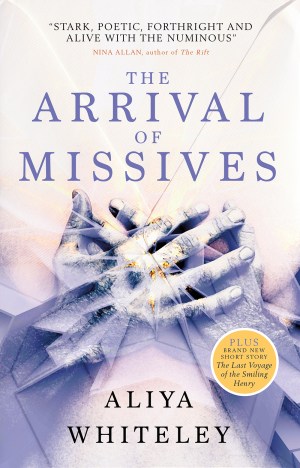
WhiteleyA-ArrivalOfMissivesUSWe never know what’s going to happen in the future, but that’s never stopped us from guessing.

In my novel The Arrival of Missives, Shirley Fearna teenage girl, is infatuated with her teacher. He served as a soldier during World War I and now keeps himself apart from the locals of the small English village where he lives. As Shirley tries harder to become part of his life, she discovers he has a secret. He believes that he is being shown the future. His method of predicting events to come is too unusual to spoil here, so instead here are a few other traditional British methods of predicting the future: Continue reading

Guest Post: “Grimdark or Grimheart?” by Peter McLean

McLeanP-AuthorPicHi Stefan, thanks for having me back on Civilian Reader!
Last time I was here I was talking with you about my Urban Fantasy books and you asked what might be next, and I said,

“The majority of what I actually read for pleasure is secondary world fantasy, and I’ve always wanted to write a brutal Conan-esque Grimdark swords-and-swearing adventure story so that may see the light of day eventually.”

Well, it sort of did see the light of day.

And yet, at the same time, it sort of didn’t. I did write a brutal secondary world fantasy novel, and that’s Priest of Bones which is out on October 2nd from Ace. But it’s not quite what I had in mind when I originally answered that question three years ago. Continue reading

Guest Post: “The Final Chapter of the Bowers Files” by Steven James

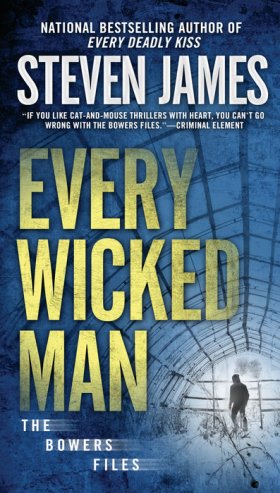
JamesS-BF11-EveryWickedManUSIt was 2005 and I was a frustrated wannabe novelist.
I’d been wanting to write a thriller for years, but every time I started one, I found that my story wasn’t as fresh and original as I needed it to be. I was about ready to give up.

Then one day, while researching investigative techniques, I stumbled across an article about geospatial investigation, a little known, cutting-edge way of analyzing the timing, location, and progression of serial crimes that the FBI was starting to use.

It was unique, different, and perfect for my story. Everything began to click and FBI Special Agent Patrick Bowers was born.

The Pawn released in 2007 and my life would never be the same again.

Since each book takes me around a year to research and write, chronicling Patrick’s adventures and cases has been a labor of love for more than a decade.

And now, with the release of the eleventh and final book, Every Wicked Man, the long-running series is coming to an end and it’s come time to say goodbye to my old friend. Continue reading

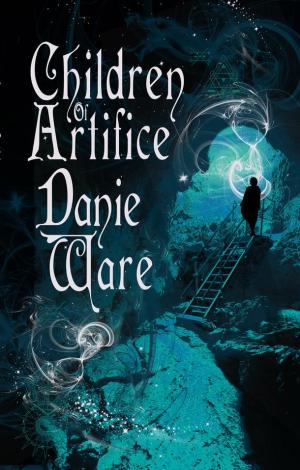
Guest Post & Excerpt: CHILDREN OF ARTIFICE by Danie Ware

WareD-ArtificePROTEUS: THE MAN WITH NO FACE

Getting a character right can be tough. The concept is great — you know what you want them to do, feel, say — but somehow, you’re still struggling. And then, one day, the lights come suddenly on…

The “Man With No Face” has fascinated me for years. The actor, with no history or personality or name of their own, who can just assume any role necessary. And not just about the physical form (a la Mystique), but about assuming/creating the mental processes and emotions — becoming someone else completely. To me, it ties in with the “Gray Man” theory of urban espionage/survival; they’re the infiltrator who can hide in plain sight, so you’d never know they were there.

It’s a great concept — and it comes with so many questions. Where did they come from? How did they end up that way? Would they have a default setting? How would they train? And what about their emotional growth — they must be able to feel and understand the full range of human emotions, but also be able change them or switch them off when necessary. So how does that work? Continue reading

Guest Post: “The Books That Made Me” by R.S. Ford

All writers are influenced by stories, be they in TV, film, novels, comics, etc. Nowadays you can throw video games in there for good measure. Influence comes from all sorts of sources, but here’s a list of what influenced me the most when I was but a wee whippersnapper:

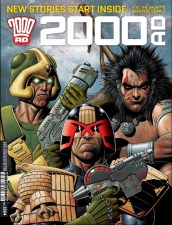
2000AD19242000AD

The first reading material I ever consumed voraciously, this seminal British comic gave us such classics as Judge Dredd, Rogue Trooper, Sláine and Strontium Dog. It’s only since I’ve matured that I’ve realise all these characters were basically the same bloke – a hard-bitten future cop/future soldier/bounty hunter/celtic warrior that roams the land, violently being violent to other more violent villains. Obviously, 2000AD also gave us the ahead-of-its-time Halo Jones and the post-modern Zenith, but seven-year-old me was rather too young to appreciate them at the time. Continue reading

Guest Post: “Plotting the Perfect Murder” by Steve Cavanagh

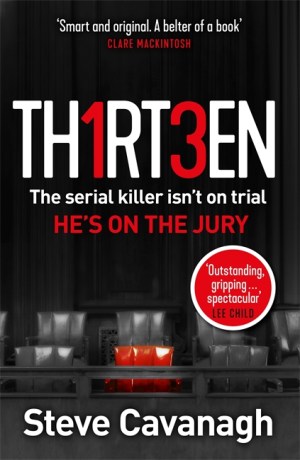
CavanaghS-ThirteenUKI get a lot of compliments about the plotting in my books. I’ve been lucky, in that way. And yet every single piece of praise about the plot of Thirteen, or any of the other Eddie Flynn books makes me feel like a fraud.
Now, let’s be serious here. I’m also a writer, and that means I love it when people enjoy the books and when they say nice things. Keep those compliments coming. And the nice Amazon reviews. I like those too. I may feel like a fraud, but I’m willing to forego my feelings for event the faintest praise.

What I really mean is I don’t know how to plot a novel. I have no clue. In my mind plotting means colour-coded flash cards, whiteboards with all the names of the characters written large with arrows flowing between them, an outline, a beat sheet, a corkboard covered in Post-It notes, pages in a journal with notes for every character, a line graph showing the five-act structure, a detailed plan of the book with every scene sketched out from beginning to end.

I don’t do any of that. I can’t. See, told you I was a fraud. Continue reading

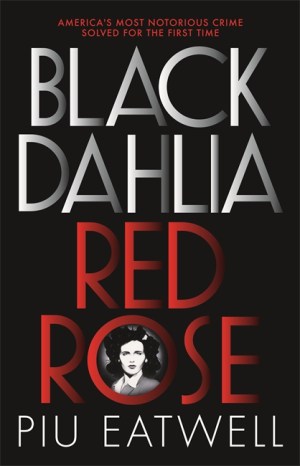
Excerpt: BLACK DAHLIA, RED ROSE by Piu Eatwell (Coronet)

EatwellP-BlackDahliaRedRoseUKPiu Eatwell’s latest book is a narrative history of the notorious Black Dahlia murder in Los Angeles. The inspiration for a number of novels and movies, it’s an interesting new account of the murder that gripped the headlines. Here’s the synopsis:
On 15th January 1947, the naked, dismembered body of a black-haired beauty, Elizabeth Short, was discovered lying next to a pavement in a Hollywood suburb. She was quickly nicknamed The Black Dahlia.

The homicide inquiry that followed consumed Los Angeles for years and the authorities blew millions of dollars of resources on an investigation that threw up dozens of suspects. But it never was solved.

Until now.

In this ground-breaking book, Piu Eatwell reveals compelling forensic and eye witness evidence for the first time, which finally points to the identity of the murderer. The case was immortalised in James Ellroy’s famous novel based on the case, in Kenneth Anger’s Hollywood Babylon and Brian de Palma’s movie The Black Dahlia.

This is a dark tale of sex, manipulation, obsession, psychopathy and one of the biggest police cover ups in history.

Now, read on for an excerpt from the first chapter…

Continue reading

Guest Post: “Writing a Trilogy — Lessons Learned” by Tom Doyle

DoyleT-AuthorPicThe final book in my American Craft trilogy, War and Craft, has just been released. It’s like sending the last kid to college — bittersweet emotion with a practical “so now what?” Before I move on to my next project, I’d like to share with you a few of my personal observations about the process, particularly if you’re a new writer planning on writing a series.

First lesson: never plan on writing a series.

Yeah, sounds like a joke, but seriously, don’t do it–unless someone has already said that they’re going to pay you for it. When I wrote American Craftsmen, I had intentionally not planned for a series. I recommend this same self-discipline to all new writers — don’t engage in heavier worldbuilding than necessary for something which may never see the light of day. The odds are long against your selling any given book to a publisher, so every minute you spend creating further material in that book’s universe has a high probability of being wasted. The best thing you can do for yourself while trying to sell a book is to start writing a completely different one. Continue reading

Guest Post: “On Theon Greyjoy…” by Mark Alder

AlderM-AuthorPicTheon Greyjoy – do you like him now? Did you ever like him? Will you ever like him?
As a writer, I find Theon by far the most interesting character in Game of Thrones. He illustrates a lot about how to make a character disliked. He also, in his long redemption, illustrates the techniques novelists and screenwriters use to build sympathy in a character.

Theon has had many of these sympathy building techniques applied to him in the course of his redemption, but here’s the thing – up until the very last scenes of the last series of  the Game of Thrones TV series, they simply have not worked.

He’s particularly interesting when compared to another GoT character who has undergone his own redemption – Jaime Lannister.

[Please Note: Spoilers for Game of Thrones!] Continue reading

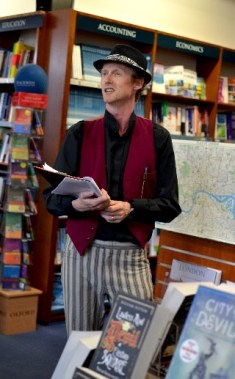
Guest Post: “Bookshop Bliss” by William Sutton

SuttonW-AuthorReadingWriters write alone.

It’s what we do. it’s how we are. But but but… sometimes it is hard. Where better to look for a focal point than your local bookshop?

Here is my paean of praise to Blackwell’s on Soundcloud.

I have always loved bookshops, as much as libraries. I seek them out, whenever I am in a new town. When I hear of a good bookshop, I am much more likely to go to that town.

Can’t I buy online? Sure – but where’s the fun in that? And if we book lovers buy online, there will soon be no bookshops left. Continue reading