 The first Memoir of Lady Trent
You, dear reader, continue at your own risk. It is not for the faint of heart — no more so than the study of dragons itself. But such study offers rewards beyond compare: to stand in a dragon’s presence, even for the briefest of moments — even at the risk of one’s life — is a delight that, once experienced, can never be forgotten…
All the world, from Scirland to the farthest reaches of Eriga, know Isabella, Lady Trent, to be the world’s preeminent dragon naturalist. She is the remarkable woman who brought the study of dragons out of the misty shadows of myth and misunderstanding into the clear light of modern science. But before she became the illustrious figure we know today, there was a bookish young woman whose passion for learning, natural history, and, yes, dragons defied the stifling conventions of her day.
Here at last, in her own words, is the true story of a pioneering spirit who risked her reputation, her prospects, and her fragile flesh and bone to satisfy her scientific curiosity; of how she sought true love and happiness despite her lamentable eccentricities; and of her thrilling expedition to the perilous mountains of Vystrana, where she made the first of many historic discoveries that would change the world forever.
Reviewed by Ryan Frye
A Natural History of Dragons is set in a Victorian-era-esque, male-dominated world where women, particularly those like Isabella (of noble birth) are meant to host teas, plan dinners and keep their interaction with the natural world limited to gardening. Obviously, Isabella wants none of that life and instead yearns to be accepted into the scholarly life as a Natural Historian who studies dragons. As luck would have it, she winds up marrying possibly the one man in all of Scirland who is willing to help her achieve her goals. Through her husband’s connections, she finagles her way into an expedition that is set to study dragons in a far-off land. Upon arrival, they are attacked by one of the region’s dragons, (attacks of this sort are a rare occurrence), and from there, the expedition continuously veers away from its original purpose. Continue reading →
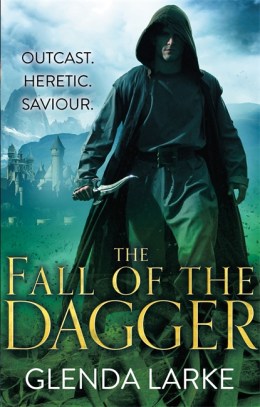 The Forsaken Lands Concludes
 In Prophecy’s Ruin, book one of the Broken Well trilogy, a child is prophesied to be born on a dark and stormy night (of course) who will end the age-old battle between the forces of shadow and light. Pardon me, but YAAAAAAAAAAAWN. We’ve all heard this shit a hundred times before.
 I’ve started writing the third book in my fantasy trilogy, and it is a very strange experience.
 I was a teenager when I walked through my first snowfield. The snow was artificial, of course. It was winter in Australia and the snow machines sat on the side of the fields, like fallen barrels.
 I got an email a few weeks ago from a young man just graduating from college, an aspiring writer, who wanted to know which careers I thought might be most conducive to the writing life. I suspect the answer might be Fire Lookout. Or maybe Monk. Professional Writer seems promising, at least at first glance, but turns out to entail all kinds of stuff that’s not actually writing.
 Writing a fantasy series is a strange and daunting process. Over the course of transforming a single book into a series, I personally realized that rather than planning a whole series in advance, there were some basic things I could include that would allow a series to create itself.
 Sometime in 2009 I was asked to write a science fiction story for
  You’re in trouble. On a mission of international importance and life-saving significance that only you can complete, you have been set adrift in space. Your heroic attempt to repair a crucial bit of satellite technology has gone awry, and now you’re drifting further and further away from your buddies — who, you’re convinced, are already preparing their tearful yet stoic remarks to the news media about how you died furthering the cause of space science. What do you do?
 I ran a workshop at a convention last year on world building. It would be accurate to say that it was a section of a world building workshop I’ve been running for several years, because whenever I set out a bunch of topics, I generally manage about a third of them before we get hung up on something, and the rest never gets touched.
 Civilian Reader