Recent Acquisitions (March)…

BooksReceived-201403-1

Another incredible couple of weeks for review copies.

Featuring: Charles L. Adler, Octavia E. Butler, James S.A. Corey, Charlie Fletcher, Christopher Fowler, Sally Green, John Gwynne, Duncan Jepson, K.V. Johansen, David Levithan & Andrea Cremer, Peter Higgins, Alison Littlewood, Adrian McKinty, Gail Z. Martin, Deborah Meyler, Pat Mills & Tony Skinner, D.J. Molles, Claire North, Stephanie Saulter, Jon Sprunk, Martin Windrow

Adler-WizardsAliensStarshipsCharles L. Adler, Wizards, Aliens and Starships (Princeton)

From teleportation and space elevators to alien contact and interstellar travel, science fiction and fantasy writers have come up with some brilliant and innovative ideas. Yet how plausible are these ideas – for instance, could Mr. Weasley’s flying car in the Harry Potter books really exist? Which concepts might actually happen, and which ones wouldn’t work at all? Wizards, Aliens, and Starships delves into the most extraordinary details in science fiction and fantasy – such as time warps, shape changing, rocket launches, and illumination by floating candle – and shows readers the physics and math behind the phenomena.

With simple mathematical models, and in most cases using no more than high school algebra, Charles Adler ranges across a plethora of remarkable imaginings, from the works of Ursula K. Le Guin to Star Trek and Avatar, to explore what might become reality. Adler explains why fantasy in the Harry Potter and Dresden Files novels cannot adhere strictly to scientific laws, and when magic might make scientific sense in the muggle world. He examines space travel and wonders why it isn’t cheaper and more common today. Adler also discusses exoplanets and how the search for alien life has shifted from radio communications to space-based telescopes. He concludes by investigating the future survival of humanity and other intelligent races. Throughout, he cites an abundance of science fiction and fantasy authors, and includes concise descriptions of stories as well as an appendix on Newton’s laws of motion.

Wizards, Aliens, and Starships will speak to anyone wanting to know about the correct – and incorrect – science of science fiction and fantasy.

I requested this on a whim. Princeton University Press publishes some of the best history, politics and mathematics books, and I’ve been an eager reader of as much of their catalogue as I can manage. I’m a little behind on my reviews, though. This book bridges two of my interests: SFF and science. Naturally, I figured it would be a good fit for CR, and I hope to get to it very soon. I’ve dipped in already, and it’s pretty good.

*

ButlerO-KindredUKOctavia E. Butler, Kindred (Headline)

A modern black woman is transported to 19th century Maryland, where she faces the cruel realities of slavery.

On her 26th birthday, Dana and her husband are moving into their apartment when she starts to feel dizzy. She falls to her knees, nauseous. Then the world falls away.

She finds herself at the edge of a green wood by a vast river. A child is screaming. Wading into the water, she pulls him to safety, only to find herself face to face with a very old looking rifle, in the hands of the boy’s father. She’s terrified. The next thing she knows she’s back in her apartment, soaking wet. It’s the most terrifying experience of her life… until it happens again.

The longer Dana spends in 19th century Maryland – a very dangerous place for a black woman – the more aware she is that her life might be over before it’s even begun.

A classic of the genre, by one of the greats. I’ve long wanted to read something by Butler, and with this arrival, I really have no excuse. Sounds really intriguing, too. (Headline have acquired UK rights for a number of Butler’s titles, and I hope to read and review as many as I can.)

*

Corey-SW-HonorAmongThievesJames S.A. Corey, Star Wars: Honor Among Thieves (Century)

When the Empire threatens the galaxy’s new hope, will Han, Luke, and Leia become its last chance?

When the mission is to extract a high-level rebel spy from the very heart of the Empire, Leia Organa knows the best man for the job is Han Solo — something the princess and the smuggler can finally agree on. After all, for a guy who broke into an Imperial cell block and helped destroy the Death Star, the assignment sounds simple enough.

But when Han locates the brash rebel agent, Scarlet Hark, she’s determined to stay behind enemy lines. A pirate plans to sell a cache of stolen secrets that the Empire would destroy entire worlds to protect — including the planet where Leia is currently meeting with rebel sympathizers. Scarlet wants to track down the thief and steal the bounty herself, and Han has no choice but to go along if he’s to keep everyone involved from getting themselves killed. From teeming city streets to a lethal jungle to a trap-filled alien temple, Han, Chewbacca, Leia, and their daring new comrade confront one ambush, double cross, and firestorm after another as they try to keep crucial intel out of Imperial hands.

But even with the crack support of Luke Skywalker’s X-Wing squadron, the Alliance heroes may be hopelessly outgunned in their final battle for the highest of stakes: the power to liberate the galaxy from tyranny or ensure the Empire’s reign of darkness forever.

I’ve been struggling with recent Star Wars fiction. After reading a number of their long series (18 books, then two nine-book series), I’m struggling to maintain much enthusiasm. I recently tried the previous novel in this series (Razor’s Edge) and… well, it didn’t click with me at all. Having already read and enjoyed Corey’s Leviathan a couple years back, I’m hoping that this book is better.

*

FletcherC-Oversight2014Charlie Fletcher, The Oversight (Orbit)

Only five still guard the borders between the worlds.Only five hold back what waits on the other side.

Once the Oversight, the secret society that policed the lines between the mundane and the magic, counted hundreds of brave souls among its members. Now their numbers can be counted on a single hand.

When a vagabond brings a screaming girl to the Oversight’s London headquarters, it seems their hopes for a new recruit will be fulfilled – but the girl is a trap.

As the borders between this world and the next begin to break down, murders erupt across the city, the Oversight are torn viciously apart, and their enemies close in for the final blow.

This gothic fantasy from Charlie Fletcher (the Stoneheart trilogy) spins a tale of witch-hunters, supra-naturalists, mirror-walkers and magicians. Meet the Oversight, and remember: when they fall, so do we all.

I know very little about this. Could it be the next Ben Aaronovitch? We shall see. I’m excited to give it a go.

*

FowlerC-B&M11-BleedingHeartChristopher Fowler, Bryant & May: The Bleeding Heart (Doubleday)

It’s a fresh start for the Met’s oddest investigation team, the Peculiar Crimes Unit.

Their first case involves two teenagers who see a dead man rising from his grave in a London park. And if that’s not alarming enough, one of them is killed in a hit and run accident. Stranger still, in the moments between when he was last seen alive and found dead on the pavement, someone has changed his shirt…

Much to his frustration, Arthur Bryant is not allowed to investigate. Instead, he has been tasked with finding out how someone could have stolen the ravens from the Tower of London. All seven birds have vanished from one of the most secure fortresses in the city. And, as the legend has it, when the ravens leave, the nation falls.

Soon it seems death is all around and Bryant and May must confront a group of latter-day bodysnatchers, explore an eerie funeral parlour and unearth the gruesome legend of Bleeding Heart Yard. More graves are desecrated, further deaths occur, and the symbol of the Bleeding Heart seems to turn up everywhere – it’s even discovered hidden in the PCU’s offices. And when Bryant is blindfolded and taken to the headquarters of a secret society, he realises that this case is more complex than even he had imagined, and that everyone is hiding something. The Grim Reaper walks abroad and seems to be stalking him, playing on his fears of premature burial.

Rich in strange characters and steeped in London’s true history, this is Bryant & May’s most peculiar and disturbing case of all.

This is the eleventh book in Fowler’s Bryant & May series. I have read… none of the others. So I’m not sure how quickly I’ll be able to get around to this. Given that it’s a “new beginning”, though, perhaps this is a good place to jump on board? It does sound good, though, and I know others who have read the author’s work and enjoyed it. We’ll see.

*

GreenS-HalfBadPBSally Green, Half Bad (Puffin)

In modern-day England, witches live alongside humans: White witches, who are good; Black witches, who are evil; and fifteen-year-old Nathan, who is both. Nathan’s father is the world’s most powerful and cruel Black witch, and his mother is dead. He is hunted from all sides. Trapped in a cage, beaten and handcuffed, Nathan must escape before his sixteenth birthday, at which point he will receive three gifts from his father and come into his own as a witch — or else he will die. But how can Nathan find his father when his every action is tracked, when there is no one safe to trust — not even family, not even the girl he loves?

There’s been a great deal of buzz surrounding this novel. I’m about halfway through it at the moment, and I have… mixed feelings about it. Full review soon.

*

GwynneJ-2-ValourUKJohn Gwynne, Valour (Tor)

War has erupted in the Banished Lands as the race for power intensifies.

Corban flees his homeland searching for peace, but he soon discovers that there is no haven in the west as the agents of Rhin and roaming bands of giants hound his every step.

Veradis leaves the battleground and rushes to his King’s side. But he has witnessed both combat and betrayal and his duty weighs heavily upon him.

Maquin seeks only revenge, but pirate slavers and the brutal world of pit-fighting stand in his way.

Nathair becomes embroiled in the wars of the west as Queen Rhin marches against King Owain. The need to find the cauldron of the giants drives him on.

Sides are chosen and oaths will be fulfilled or broken in a land where hell has broken loose.

The sequel to Malice (which I still need to read). I’m falling behind on my Big Book Fantasy reading. I’ve been having a hard time finding one that allows me to just sink in and enjoy the long ride. Maybe this one will be the one to snap me out of the rut? Also, as an aside, how bad-ass is this author photo…?

GwynneJ-AuthorPic

*

Higgins-WC2-Truth&FearUKPeter Higgins, Truth and Fear (Gollancz)

Investigator Lom returns to Mirgorod and finds the city in the throes of a crisis. The war against the Archipelago is not going well. Enemy divisions are massing outside the city, air raids are a daily occurrence and the citizens are being conscripted into the desperate defense of the city.

But Lom has other concerns. The police are after him, the mystery of the otherworldly Pollandore remains and the vast Angel is moving, turning all of nature against the city.

But will the horrors of war overtake all their plans?

I enjoyed the first novel in this series, Wolfhound Century, which I read on a bus ride between New York and Boston. The atmospheric, Russian-flavoured thriller was a nice surprise. I am, therefore, eager to see what Higgins has done with this second novel in the series. [The series is published by Orbit Books in the US.]

*

JepsonD-EmperorsOnceMoreDuncan Jepson, Emperors Once More (Quercus)

Hong Kong, August 2017.

On the eve of a crisis summit for world economic leaders, two Chinese Methodist ministers are killed in an apparently motiveless execution in Hong Kong’s financial district. Luck makes Detective Alex Soong one of the first officers at the scene.

Yet Soong begins to suspect his involvement to be more than incidental, and the crime itself more than a senseless assassination: an instinct that is proven correct when Soong is contacted by a mysterious figure, and more massacres follow.

With the eyes of the world’s media fixed on Hong Kong, Soong must race to intercept his tormentor, and thwart a conspiracy born from one of the bloodiest confrontations of China’s past, which now threatens to destroy a fragile world order.

US-China relations. Thriller fiction. Yeah, of course I was going to be interested in this. Hopefully get to this very soon.

*

JohansenJV-LeopardK.V. Johansen, The Leopard (Pyr)

In the days of the first kings in the North, there were seven devils…

Ahjvar, the assassin known as the Leopard, wants only to die, to end the curse that binds him to a life of horror. Although he has no reason to trust the goddess Catairanach or her messenger Deyandara, fugitive heir to a murdered tribal queen, desperation leads him to accept her bargain: if he kills the mad prophet known as the Voice of Marakand, Catairanach will free him of his curse. Accompanying him on his mission is the one person he has let close to him in a lifetime of death, a runaway slave named Ghu. Ahj knows Ghu is far from the half-wit others think him, but in Marakand, the great city where the caravan roads of east and west meet, both will need to face the deepest secrets of their souls, if either is to survive the undying enemies who hunt them and find a way through the darkness that damns the Leopard.

To Marakand, too, come a Northron wanderer and her demon verrbjarn lover, carrying the obsidian sword Lakkariss, a weapon forged by the Old Great Gods to bring their justice to the seven devils who escaped the cold hells so long before.

I haven’t read anything by Johansen, yet. A lot of the other reviewers I respect or share taste with like the author’s work a lot. I really should get myself around to reading at least – it’s the first in a duology (as far as I can tell), set in the same world as Johansen’s previous novels. We’ll see. I’m certainly intrigued.

*

LevithanCremer-InvisibilityDavid Levithan & Andrea Cremer, Invisibility (Puffin)

Stephen has been invisible for practically his whole life — because of a curse his grandfather, a powerful cursecaster, bestowed on Stephen’s mother before Stephen was born. So when Elizabeth moves to Stephen’s NYC apartment building from Minnesota, no one is more surprised than he is that she can see him. A budding romance ensues, and when Stephen confides in Elizabeth about his predicament, the two of them decide to dive headfirst into the secret world of cursecasters and spellseekers to figure out a way to break the curse. But things don’t go as planned, especially when Stephen’s grandfather arrives in town, taking his anger out on everyone he sees. In the end, Elizabeth and Stephen must decide how big of a sacrifice they’re willing to make for Stephen to become visible — because the answer could mean the difference between life and death. At least for Elizabeth.

I’ve never read anything by Levithan (nor anything he’s co-written), but I know a lot of people who have enjoyed everything he’s written. When this arrived (along with Half Bad, above), I was pleasantly surprised. Hopefully soon.

*

LittlewoodA-UnquietHouseUKAlison Littlewood, The Unquiet House (Jo Fletcher Books)

Mire House is dreary, dark, cold and infested with midges. But when Emma Dean inherits it from a distant relation, she immediately feels a sense of belonging.

It isn’t long before Charlie Mitchell, grandson of the original owner, appears claiming that he wants to seek out his family. But Emma suspects he’s more interested in the house than his long-lost relations.

And when she starts seeing ghostly figures, Emma begins to wonder: is Charlie trying to scare her away, or are there darker secrets lurking in the corners of Mire House?

I’m still a relative newbie to horror fiction. You can read an excerpt from The Unquiet House here.

*

McKinty-InTheMorningIllBeGoneAdrian McKinty, In the Morning I’ll Be Gone (Seventh Street Press)

A Catholic cop tracks an IRA master bomber amidst the sectarian violence of the conflict in Northern Ireland

The early 1980s. Belfast. Sean Duffy, a conflicted Catholic cop in the Protestant RUC (Royal Ulster Constabulary), is recruited by MI5 to hunt down Dermot McCann, an IRA master bomber who has made a daring escape from the notorious Maze Prison. In the course of his investigations Sean discovers a woman who may hold the key to Dermot’s whereabouts; she herself wants justice for her daughter who died in mysterious circumstances in a pub locked from the inside. Sean knows that if he can crack the “locked room mystery,” the bigger mystery of Dermot’s whereabouts might be revealed to him as a reward. Meanwhile the clock is ticking down to the Conservative Party Conference in Brighton in 1984, where Mrs. Thatcher is due to give a keynote speech…

I haven’t read anything else by McKinty. This is the third book in the series, so I can’t say that I’m expecting to get around to it anytime soon. This is published in the UK by Serpent’s Tail. If anyone in the UK would like to read and review this for CR, please do get in touch.

*

Martin,GZ-ReignOfAshGail Z. Martin, Reign of Ash (Orbit)

Blaine McFadden survived six years in the brutal Velant prison colony, exiled for murder. When war devastates his homeland of Donderath, it also destroys the intentional magic on which Donderath and its fellow kingdoms rely. Blaine and a small group of fellow exiles return to a lawless wasteland where unrestrained magic storms appear and disappear unpredictably, and monsters roam the ruins.

Yet rumours persist that the seeds of a new magic rest with a dangerous, ancient ritual and a handful of survivors who have disappeared. McFadden resolves to find these survivors and work the ritual, despite the danger, to restore the magic and end the chaos. He rallies a small and desperate army for a last stand, knowing that if they fail, the civilisation of the Ascendant Kingdoms dies with them.

The sequel to Ice Forged, and the second in Martin’s Ascendant Kingdoms series, I’ve had mixed experiences with Martin’s fiction. She’s a great writer, but sometimes the series and stories haven’t quite clicked for me. I have both of the novels in the series, and I intend to give them a try as soon as I can.

Also on CR: Guest Posts – End of the World, After the Apocalypse

*

MeylerD-BookstoreUKDeborah Meyler, The Bookstore (Bloomsbury)

Impressionable and idealistic, Esme Garland is a young British woman who finds herself studying art history in New York. She loves her apartment and is passionate about the city and her boyfriend; her future couldn’t look brighter. Until she finds out that she’s pregnant.

Esme’s boyfriend, Mitchell van Leuven, is old-money rich, handsome, successful, and irretrievably damaged. When he dumps Esme — just before she tries to tell him about the baby — she resolves to manage alone. She will keep the child and her scholarship, while finding a part-time job to make ends meet. But that is easier said than done, especially on a student visa.

The Owl is a shabby, second-hand bookstore on the Upper West Side, an all-day, all-night haven for a colorful crew of characters: handsome and taciturn guitar player Luke; Chester, who hyperventilates at the mention of Lolita; George, the owner, who lives on protein shakes and idealism; and a motley company of the timeless, the tactless, and the homeless. The Owl becomes a nexus of good in a difficult world for Esme — but will it be enough to sustain her? Even when Mitchell, repentant and charming, comes back on the scene?

A rousing celebration of books, of the shops where they are sold, and of the people who work, read, and live in them, The Bookstore is also a story about emotional discovery, the complex choices we all face, and the accidental inspirations that make a life worth the reading.

I spotted this when I was in Canada over Christmas and New Year. I love fiction set in New York, and it’s no secret I’m interested and passionate about books and publishing. So, this could be pretty fantastic. Expect it to feature again soon.

*

AccidentMan-CompletePat Mills & Tony Skinner, The Complete Accident Man (Titan)

As sexy as James Bond, as lethal and discrete as an air bubble to the heart, Mike Fallon is a genius at the art of making assassination look like an unfortunate accident.

The Complete Accident Man collects, for the first time ever, four tales of sex, revenge and violence, written by legendary comics author Pat Mills together with Tony Skinner and artwork by an outstanding selection of international stars!

From the writer of legendary titles Charley’s War, Marshal Law, Nemesis the Warlock and many more, with artwork by a murderer’s row of talent, and a cover by the indomitable Howard Chaykin!

Never read any of this series, but this is a rather handy, great-looking hardcover. I’ll be reading this soon, in between novels.

*

D.J. Molles, The Remaining & Aftermath (Orbit)

MollesDJ-Remaining-1&2UK

In a steel-and-lead-encased bunker 40 feet below the basement level of his house, Captain Lee Harden of the United States Army waits. On the surface, a plague ravages the planet, infecting over 90% of the populace. The bacterium burrows through the brain, destroying all signs of humanity and leaving behind little more than base, prehistoric instincts. The infected turn into hyper-aggressive predators, with an insatiable desire to kill and feed. Some day soon, Captain Harden will have to open the hatch to his bunker, and step out into this new wasteland, to complete his very simple mission: Subvenire Refectus.

To Rescue and Rebuild.

I’m a sucker for zombie-apocalypse fiction. This series sounds pretty fun. Orbit are releasing the four novels in quick succession.

*

NorthC-FirstFifteenLivesOfHarryAugustUKClaire North, The Fifteen Lives of Harry August (Orbit)

The extraordinary journey of one unforgettable character – a story of friendship and betrayal, loyalty and redemption, love and loneliness and the inevitable march of time

Harry August is on his deathbed. Again.

No matter what he does or the decisions he makes, when death comes, Harry always returns to where he began, a child with all the knowledge of a life he has already lived a dozen times before. Nothing ever changes.

Until now.

As Harry nears the end of his eleventh life, a little girl appears at his bedside. “I nearly missed you, Doctor August,” she says. “I need to send a message.”

This is the story of what Harry does next, and what he did before, and how he tries to save a past he cannot change and a future he cannot allow.

This is actually my next-but-one read, I think. Don’t know much about it, but I’m very much intrigued.

*

SaulterS-2-BinaryStephanie Saulter, Binary (Jo Fletcher Books)

When confiscated genestock is stolen out of secure government quarantine, DI Sharon Varsi finds herself on the biggest case of her career… chasing down a clever thief, a mysterious hacker, and the threat of new, black market gemtech.

Zavcka Klist, ruthless industrial enforcer, has reinvented herself. Now the head of Bel’Natur, she wants gem celebrity Aryel Morningstar’s blessing for the company’s revival of infotech – the science that spawned the Syndrome, nearly destroyed mankind, and led to the creation of the gems. With illness in her own family that only a gemtech can cure, Aryel’s in no position to refuse.

As the infotech programme inches towards a breakthrough, Sharon’s investigations lead ever closer to the dark heart of Bel’Natur, the secrets of Aryel Morningstar’s past… and what Zavcka Klist is really after.

I loved Gemsigns – one of my favourite reads of 2013. Naturally, I was very excited when this arrived in the mail. Expect a review very soon.

Also on CR: Excerpt of Gemsigns

*

Sprunk-BE1-BloodAndIronJon Sprunk, Blood and Iron (Pyr)

Set in a richly-imagined world, this action-heavy fantasy epic and series opener is like a sword-and-sorcery Spartacus.

It starts with a shipwreck following a magical storm at sea. Horace, a soldier from the west, had joined the Great Crusade against the heathens of Akeshia after the deaths of his wife and son from plague. When he washes ashore, he finds himself at the mercy of the very people he was sent to kill, who speak a language and have a culture and customs he doesn’t even begin to understand.

Not long after, Horace is pressed into service as a house slave. But this doesn’t last. The Akeshians discover that Horace was a latent sorcerer, and he is catapulted from the chains of a slave to the halls of power in the queen’s court. Together with Jirom, an ex-mercenary and gladiator, and Alyra, a spy in the court, he will seek a path to free himself and the empire’s caste of slaves from a system where every man and woman must pay the price of blood or iron. Before the end, Horace will have paid dearly in both.

Really enjoyed Sprunk’s first two novels in the Shadow series. I have the final book in that trilogy, but it arrived during one of my frequent moves, so it’s in a box somewhere. That’s the only reason I haven’t finished it. He’s a great author, and I’m looking forward to trying this.

Also on CR: Interview with Jon Sprunk, Guest Post; Reviews of Shadow’s Son and Shadow’s Lure

*

WindrowM-OwlWhoLikedSittingOnCaesarMartin Windrow, The Owl Who Liked Sitting on Caesar (Bantam Press)

A moving and informative memoir of life with a much-loved tawny owl.

“Perched on the back of a sunlit chair was something about 9 inches tall and shaped rather like a plump toy penguin with a nose-job. It appeared to be wearing a one-piece knitted jumpsuit of pale grey fluff with brown stitching, complete with an attached balaclava helmet. From the face-hole of the fuzzy balaclava, two big, shiny black eyes gazed up at me trustfully. Kweep, it said quietly. Enchanted, I leant closer. It blinked its furry grey eyelids, then jumped up onto my right shoulder. It felt like a big, warm dandelion head against my cheek, and it smelt like a milky new kitten. Kweep, it repeated, very softly.”

When author Martin Windrow met tawny owlet Mumble, it was love at first sight. Raising her from a fledgling, through adolescence and into her prime years, Windrow recorded every detail of their life together in a south London tower block, and later Sussex. This is the touching, erudite and eccentric story of their 15-year relationship, complete with photographs and illustrations of the beautiful Mumble. Along the way, we are given fascinating insight into the ornithology of owls – from their evolution and biology to their breeding and hunting tactics.

The Owl Who Liked to Sit on Caesar is a witty, quirky and utterly charming account of the companionship between one man and his owl.

This just sounds really endearing and quirky. And I’ve lately been wanting to read some more non-fiction (non-work-related). It’s very high on my priority pile.

*

“Nate in Venice” by Richard Russo (Kindle Single)

RussoR-NateInVeniceA short story from Pulitzer-prize winning author of Empire Falls

After a tragic incident with a student, Nate, a professor at a small New England college, retires from teaching and from life. He ends his self-imposed exile with a tour-group trip to Venice in the company of his overbearing, mostly estranged brother. Nate is unsure he’s equipped for the challenges of human contact, especially the fraternal kind. He tries to play along, keep up, mixing his antidepressants with expensive Chianti, but while navigating the labyrinthine streets of the ancient, sinking city, the past greets him around every corner, even in his dreams: There’s the stricken face of the young woman whose life he may have ruined, and there’s Julian, the older brother who has always derided and discounted him. Is Nate sunk? Is the trip, the chance to fall in love — in fact, his whole existence — merely water under the ponte?

This is only the second thing by Russo that I’ve read. I recently also read (and thoroughly enjoyed) Straight Man, which I hope to review at some point in the near future. I have also acquired his Pulitzer-prize-winning Empire Falls, which is very high on my TBR mountain. When this popped up on Amazon UK’s Kindle Singles page, I thought it would be a great, quick read to fill in a gap between full-length novels. I was not wrong.

The story follows Nate, who has come on this trip with his estranged brother. He is getting on in years, and has fled a strange event related to a student back home. As he tries to figure out why his brother is giving him such a hard time, while also considering his fellow travellers, we get to know what happened to him back home. As it turns out, it’s probably not what you were thinking. I thought it was a real good change from the norm, too. Interesting characters, a quick, engaging plot. What more can one want from a short story? This is, overall, a really well-written bit of fiction, very much focused on the characters.

What drew me to the story was not just because I enjoyed Russo’s novel – although, they do share some elements. I am really drawn to fiction set in or connected with universities. In this case, the protagonist is a professor, and as such the story contains some interesting (and familiar to me) commentary on universities and teaching. For no other reason than they interested me, and because I’ve experienced similar things as both a student and teaching assistant, here are a couple of examples.

First up, that somewhat depressing moment of marking the first round of essays for a class:

“… that first batch of essays was depressingly dismal. Their authors were not stupid — the lively classroom discussions had proved that much — but the writing they produced was breathtakingly incoherent. All their academic lives, they’d been cutting and pasting from the Internet — a phrase here, a sentence there—creating a pastiche of observations linked by little more than general subject matter. Individual sentences, lifted from their original context and plopped down in a foreign one, varied wildly in tone and style. Given a list of transitional phrases — but, rather, on the other hand, while, hence — the essay’s alleged authors would’ve been helpless to choose the one that correctly expressed the relationship between juxtaposed assertions, had such a relationship by chance occurred. Whole paragraphs were maddeningly free of both mistakes and meaning.”

The awkwardness of essay hand-back sessions, when hitherto spoon-fed and pampered students, not as brilliant as their parents have no doubt always told them, realise that completing the assignment is not enough to get an A…

“Handing back student essays, especially the first batch, was invariably an unpleasant duty, marking as it did the end of the academic honeymoon. Here they’d all been getting along so well, pretending to be the best of friends, and now this. A grade. Having briefly imagined that this class would be different, they now understood it wasn’t. Betrayed again.”

And the frustrating reality of students not realising that clarity is oh-so-very-important.

“… students, even the English majors, were content for their meaning to loiter in the shadows of their murky prose, as if clarity were a shared responsibility between writer and reader. His prose workshops flew in the face of their unshakable conviction that the essays they turned in were a private matter between them and him, sort of like therapy or confession.”

Anyway, back to the review. This is a short, well-written and well-constructed short story. Nate in Venice is a great introduction to Russo’s writing and style, and was a very enjoyable read. Very much recommended.

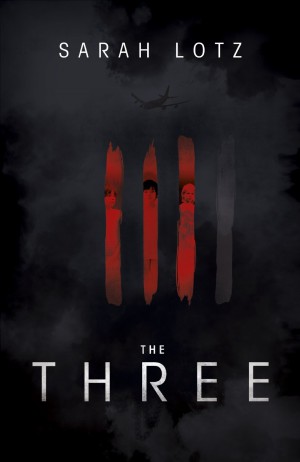
Review: THE THREE by Sarah Lotz (Hodder)

LotzS-TheThreeA brilliant thriller. A must-read. And one of my new favourite books.

“They’re here… The boy. The boy watch the boy watch the dead people oh Lordy there’s so many… They’re coming for me now. We’re all going soon. All of us. Pastor Len warn them that the boy he’s not to­­—”

The last words of Pamela May Donald (1961-2012)

Black Thursday. The day that will never be forgotten. The day that four passenger planes crash, at almost exactly the same moment, at four different points around the globe.

There are only four survivors. Three are children, who emerge from the wreckage seemingly unhurt. But they are not unchanged.

And the fourth is Pamela May Donald, who lives just long enough to record a voice message on her phone.

A message that will change the world.

The message is a warning.

This wasn’t what I was expecting. I think I saw a positive comment from Lauren Beukes on Twitter, but other than that, didn’t know too much about it. So it was with great anticipation that I started reading it. And I loved it. It’s unusual, brilliantly written and expertly constructed, utterly gripping, frequently chilling, and always fascinating. It’s also really difficult to review, but very easy to praise. Continue reading

“The Library of Unrequited Love” by Sophie Divry & Siân Reynolds (trans.) (MacLehose Press)

Divry-TheLibraryOfUnrequitedLoveA peculiar, endearing little book

One morning a librarian finds a reader who has been locked in overnight.

She starts to talk to him, a one-way conversation that soon gathers pace as an outpouring of frustrations, observations and anguishes. Two things shine through: her shy, unrequited passion for a quiet researcher named Martin, and an ardent and absolute love of books.

A delightful flight of fancy for the lonely bookworm in all of us…

What a peculiar little book. The Library of Unrequited Love is a 98-page, stream-of-consciousness, single-paragraph monologue. Ordinarily, such a description would be an automatic turn-off for me. This, however, was a very endearing read.

Someone has been locked in a library over-night, and in the morning an old librarian finds him as she prepares to open up. Rather strangely, instead of being particularly concerned, the librarian goes on a great, long, free-form ramble that covers a broad-range of topic – from libraries, books, librarians-vs.-readers, society, and, of course, Martin (who has attracted her eye and is the emerges-late-in-the-story focus of the title).

Given its extremely brief length, it’s difficult to know how to approach it for a review. Reynolds has done a great job with the translation, and there’s a great flow to the narrative. We really get a sense of the librarian’s character, her biases and tastes. There’s a wealth of information and great commentary, too – especially on the subject of libraries. Here are just a couple of nuggets.

First, a thought on the strange people they attract, but also why they’re important in the Summer:

“… libraries do attract mad people. Especially in summer. Of course, if you closed the libraries during the summer holidays, you wouldn’t see them. No more lunatics, poor people, children on their own, students who’ve failed their exams, no more little old chaps, no more culture and no more humanity. When I think that some mayors dare to close their libraries in August. Just to cut down on costs. Barbaric. Think of it: when the town’s sweltering in the heat, the shops are all shut, the swimming baths are full, people’s purses are empty, their pay’s too low, and they’re brooding over their problems in the shade, with the tar melting on the road, the house of culture could be opening its arms to all those children lost in an ocean of urban idiocy, but no, his nibs the Mayor has closed the library … What’s the little old pensioner going to do in August? I’ll tell you: he gets up on Tuesday morning, he takes the only bus of the day, and he toddles along slowly to the entrance of the library, because for twenty-four hours he’s been looking forward to a nice long day spent in an air-conditioned reading room, leafing through his favourite newspapers, and then like a stab in the back, or Napoleon’s coup d’etat, my poor little pensioner sees the criminal notice on the door: Closed until September … Nothing is sadder than an empty library.”

And also this amusing interpretation of the never-ending war that takes place in a library:

“I’ll tell you how it works. The library is the arena where every day the Homeric battle begins between books and readers. In this struggle, the librarians are the referees. In this arena, they have a part to play. Either they’re cowards and take the side of the mountain of books, or they bravely help the worried reader. And in this fight, you have to let your conscience be your guide. But librarians aren’t automatically on the side of the humans, don’t be fooled. You don’t realize, but you’re a flock of sheep in our hands, you think you’re gambolling about free as air, but there are wolves everywhere lying in wait for you, cyclops, sirens, naked nymphs, oh, the pity of it … A barricade only has two sides and I know which side I’m on, comrade. I’m here to help the poor, depressed, thirsty reader faced with the crushing prestige of the Army of Books.”

Overall, then, I would strongly recommend this to anyone who was brought up visiting libraries and thinks of them fondly, any bibliophile, and also anyone who has a couple of hours to fill and doesn’t want to dive in to a new full-length novel quite yet.

A peculiar, endearing, very well-written novella. Definitely recommended.

Excerpt & Giveaway: WORDS OF RADIANCE by Brandon Sanderson (Gollancz)

Sanderson-SA2-WordsOfRadianceUK-Banner

Brandon Sanderson’s Words of Radiance is one of the most hotly-anticipated epic fantasy novels of the year. Published by Gollancz (UK) and Tor Books (US).

Thanks to Gollancz, who also provided this excerpt (Chapter 3), there is a copy of the book up for grabs! All you need to do to be in with the chance of winning it is to re-tweet this excerpt on Twitter, follow @civilianreader, and include the hashtag “#CRWoR”. Simples. If you are not on Twitter, then you can leave a comment at the end, and I’ll include you in the random draw, as well. The winner will be selected at the end of the day (9pm) – unfortunately, the giveaway is for UK only.

(See banner, below, for upcoming stops on the blog tour.)

Sanderson-SA2-WordsOfRadianceCh3

Soldiers reported being watched from afar by an unnerving number of Parshendi scouts. Then we noticed a new pattern of their penetrating close to the camps in the night and then quickly retreating. I can only surmise that our enemies were even then preparing their stratagem to end this war.

— From the personal journal of Navani Kholin, Jeseses 1174

Research into times before the Hierocracy is frustratingly difficult, the book read. During the reign of the Hierocracy, the Vorin Church had near absolute control over eastern Roshar. The fabrications they promoted — and then perpetuated as absolute truth — became ingrained in the consciousness of society. More disturbingly, modified copies of ancient texts were made, aligning history to match Hierocratic dogma.

In her cabin, Shallan read by the glow of a goblet of spheres, wearing her nightgown. Her cramped chamber lacked a true porthole and had just a thin slit of a window running across the top of the outside wall. The only sound she could hear was the water lapping against the hull. Tonight, the ship did not have a port in which to shelter.

The church of this era was suspicious of the Knights Radiant, the book read. Yet it relied upon the authority granted Vorinism by the Heralds. Th is created a dichotomy in which the Recreance, and the betrayal of the knights, was overemphasized. At the same time, the ancient knights — the ones who had lived alongside the Heralds in the shadowdays — were celebrated.

This makes it particularly difficult to study the Radiants and the place named Shadesmar. What is fact? What records did the church, in its misguided attempt to cleanse the past of perceived contradictions, rewrite to suit its preferred narrative? Few documents from the period survive that did not pass through Vorin hands to be copied from the original parchment into modern codices.

Shallan glanced up over the top of her book. The volume was one of Jasnah’s earliest published works as a full scholar. Jasnah had not assigned Shallan to read it. Indeed, she’d been hesitant when Shallan had asked for a copy, and had needed to dig it out of one of the numerous trunks full of books she kept in the ship’s hold.

Why had she been so reluctant, when this volume dealt with the very things that Shallan was studying? Shouldn’t Jasnah have given her this right off ? It—

The pattern returned.

Shallan’s breath caught in her throat as she saw it on the cabin wall beside the bunk, just to her left. She carefully moved her eyes back to the page in front of her. The pattern was the same one that she’d seen before, the shape that had appeared on her sketchpad.

Ever since then, she’d been seeing it from the corner of her eye, appearing in the grain of wood, the cloth on the back of a sailor’s shirt, the shimmering of the water. Each time, when she looked right at it, the pattern vanished. Jasnah would say nothing more, other than to indicate it was likely harmless.

Shallan turned the page and steadied her breathing. She had experienced something like this before with the strange symbol- headed creatures who had appeared unbidden in her drawings. She allowed her eyes to slip up off the page and look at the wall — not right at the pattern, but to the side of it, as if she hadn’t noticed it.

Yes, it was there. Raised, like an embossing, it had a complex pattern with a haunting symmetry. Its tiny lines twisted and turned through its mass, somehow lifting the surface of the wood, like iron scrollwork under a taut tablecloth.

It was one of those things. The symbolheads. This pattern was similar to their strange heads. She looked back at the page, but did not read. The ship swayed, and the glowing white spheres in her goblet clinked as they shifted. She took a deep breath.

Then looked directly at the pattern.

Immediately, it began to fade, the ridges sinking. Before it did, she got a clear look at it, and she took a Memory.

“Not this time,” she muttered as it vanished. “This time I have you.” She threw away her book, scrambling to get out her charcoal pencil and a sheet of sketching paper. She huddled down beside her light, red hair tumbling around her shoulders.

She worked furiously, possessed by a frantic need to have this drawing done. Her fingers moved on their own, her unclothed safehand holding the sketchpad toward the goblet, which sprinkled the paper with shards of light.

She tossed aside the pencil. She needed something crisper, capable of sharper lines. Ink. Pencil was wonderful for drawing the soft shades of life, but this thing she drew was not life. It was something else, something unreal. She dug a pen and inkwell from her supplies, then went back to her drawing, replicating the tiny, intricate lines.

She did not think as she drew. The art consumed her, and creationspren popped into existence all around. Dozens of tiny shapes soon crowded the small table beside her cot and the floor of the cabin near where she knelt. The spren shifted and spun, each no larger than the bowl of a spoon, becoming shapes they’d recently encountered. She mostly ignored them, though she’d never seen so many at once.

Faster and faster they shifted forms as she drew, intent. The pattern seemed impossible to capture. Its complex repetitions twisted down into infinity. No, a pen could never capture this thing perfectly, but she was close. She drew it spiraling out of a center point, then re- created each branch off the center, which had its own swirl of tiny lines. It was like a maze created to drive its captive insane.

When she finished the last line, she found herself breathing hard, as if she’d run a great distance. She blinked, again noticing the creationspren around her — there were hundreds. They lingered before fading away one by one. Shallan set the pen down beside her vial of ink, which she’d stuck to the tabletop with wax to keep it from sliding as the ship swayed. She picked up the page, waiting for the last lines of ink to dry, and felt as if she’d accomplished something significant — though she knew not what.

As the last line dried, the pattern rose before her. She heard a distinct sigh from the paper, as if in relief.

She jumped, dropping the paper and scrambling onto her bed. Unlike the other times, the embossing didn’t vanish, though it left the paper — budding from her matching drawing — and moved onto the floor.

She could describe it in no other way. The pattern somehow moved from paper to floor. It came to the leg of her cot and wrapped around it, climbing upward and onto the blanket. It didn’t look like something moving beneath the blanket; that was simply a crude approximation. The lines were too precise for that, and there was no stretching. Something beneath the blanket would have been just an indistinct lump, but this was exact. It drew closer. It didn’t look dangerous, but she still found herself trembling. This pattern was different from the symbolheads in her drawings, but it was also somehow the same. A flattened-out version, without torso or limbs. It was an abstraction of one of them, just as a circle with a few lines in it could represent a human’s face on the page.

Those things had terrified her, haunted her dreams, made her worry she was going insane. So as this one approached, she scuttled from her bed and went as far from it in the small cabin as she could. Then, heart thumping in her chest, she pulled open the door to go for Jasnah.

She found Jasnah herself just outside, reaching toward the doorknob, her left hand cupped before her. A small figure made of inky blackness — shaped like a man in a smart, fashionable suit with a long coat — stood in her palm. He melted away into shadow as he saw Shallan. Jasnah looked to Shallan, then glanced toward the fl oor of the cabin, where the pattern was crossing the wood.

“Put on some clothing, child,” Jasnah said. “We have matters to discuss.”

*

Sanderson-SA2-WordsOfRadianceUK-Banner“I had originally hoped that we would have the same type of spren,” Jasnah said, sitting on a stool in Shallan’s cabin. The pattern remained on the floor between her and Shallan, who lay prone on the cot, properly clothed with a robe over the nightgown and a thin white glove on her left hand. “But of course, that would be too easy. I have suspected since Kharbranth that we would be of different orders.”

“Orders, Brightness?” Shallan asked, timidly using a pencil to prod at the pattern on the floor. It shied away, like an animal that had been poked. Shallan was fascinated by how it raised the surface of the floor, though a part of her did not want to have anything to do with it and its unnatural, eye- twisting geometries.

“Yes,” Jasnah said. The inklike spren that had accompanied her before had not reappeared. “Each order reportedly had access to two of the Surges, with overlap between them. We call the powers Surgebinding. Soulcasting was one, and is what we share, though our orders are different.”

Shallan nodded. Surgebinding. Soulcasting. These were talents of the Lost Radiants, the abilities — supposedly just legend — that had been their blessing or their curse, depending upon which reports you read. Or so she’d learned from the books Jasnah had given her to read during their trip.

“I’m not one of the Radiants,” Shallan said.

“Of course you aren’t,” Jasnah said, “and neither am I. The orders of knights were a construct, just as all society is a construct, used by men to define and explain. Not every man who wields a spear is a soldier, and not every woman who makes bread is a baker. And yet weapons, or baking, become the hallmarks of certain professions.”

“So you’re saying that what we can do . . .”

Was once the definition of what initiated one into the Knights Radiant,” Jasnah said.

“But we’re women!”

“Yes,” Jasnah said lightly. “Spren don’t suffer from human society’s prejudices. Refreshing, wouldn’t you say?”

Shallan looked up from poking at the pattern spren. “There were women among the Knights Radiant?”

“A statistically appropriate number,” Jasnah said. “But don’t fear that you will soon find yourself swinging a sword, child. The archetype of Radiants on the battlefield is an exaggeration. From what I’ve read — though records are, unfortunately, untrustworthy — for every Radiant dedicated to battle, there were another three who spent their time on diplomacy, scholarship, or other ways to aid society.”

“Oh.” Why was Shallan disappointed by that?

Fool. A memory rose unbidden. A silvery sword. A pattern of light. Truths she could not face. She banished them, squeezing her eyes shut.

Ten heartbeats.

“I have been looking into the spren you told me about,” Jasnah said. “The creatures with the symbol heads.”

Shallan took a deep breath and opened her eyes. “This is one of them,” she said, pointing her pencil at the pattern, which had approached her trunk and was moving up onto it and off it — like a child jumping on a sofa. Instead of threatening, it seemed innocent, even playful — and hardly intelligent at all. She had been frightened of this thing?

“Yes, I suspect that it is,” Jasnah said. “Most spren manifest differently here than they do in Shadesmar. What you drew before was their form there.”

“Th is one is not very impressive.”

“Yes. I will admit that I’m disappointed. I feel that we’re missing something important about this, Shallan, and I find it annoying. The Cryptics have a fearful reputation, and yet this one — the first specimen I’ve ever seen — seems . . .”

It climbed up the wall, then slipped down, then climbed back up, then slipped down again.

“Imbecilic?” Shallan asked.

“Perhaps it simply needs more time,” Jasnah said. “When I first bonded with Ivory—” She stopped abruptly.

“What?” Shallan said.

“I’m sorry. He does not like me to speak of him. It makes him anxious. The knights’ breaking of their oaths was very painful to the spren. Many spren died; I’m certain of it. Though Ivory won’t speak of it, I gather that what he’s done is regarded as a betrayal by the others of his kind.”

“But—”

“No more of that,” Jasnah said. “I’m sorry.”

“Fine. You mentioned the Cryptics?”

“Yes,” Jasnah said, reaching into the sleeve that hid her safehand and slipping out a folded piece of paper — one of Shallan’s drawings of the symbolheads. “That is their own name for themselves, though we would probably name them liespren. They don’t like the term. Regardless, the Cryptics rule one of the greater cities in Shadesmar. Think of them as the lighteyes of the Cognitive Realm.”

“So this thing,” Shallan said, nodding to the pattern, which was spinning in circles in the center of the cabin, “is like . . . a prince, on their side?”

“Something like that. There is a complex sort of conflict between them and the honorspren. Spren politics are not something I’ve been able to devote much time to. This spren will be your companion — and will grant you the ability to Soulcast, among other things.”

“Other things?”

“We will have to see,” Jasnah said. “It comes down to the nature of spren. What has your research revealed?”

With Jasnah, everything seemed to be a test of scholarship. Shallan smothered a sigh. This was why she had come with Jasnah, rather than returning to her home. Still, she did wish that sometimes Jasnah would just tell her answers rather than making her work so hard to find them. “Alai says that the spren are fragments of the powers of creation. A lot of the scholars I read agreed with that.”

“It is one opinion. What does it mean?”

Shallan tried not to let herself be distracted by the spren on the floor. “There are ten fundamental Surges — forces —by which the world works. Gravitation, pressure, transformation. That sort of thing. You told me spren are fragments of the Cognitive Realm that have somehow gained sentience because of human attention. Well, it stands to reason that they were something before. Like . . . like a painting was a canvas before being given life.”

“Life?” Jasnah said, raising her eyebrow.

“Of course,” Shallan said. Paintings lived. Not lived like a person or a spren, but . . . well, it was obvious to her, at least. “So, before the spren were alive, they were something. Power. Energy. Zen-daughter-Vath sketched tiny spren she found sometimes around heavy objects. Gravitationspren — fragments of the power or force that causes us to fall. It stands to reason that every spren was a power before it was a spren. Really, you can divide spren into two general groups. Those that respond to emotions and those that respond to forces like fi re or wind pressure.”

“So you believe Namar’s theory on spren categorization?”

“Yes.”

“Good,” Jasnah said. “As do I. I suspect, personally, that these groupings of spren — emotion spren versus nature spren — are where the ideas of mankind’s primeval ‘gods’ came from. Honor, who became Vorinism’s Almighty, was created by men who wanted a representation of ideal human emotions as they saw in emotion spren. Cultivation, the god worshipped in the West, is a female deity that is an embodiment of nature and nature spren. The various Voidspren, with their unseen lord — whose name changes depending on which culture we’re speaking of — evoke an enemy or antagonist. The Stormfather, of course, is a strange off shoot of this, his theoretical nature changing depending on which era of Vorinism is doing the talking. . . .”

She trailed off . Shallan blushed, realizing she’d looked away and had begun tracing a glyphward on her blanket against the evil in Jasnah’s words.

“That was a tangent,” Jasnah said. “I apologize.”

“You’re so sure he isn’t real,” Shallan said. “The Almighty.”

“I have no more proof of him than I do of the Th aylen Passions, Nu Ralik of the Purelake, or any other religion.”

“And the Heralds? You don’t think they existed?”

“I don’t know,” Jasnah said. “There are many things in this world that I don’t understand. For example, there is some slight proof that both the Stormfather and the Almighty are real creatures — simply powerful spren, such as the Nightwatcher.”

“Th en he would be real.”

“I never claimed he was not,” Jasnah said. “I merely claimed that I do not accept him as God, nor do I feel any inclination to worship him. But this is, again, a tangent.” Jasnah stood. “You are relieved of other duties of study. For the next few days, you have only one focus for your scholarship.” She pointed toward the floor.

“The pattern?” Shallan asked.

“You are the only person in centuries to have the chance to interact with a Cryptic,” Jasnah said. “Study it and record your experiences — in detail. This will likely be your first writing of signifi cance, and could be of utmost importance to our future.”

Shallan regarded the pattern, which had moved over and bumped into her foot — she could feel it only faintly — and was now bumping into it time and time again.

“Great,” Shallan said.

***

The story continues in Words of Radiance…

Sanderson-SA2-WordsOfRadiance

“Cataveiro” by E.J. Swift (Del Rey UK)

Reviewed by H.

SwiftEJ-2-CataveiroUKSwift nimbly avoids the sophomore slump, with another solid novel.

A shipwreck.

And one lone survivor.

For political exile Taeo Ybanez, this could be his ticket home. Relations between the Antarcticans and the Patagonians are worse than ever, and to be caught on the wrong side could prove deadly.

For pilot and cartographer Ramona Callejas, the presence of the mysterious stranger is one more thing in the way of her saving her mother from a deadly disease.

All roads lead to Cataveiro, the city of fate and fortune, where their destinies will become intertwined and their futures cemented for ever…

Cataveiro is the sequel to Swift’s beautifully-written debut, Osiris. Continuing the story of the world, this is a very good follow up, improving on the first in pretty much every way.

The story at first felt rather disconnected to the events of the series opener. This was somewhat frustrating, given how much I enjoyed reading Vikram’s and Adelaide’s story. This does mean that it would probably not be too difficult for a new reader to start here (although, given the quality of Osiris, I would still recommend you read that, too). The many new ideas, locales, and characters made Cataveiro feel like a new beginning. The lack of any form of lengthy recap for the events of the first book, perhaps even suggest that Osiris is unnecessary. An odd decision, but it works. The fact that Vikram remained rather peripheral to the story, for the most part, was also a little disappointing to begin with. The more I read, though, the more invested I became in the new protagonists and their stories.

The author’s prose is as good as before (in fact, better), and the story does a great job of building the readers’ image of this future. It’s difficult to not be impressed by the world-building. Swift offers an engaging explanation of how the “land” world works, and offers commentary on the old ways that led to the environmental disasters that gave rise to this somewhat devastated world. Cataveiro also introduces us to two new characters. Both of them – Ramona and Taeo – are well-realised on the page, and develop nicely over the course of the novel. They are engaging guides to this part of the world.

Overall, Swift has produced another beautifully-written novel. There’s no doubt, also, that Cataveiro is a better novel than Osiris. The pacing is still relatively slow – this is something I struggled with when reading Osiris, and probably my only real criticism of Swift’s debut. The author has addressed this, here, though, making this a much more satisfying, fluid read. Nevertheless, the world, commentary, characters and – above all – story are interesting and engaging enough to keep us reading until the end. Fans of the first novel should definitely take to this sequel, although I’d be surprised if many weren’t similarly thrown by the apparent disregard of the events in Osiris. I’m certainly intrigued to see what happens in the final volume of the trilogy.

Cataveiro – and Osiris – might not be for all sci-fi fans, but there’s no doubt that Swift is a very talented writer, who is honing her craft wonderfully (in these two novels and also her shorter fiction). I expect she will very soon become a real force to be reckoned with. Definitely an author to watch. If you enjoy beautifully-written, literary science fiction, with less focus on being an action-packed blockbuster, then The Osiris Project is a must read.

Also on CR: Interview with E.J. Swift

*

For more on Swift’s writing and novels, be sure to follow her on Twitter, Facebook, Pinterest, and visit her Website.

Guest Post: “Inspiration in Translation” by E.J. Swift

SwiftEJ-AuthorPic2The second book in my Osiris Project trilogy, Cataveiro, moves the action from an ocean city cut off from the rest of the world, to a South American continent which has been radically altered by climate change. I’ve always been drawn by the beauty of the South American landscape, but in writing Cataveiro I also wanted to explore something of the continent’s literary heritage. For inspiration, and in the hope that some of their flair might rub off, I started reading Latin American writers in translation.

The obvious place to start was with magical realism, although I was interested to discover a podcast on Latin American literature debating a move away from the form. I’d previously read Gabriel García Márquez’s One Hundred Years of Solitude, but while I admired the novel greatly, Marquez turned out to be my least favourite of the writers I discovered.

One of the first books I read was by the Chilean writer Roberto Bolaño. Last Evenings On Earth is a darkly satirical collection of stories, and proved a good place to start as an introduction to Bolaño’s work. His prose is effortless, clean as a knife, and stylistically, he seems to get away with things that on paper should never work. I’ve only just got round to the book generally acknowledged as his masterpiece, 2666, but already I’m lost in admiration over the seamless weaving of characters and their internal and external narratives.

SwiftEJ-Inspiration

Angelica Gorodischer’s Kalpa Imperial has proved another favourite: a gorgeous work of fantasy which charters ‘The Greatest Empire That Never Was’ in a series of tales delivered through the classic frame of the story-teller. One of my favourite chapters tells the story of one of the empire’s cities, capturing centuries of history in sinuous, evocative prose. In the final chapter, stories offered by the characters during a caravan crossing of the desert are punctuated with gloriously bizarre riffs on everything from the rise of Hollywood studios to the Beatles.

Nine Nights by Bernard Cavalho is part memoir, part imagined history, in which the author becomes obsessed with an American ethnologist who committed suicide in the Amazon jungle in 1939. Dreamy and mysterious, you never quite know where you are with this narrator. Equally tricksy is the protagonist of Chico Buarque’s Budapest, a Brazilian ghost writer who becomes obsessed with the Hungarian language. This is a beautiful poem of a book where the narrative works like a series of mirrors, illuminating and reflecting back on itself.

I dipped into Borges with Dreamtigers – a collection which is half poetry, half reflection – and Silvina Ocampo’s The Topless Tower, a contemporary of Borges and another prolific writer of the fantastic. Lygia Fagundes Telles’s vividly told The Girl in the Photograph deploys a complex, demanding narrative as it follows the intertwining stories of three young women.

This was only a small sample of the writers I would have liked to read, and there are many more whose work wasn’t available in English. I’d love to read Rachel de Queiroz, Alejandra Pizarnik, and Andrea del Fuego, three recommendations whose work I couldn’t find a translation. What other writers in translation (Spanish/Portuguese speaking or otherwise!) would you recommend, and which are on your to-read list?

***

E. J. Swift is the author of Osiris and Cataveiro, the first two volumes in The Osiris Project trilogy – published in the UK by Del Rey UK, and in the US by Night Shade Books. Her short fiction has been published in Interzone magazine, and appears in anthologies including The Best British Fiction 2013 and Pandemonium: The Lowest Heaven. She is shortlisted for a 2013 BFSA Award in the short fiction category for her story Saga’s Children.

SwiftEJ-Osiris1&2UK

An Interview with DEN PATRICK

DenPatrick-AuthorPicLet’s start with an introduction: Who is Den Patrick?

I’m a thirty-something novelist, originally from Dorset, born to Londoner parents. I’ve been in London for over ten years. I describe myself as all round geek; I like Fantasy, Sci-Fi, table top gaming, RPGs, CCGs and other acronyms that confuse normal folks.

Your debut novel, The Boy With the Porcelain Blade, is due to be published by Gollancz next week (March 20th). How would you introduce the novel to a new reader? Is it the first in a series?

The Boy with the Porcelain Blade is the first book of The Erebus Sequence. It is a Fantasy novel set in a pseudo-Renaissance world full of suspicion, politics and mystery. The novel takes place is the vast sprawling castle of Demesne, in the Kingdom of Landfall. The protagonist, Lucien, is exiled just after he turns eighteen which precipitates a lot of (frequently violent) repercussions. And swearing and sarcasm.

PatrickD-BoyWithThePorcelainBlade

What inspired you to write the series? And where do you draw your inspiration from in general?

The book was originally called The Boy with the Porcelain Ears. There is a point in the novel where Lucien wears fabricated ears to make up for his own, which he is lacking. It was very much about being self-conscious and different. So much of fiction is based on the outsider. My influences come from anywhere, as much from films as novels, music and television play their part, but also games. There’s also an undercurrent of Horror to Porcelain despite remaining a Fantasy novel.

You’ve also written three War Manuals for classic fantasy races (Dwarves, Elves, and Orcs). How did this project come about? How did writing these differ from writing The Boy With the Porcelain Blade?

I was chatting to Simon Spanton at the Gollancz 50th birthday party a few years back. We got talking about Tolkein, as geeks do after a certain amount of booze. One of us (I can’t remember who) joked that it would be funny if there was a guide to conducting warfare as written by orcs. We met again in a pub not long after and decided we’d try it out. They were a lot of fun to write. The War-Manuals were very much in the vein of an army book, but also provided a chance to poke fun at the pop culture stereotypes of Elves, Dwarves an Orcs. They’re really instructional books, so are very different to a novel and the pacing of a story.

PatrickD-WarFightingManuals

How were you introduced to reading and genre fiction?

I wasn’t so hot at school at age seven but I found these books called Tim and the Hidden People by Sheila K. McCullagh. I was reading below my age but they really grabbed by attention. They’re set in the modern world but full of ghosts and talking cats and magic. It was the early ’80s at that point, so I’d read anything to do with Star Wars, comics and annuals. Later I’d voraciously read White Dwarf or army codexes cover-to-cover. Later still came James Herbert, Terry Pratchet and David Eddings.

How do you enjoy being a writer and working within the publishing industry?

I became a full-time writer by accident, laid off from the bookstore I was working at. Irony alert! I spend a lot of time alone, so I always make the effort to get out of the house in the evenings and see people, lest I become completely unhinged. I am so grateful to be able to do the thing I love full time, but it is a job. Some days I get tired, sometimes things go wrong, sometimes I procrastinate, but not often. I know I have people I can reach out to if I get stuck or worried about anything. My agent Juliet Mushens is great, and so is my publisher.

Is being an author what you expected? Do you have any specific working, writing, researching practices?

Don’t turn on the internet before noon. Once you log into Twitter or Facebook the day just disappears. I write in 500 word bursts, taking a break to make coffee, shower or eat before trying out another 500 words. A lot of time is spent in my pjs. I scribble myself notes on the bus, which isn’t helpful as I have terrible handwriting. I do a lot of thinking while gazing out of bus windows.

When did you realize you wanted to be an author, and what was your first foray into writing? Do you still look back on it fondly?

I think I was in my mid-twenties when I started writing this awful superhero future noir nonsense. I just wrote it for myself. It wasn’t until my early thirties that I became more serious. I started two other novels before I actually managed to finish one, but the less said about that the better.

What’s your opinion of the genre today, and where do you see your work fitting into it?

Genre is huge, both in terms of what has come before and what is occurring right now. I feel a bit overwhelmed trying to keep up to date with all of it. I’d much rather be writing than wrangling. There’s definitely a feeling the old guard are fighting to stay relevant. There’s a huge amount of sexist bullshit going on, but that’s really just a reflection of what is happening in society. I’d like to see genre be more inclusive and less the domain of straight, white males. We have lots of women editors and agents, so why not more authors?

As for my work – I’m not sure it’s up to me to declare or know where it fits, that’s for the readers, I guess.

What other projects are you working on, and what do you have currently in the pipeline?

I’m working on edits for book two of The Erebus Sequence, then I’ll be straight on to re-drafting book three, which I finished before Christmas. I may take a break from Landfall at that point to write something else (top secret, sorry). I do have two more Landfall stand alones plotted, and I’d love to write them if there is an audience.

WilliamsJ-CopperPromiseWhat are you reading at the moment (fiction, non-fiction)?

I’m reading Jen Williams’ The Copper Promise. We did an event together at Blackwell’s on 10th March.

What’s something readers might be surprised to learn about you?

I attended a performing arts school instead of going to sixth form or University. It was pretty much like the kids from Fame. I only danced professionally for a year, then stopped. These days I enjoy lindy hop, which is a style of 1940s swing dancing.

What are you most looking forward to in the next twelve months?

I should probably say the release of my first novel, but have you seen the Guardians of the Galaxy trailer? Also finishing book two of The Erebus Sequence.

Excerpt: “The Unquiet House” by Alison Littlewood (Jo Fletcher Books)

Alison Littlewood’s latest novel, THE UNQUIET HOUSE, is due to be published in the UK by Jo Fletcher Books on April 24, 2014. Here, for your reading pleasure, is an excerpt…

LittlewoodA-UnquietHouseUKChapter Seven

Emma didn’t know when the house had changed. She had been sleeping, but when she awoke she had a sense that she had been listening to it all along, or if not listening, sensing it with her body, finding its rhythm, attuning herself to its ways.

She pushed the covers away, feeling too hot under them, but outside, the air was bitter. There was a sharp barrier between the two and once she’d crossed it, it was too late; the chill delved inside, embracing her skin, furrowing along her body, finding her spine, her legs, her feet. The room was dark, everything grainy and silver. The ceiling looked a long way off and the corners were dark, as if a child had sketched the room in stark black lines. She sat up and realised that the cupboard door was hanging open once more. How ridiculous, she thought. Monsters in the cupboard, like in a story. And then she saw the man standing quietly next to it.

He was half-dressed. He had hunched shoulders and a stocky body and slightly bowed legs, and she opened her mouth but the only sound she could make was a dry gasp. He didn’t move but she knew that he was watching her. She couldn’t see his eyes but she could just make out his rumpled vest and then she knew: the suit was his – he had come looking for it but he wouldn’t find it because she had thrown it away. Now he’d come to see where it was and instead, he had found her.

Her hands flexed. She could feel the tainted material on her skin, that shiny-musty fabric. She could see again the way she’d thrown it down in disgust, just as if it wasn’t wanted, wasn’t needed any longer.

You’re being fanciful, Emma.

She took a deep breath. She was in a strange house and there was nothing there, only an unfamiliar room full of shadows. But he was there. He didn’t move but continued to stand there, and she could feel his gaze on her, though she still couldn’t see his eyes. She could sense the hostility in his look. She became conscious of the cold on her own face, a bone-deep cold. She was alone, and for a moment that was the worst thing of all. She didn’t know why she had come here, but then she remembered Charlie, sleeping at the other end of the house. He would banish this thing. He’d grin at her and laugh, his very presence denying the possibility of its existence.

Panic took her and she pushed herself to her feet and ran, hoping – hoping – that the man wouldn’t stretch out his arm and grasp her shoulder as she passed. Then she was in the corridor and heading for Charlie’s room. The worn carpet was no protection from the hard boards beneath and her steps rang out loudly. She banged on the door, and the moment she did, she felt ridiculous. If she was so scared, why didn’t she just go in? There were no locks on the doors, nothing to stop her. And if she wasn’t, why was she at his door?

He opened it, his face full of concern. She reached for his arm and started to cry. She wanted to be held and yet a part of her didn’t want to touch him, this stranger in a strange house – in her house. Then he opened the door wider and put a hand on her arm and brought her out of the corridor, drawing her inside.

Charlie didn’t switch on the light but a slanting glow lit the room anyway and she realised his room didn’t have any curtains. There was nothing to shut out the moon which shone down, silvering the ancient carpet and the mound of his makeshift bed. She hugged herself. What must he think of her?

But he didn’t touch her. He took a step back and waited. She no longer knew what she was going to say. She was no longer sure she’d seen anything at all.

‘What is it?’ he asked at last. ‘A bad dream?’

‘No. I woke up. I thought – I thought I saw someone in my room.’

He turned towards the door. ‘There’s someone in the house? Now? All right, I’ll go and check. Have you heard him moving about – do you think he’s still in your room? Should we call someone?’

Instinctively she grabbed his arm. She felt cool skin, the roughness of his hair, and she realised he was wearing only T-shirt and shorts. He must be freezing. ‘No, don’t – I don’t think— that wasn’t it, Charlie. No one’s broken in. At least, I don’t think they have. I— it’s hard to explain, but it didn’t feel like that.’

He frowned. ‘What do you mean? Did you dream it, Emma, or should I go looking?’

She paused. ‘No, I didn’t dream it.’ Her voice faltered. ‘He was real. I saw someone. I felt him looking back at me. I had to go straight past him to get out of the room. I was scared he’d touch me when I went past.’

‘And did he? Did he try to grab you?’

She shook her head. It hadn’t been like that, not someone who could grab and hold on. But someone trying to touch her would have been bad enough. She just wasn’t sure if she’d have felt it as a physical thing, a real thing. Now she didn’t know which would be worse, her feeling it or not feeling it. She reached out for him again. This time it felt more intimate, chosen rather than a reflex. She closed her fingers over his arm. ‘I’m sorry,’ she said. ‘It wasn’t a dream – or I don’t think it was – but it wasn’t real either. I knew he wasn’t real even while he was looking straight at me. Don’t ask me how I knew that. I just knew. He wasn’t there, not like we are, but he was still real.’

He looked at her and she replayed her words in her head, realising how stupid it sounded.

But Charlie didn’t tell her she was being fanciful. He didn’t tell her there was nothing there and he didn’t try to reason with her or name her fear. He simply twisted around so that he was standing at her side and he put his arm around her. After a while he squeezed her shoulders and he said, ‘I’ll go and take a look.’

She couldn’t see his expression as he walked out of the room. His footsteps receded, steady and sure, and there came the faint creak of a door opening and then silence. Emma listened to the sound of her own breathing. She tried to remember if she’d heard him breathing, the man in her room; she didn’t think so. She wasn’t sure what it would mean if she had. She still didn’t think he had been a real person.

After a time she heard footsteps again but they didn’t come back to this room. Instead they faded into another, and then came louder on the landing and then rhythmic on the stairs. After a time the same rhythm sounded, getting louder this time, and before the thought had fully formed in her mind that it might not be Charlie, it might be him, the door swung wide and she saw the outline of Charlie’s hair. He walked in and smiled reassuringly. ‘There’s no one there,’ he said. ‘I had a good look around – I even looked under the bed and in the cupboard, and in the other rooms and downstairs. Unless someone kept slipping into a different room while my back was turned, we’re on our own.’

She took a deep breath. ‘No, I— I didn’t think there would be. Sorry, Charlie.’

He frowned as the words sank in, and he tensed. Now he would say it: There’s nothing there, Emma. You’re just being fanciful. She could already hear the note of contempt that would be in his voice when he said it.

But he didn’t say that. Instead, she heard a low chuckle. ‘Well, you know what this means.’

I’m crazy, she thought. That’s what it means.

‘This house is even more interesting than you thought. It looks as if you’ve got a real live ghost.’

She turned the word over in her mind. Ghost. Had she really thought of it that way? She had only known that the person

in her room had come from somewhere else, that it belonged somewhere else. She hadn’t thought of it as a ghost – she hadn’t thought to name it – but now she couldn’t get the word out of her mind. It didn’t fit with the way she thought of herself. She wasn’t the sort of person who saw ghosts, or even believed in them. She pushed the idea away, something to think about later, and she forced herself to nod at Charlie. She really didn’t want to go back to her room, not now, but she couldn’t stay here.

‘Thank you, Charlie,’ she started. She found she wanted to say something else, to explain the whole thing away perhaps, but tiredness had overtaken her. She didn’t want to think about it, not now. Later maybe, when she couldn’t sleep or when she was alone. Charlie showed her out and she stood in the hallway, looking at the door to her room.

*

She knew her room was empty even before she flicked on the light and it flooded across the dingy floor and into the dusty corners. The cupboard door was open, though she couldn’t see inside. The sense of presence which had been so strong when she’d awakened was gone.

She went to the door, reaching out to push it closed once more, and froze. The suit was back again. It was hanging on its yellowing padded hanger, not pulled awry but straight and neat, the trousers sharply creased around the white shine of the bulked-out knees, the jacket hanging squarely over the top. At once she thought of grabbing the thing and taking it downstairs and throwing it out of the door, but she stopped herself even before the movement began. She didn’t want to feel that fabric on her fingers. Would the owner of the thing still be looking for it? Perhaps she’d feel his hand on her shoulder after all.

But maybe he’d already found it – she had thrown it out, hadn’t she? She’d put it in the bin outside or left it in the drawing room, she wasn’t sure which. It hadn’t been something she’d wanted in the house. He must have come looking for it, and he’d found it and placed it in here. If she was to move it again, she might make everything worse. It might even call him back.

Then a thought struck her and she flushed with heat. Charlie had come in here, hadn’t he? He’d been checking the place, being helpful. And he knew about the suit. More Savile Row, the old man.

He’d been downstairs too, while she hid in his room. Had he found the suit down there and brought it back up with him? The whole thing might have been some kind of joke. Heat spread through her. She’d thought he was helping, that he was being kind, and all the time he’d just been pulling some kind of trick. She frowned. Had she really seen a stranger in her room or had that been only another kind of trick? The kind that meant standing and watching her, in the dark – watching her sleep, maybe?

She shook her head. The suit was still there, in front of her eyes. Tomorrow she would take it outside and banish it forever; it would be gone and so would Charlie and she would get on with all the things she’d planned to do. For now, though, she had no intention of touching it. Let it stay there. She backed away and closed the door, making sure it snicked into place. It wouldn’t open on her again; she didn’t even have to think about it until morning.

She turned, still not liking to have her back to that door, just as if she were a child again, afraid of the monster in the wardrobe, and she got back into bed. The sheets had grown cold and she pulled them up to her shoulders, watching the door as she nestled her head into her pillow. Charlie had comforted her. He had been kind to her, had gone to see what was wrong, looking around the house in the dark and the cold. It couldn’t have been him. She had seen a ghost, for God’s sake. If she accepted that, it wasn’t too much of a step to suppose it could have found its suit and put it back. And that was enough to worry about, without inventing trickery of another kind: without souring the kindness of the one person in her life who appeared to be intent on helping her.

***

Artwork: Ian McDonald’s NECROVILLE (Audible)

McDonald-NecrovilleAUD

Ian McDonald is an author I have always wanted to read, but either never got around to, or I have just not had the chance to get hold of his books. This year, Audible are releasing new audio editions of a handful of his earlier novels (some of which have also been released as eBooks by Open Road Media). One novel of his in particular that I’ve been interested in is Necroville, which was released as an audiobook this week. And I just really liked that new cover (above), which has a certain Cinquo de Maio feel to it – alternatively spooky and groovy. It would make a great rock/metal album cover, too, I think. Here’s the synopsis…

In the Los Angeles ghetto of Necroville, the yearly celebration of the Night of the Dead – where the dead are resurrected through the miracle of nanotechnology and live their second lives as non-citizens – becomes a journey of discovery and revelation for five individuals on the run from their pasts.

With his customary flair for making the bizarre both credible and fascinating, McDonald tosses aside the line of demarcation between living and dead in a story that confronts the central quandary of human existence: the essence of non-being.

Necroville is published by Gollancz in paperback and eBook. In the US, it is Terminal Café for reasons that I cannot fathom.