New Books… (July/August)

BooksReceived-20140729

Featuring: Guy Adams, Scott K. Andrews, Edward Cox, Matthew Dunn, Maria & Sergey Dyachenko, Ian C. Esslemont, William Gibson, Bill Granger, Lev Grossman, Marc Guggenheim, Jim C. Hines, Mark Hodder, James Lovegrove, Andy Miller, Fredrik T. Olsson, Gaie Sebold, Tricia Sullivan, David Shafer

AdamsG-CS2-RainSoakedBrideUKGuy Adams, The Rain-Soaked Bride (Del Rey UK)

How do you stop an assassin that can’t be killed?

When several members of the diplomatic service die in seemingly innocent, yet strangely similar

circumstances, it seems a unique form of murder is being used.

Toby Greene is part of Section 37, known as The Clown Service, a mostly forgotten branch of British Intelligence tasked with fighting exactly this kind of threat.

However, the Rain-Soaked Bride is no ordinary assassin. Relentless, inexorable and part of a larger game, merely stopping this impossible killer may not be enough to save the day…

This is the sequel to Adams’s The Clown Service, which I have not yet read. It sounds pretty interesting, though.

*

AndrewsSK-1-TimebombScott K. Andrews, Timebomb (Hodder)

New York City, 2141: Yojana Patel throws herself off a skyscraper, but never hits the ground.

Cornwall, 1640: gentle young Dora Predennick, newly come to Sweetclover Hall to work, discovers a badly-burnt woman at the bottom of a flight of stairs. When she reaches out to comfort the dying woman, she’s knocked unconscious, only to wake, centuries later, in empty laboratory room.

On a rainy night in present-day Cornwall, seventeen-year-old Kaz Cecka sneaks into the long-abandoned Sweetclover Hall, determined to secure a dry place to sleep. Instead he finds a frightened housemaid who believes Charles I is king and an angry girl who claims to come from the future.

Thrust into the centre of an adventure that spans millennia, Dora, Kaz and Jana must learn to harness powers they barely understand to escape not only villainous Lord Sweetclover but the forces of a fanatical army… all the while staying one step ahead of a mysterious woman known only as Quil.

Sounds interesting. Looks like it hops back-and-forth in time quite frequently. Could work. Or could not. We’ll see.

*

CoxE-RG1-RelicGuild2014Edward Cox, The Relic Guild (Gollancz)

In the sealed Labyrinth, a young woman must find a way to control her magic and escape her prison in this remarkable debut fantasy.

Magic caused the war. Magic is forbidden. Magic will save us.

It was said the Labyrinth had once been the great meeting place, a sprawling city at the heart of an endless maze where a million humans hosted the Houses of the Aelfir. The Aelfir who had brought trade and riches, and a future full of promise. But when the Thaumaturgists, overlords of human and Aelfir alike, went to war, everything was ruined and the Labyrinth became an abandoned forbidden zone, where humans were trapped behind boundary walls a hundred feet high.

Now the Aelfir are a distant memory and the Thaumaturgists have faded into myth. Young Clara struggles to survive in a dangerous and dysfunctional city, where eyes are keen, nights are long, and the use of magic is punishable by death. She hides in the shadows, fearful that someone will discover she is touched by magic. She knows her days are numbered. But when a strange man named Fabian Moor returns to the Labyrinth, Clara learns that magic serves a higher purpose and that some myths are much more deadly in the flesh.

The only people Clara can trust are the Relic Guild, a secret band of magickers sworn to protect the Labyrinth. But the Relic Guild are now too few. To truly defeat their old nemesis Moor, mightier help will be required. To save the Labyrinth – and the lives of one million humans – Clara and the Relic Guild must find a way to contact the worlds beyond their walls.

I read an early draft of this, and I’m very eager to get stuck in to read this final, fully-edited version of the story. I have very high hopes for this novel and series.

Also on CR: Interview with Edward Cox

*

DunnM-S4-DarkSpiesUSMatthew Dunn, Dark Spies (William Morrow)

On the run from the CIA, intelligence operative Will Cochrane heads to the U.S. to uncover a diabolical spymaster at the center of an international conspiracy in this thrilling follow up to Slingshot.

When Will Cochrane encounters a Russian spymaster – codenamed Antaeus – who everyone believes is dead, he is thrust into a deadly game set in motion by powerful players deep inside the U.S. intelligence community. Will has worked with the CIA for years and knows them all. But now he knows there’s no one he can trust.

His orders from Langley are clear: ANTAEUS MUST NOT BE TOUCHED. FURTHER INQUIRIES REQUIRE PROJECT FERRYMAN CLEARANCE. But as Antaeus and his men then attempt to execute the CIA’s best agents, Will decides to take his own shot at the spymaster, knowing it will make him a marked man.

Now, the only way to save his career – and his life – is to get into the U.S. and expose the truth about Project Ferryman. But to accomplish that he’s got to outmaneuver four deadly Russian assassins and an elite FBI team controlled by shadowy officials who will stop at nothing to keep their sins and secrets safe.

This is the fourth novel in Dunn’s Spycatcher series. A series I have not actually yet read. It has, however, been on my radar for a very long time, and so I’ve bought the first three books in the series to catch up on – I’m hoping to do a number of thriller-series-binges over the next few months. So, expect these to feature soon. (I also received the novella for review, which falls between books three and four.)

*

Dyachenko-VitaNostraMaria & Sergey Dyachenko, Vita Nostra

The words VITA NOSTRA, or “our life,” come from an old Latin student anthem Gaudeamus : “Vita nostra brevis est, Brevi finietur” or “Our life is brief, It will shortly end …”

The heroine of the novel has been forced into a seemingly inconceivable situation. Against her will, she must enter the Institute of Special Technologies. A slightest misstep or failure at school – and the students’ loved ones pay a price. Governed by fear and coercion, Sasha will learn the meaning of the phrase “In the beginning was the word …”

VITA NOSTRA is a thrilling journey into the deepest mysteries of existence, a dizzying adventure, an opening into a world that no one has ever described, a world that frightens and attracts the readers of the novel.

The novel combines the seemingly incongruous aspects – spectacular adventures and philosophical depth, incredible transformations and psychological accuracy, complexity of ethical issues and mundane details of urban life.

VITA NOSTRA enjoyed a considerable critical acclaim in Russia. It has received eight major literary prizes and has been named the best novel of the twenty first century in the sci-fi/fantasy genre (Prize of Prizes, Eurocon-2008, Moscow). It has been translated into several languages.

Information about this novel is pretty limited in the English-speaking world. I heard about it via Aliette de Bodard’s Twitter feed and a short blog post she wrote about it. More a press release than a synopsis, what it above is pretty much all I’ve been able to find outside of other review. (Lev Grossman provided the blurb on the cover, which further increased my interest.) It does sound pretty interesting. I picked it up for my Kindle (it’s very cheap for a new, 500+ page novel) and also The Scar – the authors’ previous novel, an epic fantasy that was published in the US by Tor Books.

*

Esslemont-AssailIan C. Esslemont, Assail (Transworld)

Tens of thousands of years of ice is melting, and the land of Assail, long a byword for menace and inaccessibility, is at last yielding its secrets. Tales of gold discovered in the region’s north circulate in every waterfront dive and sailor’s tavern and now adventurers and fortune-seekers have set sail in search of riches. And all they have to guide them are legends and garbled tales of the dangers that lie in wait – hostile coasts, fields of ice, impassable barriers and strange, terrifying creatures. But all accounts concur that the people of the north meet all trespassers with the sword – and should you make it, beyond are rumoured to lurk Elder monsters out of history’s very beginnings.

Into this turmoil ventures the mercenary company, the Crimson Guard. Not drawn by contract, but by the promise of answers: answers that Shimmer, second in command, feels should not be sought. Also heading north, as part of an uneasy alliance of Malazan fortune-hunters and Letherii soldiery, comes the bard Fisher kel Tath. With him is a Tiste Andii who was found washed ashore and cannot remember his past and yet commands far more power than he really should. It is also rumoured that a warrior, bearer of a sword that slays gods and who once fought for the Malazans, is also journeying that way. But far to the south, a woman patiently guards the shore. She awaits both allies and enemies. She is Silverfox, newly incarnate Summoner of the undying army of the T’lan Imass, and she will do anything to stop the renewal of an ages-old crusade that could lay waste to the entire continent and beyond. Casting light on mysteries spanning the Malazan empire, and offering a glimpse of the storied and epic history that shaped it, Assail brings the epic story of the Empire of Malaz to a thrilling close.

The final book in the Malazan world, I believe. A series I have not read. Still. Now that the epic is complete – both Esslemont’s and Erikson’s novels – maybe I’ll give it a try.

*

GibsonW-DistrustThatParticularFlavorWilliam Gibson, Distrust That Particular Flavour (Putnam)

“The future’s already here: it’s just not evenly distributed.”

William Gibson was writing fiction when he predicted the internet. And as his stories bled into reality so he became one of the first to report on the real-world consequences of cyberspace’s growth and development.

Now, with the dust settling on the first internet revolution, comes Gibson’s first collection of non-fiction – essays from the technological and cultural frontiers of this new world.

Covering a variety of subjects, they include: Metrophagy – the Art and Science of Digesting Great Cities; An account of obsession in “the world’s attic” – eBay; Reasons why “The Net is a Waste of Time”; Singapore as “Disneyland with the Death Penalty”; A primer on Japan, our default setting for the future…

These and many other pieces, collected for the first time in Distrust that Particular Flavour, are studded with revealing autobiographical fragments and map the development of Gibson’s acute perceptions about modern life. Readers of Neal Stephenson, Ray Bradbury and Iain M. Banks will love this book.

Some non-fiction by William Gibson. Should be interesting.

*

Bill Granger, November Man Series #1-3 (Grand Central)

GrangerB-NovemberMan-1to3

The president learned long ago that the CIA could not be trusted. And so he created his own group of deadly efficient men to gather independent intelligence: a watchdog organization to keep the CIA in check. R Section was born.

“There are no spies…”

Until he heard those four simple words, Devereaux thought he’d left his days in R Section behind. He was no longer The November Man, an American field officer in the vice-grip of duty and danger – and the most brilliant agent R Section had ever produced. When he receives the cryptic message from Hanley, his former handler, Devereaux has no idea he’s about to be reactivated into a mission to save both his life and R Section itself. He’s not aware that a beautiful KGB agent has been ordered to stalk and kill him-or that Hanley is now in a government-subsidized asylum for people with too many secrets. And he doesn’t know that zero hour ticks closer for an operation to catch a master spy… with Devereaux the designated pawn.

What The November Man doesn’t know can kill him.

Code Name November, Schism, and The Shattered Eye are the first three novels in Bill Granger’s long-running November Man series, which is being re-issued to celebrate the upcoming release of the Pierce Brosnan-starring movie based on the first book. I’m quite intrigued, I must say. It sounds like a classic espionage thriller. High hopes.

Confusingly, Code Name November was previously published as The November Man, and originally published as There Are No Spies.

CORRECTION: I actually have The November Man, which is the seventh title in the November Man series – that is the novel that has been adapted into a movie starring Pierce Brosnan.

*

GrossmanL-3-MagiciansLandLev Grossman, The Magician Land (Penguin)

Quentin Coldwater has lost everything. He has been cast out of Fillory, the secret magical land of his childhood dreams that he once ruled. Everything he had fought so hard for, not to mention his closest friends, is sealed away in a land Quentin may never again visit. With nothing left to lose he returns to where his story began, the Brakebills Preparatory College of Magic. But he can’t hide from his past, and it’s not long before it comes looking for him. Meanwhile, the magical barriers that keep Fillory safe are failing, and barbarians from the north have invaded. Eliot and Janet, the rulers of Fillory, embark on a final quest to save their beloved world, only to discover a situation far more complex – and far more dire – than anyone had envisioned.

Along with Plum, a brilliant young magician with a dark secret of her own, Quentin sets out on a crooked path through a magical demimonde of gray magic and desperate characters. His new life takes him back to old haunts, like Antarctica and the Neitherlands, and old friends he thought were lost forever. He uncovers buried secrets and hidden evils and ultimately the key to a sorcerous masterwork, a spell that could create a magical utopia. But all roads lead back to Fillory, where Quentin must face his fears and put things right or die trying.

I just finished The Magician King, which was excellent (if a tad slow to get going). I’m taking a short break from this setting, but will hopefully get this reviewed for the week of release. If you haven’t tried Grossman’s series, yet, then you really should – it does a wonderful job of deconstructing the fantasy genre (especially that pioneered by C.S. Lewis).

Also on CR: Interview with Lev Grossman

*

GuggenheimM-OverwatchMarc Guggenheim, Overwatch (Mulholland)

A young CIA lawyer uncovers a dangerous worldwide conspiracy, masterminded by forces within the US intelligence community.

Alex Garnett has spent his life in the shadow of his father, a former Chief of Staff and Solicitor General to two presidents who’s been responsible for getting Alex every job he ever had, including his latest: attorney for the CIA. However, a seemingly routine litigation leads to a series of unexpected events, including poison, kidnapping, torture and murder. As casualties pile up, it becomes clear Alex is the final target in someone’s blood-soaked attempts to cover their tracks.

With the help of a neurotic hacker, Alex unravels a conspiracy older than the CIA itself. The trail of clues reveals the presence of unseen forces that are bringing this nation to the brink of war – and Alex’s life is only one of many in danger.

This novel has been on my radar for a while, and I’m very happy that I finally have my hands on it. Guggenheim is quite the accomplished writer of TV (Law & Order, Brothers & Sisters) and comics (Spider-Man, Wolverine, etc.), not to mention the fact that he is also a co-creator of Arrow, one of my favourite new TV shows. And this is a political thriller. So I’m really looking forward to reading this. It may have to be my next read, after I finish Whiskey Tango Foxtrot (another Mulholland title – details below).

*

HinesJC-MEL2-CodexBornUKJim C. Hines, Codex Born (Del Rey UK)

They’re back. And they want revenge…

Sent to investigate the brutal slaughter of a wendigo in the north Michigan town of Tamarack, Isaac Vainio and his companions find they have wandered into something far more dangerous than a simple killing.

A long established werewolf territory, Tamarack is rife with ancient enemies of Libriomancy who quest for revenge. Isaac has the help of Lena Greenwood, his dryad bodyguard born from the pages of a pulp fantasy novel, but he is not the only one in need of her unique and formidable powers…

The second novel in Hines’s Magic El Libris series. I enjoyed the first one, Libriomancer – though it was slightly flawed, it was a lot of fun, especially for genre fans and fantasy bibliophiles.

*

Hodder-TheReturnOfTheDiscontinuedManUKMark Hodder, The Return of the Discontinued Man (Del Rey UK)

Burton and Swinburne return in a new wildly imaginative steampunk adventure, and this time they’re facing their greatest foe…

Leicester Square, London. Blood red snow falls from the sky and a strange creature, disorientated and apparently insane, materialises out of thin air. Spring Heeled Jack has returned, and he is intent on one thing: hunting Sir Richard Francis Burton.

Burton is experiencing one hallucination after another; visions of parallel realities and future history plague his every thought. These send him, and his companions, on an unimaginable expedition – a voyage through time itself…

An author I have never got around to reading, this is the latest in Hodder’s Burton & Swinburne steampunk series. I have never really been taken with steampunk. But, given how popular this series is, I may just have to give it a go.

*

Lovegrove-WorldOfFireJames Lovegrove, World of Fire (Solaris)

Dev Harmer, reluctant agent of Interstellar Security Solutions, wakes up in a newly cloned host body on the planet Alighieri, ready for action. It’s an infernal world, so close to its sun that its surface is regularly baked to 1000 degrees centigrade, hot enough to turn rock to lava. But deep underground there are networks of tunnels connecting colonies of miners who dig for the precious helium-3 regolith deposits in Alighieri’s crust.

Polis+, the AI race who are humankind’s great galactic rivals, want to claim the fiery planet’s mineral wealth for their own. All that stands between them and this goal is Dev. But as well as Polis+’s agents, there are giant moleworms to contend with, and a spate of mysterious earthquakes, and the perils of the surface where a man can be burned to cinders if he gets caught unprotected on the day side…

Sounds a little like Richard Morgan’s Altered Carbon, only set on a really hot planet. Could be cool – Lovegrove is a great author, after all.

Also on CR: Interview with James Lovegrove; Guest Posts – Age of Godpunk, Pantheon Inspirations; Excerpt from Age of Shiva

*

MillerA-TheYearOfReadingDangerouslyUSAndy Miller, The Year of Reading Dangerously (William Morrow)

An editor and writer’s vivaciously entertaining, and often moving, chronicle of his year-long adventure with fifty great books (and two not-so-great ones) – a true story about reading that reminds us why we should all make time in our lives for books.

Nearing his fortieth birthday, author and critic Andy Miller realized he’s not nearly as well read as he’d like to be. A devout book lover who somehow fell out of the habit of reading, he began to ponder the power of books to change an individual life – including his own – and to the define the sort of person he would like to be. Beginning with a copy of Bulgakov’s Master and Margarita that he happens to find one day in a bookstore, he embarks on a literary odyssey of mindful reading and wry introspection. From Middlemarch to Anna Karenina to A Confederacy of Dunces, these are books Miller felt he should read; books he’d always wanted to read; books he’d previously started but hadn’t finished; and books he’d lied about having read to impress people.

Combining memoir and literary criticism, The Year of Reading Dangerously is Miller’s heartfelt, humorous, and honest examination of what it means to be a reader. Passionately believing that books deserve to be read, enjoyed, and debated in the real world, Miller documents his reading experiences and how they resonated in his daily life and ultimately his very sense of self. The result is a witty and insightful journey of discovery and soul-searching that celebrates the abiding miracle of the book and the power of reading.

Why this book is interesting probably doesn’t need an explanation.

*

OlssonFT-ChainOfEventsUKFredrik T. Olsson, Chain of Events (Sphere)

Nothing would make me keep a diary.

Except for one thing.

The realisation that soon there won’t be anyone around to read it.

William Sandberg. A broken genius, snatched from his home.

Christina Sandberg, his ex-wife. She does not believe their lies.

Our future hangs on their survival. If they fail, we are all lost.

To be honest, I don’t know much about this novel, but it has been on my radar for some time. It’s created a fair bit of stir and seems to be picking up international publishers left and right. As I’m going to be reading and featuring more thrillers in the coming months, this should fit in very nicely. Expect more pretty soon.

*

Sebold-ShanghaiSparrowGaie Sebold, Shanghai Sparrow (Solaris)

The British Empire is at war, both within and without. Eveline Duchen was once a country child, touched by the magic that clings to the woods. Now she is a street urchin in a London where brutal poverty and glittering new inventions exist side by side, living as a thief and a con-artist. Caught in an act of deception, Eveline is faced with Mr Holmfirth, who offers her a stark choice. Transportation, or an education – at Madam Cairngrim’s school for female spies.

The school’s regime is harsh, but she plans to take advantage of everything they can teach her, then go her own way. But in the fury of the Opium Wars, the British Empire is about to make a devil’s bargain. Eveline’s choices will change the future of her world, and reveal the truth about the death of her sister Charlotte. Shaghai Sparrow is set in an alternative England and China.

I finally got around to buying this. I loved Sebold’s debut novel, Babylon Steel, and this sounds even more like something I’d like (being a Chinese history fan). Hopefully get to this pretty soon.

Also on CR: Interview with Gaie Sebold

*

ShaferD-WhiskeyTangoFoxtrotDavid Shafer, Whiskey Tango Foxtrot (Mulholland)

The Committee, an international cabal of industrialists and media barons, is on the verge of privatizing all information. Dear Diary, an idealistic online Underground, stands in the way of that takeover, using radical politics, classic spycraft, and technology that makes Big Data look like dial-up. Into this secret battle stumbles an unlikely trio: Leila Majnoun, a disillusioned non-profit worker; Leo Crane, an unhinged trustafarian; and Mark Deveraux, a phony self-betterment guru who works for the Committee.

Leo and Mark were best friends in college, but early adulthood has set them on diverging paths. Growing increasingly disdainful of Mark’s platitudes, Leo publishes a withering takedown of his ideas online. But the Committee is reading – and erasing – Leo’s words. On the other side of the world, Leila’s discoveries about the Committee’s far-reaching ambitions threaten to ruin those who are closest to her.

In the spirit of William Gibson and Chuck Palahniuk, Whiskey Tango Foxtrot is both a suspenseful global thriller and an emotionally truthful novel about the struggle to change the world in- and outside your head.

I’ve heard and read a lot of positive murmers about this novel. I’m reading it at the moment, and enjoying it a good deal. Shafer writes very well, and, while I’m not entirely sure where the story is headed, it’s well-paced and engaging. Very good characters, too.

*

SullivanT-1-ShadowboxerTricia Sullivan, Shadowboxer (Solaris / Ravenstone)

Jade Barrera is a 17-year-old champion martial arts fighter; when she’s in the cage she dominates her opponents – but in real life she’s out of control. After a confrontation with a Hollywood star that threatens her gym’s reputation, Jade’s coach sends her to a training camp in Thailand for an attitude adjustment.

Hoping to discover herself, she instead uncovers a shocking conspiracy. In a world just beyond our own, a man is stealing the souls of children to try and live forever.

As Jade’s world collides with that of ten-year-old refugee Mya, can she keep her cool and remember the training camp’s lessons when she enters the ring for the fight of her life? A fight that will seal not only her own fate, but Mya’s too…

Sounds like an interesting novel. Not sure if it’s the first of a series or a stand-alone, but I hope to get to it soon.

*

Upcoming: “The Secret History of Wonder Woman” by Jill Lepore (Knopf)

LeporeJ-SecretHistoryOfWonderWomanI am a huge fan of Jill Lepore’s writing – both long-form and also her journalism and shorter pieces. A professor of American History at Harvard University (and a staff writer at The New Yorker), Lepore has written extensively about history and how we interpret, teach, and read the history of the United States. Last year, I read the paperback edition of The Story of America, which was easily one of the best books I read in 2013. Perhaps of more interest to the readers of Civilian Reader, though, her upcoming work is about the fan-favourite Amazon warrior from the Justice League: Wonder Woman. Due to be published on October 28th, 2014 by Knopf. Here’s the rather long synopsis:

Wonder Woman, created in 1941, is the most popular female superhero of all time. Aside from Superman and Batman, no superhero has lasted as long or commanded so vast and wildly passionate a following. In the more than seven decades since she first appeared, her comic books have never been out of print. In years of interviews and archival research, Harvard historian and New Yorker staff writer Jill Lepore has uncovered an astonishing trove of documents, including the never-before-seen private papers of William Moulton Marston, Wonder Woman’s creator. Lepore has discovered that, from Marston’s days as a Harvard undergraduate, he was influenced by early suffragists and feminists, starting with the British suffragist Emmeline Pankhurst, who was banned from speaking on campus in 1911, when Marston was a freshman. In the 1920s, Marston and his wife brought into their home, as Marston’s mistress, the niece of Margaret Sanger, one of the most influential figures of the twentieth century. The Marston family story – a house of one man, three women, and four children-is a story of drama, intrigue, and irony. In the 1930s, Marston and Sanger’s niece together wrote a regular column for Family Circle celebrating conventional family life, even as they pursued a life of extraordinary nonconformity. No less fascinating is Marston’s role as the inventor of the lie detector. Internationally known as an expert on truth, he lived a life of secrets-only to spill them on the pages of the Wonder Woman comics he began writing in 1941.

The Secret History of Wonder Woman is a tour-de-force of intellectual and cultural history, explaining not only the mysterious origins of the world’s most famous female superhero, but solving some of the most vexing puzzles in the American past. Wonder Woman, Lepore argues, is the missing link in the history of the struggle for women’s rights – a chain of events that begins with the women’s suffrage campaigns of the early 1900s and ends with the troubled place of feminism a century later.

Given how prominent the character has been in not only the comics and SFF communities (specifically the absence of plans for a Wonder Woman big-budget movie), but in pop-culture and gender studies communities, this is a very timely book. I’m really looking forward to this.

Upcoming: KILL BAXTER by Charlie Human (Century)

Human-KillBaxterUK

In July, Century (a division of Random House UK) will be publishing KILL BAXTER, the follow up to Charlie Human’s mind-bending debut, Apocalypse Now Now. I thoroughly enjoyed that novel (despite the slightly weak ending) – the main character, Baxter, was delightfully twisted; the plot rather bonkers, with a great Cape Town setting populated by some of the most colourful, interesting and weird Urban Fantasy creations I’ve come across. I have pretty high hopes for Kill Baxter, and can’t wait to get my mitts on a copy. The cover is once again done by the ever-excellent Joey Hi-Fi who is also working on a separate South African cover (as he did for Apocalypse Now Now). Can’t wait to see that piece, too!

Here’s the synopsis…

And he thought the hard part was over…

The world has been massively unappreciative of sixteen-year-old Baxter Zevcenko. His bloodline may be a combination of ancient Boer mystic and giant shape-shifting crow, and he may have won an inter-dimensional battle and saved the world, but does anyone care? No.

Instead he’s packed off to Hexpoort, a magical training school that’s part reformatory, part military school, and just like Hogwarts (except with sex, drugs, and better internet access). The problem is that Baxter sucks at magic. He’s also desperately attempting to control his new ability to dreamwalk, all the while being singled out by the school’s resident bully, who just so happens to be the Chosen One.

But when the school comes under attack, Baxter needs to forget all that and step into action. The only way is joining forces with his favourite recovering alcoholic of a supernatural bounty hunter, Ronin, to try and save the world from the apocalypse. Again.

Sounds pretty cool, no? This time, I hope Human manages to really stick the landing, and makes Kill Baxter awesome all the way through. The novel is due to be published on July 17, 2014 in the UK (not sure about the US or South Africa).

“& Sons” by David Gilbert (Fourth Estate/Random House)

Royal.inddAn intriguing, engaging literary novel

The funeral of Charles Henry Topping on Manhattan’s Upper East Side would have been a minor affair (his two-hundred-word obit in The New York Times notwithstanding) but for the presence of one particular mourner: the notoriously reclusive author A.N. Dyer, whose novel Ampersand stands as a classic of American teenage angst. But as Andrew Newbold Dyer delivers the eulogy for his oldest friend, he suffers a breakdown over the life he’s led and the people he’s hurt and the novel that will forever endure as his legacy. He must gather his three sons for the first time in many years – before it’s too late.

So begins a wild, transformative, heartbreaking week, as witnessed by Philip Topping, who, like his late father, finds himself caught up in the swirl of the Dyer family. First there’s son Richard, a struggling screenwriter and father, returning from self-imposed exile in California. In the middle lingers Jamie, settled in Brooklyn after his twenty-year mission of making documentaries about human suffering. And last is Andy, the half-brother whose mysterious birth tore the Dyers apart seventeen years ago, now in New York on spring break, determined to lose his virginity before returning to the prestigious New England boarding school that inspired Ampersand.

But only when the real purpose of this reunion comes to light do these sons realize just how much is at stake, not only for their father but for themselves and three generations of their family.

& Sons is a very good novel. It’s a bit tricky to review, though. I was quickly drawn into the story, and the lives of the protagonists. It was by no means perfect, and sometimes downright weird, but Gilbert’s prose and characters were engaging throughout.

This is a peculiar novel, in many ways. Gilbert writes extremely well, but that didn’t stop the beginning from being a bit confusing – specifically, the narrative style wasn’t clear. I wasn’t sure who was narrating the tale. It is presented as if Philip Topping has written an account of the events, but bestowed upon himself omnipotence, able to write inside his subjects’ heads without really any way of knowing what was going on. A strange decision, but one that I quickly got used to and accepted.

It is the story of families, fathers and sons. Philip Topping, never particularly close with his father, was always enamoured of the Dyers – revering Andrew, idolising Richard and Jamie, glomming on to the family as an attempt to become a de facto member. For this desire, he has long been mocked and pranked by the elder two Dyer brothers. It was a strange and sometimes-creepy dynamic. Andrew Jr., the half-brother whose existence cratered A.N. Dyer’s marriage, is probably the best character in the novel, and I enjoyed seeing him navigate his world, and the strange dynamic he had with his father and brothers.

GilbertD-AndSonsLiterary fiction seems to require a peculiarity. I’m not sure why this trope has developed, but almost every literary fiction novel I’ve read contains a truly bizarre element or event, and this can often be the stumbling block that takes a great novel and almost ruins it. With & Sons, the peculiarity is the secret Andrew wishes to share with his sons. I’m not going to spoil it, but it kind of came out of nowhere, and we’re never sure if it’s real or a delusion of the fast-declining Andrew Dyer.

I’m not really sure what else to write about the book without spoiling the twists and turns, or delving too deeply or academically into its contents (which is not something CR has been doing in the past). Needless to say, I enjoyed reading & Sons. There’s a great deal of insight and shrewd observation about families – especially fathers and sons – presented in both remorseful and amusing ways. Despite the muddled narrative voice of the first couple of chapters, this grew to become a very strong novel and engaging read.

Recommended for fans of New York-based literary fiction – for example, Claire Messud’s The Emperor’s Children, Donna Tartt’s The Goldfinch – and also authors such as Michael Chabon, Philip Roth and Richard Russo.

*

David Gilbert’s & Sons is published by Fourth Estate in the UK and Random House in the US. It is out now.

Upcoming: “Black Moon” by Kenneth Calhoun (Hogarth)

CalhounK-BlackMoonUKThis is a really intriguing-looking novel. A copy of the novel arrived in the mail yesterday (complete with an eye-mask…). Here is the synopsis for Kenneth Calhoun’s dystopian future novel, Black Moon

Insomnia has claimed everyone Biggs knows. Even his beloved wife, Carolyn, has succumbed to the telltale red-rimmed eyes, slurred speech and cloudy mind before disappearing into the quickly collapsing world. Yet Biggs can still sleep, and dream, so he sets out to find her.

He ventures out into a world ransacked by mass confusion and desperation, where he meets others struggling against the tide of sleeplessness. Chase and his buddy Jordan are devising a scheme to live off their drug-store lootings; Lila is a high school student wandering the streets in an owl mask, no longer safe with her insomniac parents; Felicia abandons the sanctuary of a sleep research center to try to protect her family and perhaps reunite with Chase, an ex-boyfriend. All around, sleep has become an infinitely precious commodity. Money can’t buy it, no drug can touch it, and there are those who would kill to have it. However, Biggs persists in his quest for Carolyn, finding a resolve and inner strength that he never knew he had.

Black Moon will be published in March 2014 by Hogarth (an imprint of Random House) in both the UK and US.

An Interview with SUSIE MOLONEY

MoloneySusie-AuthorPic(Richard-Wagner-2010)Let’s start with an introduction: Who is Susie Moloney?

I’m a writer of horror fiction, and I live in Canada and the US, spending half my time in New York City with my playwright husband, Vern Thiessen. I’m a mom to two sons and a blind dog, and I love them all equally, no favourites.

I’ve been writing stories since I could hold a pencil, although when I first started writing, I used to illustrate them as well, and color the pictures. Somewhere there’s a pretty epic illustrated story about a black water beetle (“Blackie’s Story”) who isn’t black, but green. No black crayon.

To date, I’ve written four novels, Bastion Falls, A Dry Spell, The Dwelling and The Thirteen. My claim to fame is that A Dry Spell received the largest advance ever, in Canada. That may have changed by now, but it was a big deal back in the day. I’ve been on the cover of two national magazines. The week my cover on Chatelaine came out, was the week that Princess Diana died. True story: I walked into an airport bookstore to pick up something to read on the plane, and there was my cover, right next to the People Magazine Princess Diana cover. I turned around and ran out. It was too overwhelming, my face right next to hers. I read the in-flight magazine that trip.

Things Withered, Stories is my very first collection. I’m no longer a collection virgin.

MoloneyS-ThingsWithered

What inspired you to write these particular stories? And where do you draw your inspiration from in general?

All my inspiration comes from really mundane, prosaic sources. I know everyone says that. But I’ll tell you, regular, ordinary everyday people terrify me. You know why? Because everyone has something special about them. Everyone. We were raised on that tenet. So if some regular Joe is standing in front of you, and you can’t quite tell what’s special about him — I just naturally assume his special quality must be that he’s a serial killer. Or what if he’s a vampire (if it’s at night), or a warlock hell-bent on collecting enough souls to pay a debt to Satan? What if there’s a suburban mom, slowly letting her oppression and anger drive her into madness and as a means of releasing that horrible pressure cooker of rage, she poisons cookies and brings them over? What if the cookies are super-good and you eat like, ten of them (not saying I’ve ever eaten ten cookies at once)?

I’m pretty sure regular, ordinary, everyday folk are seriously dangerous.

How were you introduced to genre fiction?

Blatty-TheExorcistThe first genre book I ever read, if you can call it a genre book, was The Exorcist. I’m pretty sure I wasn’t supposed to read it, I was only a little kid. I certainly knew enough to read it with a flashlight in the cubby hole at my grandparent’s house. It was sufficiently terrifying that I went on to read Jaws I think that same summer. By the time I was a teenager, people were passing around Salem’s Lot by Stephen King and I alternated between horror and those bodice rippers that were all the rage in the ’80s (an entirely different kind of horror).

Up until then I was writing stories about my dog and the odd love story. Often someone died in what I wrote. After I finished reading Cujo, also by King, I just wanted to write something in the tone and mood of that book — and so was born Bastion Falls, my first novel.

MoloneySusie-FirstStephenKing

How do you enjoy being a writer and working within the publishing industry? Do you have any specific working, writing, researching practices?

Publishing has changed so much since my early days! In a lot of ways it’s much better. We do seem to be in some kind of a transition phase and I’m curious to know where it ends up. This is the most literate epoch in human history — we’re constantly communicating. Email, Facebook posts, Twitter (literate in 140 characters!). Everyone is clever and interesting and sharing. I love/hate it. Being a writer is no longer a special career! On the other hand, there has never been so much access to such an incredible variety of experiences and perspective, that a seeker of the human experience is the beneficiary of an embarrassment of riches, the likes of which have never been seen.

MoloneyS-TheThirteenAs for writing practices, the only thing I consistently do is burn a candle while I write. Makes me feel like I’m in a dark garret in the middle of Paris (never been, I hear they have garrets).

When did you realize you wanted to be an author, and what was your first foray into writing? Do you still look back on it fondly?

Aside from the aforementioned “Blackie’s Story,” the first substantial piece I ever wrote was about a single-mother vampire by the name of Aria. This was long before the Twilight days, long before vampires were ever even a thing — how about that, right? I invented vampires (maybe not — should probably Google-check that). The story came out of my experience of being a single mom back in the days when that was a bad thing. I felt like a monster much of the time, and I suppose that was my way of dealing with it. In the story the little boy is not a vampire and the mom — Aria — does her best to raise him even as she tries to adapt to her new form. There’s a version of it in Things Withered at the very end of the book, a short film script I wrote to adapt the story in some way.

MoloneyS-TheDwellingWhat’s your opinion of the genre today, and where do you see your work fitting into it?

I love how many women are writing genre now, and how that’s changing the face of genre. I have my favourites, like Gemma Files, Kaaron Warren, Barbara Roden — her book Northwest Passages is absolute not-miss — Tananarive Due, these are all great writers who are writing genre.

I never quite feel like what I’m writing fits exactly into the genre category. It’s not a perfect fit like some of the women I’ve listed. I feel like I’m writing about very dark subject matter, with some supernatural elements.

What other projects are you working on, and what do you have currently in the pipeline?

I’ve started a new novel, but it’s always slow going in the beginning. I always think of the first four-five months of a new novel to be the “mistake-making” time. I change my mind about the direction a character is taking and have to rewrite, or I decide one character is more important than the one I felt was the protagonist and have to rewrite, or I have an existential crisis and decide to spend a week drinking too much, doubting the value of my existence and the value of words in general, and have to spend some time drying out. I’m nearly through this part. Also, there’s still lots of crying.

This new (currently untitled, or more accurately, over-titled) is the first time I’ve written “in period.” It takes place in the very early ’70s. It requires more research than you’d think. Who remembers? You know what’s fun about it? Listening to the music of the time and remembering that most young girls listened to AM radio. Wow that was some really bad music (“Go Away Little Girl”, Donny Osmond), and some really exceptional stuff (“Ain’t No Sunshine”, Bill Withers).

What are you reading at the moment (fiction, non-fiction)?

EndicottM-TheLittleShadowsRight this very moment I’m reading The Little Shadows by Marina Endicott, a stunningly written story about a mother and her daughters on the Vaudeville circuit around the time of the first world war. I’m also reading Manson by John Gilmore. I’m a Gilmore fan, love his gritty edge, his no bullshit style.

What’s something readers might be surprised to learn about you?

I’m totally obsessed with Bonnie & Clyde. I have about twenty books on the subject and I’m sure I know everything there is to know about the deadly couple. I once started a screenplay, told from Bonnie’s POV and I called it “Dirt.” Never got very far with it, but I think about picking it up again about every six months. I also have a more minor obsession with Tudor history and the reformation. I like to think that gives me Nerd status on the street. I got juice, man.

What are you most looking forward to in the next twelve months?

I have a couple of projects that I’ll see the end of. It’s always nice to finish things. And I have the new novel… I’m hoping that my schedule will clear up enough so that all I’ll be working on is the new book. There’s something so extraordinarily wonderful about waking up in the morning and knowing that the only thing you have to do is toss yourself into the world you are creating and not come up for air until it’s dark.

I do love the dark.

***

Things Withered is out now, published by ChiZine Publications.

“The Circle” by Dave Eggers (Knopf)

EggersD-TheCircleAn interesting, timely and disturbing novel

When Mae Holland is hired to work for the Circle, the world’s most powerful internet company, she feels she’s been given the opportunity of a lifetime. The Circle, run out of a sprawling California campus, links users’ personal emails, social media, banking, and purchasing with their universal operating system, resulting in one online identity and a new age of civility and transparency. As Mae tours the open-plan office spaces, the towering glass dining facilities, the cozy dorms for those who spend nights at work, she is thrilled with the company’s modernity and activity. There are parties that last through the night, there are famous musicians playing on the lawn, there are athletic activities and clubs and brunches, and even an aquarium of rare fish retrieved from the Marianas Trench by the CEO. Mae can’t believe her luck, her great fortune to work for the most influential company in America — even as life beyond the campus grows distant, even as a strange encounter with a colleague leaves her shaken, even as her role at the Circle becomes increasingly public.

The Circle is the first novel I’ve read by Eggers. It is also one of the creepiest books I’ve ever read. The novel revolves around Mae Holland, a new hire at The Circle – a massive, Google-meets-Facebook-type social media goliath. We follow her story as she navigates the company, its quirks, and also its never-ending evolution. We see her life turned upside down as she strives to rise in the Circle’s ranks, to adopt and embrace its new innovations. Completing the Circle becomes an obsession, and despite clear signs of its negative impact on her life and those of her loved ones, the inexorable pull of the company, the sense of community, and compulsion to be a part of something proves too much for Mae to resist.

What made this novel so unsettling was how Eggers has extrapolated an all-too plausible (albeit slippery-slope) evolution of social media. The author’s not subtle, either, and it sometimes felt like he is trying to bludgeon the reader with his own negative feelings about social media and its ubiquitous place in contemporary life. At the same time, he has a point. As The Circle continues to evolve, and gobble up ever-more resources, technology and, above all else, access to its users’ private lives, we see an unprecedented erosion of privacy. More than that, though, is that this erosion is voluntarily embraced by Circle users.

Despite the anvil-from-the-sky approach to delivering his point, Eggers has written an accessible, engaging and above-all thought-provoking novel. It will make you analyse your own social media use, and probably make you adjust your habits, too…

An important, if unsubtle, novel, The Circle is certainly recommended reading for anyone who embraces a well-connected life.

An Interview with TAYLOR STEVENS

StevensT-TheInformationist

Taylor Stevens is the author of the new thriller THE INFORMATIONIST. It has an interesting premise and a pretty unique-seeming protagonist. Naturally, I wanted to learn more after the book arrived in the mail, and so Stevens’s UK publicist (Arrow) kindly set up this interview…

Let’s start with an introduction: Who is Taylor Stevens?

I’ve been asked many, many questions but this is the first I’ve been presented with this one, so let’s see: Officially, Taylor Stevens is an award-winning, New York Times bestselling author, whose books have received critical acclaim, are published in over twenty languages, and whose first title, The Informationist, has been optioned for film by James Cameron’s production company. Unofficially, Taylor Stevens is a harried, fulltime working mom, who juggles after-school activities and all the crazy that goes into running a household, with making up stories to pay the bills.

Your latest novel, The Informationist, was published by Arrow in December. How would you introduce the novel to a potential reader? Is it part of a series?

The Informationist is the beginning of tragic, intense, victorious, globe-trotting, rollercoaster-ride of a kick-butt series, though I had no idea that would be the case when I wrote it. As readers, we tend to categorize books because this allows us to explain in quick brushstrokes how they fit into the reading experience. For that reason, these stories are labeled thrillers, although there is more to them than that. They are in the vein of Jason Bourne, or James Bond, or Jack Reacher—albeit with a woman in the lead who could go toe-to-toe with any one of the men.

What inspired you to write the novel? And where do you draw your inspiration from in general?

Well, the impetus and inspiration winds so far back that we would take pages to get to the root of it, but in its most concise version: I had lived in Equatorial Guinea, a tiny island off the coast of Central Africa, for a little over two years. When I made the decision to start writing, it was because I wanted to bring this country to life for readers who might never have the chance to visit. Without a doubt, the first two books are drawn heavily from things I lived and experienced, but we’re heading into the fifth book now and, as I often joke to my readers, “I only have so much life trauma to pull from and I’d really like to keep it that way.” World news and current events work quite well as alternative source material.

StevensT-TheInformationist

The Informationist UK Cover

How were you introduced to thrillers/crime fiction?

Somewhat by accident, I think. When I first began writing fiction, I had no concept of genre. I had been born and raised in a very strict, isolated, and controlled religious environment in which my education stopped completely when I was 12 years old. We weren’t allowed to watch TV, or listen to music from the outside, and were also forbidden from reading fiction. When finally I was free of that and able to make my own choices, not only did I have no reference as to what authors to read, I was too poor to go to bookstores to buy books. Everything I read came to me second hand, and as it was, most of the novels were suspense and thrillers. So I came to fiction with the understanding that stories were meant to be “exciting,” and that was what I emulated when I began to tell stories of my own — which actually worked out quite nicely given that writing suspense is what I’m good at.

How do you enjoy being a writer and working within the publishing industry? Do you have any specific working, writing, researching practices?

I cannot even imagine what life would have been like had this whole “writing thing” not worked out. I’m overwhelmed by the goodness that has come through the publication experience, ever grateful for each day that passes wherein I’m able to pay the bills while still being available for my children. That said, I do not really consider myself a “creative” or even a “writer” so much as a storyteller who happens to use the written word as the medium for communication. My personality is more inclined toward spread-sheets and paperwork, so imagining the stories to life is what’s most difficult about the process. Once the stories are built, the bean-counter in me gets to have fun with the editing and tightening, which is handy I suppose, because revision is where the craft lies. As far as writing and researching practices, these have changed often throughout the years, but the one thing that has been consistent is “butt in chair.” That’s the only way to get a book written.

StevensT-InformationistUS

The Informationist US Cover

When did you realize you wanted to be an author, and what was your first foray into writing? Do you still look back on it fondly?

You see, this is a very difficult question to answer. Growing up, I had no concept that “being an author” was even an option. Thoughts of becoming a doctor or lawyer, bartender or chef were as foreign as those of becoming a handyman within one of the communes — which, in our culture, was strictly a male job. As a girl, the best I could hope for was to become a personal assistant to one of those higher up the cult food-chain, and in my early twenties I did wind up in that unpaid position for a few years. As children we were essentially child labor, and as we had no mental stimulation and we were so bored, I would make up stories for entertainment. When I was fourteen, I started writing them down, but this turned out very badly. When my notebooks were discovered, I was isolated from my peers and the “demons” “exorcised” and my writing was confiscated and burned. I was told never to write fiction again, or else. I was in my thirties, at home with two babies, when I realized that I wanted to give storytelling another try. But I didn’t start writing with the idea of “becoming an author.” I wrote just so I could say I had finished a book, and to give a finger to the people who had controlled me in the past. There was no way I could have possibly predicted or even imagined what would follow from the determination to see that one decision through.

Taylor Stevens (credit must be used Alyssa Skyes)

Taylor Stevens (Credit: Alyssa Sykes)

What’s your opinion of the genre today, and where do you see your work fitting into it?

To be honest, I have no idea. I’m still sorely under-read and rather painfully oblivious to current trends. I know that there is so much available for readers to explore and that my books are just a drop in a vast ocean of goodness. I’m completely honored to be part of that ocean, though, and treasure every one of my fans and readers — they’re the ones who’ve kept me in business and I owe them a huge debt of gratitude.

What other projects are you working on, and what do you have currently in the pipeline?

The next in the series, THE INNOCENT, takes readers inside the cult of my childhood. It is as close to real life as I could get in a genre-specific, word-count based, fictional format. For that reason, it is more psychological and has less blood and violence than the first — but the realism is uncomfortably accurate. The high octane continues with THE DOLL, and in the United States we are now getting ready to publish the fourth in the series, THE CATCH. I’m excited because with each new title I hear from more readers, and I do love to interact with my readers. For those who are interested, I email regularly via my website.

What are you reading at the moment (fiction, non-fiction)?

SmithHW-PowerOfPerceptionI’m a firm believer in the need for continual self-growth. I feel that the more I am able to shed bad habits and wrong ways of thinking, the happier and more balanced my life will be — and there is always room for improvement. I have just finished Power of Perception by Hyrum W. Smith. It’s a tiny book, basically the direct transcript of a speech that he gives, but the principles, simple as they are, are life-changing. Based on how much I appreciated the speech, I purchased two of his older books, 10 Natural Laws of Successful Time and Life Management and What Matters Most: The Power of Living Your Values, and plan to start them shortly.

What’s something readers might be surprised to learn about you?

Considering the characters that I write and the life background I’ve risen from, readers are often surprised—perhaps disappointed—to discover that I’m very sweet, happy, empathetic, content, and polite in real life. I also cry when I see or experience something beautiful, or when something makes me happy (which is often).  And I hate suspense and blood and gore, which I find hilarious, seeing as that’s exactly what I write. I suppose it’s different with my own work because I get to control the story and I know how it ends. I love spoilers. Sometimes that’s the only thing that will get me to watch a particularly suspenseful movie. With suspenseful books, I have to read the last chapter first.

What are you most looking forward to in the next twelve months?

Over the past few years, during quiet spells, or while waiting to receive material back from my publisher, I’ve worked on side project geared more toward a younger audience. Oblivious as I am, I couldn’t say what genre the book is, only that it’s not a thriller. I finally finished the writing just last month and the response from test readers has been quite enthusiastic. The manuscript is in the hands of my agent now, and I’m nervous because it’s unlike anything I’ve done before. If I could have a wish granted over these next twelve months, it would be to see something wonderful happen with that story. I’m also quite excited to begin on the fifth book in the Vanessa Michael Munroe series.

*

Be sure to visit the author’s website, and follow her on Twitter and Facebook, for more information and news. The Informationist by Taylor Stevens is available now (Arrow Books in the UK, Crown in the US).

An Interview with ALMA KATSU

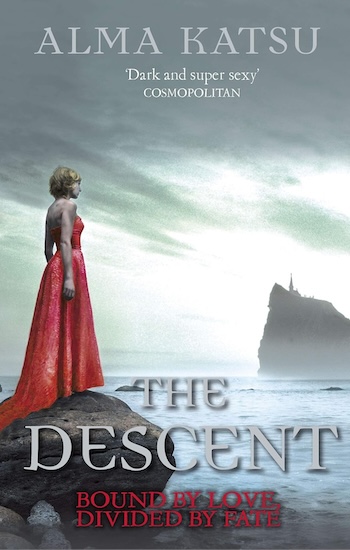
KatsuA-I3-DescentUKA few days ago, a copy of Alma Katsu’s third novel, The Descent dropped through the mailbox. It is the third novel in the author’s The Immortal trilogy, but I didn’t (at the time) know too much about the series or the author, so I took the opportunity to send her some questions.

Who is Alma Katsu?

As a girl, I wanted to have a magical, fantastical life but the outlook was kind of narrow and grim, and I think that’s why I turned to creating my own worlds in fiction. Then, funnily enough, I ended up having a life that was the stuff of fantasy: working in intelligence, traveling, doing all this technical, math-y stuff that I never would’ve thought possible for a little storyteller. Lesson: you never know where life will take you. Continue reading

“The Emperor’s Children” by Claire Messud (Knopf)

Messud-TheEmperorsChildrenAn interesting tale of privilege in New York, in the lead-up to 9/11

A novel about the intersections in the lives of three friends, now on the cusp of their thirties, making their way — and not — in New York City. There is beautiful, sophisticated Marina Thwaite — an “It” girl finishing her first book; the daughter of Murray Thwaite, celebrated intellectual and journalist — and her two closest friends from Brown, Danielle, a quietly appealing television producer, and Julius, a cash-strapped freelance critic.

The delicious complications that arise among them become dangerous when Murray’s nephew, Frederick “Bootie” Tubb, an idealistic college dropout determined to make his mark, comes to town.

As the skies darken, it is Bootie’s unexpected decisions — and their stunning, heartbreaking outcome — that will change each of their lives forever.

This novel came very highly recommended, but for some reason it took me quite a long time to get around to reading it. I have a weak-spot for novels set in New York City. This is the first one I’ve read that takes a look (near the end) at the impact of 9/11 on inhabitants of the city – not in terms of politics or the War on Terror, but rather as an event that would turn the lives of these protagonists upside down, in both large and small ways. I certainly enjoyed reading the novel, but it’s not perfect. It offers some shrewd, pointed commentary on the foibles and anxieties that face or characterise the lives of privileged (and some not-so-privileged) white youth in New York City.

The friends at the core of the story are quite typical, in many respects. This works in their favour, and makes the novel pretty easy to sink in to. They are from a wealthy set, but each hides their own insecurities from the others. Julius, for example, is down on his luck, and has been hiding the fact that he has resorted to temping in order to make ends meet. Danielle is ticking along, but then develops a relationship with someone she never would have thought possible. Marina is a typical, spoiled, highly privileged daughter of an accomplished, beloved-of-the-NY-literary-set journalist. In the meantime, Bootie, Marina’s awkward cousin with delusions of literary/journalistic grandeur, a surprisingly strong sense of his own iconoclasm, moves to New York, and ends up causing quite the unpleasant stir.

It’s tricky to go into too much detail, as is so often the case. Messud weaves a number of twists and turns into the novel, as her protagonists navigate their way through their personal and professional lives – Marina struggling to finish the long-fallow book project she’s been paid to write (years ago), and also having to deal with her new boyfriend’s obvious distaste and derision for her father’s reputation; Danielle trying to get her productions green-lit, while keeping her new romance secret from her friends (who would undoubtedly disapprove); Julius, whose love-life takes a turn for the better, before spiraling catastrophically; and Bootie’s attempts to make a life in New York, balancing his awe, jealousy and eventual disappointment in Marina’s father (for whom he works as an assistant for a short while).

The novel had two particular strengths. First, the characterisation – which I know I haven’t outlined particularly well, above – was excellent. These are people who are by no means perfect or in any way heroes. There is a natural ugliness, almost, to their personalities: the natural jealousies, the petty narcissism, and so forth. But also their privileged ennui, as they attempt to figure out what it is they are meant to be doing with their lives (something I can sometimes relate to). There were a few uncomfortable moments when I would read one of the characters’ inner struggles, perhaps raise a judgmental eyebrow or sneer, and then realise that I myself had harboured similar thoughts, worries, or jealousies on occasion.
Another thing I really liked about the novel, were the moments in which characters would talk about books. Perhaps a strange thing to pick up on, given that they are universally small and fleeting moments in the story, but I really liked it. For example, when Danielle is looking at her bookshelves in her apartment, a form of biblio-memoir:

… a wall of books, both read and unread, all of them dear to her not only in themselves, their tender spines, but in the moments or periods they evoked. She had kept some books since college that she had acquired for courses and never read — Fredric Jameson, for example, and Kant’s Critique of Judgment — but which suggested to her that she was, or might be, a person of seriousness, a thinker in some seeping, ubiquitous way; and she had kept, too, a handful of children’s books taken from her now-dismantled girlhood room, like Charlotte’s Web and the Harriet the Spy novels, that conjured for her an earlier, passionately earnest self, the sober child who read constantly in the back of her parents’ Buick, oblivious to her brother punching her knee, oblivious to her parents’ squabbling, oblivious to the traffic and landscapes pressing upon her from outside the window.

Messud does a great job of giving each character their own voice (although, sometimes only slightly different from others), and she’s doing a great job of deconstructing her protagonists and their neuroses and petty jealousies. But, and this is my only real issue with the novel: it could have been trimmed down, I think. There were times when it felt like the novel veered off into an unnecessary tangent, without adding enough to the story to justify it, or being too mundane to really be worth it. I also think the author has never found an over-long sentence she didn’t like. There were, for my taste, far too many run-on sentences. There were so many instances when a well-placed full-stop would have done wonders for the prose and reading experience; any number of sentences that were begging to be broken up into easier-read sizes. Take, for example, this paragraph (which is by no means the worst offender):

As they each gingerly dismantled and consumed their fanciful dishes — in her case at least, a fancy that, Danielle thought but did not say, was less original and extraordinary than the restaurant’s reputation and price had led her to expect, and therefore disappointing, as she had chosen the venue to impress — Danielle proceeded to explain that she had been taken with his use of the term, that she had, perhaps wrongly, heard in it a certain echo, the suggestion of an ethos that she thought might be found, to greater or lesser degrees, in certain other publications or presentations, and that she, in her producer’s role, had thought to articulate into, well, a movement.

Or this stuttering, shorter example: “and there was, had been, at the very sight of him, at the front of the line at the restaurant, a pull that Danielle felt to be inevitable, personal, even spiritual — a magnetic attraction.” And the use of near-repetition to make or reinforce a point (“having felt, and felt keenly”).

There are, of course, moments of levity that break up what could otherwise become a rather heavy-handed narrative. Mostly, this occurs when theses privileged characters are confronted with simple situations they are entirely ill-equipped to deal with (thing that would, ordinarily, be dealt with by the Help). For example, when Marina’s cat, Pope, dies:

“I’m sorry, Daddy — it’s just the Pope. She’s not — I mean, she’s dead.”

“Oh.” The two of them stood side by side without approaching. “You’re quite sure?” Murray asked, scratching at the back of his head.

“Yep. Sure.” The cat, a black blot on the duvet, didn’t move.

“Is your mother asleep?”

“Hours ago.”

“Hmm. Worse things could happen than leaving her there for the night, don’t you agree?”

The idea seemed somehow sacrilegious to Marina, though whether the offense was against the cat or the bed and its imminent occupant, she couldn’t have said. “Don’t dead things, you know, leak?”

“Not overnight, I wouldn’t think. And it’s pretty cool in here.”

And this, later moment in which they discuss what to do with books from university…

“What did you major in, in college?” she ventured again, after a time.

“Poli Sci.”

“Mm-hmm.”

“You must have been English, right?”

“Does it show that badly? We all were. I was double, English and Philosophy. I don’t remember a thing.”

“Who does?”

“Seriously, though, I look at the books on my shelves and it’s clear that I read them, back then, but I can’t remember ever doing it, and I don’t have the first idea what they might be about.”

“Read them again, then?”

Danielle sighed. “Not now. Maybe someday. I look at them and wonder who I was, you know? It’s a long time ago. I’m thirty.”

“You should throw those books away.”

“Like, in the garbage?”

“Like that.”

“Sacrilege. It would be.”

“Do you hang on to clothes you haven’t worn for ten years? Or bags of pasta, or cans of beans?” Danielle did not need to answer. “What is it about books? Perfectly rational people get crazy about their books. Who has time for that?”

“I measure my life out in books.”

“You should be measuring your life by living. Correction: you shouldn’t be measuring your life. What’s the point?”

Ultimately, The Emperor’s Children is a richly drawn, well-observed story of how these friends and relatives navigate their world. The characters develop naturally over the course of the story, and while they felt rather cookie-cutter at the beginning, they quickly developed their own voices. Despite the sometime-trouble I had with Messud’s drawn-out prose-style, this is a recommended read. I’ll be sure to read her latest novel, The Woman Upstairs, very soon.