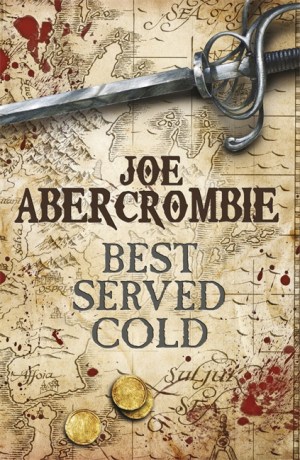
Review: BEST SERVED COLD by Joe Abercrombie (Gollancz/Orbit)

Abercrombie-BestServedColdUKAbercrombie expands the World of the First Law

Springtime in Styria. And that means war. Springtime in Styria. And that means revenge.

There have been nineteen years of blood. The ruthless Grand Duke Orso is locked in a vicious struggle with the squabbling League of Eight, and between them they have bled the land white. While armies march, heads roll and cities burn, behind the scenes bankers, priests and older, darker powers play a deadly game to choose who will be king.

War may be hell but for Monza Murcatto, the Snake of Talins, the most feared and famous mercenary in Duke Orso’s employ, it’s a damn good way of making money too. Her victories have made her popular — a shade too popular for her employer’s taste. Betrayed, thrown down a mountain and left for dead, Murcatto’s reward is a broken body and a burning hunger for vengeance. Whatever the cost, seven men must die.

Her allies include Styria’s least reliable drunkard, Styria’s most treacherous poisoner, a mass-murderer obsessed with numbers and a Northman who just wants to do the right thing. Her enemies number the better half of the nation. And that’s all before the most dangerous man in the world is dispatched to hunt her down and finish the job Duke Orso started…

Springtime in Styria. And that means revenge.

Joe Abercrombie’s First Law trilogy is one of my favourites: a great story, fantastic characters, superb prose. For some reason, it took me a while to get around to reading Best Served Cold (originally published in 2008). I finally read it after taking a glance at the first pages, and being quickly drawn in by not only the author’s great prose, but also his gift for characterization. Unfortunately, though, I finished the novel with a very different feeling to that I had after finishing Last Argument of KingsContinue reading

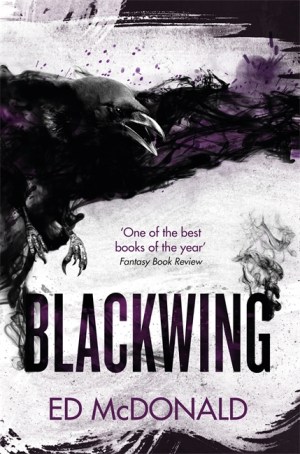
Quick Review: BLACKWING by Ed McDonald (Gollancz/Ace)

A promising debut grimdark fantasy

You think you know Misery? You’ve not seen anything yet…

The republic faces annihilation, despite the vigilance of Galharrow’s Blackwings. When a raven tattoo rips itself from his arm to deliver a desperate message, Galharrow and a mysterious noblewoman must investigate a long dead sorcerer’s legacy. But there is a conspiracy within the citadel: traitors, flesh-eaters and the ghosts of the wastelands seek to destroy them, but if they cannot solve the ancient wizard’s paradox, the Deep Kings will walk the earth again, and all will be lost.

The war with the Eastern Empire ended in stalemate some eighty years ago, thanks to Nall’s ‘Engine’, a wizard-crafted weapon so powerful even the Deep Kings feared it. The strike of the Engine created the Misery — a wasteland full of ghosts and corrupted magic that now forms a No Mans Land along the frontier. But when Galharrow investigates a frontier fortress, he discovers complacency bordering on treason: then the walls are stormed, and the Engine fails to launch. Galharrow only escapes because of the preternatural magical power of the noblewoman he was supposed to be protecting. Together, they race to the capital to unmask the traitors and restore the republic’s defences. Far across the Misery a vast army is on the move, as the Empire prepares to call the republic’s bluff.

Blackwing is one of the most hotly-anticipated debut fantasy novels of the year. Social media and the blogosphere have been filled with glowing reviews, squees and other evidence that suggests the hype has been entirely justified. There’s a lot in here that will certainly appeal to plenty of fantasy fans. However, I ultimately came away from this novel underwhelmed. Continue reading

Interview with ED McDONALD

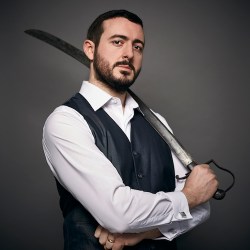
McDonaldE-AuthorPicLet’s start with an introduction: Who is Ed McDonald?

Hello! That would be me. I’m an author, swordsman, medieval historian, lecturer, husband, reader, and gamer.

Your debut novel, Blackwing, will be published by Gollancz. It’s been getting quite a bit of pre-publication buzz. How would you introduce it to a potential reader? Is it part of a series?

Blackwing is the first part of The Raven’s Mark series. It’s epic fantasy in scope, but with a tight focus on a single character and the individual part he plays in a wider conflict. The pace is more like a thriller than the usual wander through a fantasy landscape, so I’d say that if you like your fantasy fast paced, character driven, hard hitting, free from gender bias and set on the edge of a post-apocalyptic magical wasteland, then it’s probably for you. Continue reading

Interview with ANNA SMITH SPARK

anna-smith-spark-author-photo-1Let’s start with an introduction: Who is Anna Smith Spark?

I tweet as QueenofGrimdark, I’m an ex-fetish model, and I have a PhD in Victorian occultism.

No, honestly.

I’m a fantasy novelist from London, UK.  I have a background in history and literature: I studied Classical History for my BA, Cultural History for my MA and English Literature for my PhD. Which really was about Victorian occultism, looking at the way it intersected with the physical sciences and with politics. My only real interests in life are history, mythology and literature. I spent several years as an obsessive D&D player, but sadly no longer play. I’m obsessed with Warhammer miniatures as well (Chaos Warriors … oh. Oh oh oh), but don’t actually play Warhammer either. Continue reading

Introducing “Turn back 10” & Another Look at WAY OF SHADOWS by Brent Weeks (Orbit)

TurnBackTimeManOnClockApril 8th will mark the tenth anniversary of Civilian Reader. Which is a surprise. I thought it might be interesting to post one old review per week, working back to the first — which I will re-post on April 8th. I’m going to call these “Turn Back 10” posts. The first three don’t feature content that is actually ten years old — I only wrote three reviews in 2006, after all, which would make this a pretty short exercise. Not to mention a bit dull. Each post will feature a review from the first three years of CR (2006-08). And it’s a nifty title, so I’m sticking with it. The reviews are, of course, mostly terrible in terms of style — I was still figuring out how I wanted to write them. They are often rather more hyperbolic than I would like now.

I will do some minor editing and adjusting, in order to make them fit in with the current style, and fix typos, but other than that they are re-posted as they first appeared. If I enjoy posting them, I may continue the practice after the anniversary, but try to feature reviews more relevant to what I might be reading at the time, or what I’m posting about.

Brent Weeks’s The Way of Shadows was the first fantasy novel I had read in a very long time, which wasn’t set in a shared universe or Discworld. I remember it blowing me away, too: it did things that I had thought one wouldn’t find in fantasy novels (remember, I barely read any fantasy at the time). It was, to use words that have fallen completely out of favour, grim and quite gritty. (Especially the ending, and one storyline in the second book.) Certainly, more grim and gritty than I was familiar with. I remember noticing it because Amazon recommended it because I had also bought Scott Lynch’s The Lies of Locke Lamora.

It was also the first fantasy novel I received from a publisher for review — up until that point, it had been predominantly non-fiction and Star Wars novels. It also marked the point when Civilian Reader started to take off — in terms of readership and also how much time and effort I poured into the site. I also remember, after publishing the review, incessantly pestering Orbit’s publicist for the next two novels in the series… (Thankfully, the then-publicist has the patience of a saint.)

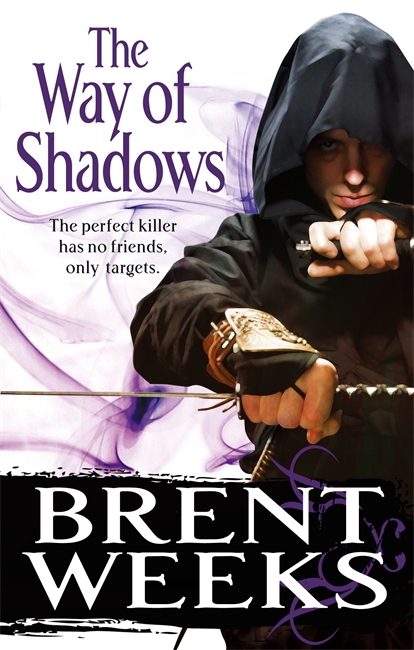
WeeksB-NA1-WayOfShadowsTHE WAY OF SHADOWS by Brent Weeks (Orbit)

The start of something truly fantastic

The perfect killer has no friends. Only targets. 

For Durzo Blint, assassination is an art. And he is the city’s most accomplished artist, his talents required from alleyway to courtly boudoir.

For Azoth, survival is precarious. Something you never take for granted. As a guild rat, he’s grown up in the slums, and learned the hard way to judge people quickly — and to take risks. Risks like apprenticing himself to Durzo Blint.

But to be accepted, Azoth must turn his back on his old life and embrace a new identity and name. As Kylar Stern, he must learn to navigate the assassins’ world of dangerous politics and strange magics — and cultivate a flair for death.

Fantasy fiction has undertaken a shift in tone and style in recent years. It’s darker, more realistic (oddly), and the characters are less polished, more flawed and human. The fairy-tale feel of older fantasy fiction has been purged from much the genre’s new writing, and the world is better for it. Brent Weeks’ new series not only fits perfectly into this new genre, but it surpasses much of what’s already available. Continue reading

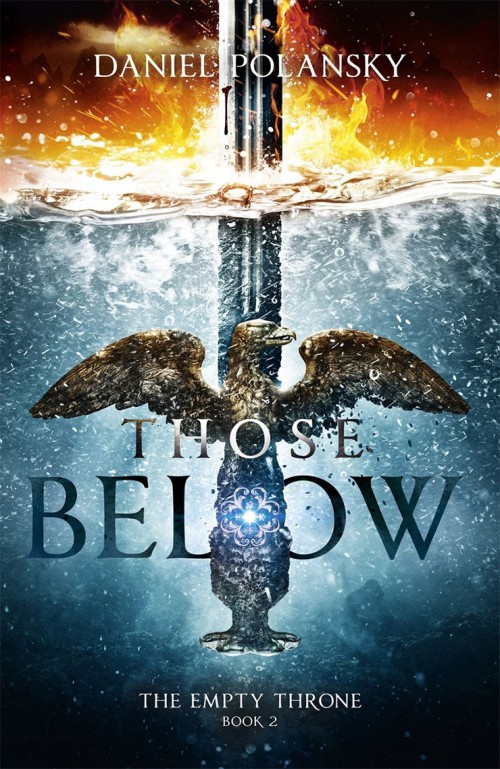
Upcoming: THOSE BELOW by Daniel Polansky (Hodder)

PolanskyD-ET2-ThoseBelowUK

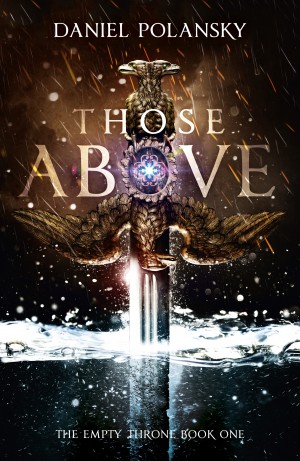
Earlier today, Tor.com shared the cover artwork for Daniel Polansky‘s upcoming new novel, Those Below. It was unveiled earlier by Hodder, although I inexplicably managed to miss that post… The sequel to Those Above, and final novel in the author’s epic fantasy Empty Throne series, it’s due to be published by Hodder in the UK, on March 10th, 2016. I really can’t wait to get my mitts on this one…

Here’s what it’s about:

For centuries beyond counting, humanity has served the Others, god-like Eternals who rule from their cloud-capped mountain-city, building a civilization of unimagined beauty and unchecked viciousness.

But all that is about to change. Bas Alyates, grizzled general of a thousand battles, has assembled a vast army with which to contend with the might of Those Above. Eudokia, Machiavellian matriarch and the power behind the Empty Throne, travels to the Roost, nominally to play peacemaker – but in fact to inspire the human population toward revolt. Deep in the dark byways of the mountain’s lower tiers, the urchin Pyre leads a band of fanatical revolutionaries in acts of terrorism against their inhuman oppressors. Against them, Calla, handmaiden of the Eternals’ king, fights desperately to stave off the rising tide of violence which threatens to destroy her beloved city.

Polansky-ET1-ThoseAboveUK

Upcoming: THE LIAR’S KEY by Mark Lawrence (Ace/Voyager)

LawrenceM-RQW2-LiarsKeyUS

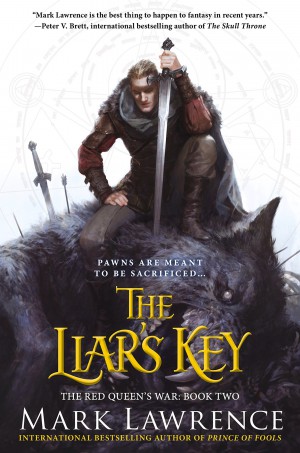
I’m a big fan of Mark Lawrence‘s novels. His debut, Prince of Thorns (published in 2011) blew me away, and I blitzed through it in just two sittings. King of Thorns, the sequel, was a heftier beast, but no less good. I haven’t managed to get around to Emperor of Thorns, just yet, but I do intend to do so ASAP. He has since completed his first trilogy and begun a second, parallel trilogy set in the same world and at the same time. The cover for the second novel in this new trilogy, The Liar’s Key now has UK (below) and US (above) covers.

After harrowing adventure and near-death, Prince Jalan Kendeth and the Viking Snorri ver Snagason find themselves in possession of Loki’s Key, an artefact capable of opening any door, and sought by the most dangerous beings in the Broken Empire — including The Dead King.

Jal wants only to return home to his wine, women, and song, but Snorri has his own purpose for the key: to find the very door into death, throw it wide, and bring his family back into the land of the living.

And as Snorri prepares for his quest to find death’s door, Jal’s grandmother, the Red Queen continues to manipulate kings and pawns towards an endgame of her own design…

The Broken Empire trilogy includes Prince of ThornsKing of Thorns and Emperor of Thorns.

The Red Queen’s War trilogy includes Prince of FoolsThe Liar’s Key and The Wheel of Osheim (2016).

The Liar’s Key is published in the US by Ace Books, on June 2nd, 2015; and in the UK by Voyager, on June 18th, 2015.

Also on CR: Interview with Mark Lawrence

LawrenceM-RQW2-LiarsKeyUK

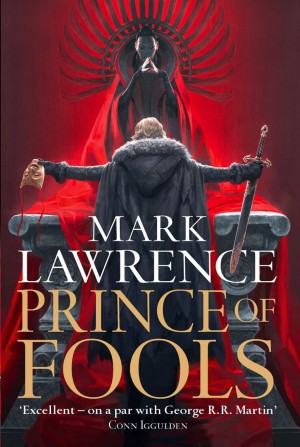
Review: PRINCE OF FOOLS by Mark Lawrence (Voyager/Ace Books)

LawrenceM-RQW1-PrinceOfFoolsUKA new trilogy and hero, and still just as good…

The Red Queen is old but the kings of the Broken Empire fear her as they fear no other.

Her grandson Jalan Kendeth is a coward, a cheat and a womaniser; and tenth in line to the throne. While his grandmother shapes the destiny of millions, Prince Jalan pursues his debauched pleasures. Until he gets entangled with Snorri ver Snagason, a huge Norse axe man, and dragged against his will to the icy north.

In a journey across half the Broken Empire, Jalan flees minions of the Dead King, agrees to duel an upstart prince named Jorg Ancrath, and meets the ice witch, Skilfar, all the time seeking a way to part company with Snorri before the Norseman’s quest leads them to face his enemies in the black fort on the edge of the Bitter Ice.

Experience does not lend Jalan wisdom; but here and there he unearths a corner of the truth. He discovers that they are all pieces on a board, pieces that may be being played in the long, secret war the Red Queen has waged throughout her reign, against the powers that stand behind thrones and nations, and for higher stakes than land or gold.

Mark Lawrence returns with the first in a great new trilogy set in the same world as his critically-acclaimed Broken Empire trilogy. As long-time readers of the blog will know, I really enjoyed Lawrence’s debut, Prince of Thorns. He is without doubt one of the best new fantasy authors, and if you like your fantasy dark, twisty, and very well-written, then you really do need to give his work a try. Prince of Fools introduces us to a new pair of heroes – Prince Jalan and his Viking companion, Snorri. I really enjoyed this novel. Continue reading

Guest Post: “And the World Turned Gray: Gritty vs. Classic Heroes” by Kameron Hurley

KameronHurley-AuthorPicKameron Hurley is an award-winning writer and freelance copywriter who grew up in Washington State. She is the author of the book God’s War, Infidel, and Rapture, and her short fiction has appeared in magazines such Lightspeed, EscapePod, and Strange Horizons, and anthologies such as The Lowest Heaven and Year’s Best SF.

Also on CR: Review of God’s War

***

Peake-GormenghastI’ll sometimes hear folks musing about where the “gritty” hero came from. And though you’ll get a lot of knee-jerk responses of the “Well, it’s a reaction to traditional goody-goody heroes,” I’d argue, in fact, that gritty, unlikeable heroes have been around a lot longer than you’d think. Gormenghast wasn’t exactly full of heroes. It was full of idiots and backstabbers. We just didn’t celebrate them. They were funny.

Oh, sure, what littered the shelves as I was growing up in the ’80s and ’90s were indeed mostly traditional sorts, I suppose. But there were notable exceptions – Jennifer Roberson’s Tiger, Mary Gentle’s Ash, and let’s face it, you know, Conan wasn’t a sweetheart fun dude.

Hobb-1-AssasinsApprenticeUKBut the hero who broke all the rules – who didn’t really save the world, who didn’t get the girl that tore me up the most – was Fitz in Robin Hobb’s Assassin’s Apprentice. I’d argue Hobb’s semi-tragic hero, who did not slay the dragon or win a kingdom (even Joe Abercrombie’s characters sometimes win a kingdom) or run off with the love of their life, was among the first to start the shift toward a hero who was a bit more gray, a bit more complex, and whose end was a lot less predictable than most. Fitz was the Catalyst. He was the person great events moved around. He was not the active agent. Only the spark.

In truth, on looking at a lot of fantasy heroes and heroines of the past, what I found had changed most between, say 1970 and 2004 wasn’t the level of grit or gritty. After all, there was a lot of dark, messed up stuff going on in the New Wave (The Stars My Destination, for a brief departure into SF-land, was hardly full of nice people). Instead, what changed was this idea that the good guys were always going to win. That the Big Bad would be defeated. So you got heroes like Fitz, and KJ Bishop’s war-wrecked veterans, who, it could be argued, often did more harm than good. Maureen McHugh writes complex characters whose endings always tend to be ambiguous, sort of non-endings, more abrupt halts than tying up all the loose ends.

What we’re falling in love with, over time, isn’t necessarily the grittiest jerk with a sword – we had Conan for that. What began to happen is that we craved more complexity in our stories. And with complexity comes a good deal of ugliness. The bad guys sometimes win. Sometimes it’s not even clear who the bad guys are. Oh, sure, folks wrote dark, complex fiction prior to when the term “grimdark” popped up, but grimdark – tragedy, complexity, brutality – of this type has been especially sought after from the early 2000’s. Just as New Weird started becoming a Named Thing, the dark fantasy writers were beginning to get more attention, too.

ME3_Cover_ArtIt’s been interesting to watch video games go through this same tilt toward the more complex, the tragic. I sobbed my way through Mass Effect 3, while the galaxy was being destroyed around me. And… I found it deeply cathartic. But… why? What are these complex stories giving me that fluffier, more comfortable stuff isn’t?

I’d argue this love of the grim and complex isn’t just about the maturity of an art form, but a reflection of the times we live in. The United States has been at constant war since 2001. That’s thirteen years of war. That kind of war – even one conducted on far shores, and brutally ignored in our media – seeps into everything. The world looks a lot more complex when you’re fighting in residential areas and sending drones to blow up wedding parties, doesn’t it?

Our fiction, the stories we were interested in, changed too. Because war gets into your bones. Veterans come home. The war they fought not only affects them, but everyone around them. It bleeds into everything.

And that seepage is nothing compared to the grim reality faced by those whose countries we waged war in.

So when people tell me that the rise of gritty, complex fiction is a reaction against traditional heroes, or something only aliened teen boys read, I can’t help but sigh. Because I’m seeing the desire for grim stories from another angle. From the position of a people who perpetuate violence on others but have very little experience of violence. People struggling to figure out who the good guy is, because, increasingly, as they look in the mirror they realize that it isn’t as clear as it once we.

We look for ourselves in our stories. It’s how we make sense of the world.

The gritty and traditional heroes are products of their times. We used to believe we were right. We’d always win. The world was black and white. As the world is split wide open with greater access to information and instant communication, many are waking up to that fact.

It’s the gray heroes we see – the ones who don’t always win. The ones who bring more war than peace. Who solve disagreements with brutality. With force. And fear. And fault.

We see ourselves.

And we’re not traditional heroes.

***

Kameron’s God’s War, Infidel and Rapture are published by Night Shade Books in the US and Del Rey in the UK (only God’s War has been released so far in the UK).

Hurley-BelDameApocrypha

US Covers

Hurley-GodsWarUKPB

UK Cover (Paperback) for God’s War

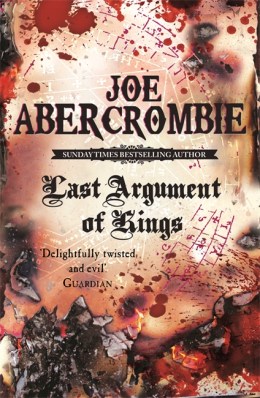
Review: LAST ARGUMENT OF KINGS by Joe Abercrombie (Gollancz)

AbercrombieJ-FL3-LastArgumentOfKingsUK1A strong finish to The First Law trilogy

The end is coming.

Logen Ninefingers might only have one more fight in him – but it’s going to be a big one. Battle rages across the North, the king of the Northmen still stands firm, and there’s only one man who can stop him. His oldest friend, and his oldest enemy: it’s time for the Bloody-Nine to come home.

With too many masters and too little time, Superior Glokta is fighting a different kind of war. A secret struggle in which no one is safe, and no one can be trusted. As his days with a sword are far behind him, it’s fortunate that he’s deadly with his remaining weapons: blackmail, threats, and torture.

Jezal dan Luthar has decided that winning glory is too painful an undertaking and turned his back on soldiering for a simple life with the woman he loves. But love can be painful too – and glory has a nasty habit of creeping up on a man when he least expects it.

The king of the Union lies on his deathbed, the peasants revolt, and the nobles scramble to steal his crown. No one believes that the shadow of war is about to fall across the heart of the Union. Only the First of the Magi can save the world, but there are risks. There is no risk more terrible, than to break the First Law…

It is always tricky to review the final book in a trilogy or series. So how to go about it, with a series and novel that I could talk about for hours? To avoid spoilers or over-analysis requires a very short review. But, “This is the culmination of a superb series” seems just too short… The Blade Itself started the series in fine form. Before They Are Hanged kicked things into a much higher gear. And Last Argument of Kings brings things to a brash, loud conclusion. Continue reading