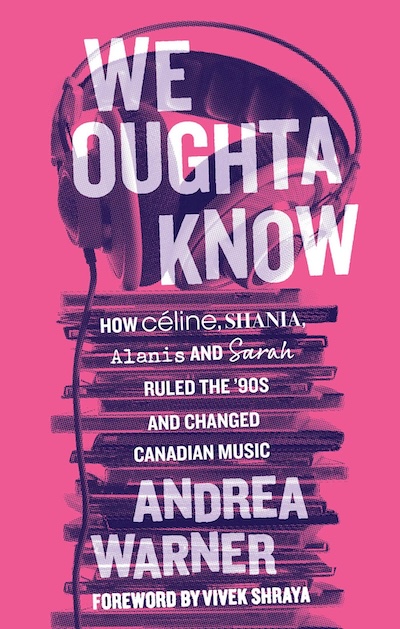
 On October 15th, ECW Press is due to publish We Oughta Know by Andrea Warner. The book is an essay collection that examines “How Céline, Shania, Alanis, and Sarah Ruled the ’90s and Changed Music”. To mark the book’s publication, the publisher has allowed CR to share the Introduction. Before we get to the excerpt, though, here is the synopsis:
A lively collection of essays that re-examines the extraordinary legacies of the four Canadian women who dominated ’90s music and changed the industry forever
Fully revised and updated, with a foreword by Vivek Shraya
In this of-the-moment essay collection, celebrated music journalist Andrea Warner explores the ways in which Céline Dion, Shania Twain, Alanis Morissette, and Sarah McLachlan became legit global superstars and revolutionized ’90s music. In an era when male-fronted musical acts were given magazine covers, Grammys and Junos, and serious critical consideration, these four women were reduced, mocked, and disparaged by the media and became pop culture jokes even as their recordings were demolishing sales records. The world is now reconsidering the treatment and reputations of key women in ’90s entertainment, and We Oughta Know is a crucial part of that conversation.
With empathy, humor, and reflections on her own teenaged perceptions of Céline, Shania, Alanis, and Sarah, Warner offers us a new perspective on the music and legacies of the four Canadian women who dominated the ’90s airwaves and influenced an entire generation of current-day popstars with their voices, fashion, and advocacy.
 An excellent history of how internet influencers and creators changed the way we socialize and interact online
 It is impossible to ignore the influence of social media. In the years since Facebook and Twitter, in particular, have exploded onto our browsers and mobile devices, many millions have found themselves spending more and more time watching their feeds update. “Doomscrolling” became a common word during the Trump years. Social media has connected us with people across the world with shared interests and hobbies. In too-many instances, it has also allowed the worst aspects of human nature to flourish. In Social Warming, Charles Arthur takes a deep dive into the ways in which social media has changed the world and today we have an excerpt for you. First, though, here’s the synopsis:
 Lessons from the city-state of Los Angeles
 A “definitive” history of the TV show Friends
 I have long been a fan of James Fallows‘s journalism — I first read his work in The Atlantic, back in 2007 when he was still living in China (some of his articles from that time have been collected in the excellent
 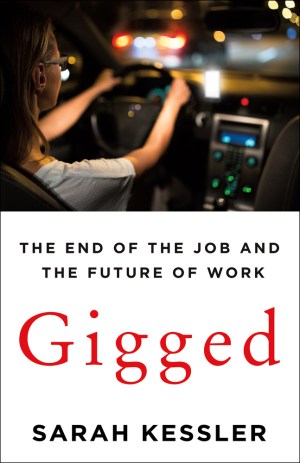 Sarah Kessler‘s upcoming book looks really interesting. The gig economy has come to dominate a few sectors, and seems to be spreading. To someone who is an accidental freelancer (I didn’t expect to be one so soon in my career), Gigged therefore looks really interesting and relevant. Even though the book is focused on the gig economy in the United States, I think it will resonate with readers in other countries, where gigging is fast becoming a wider experience of life and work. Here’s the synopsis:
 When I conceived of the Andan faction of the hexarchate, I saw them as beautiful, rich, and cultured. In particular, I saw them as the people who weaponize culture.
  Civilian Reader