Review: THE ACCIDENT by Chris Pavone (Crown Publishing/Faber)

PavoneC-TheAccidentUSAn engaging suspense, featuring a secret manuscript, a conspiracy, and unwitting pawns caught in the middle.

As dawn approaches in New York, literary agent Isabel Reed is turning the final pages of a mysterious, anonymous manuscript, racing through the explosive revelations about powerful people, as well as long-hidden secrets about her own past. In Copenhagen, veteran CIA operative Hayden Gray, determined that this sweeping story be buried, is suddenly staring down the barrel of an unexpected gun. And in Zurich, the author himself is hiding in a shadowy expat life, trying to atone for a lifetime’s worth of lies and betrayals with publication of The Accident, while always looking over his shoulder.

Over the course of one long, desperate, increasingly perilous day, these lives collide as the book begins its dangerous march toward publication, toward saving or ruining careers and companies, placing everything at risk—and everyone in mortal peril.  The rich cast of characters—in publishing and film, politics and espionage—are all forced to confront the consequences of their ambitions, the schisms between their ideal selves and the people they actually became.

The action rockets around Europe and across America, with an intricate web of duplicities stretching back a quarter-century to a dark winding road in upstate New York, where the shocking truth about the accident itself is buried.

Pavone’s The Expats was an international bestseller – one I seem to have missed almost entirely. When The Accident popped up on NetGalley, though, its synopsis sent it right to the top of my Must Read titles. The story is located at the confluence of a number of my key interests: politics, media, international relations/espionage, and publishing. While the novel is not perfect, it is nevertheless a gripping, fast-paced thriller that entertained and gripped me from the start. Continue reading

Interview with DANIELLE JENSEN

JensenD-AuthorPicLet’s start with an introduction: Who is Danielle Jensen?

Danielle is an unrepentant daydreamer, which is a highly undesirable attribute for most professions. Life might have gone quite poorly for her if she hadn’t discovered her knack for translating dreams into novels. 

Your debut novel, Stolen Songbird, is due to be published by Strange Chemistry in April 2014. How would you introduce the novel to a new reader? Is it part of a series?

Stolen Songbird is Book 1 in The Malediction Trilogy.  This is the blurb that will be on the back of the book:

For five centuries, a witch’s curse has bound the trolls to their city beneath the mountain. When Cécile de Troyes is kidnapped and taken beneath the mountain, she realises that the trolls are relying on her to break the curse.

Cécile has only one thing on her mind: escape. But the trolls are clever, fast, and inhumanly strong. She will have to bide her time…

But the more time she spends with the trolls, the more she understands their plight. There is a rebellion brewing. And she just might be the one the trolls were looking for…

JensenDL-StolenSongbird2014

What inspired you to write the novel? And where do you draw your inspiration from in general?

Stolen Songbird was inspired by a dream I had about a city buried by rubble. Inspiration comes from everywhere: people I meet, things I see, movies I watch, books I read, etc., and it all sits in my brain waiting to bubble up as parts of plot.

How were you introduced to reading and genre fiction?

Tolkien-HobbitMy dad got sick of reading kid’s books to me when I was little, so he started reading me fantasy novels when I was in grade 1, mostly Tolkien and Eddings. I’m from a family of readers – it is what we do. 

How do you enjoy being a writer and working within the publishing industry?

It can be tough, but I love it. The people in this business are amazing.

What’s it like, being a (soon-to-be-)published author? Is it what you expected? Do you have any specific working, writing, researching practices?

It’s exciting, but very stressful. I didn’t expect for there to be so much work required of me that had nothing to do with writing another book. I write or do book related work every day, but I’ve learned to recognize when I’m getting an attack of the crazies and need a break.

When did you realize you wanted to be an author, and what was your first foray into writing? Do you still look back on it fondly?

I made my first attempts at writing a novel when I was in my mid-twenties, and I look back on my efforts with amusement. I realized I wanted to be an author in 2009, and that was when I decided I was going to throw every ounce of determination I had into getting published. Took a few years, but here I am. 

What’s your opinion of the genre today, and where do you see your work fitting into it?

It feels like epic/alternate world fantasy is in a stronger place than it was five years ago, which is obviously good for me. 

What other projects are you working on, and what do you have currently in the pipeline?

I’m currently working on Book 2 of The Malediction Trilogy, and after that’s done, I’ll immediately start working on Book 3. I do have other fantasy projects waiting for the day I have some spare time on my hands.

What are you reading at the moment (fiction, non-fiction)?

LarsonSB-DefyOther than the news, I don’t read much non-fiction. As far as fiction goes, I’m currently reading Defy by Sara B. Larson.

What’s something readers might be surprised to learn about you?

That I can’t sing or play a musical instrument.

What are you most looking forward to in the next twelve months?

I’m most looking forward to seeing the cover for the sequel, which I’m guessing will be around November.

***

Be sure to check out Danielle Jensen’s website, Twitter and Facebook for more information on her books and writing. Stolen Songbird is due to be published on April 3rd 2014.

Upcoming: “The Relic Guild” by Edward Cox (Gollancz)

CoxE-RG1-RelicGuild2014I’ve been lucky enough to read a (very) early draft of this, about a year and a half ago, before it was submitted to publishers for consideration. I can’t wait to see the final version. This cover, unveiled earlier this week, is awesome. The Relic Guild is, in my opinion, a must-read of 2014.

Here’s the synopsis:

Magic caused the war. Magic is forbidden. Magic will save us.

It was said the Labyrinth had once been the great meeting place, a sprawling city at the heart of an endless maze where a million humans hosted the Houses of the Aelfir. The Aelfir who had brought trade and riches, and a future full of promise. But when the Thaumaturgists, overlords of human and Aelfir alike, went to war, everything was ruined and the Labyrinth became an abandoned forbidden zone, where humans were trapped behind boundary walls a hundred feet high.

Now the Aelfir are a distant memory and the Thaumaturgists have faded into myth. Young Clara struggles to survive in a dangerous and dysfunctional city, where eyes are keen, nights are long, and the use of magic is punishable by death. She hides in the shadows, fearful that someone will discover she is touched by magic. She knows her days are numbered. But when a strange man named Fabian Moor returns to the Labyrinth, Clara learns that magic serves a higher purpose and that some myths are much more deadly in the flesh.

The only people Clara can trust are the Relic Guild, a secret band of magickers sworn to protect the Labyrinth. But the Relic Guild are now too few. To truly defeat their old nemesis Moor, mightier help will be required. To save the Labyrinth – and the lives of one million humans – Clara and the Relic Guild must find a way to contact the worlds beyond their walls.

Be sure to check out Edward Cox’s Tumblr and Twitter for more on his writing and exuberant personality (directly inverse to just how awesomely dark, atmospheric and Peake-ian his novel is). The Relic Guild is due to be published by Gollancz, on September 18th, 2014. It is also part of the publisher’s £1.99 Debut eBook promotion – which means there is no excuse for you to not check out this great new author. (At the time of writing, there weren’t yet any retail links to pre-order the novel, but I’ll be sure to share it ASAP.)

Review: THE RADLEYS by Matt Haig (Canongate Books)

HaigM-RadleysAn unconventional, intelligent vampire novel

Just about everyone knows a family like the Radleys. Many of us grew up next door to one. They are a modern family, averagely content, averagely dysfunctional, living in a staid and quiet suburban English town. Peter is an overworked doctor whose wife, Helen, has become increasingly remote and uncommunicative. Rowan, their teenage son, is being bullied at school, and their anemic daughter, Clara, has recently become a vegan. They are typical, that is, save for one devastating exception: Peter and Helen are vampires and have – for seventeen years – been abstaining by choice from a life of chasing blood in the hope that their children could live normal lives.

One night, Clara finds herself driven to commit a shocking – and disturbingly satisfying – act of violence, and her parents are forced to explain their history of shadows and lies. A police investigation is launched that uncovers a richness of vampire history heretofore unknown to the general public. And when the malevolent and alluring Uncle Will, a practicing vampire, arrives to throw the police off Clara’s trail, he winds up throwing the whole house into temptation and turmoil and unleashing a host of dark secrets that threaten the Radleys’ marriage.

I really enjoyed this. I also read it quite a while ago, which is why I’m going to keep the review rather brief. It’s a different and original take on vampires – one that blends commentary on contemporary British society, middle-class life and anxieties, and is presented with a deft, light touch. Continue reading

Guest Post: “Pantheon Inspirations” by James Lovegrove

LovegroveJ-AuthorPicSo far my Pantheon series extends to six novels and three novellas. What is it about these military-SF tales of gods and men that I seem to find so fascinating? Why do I keep coming back time and time again to this well of inspiration?

Partly it’s because the ideas embedded in polytheistic religious mythologies are so wonderfully rich and exploitable, like countless mines yielding up different seams of precious ore. I myself do not believe in deities of any kind, but the stories that others have came up with about them over the centuries are pleasingly intricate and complex, full of incident and nuance. Every Pantheon strikes me as being like a dysfunctional family. Their conflicts and passions echo those of their worshippers. Even though they’re gods, they’re eminently relatable. They banter and squabble, have affairs, plays tricks on one another, lose their temper, just as humans do. The aloof, monotheistic gods whose faiths prevail in the world today aren’t anywhere near as interesting. Those guys are like grumpy father figures you can’t get on with and have to tread carefully around but are still supposed to admire. Where’s the fun in that?

Lovegrove-AgeOfRaI didn’t set out to write a series. When Solaris, my publisher, commissioned Age Of Ra from me, I thought it would be a one-off, a slice of alternate history with a bit of Ancient Egyptian mythology thrown in to add savour. I certainly didn’t anticipate that I’d still be writing in the same subgenre seven years later, or even that that subgenre would have gained its own name, godpunk. But that’s me. I never plan things. Foresight is not my middle name.

The great thing about the Pantheon novels, as far as writing them goes, is that the tone of each is set by the individual tone of the myths which I’m dealing with. Age Of Odin, for instance, could only have taken place in a world caught in the grip of the Fimbulwinter, the three years of constant ice and snow that presage Ragnarok, and the bad guy could only have been Loki, the trickster, pitting himself against the other residents of Asgard as he does in the Sagas and the Skaldic poems. Likewise, Age Of Aztec just had to be about a high-tech, quasi-Aztec culture, full of human sacrifice, ziggurat temples, and flying saucers in the tradition of Chariots Of The Gods. Once I’ve started researching each book, the plot begins to suggest itself, arising organically from the background material. In a way, I have to do only half the work I otherwise might – half the backstory creation, half the worldbuilding. The other half has already been done for me by the people who dreamed up the original stories. You could even call this cheating.

Lovegrove-AgeOfOdin&Aztec

The latest volume in the series, Age Of Shiva, came about largely because I’ve long had a hankering to write a superhero tale, being the massive comics fan than I am. I perceived that the Hindu pantheon is, in many ways, a set of super-powered beings who battle demons, vampires and other monsters. They’re good guys with a clearly delineated set of bad guys ranged against them. That is, of course, a very reductive view of Hinduism, which is a great deal more complicated and beautifully arabesque and nowhere near as trivial as I’m making it sound. On the surface, however, at a purely primal level of storytelling, that is where it’s at. I thought to myself, “I could have some fun extrapolating a superhero story out of this mythology,” and so, as it proved, I did.

LovegroveJ-AgeOfShiva2014The plot focuses on a comic book artist who is employed by a multinational consortium to help on a secret project to create a real-live superhero team. Ten super-powered characters, based on the Ten Avatars of Vishnu, emerge into the glare of the media spotlight, and rapidly make a name for themselves, saving civilians from snake-men, sewer-dwelling vampires and the like. Things, however, get gnarlier and more complicated from there, and it isn’t long before the world’s balance of military power is destabilised and the threat of nuclear Armageddon looms.

That may all sound very serious, but as with the other Pantheon novels, Shiva is all about the action and the fun. The violence is over-the-top, and the protagonist’s narrative voice is, I hope, witty and wry.

I’m not sure what my next Pantheon novel will be, which set of gods it will concentrate on, what shape it will take. I’ve three other books to write first before I seriously have to start thinking about it. The joy of the concept, though, is that whichever pantheon I choose to exploit, I’ll be as surprised by the outcome as any reader.

***

Also on CR: Interview with James Lovegrove, Guest Post on Age of Godpunk, Excerpt (Age of Shiva)

Guest Post: “On Change, Blood and Iron…” by Jon Sprunk

SprunkJ-AuthorPicHello everyone. I’m Jon Sprunk, the author of Blood and Iron (which came out last week) as well as the Shadow Saga, both from Pyr Books. I’m so glad to have this chance to speak to you. Today I’d like to talk about change.

Whoa, whoa. Don’t click away yet! I know everyone has a healthy mistrust for change, but I’ll keep it painless. Scoundrel’s honor.

What I mean by change are the differences between writing my two series. For those who don’t know my work, the Shadow Saga trilogy was about a lonewolf assassin named Caim. The new series, The Book of the Black Earth, follows the stories of three people caught up in the machinations of an empire ruled by sorcerers.

Sprunk-BE1-BloodAndIron

Besides the obvious story differences, I had a completely different experience writing these series. The Shadow books were all kinetic energy, with the characters bouncing from one perilous danger to the next. I likened it to the Bourne movies, but with more swords and arrows.

With Blood and Iron, I took a more deliberate approach. Does that mean it’s boring? I hope not. But it means that the action (and there is a lot of action) serves the story, rather than the other way around. I don’t believe one way is better than the other, but I’d done the “slash first and ask questions later” routine, so with the new books I wanted to try something different.

Speaking of action. Fight scenes. I love them and I’m not ashamed to admit it. And I love writing them. The biggest change in fight scenes between the two series is perhaps found in the mindsets of the major characters. As I said, Caim from the Shadow books is an assassin. He’s an expert knife-fighter, and killing is his business. The main character in Blood and Iron is a former shipwright and carpenter named Horace. While not a coward, Horace isn’t accustomed to confrontation. When he is taken captive by his enemies, it seems he doesn’t have any tools with which to fight them… until he discovers a latent talent for sorcery. Yet, even once Horace begins to learn about his new power, he isn’t as cutthroat (pardon the pun) or proficient in combat as Caim the Knife. Like most of us “real people,” fights typically happen to Horace, whereas Caim has no problem looking for trouble.

One thing I’m commonly asked is what I’ve learned since writing my first book. That’s not easy to answer. It’s a difficult thing to gauge your own progress. I feel more in control of my stories now, that I’m in a better position to try new things and push my personal envelop. As a lifelong lover of old-school sword & sorcery, the Shadow books were right in my wheelhouse. I also read a lot of epic fantasy, but I have to confess I was a little anxious approaching the new series. Epic usually means a bigger story world, a larger cast, more emphasis on the big picture. Big everything! But what I attempted to do (and perhaps some of you who read Blood and Iron will tell me if I’ve succeeded) was to take the cut and thrust dynamics of S&S and apply that to an “epic” setting and “epic” themes. In short, I wanted to have the best of both worlds.

Well, that’s it for today. I hope I was at least marginally entertaining.

Be well and keep reading.

***

Also on CR: Interview with Jon Sprunk, Guest Post (Lessons Learned)

Jon Sprunk is the author of Blood and Iron as well as the Shadow Saga (Shadow’s Son, Shadow’s Lure, and Shadow’s Master). He’s also a mentor at the Seton Hill University fiction writing program. Be sure to check out his website and follow him on Twitter and Facebook.

Sprunk-ShadowSeriesUK

Recent Acquisitions (March)…

BooksReceived-201403-1

Another incredible couple of weeks for review copies.

Featuring: Charles L. Adler, Octavia E. Butler, James S.A. Corey, Charlie Fletcher, Christopher Fowler, Sally Green, John Gwynne, Duncan Jepson, K.V. Johansen, David Levithan & Andrea Cremer, Peter Higgins, Alison Littlewood, Adrian McKinty, Gail Z. Martin, Deborah Meyler, Pat Mills & Tony Skinner, D.J. Molles, Claire North, Stephanie Saulter, Jon Sprunk, Martin Windrow

Adler-WizardsAliensStarshipsCharles L. Adler, Wizards, Aliens and Starships (Princeton)

From teleportation and space elevators to alien contact and interstellar travel, science fiction and fantasy writers have come up with some brilliant and innovative ideas. Yet how plausible are these ideas – for instance, could Mr. Weasley’s flying car in the Harry Potter books really exist? Which concepts might actually happen, and which ones wouldn’t work at all? Wizards, Aliens, and Starships delves into the most extraordinary details in science fiction and fantasy – such as time warps, shape changing, rocket launches, and illumination by floating candle – and shows readers the physics and math behind the phenomena.

With simple mathematical models, and in most cases using no more than high school algebra, Charles Adler ranges across a plethora of remarkable imaginings, from the works of Ursula K. Le Guin to Star Trek and Avatar, to explore what might become reality. Adler explains why fantasy in the Harry Potter and Dresden Files novels cannot adhere strictly to scientific laws, and when magic might make scientific sense in the muggle world. He examines space travel and wonders why it isn’t cheaper and more common today. Adler also discusses exoplanets and how the search for alien life has shifted from radio communications to space-based telescopes. He concludes by investigating the future survival of humanity and other intelligent races. Throughout, he cites an abundance of science fiction and fantasy authors, and includes concise descriptions of stories as well as an appendix on Newton’s laws of motion.

Wizards, Aliens, and Starships will speak to anyone wanting to know about the correct – and incorrect – science of science fiction and fantasy.

I requested this on a whim. Princeton University Press publishes some of the best history, politics and mathematics books, and I’ve been an eager reader of as much of their catalogue as I can manage. I’m a little behind on my reviews, though. This book bridges two of my interests: SFF and science. Naturally, I figured it would be a good fit for CR, and I hope to get to it very soon. I’ve dipped in already, and it’s pretty good.

*

ButlerO-KindredUKOctavia E. Butler, Kindred (Headline)

A modern black woman is transported to 19th century Maryland, where she faces the cruel realities of slavery.

On her 26th birthday, Dana and her husband are moving into their apartment when she starts to feel dizzy. She falls to her knees, nauseous. Then the world falls away.

She finds herself at the edge of a green wood by a vast river. A child is screaming. Wading into the water, she pulls him to safety, only to find herself face to face with a very old looking rifle, in the hands of the boy’s father. She’s terrified. The next thing she knows she’s back in her apartment, soaking wet. It’s the most terrifying experience of her life… until it happens again.

The longer Dana spends in 19th century Maryland – a very dangerous place for a black woman – the more aware she is that her life might be over before it’s even begun.

A classic of the genre, by one of the greats. I’ve long wanted to read something by Butler, and with this arrival, I really have no excuse. Sounds really intriguing, too. (Headline have acquired UK rights for a number of Butler’s titles, and I hope to read and review as many as I can.)

*

Corey-SW-HonorAmongThievesJames S.A. Corey, Star Wars: Honor Among Thieves (Century)

When the Empire threatens the galaxy’s new hope, will Han, Luke, and Leia become its last chance?

When the mission is to extract a high-level rebel spy from the very heart of the Empire, Leia Organa knows the best man for the job is Han Solo — something the princess and the smuggler can finally agree on. After all, for a guy who broke into an Imperial cell block and helped destroy the Death Star, the assignment sounds simple enough.

But when Han locates the brash rebel agent, Scarlet Hark, she’s determined to stay behind enemy lines. A pirate plans to sell a cache of stolen secrets that the Empire would destroy entire worlds to protect — including the planet where Leia is currently meeting with rebel sympathizers. Scarlet wants to track down the thief and steal the bounty herself, and Han has no choice but to go along if he’s to keep everyone involved from getting themselves killed. From teeming city streets to a lethal jungle to a trap-filled alien temple, Han, Chewbacca, Leia, and their daring new comrade confront one ambush, double cross, and firestorm after another as they try to keep crucial intel out of Imperial hands.

But even with the crack support of Luke Skywalker’s X-Wing squadron, the Alliance heroes may be hopelessly outgunned in their final battle for the highest of stakes: the power to liberate the galaxy from tyranny or ensure the Empire’s reign of darkness forever.

I’ve been struggling with recent Star Wars fiction. After reading a number of their long series (18 books, then two nine-book series), I’m struggling to maintain much enthusiasm. I recently tried the previous novel in this series (Razor’s Edge) and… well, it didn’t click with me at all. Having already read and enjoyed Corey’s Leviathan a couple years back, I’m hoping that this book is better.

*

FletcherC-Oversight2014Charlie Fletcher, The Oversight (Orbit)

Only five still guard the borders between the worlds.Only five hold back what waits on the other side.

Once the Oversight, the secret society that policed the lines between the mundane and the magic, counted hundreds of brave souls among its members. Now their numbers can be counted on a single hand.

When a vagabond brings a screaming girl to the Oversight’s London headquarters, it seems their hopes for a new recruit will be fulfilled – but the girl is a trap.

As the borders between this world and the next begin to break down, murders erupt across the city, the Oversight are torn viciously apart, and their enemies close in for the final blow.

This gothic fantasy from Charlie Fletcher (the Stoneheart trilogy) spins a tale of witch-hunters, supra-naturalists, mirror-walkers and magicians. Meet the Oversight, and remember: when they fall, so do we all.

I know very little about this. Could it be the next Ben Aaronovitch? We shall see. I’m excited to give it a go.

*

FowlerC-B&M11-BleedingHeartChristopher Fowler, Bryant & May: The Bleeding Heart (Doubleday)

It’s a fresh start for the Met’s oddest investigation team, the Peculiar Crimes Unit.

Their first case involves two teenagers who see a dead man rising from his grave in a London park. And if that’s not alarming enough, one of them is killed in a hit and run accident. Stranger still, in the moments between when he was last seen alive and found dead on the pavement, someone has changed his shirt…

Much to his frustration, Arthur Bryant is not allowed to investigate. Instead, he has been tasked with finding out how someone could have stolen the ravens from the Tower of London. All seven birds have vanished from one of the most secure fortresses in the city. And, as the legend has it, when the ravens leave, the nation falls.

Soon it seems death is all around and Bryant and May must confront a group of latter-day bodysnatchers, explore an eerie funeral parlour and unearth the gruesome legend of Bleeding Heart Yard. More graves are desecrated, further deaths occur, and the symbol of the Bleeding Heart seems to turn up everywhere – it’s even discovered hidden in the PCU’s offices. And when Bryant is blindfolded and taken to the headquarters of a secret society, he realises that this case is more complex than even he had imagined, and that everyone is hiding something. The Grim Reaper walks abroad and seems to be stalking him, playing on his fears of premature burial.

Rich in strange characters and steeped in London’s true history, this is Bryant & May’s most peculiar and disturbing case of all.

This is the eleventh book in Fowler’s Bryant & May series. I have read… none of the others. So I’m not sure how quickly I’ll be able to get around to this. Given that it’s a “new beginning”, though, perhaps this is a good place to jump on board? It does sound good, though, and I know others who have read the author’s work and enjoyed it. We’ll see.

*

GreenS-HalfBadPBSally Green, Half Bad (Puffin)

In modern-day England, witches live alongside humans: White witches, who are good; Black witches, who are evil; and fifteen-year-old Nathan, who is both. Nathan’s father is the world’s most powerful and cruel Black witch, and his mother is dead. He is hunted from all sides. Trapped in a cage, beaten and handcuffed, Nathan must escape before his sixteenth birthday, at which point he will receive three gifts from his father and come into his own as a witch — or else he will die. But how can Nathan find his father when his every action is tracked, when there is no one safe to trust — not even family, not even the girl he loves?

There’s been a great deal of buzz surrounding this novel. I’m about halfway through it at the moment, and I have… mixed feelings about it. Full review soon.

*

GwynneJ-2-ValourUKJohn Gwynne, Valour (Tor)

War has erupted in the Banished Lands as the race for power intensifies.

Corban flees his homeland searching for peace, but he soon discovers that there is no haven in the west as the agents of Rhin and roaming bands of giants hound his every step.

Veradis leaves the battleground and rushes to his King’s side. But he has witnessed both combat and betrayal and his duty weighs heavily upon him.

Maquin seeks only revenge, but pirate slavers and the brutal world of pit-fighting stand in his way.

Nathair becomes embroiled in the wars of the west as Queen Rhin marches against King Owain. The need to find the cauldron of the giants drives him on.

Sides are chosen and oaths will be fulfilled or broken in a land where hell has broken loose.

The sequel to Malice (which I still need to read). I’m falling behind on my Big Book Fantasy reading. I’ve been having a hard time finding one that allows me to just sink in and enjoy the long ride. Maybe this one will be the one to snap me out of the rut? Also, as an aside, how bad-ass is this author photo…?

GwynneJ-AuthorPic

*

Higgins-WC2-Truth&FearUKPeter Higgins, Truth and Fear (Gollancz)

Investigator Lom returns to Mirgorod and finds the city in the throes of a crisis. The war against the Archipelago is not going well. Enemy divisions are massing outside the city, air raids are a daily occurrence and the citizens are being conscripted into the desperate defense of the city.

But Lom has other concerns. The police are after him, the mystery of the otherworldly Pollandore remains and the vast Angel is moving, turning all of nature against the city.

But will the horrors of war overtake all their plans?

I enjoyed the first novel in this series, Wolfhound Century, which I read on a bus ride between New York and Boston. The atmospheric, Russian-flavoured thriller was a nice surprise. I am, therefore, eager to see what Higgins has done with this second novel in the series. [The series is published by Orbit Books in the US.]

*

JepsonD-EmperorsOnceMoreDuncan Jepson, Emperors Once More (Quercus)

Hong Kong, August 2017.

On the eve of a crisis summit for world economic leaders, two Chinese Methodist ministers are killed in an apparently motiveless execution in Hong Kong’s financial district. Luck makes Detective Alex Soong one of the first officers at the scene.

Yet Soong begins to suspect his involvement to be more than incidental, and the crime itself more than a senseless assassination: an instinct that is proven correct when Soong is contacted by a mysterious figure, and more massacres follow.

With the eyes of the world’s media fixed on Hong Kong, Soong must race to intercept his tormentor, and thwart a conspiracy born from one of the bloodiest confrontations of China’s past, which now threatens to destroy a fragile world order.

US-China relations. Thriller fiction. Yeah, of course I was going to be interested in this. Hopefully get to this very soon.

*

JohansenJV-LeopardK.V. Johansen, The Leopard (Pyr)

In the days of the first kings in the North, there were seven devils…

Ahjvar, the assassin known as the Leopard, wants only to die, to end the curse that binds him to a life of horror. Although he has no reason to trust the goddess Catairanach or her messenger Deyandara, fugitive heir to a murdered tribal queen, desperation leads him to accept her bargain: if he kills the mad prophet known as the Voice of Marakand, Catairanach will free him of his curse. Accompanying him on his mission is the one person he has let close to him in a lifetime of death, a runaway slave named Ghu. Ahj knows Ghu is far from the half-wit others think him, but in Marakand, the great city where the caravan roads of east and west meet, both will need to face the deepest secrets of their souls, if either is to survive the undying enemies who hunt them and find a way through the darkness that damns the Leopard.

To Marakand, too, come a Northron wanderer and her demon verrbjarn lover, carrying the obsidian sword Lakkariss, a weapon forged by the Old Great Gods to bring their justice to the seven devils who escaped the cold hells so long before.

I haven’t read anything by Johansen, yet. A lot of the other reviewers I respect or share taste with like the author’s work a lot. I really should get myself around to reading at least – it’s the first in a duology (as far as I can tell), set in the same world as Johansen’s previous novels. We’ll see. I’m certainly intrigued.

*

LevithanCremer-InvisibilityDavid Levithan & Andrea Cremer, Invisibility (Puffin)

Stephen has been invisible for practically his whole life — because of a curse his grandfather, a powerful cursecaster, bestowed on Stephen’s mother before Stephen was born. So when Elizabeth moves to Stephen’s NYC apartment building from Minnesota, no one is more surprised than he is that she can see him. A budding romance ensues, and when Stephen confides in Elizabeth about his predicament, the two of them decide to dive headfirst into the secret world of cursecasters and spellseekers to figure out a way to break the curse. But things don’t go as planned, especially when Stephen’s grandfather arrives in town, taking his anger out on everyone he sees. In the end, Elizabeth and Stephen must decide how big of a sacrifice they’re willing to make for Stephen to become visible — because the answer could mean the difference between life and death. At least for Elizabeth.

I’ve never read anything by Levithan (nor anything he’s co-written), but I know a lot of people who have enjoyed everything he’s written. When this arrived (along with Half Bad, above), I was pleasantly surprised. Hopefully soon.

*

LittlewoodA-UnquietHouseUKAlison Littlewood, The Unquiet House (Jo Fletcher Books)

Mire House is dreary, dark, cold and infested with midges. But when Emma Dean inherits it from a distant relation, she immediately feels a sense of belonging.

It isn’t long before Charlie Mitchell, grandson of the original owner, appears claiming that he wants to seek out his family. But Emma suspects he’s more interested in the house than his long-lost relations.

And when she starts seeing ghostly figures, Emma begins to wonder: is Charlie trying to scare her away, or are there darker secrets lurking in the corners of Mire House?

I’m still a relative newbie to horror fiction. You can read an excerpt from The Unquiet House here.

*

McKinty-InTheMorningIllBeGoneAdrian McKinty, In the Morning I’ll Be Gone (Seventh Street Press)

A Catholic cop tracks an IRA master bomber amidst the sectarian violence of the conflict in Northern Ireland

The early 1980s. Belfast. Sean Duffy, a conflicted Catholic cop in the Protestant RUC (Royal Ulster Constabulary), is recruited by MI5 to hunt down Dermot McCann, an IRA master bomber who has made a daring escape from the notorious Maze Prison. In the course of his investigations Sean discovers a woman who may hold the key to Dermot’s whereabouts; she herself wants justice for her daughter who died in mysterious circumstances in a pub locked from the inside. Sean knows that if he can crack the “locked room mystery,” the bigger mystery of Dermot’s whereabouts might be revealed to him as a reward. Meanwhile the clock is ticking down to the Conservative Party Conference in Brighton in 1984, where Mrs. Thatcher is due to give a keynote speech…

I haven’t read anything else by McKinty. This is the third book in the series, so I can’t say that I’m expecting to get around to it anytime soon. This is published in the UK by Serpent’s Tail. If anyone in the UK would like to read and review this for CR, please do get in touch.

*

Martin,GZ-ReignOfAshGail Z. Martin, Reign of Ash (Orbit)

Blaine McFadden survived six years in the brutal Velant prison colony, exiled for murder. When war devastates his homeland of Donderath, it also destroys the intentional magic on which Donderath and its fellow kingdoms rely. Blaine and a small group of fellow exiles return to a lawless wasteland where unrestrained magic storms appear and disappear unpredictably, and monsters roam the ruins.

Yet rumours persist that the seeds of a new magic rest with a dangerous, ancient ritual and a handful of survivors who have disappeared. McFadden resolves to find these survivors and work the ritual, despite the danger, to restore the magic and end the chaos. He rallies a small and desperate army for a last stand, knowing that if they fail, the civilisation of the Ascendant Kingdoms dies with them.

The sequel to Ice Forged, and the second in Martin’s Ascendant Kingdoms series, I’ve had mixed experiences with Martin’s fiction. She’s a great writer, but sometimes the series and stories haven’t quite clicked for me. I have both of the novels in the series, and I intend to give them a try as soon as I can.

Also on CR: Guest Posts – End of the World, After the Apocalypse

*

MeylerD-BookstoreUKDeborah Meyler, The Bookstore (Bloomsbury)

Impressionable and idealistic, Esme Garland is a young British woman who finds herself studying art history in New York. She loves her apartment and is passionate about the city and her boyfriend; her future couldn’t look brighter. Until she finds out that she’s pregnant.

Esme’s boyfriend, Mitchell van Leuven, is old-money rich, handsome, successful, and irretrievably damaged. When he dumps Esme — just before she tries to tell him about the baby — she resolves to manage alone. She will keep the child and her scholarship, while finding a part-time job to make ends meet. But that is easier said than done, especially on a student visa.

The Owl is a shabby, second-hand bookstore on the Upper West Side, an all-day, all-night haven for a colorful crew of characters: handsome and taciturn guitar player Luke; Chester, who hyperventilates at the mention of Lolita; George, the owner, who lives on protein shakes and idealism; and a motley company of the timeless, the tactless, and the homeless. The Owl becomes a nexus of good in a difficult world for Esme — but will it be enough to sustain her? Even when Mitchell, repentant and charming, comes back on the scene?

A rousing celebration of books, of the shops where they are sold, and of the people who work, read, and live in them, The Bookstore is also a story about emotional discovery, the complex choices we all face, and the accidental inspirations that make a life worth the reading.

I spotted this when I was in Canada over Christmas and New Year. I love fiction set in New York, and it’s no secret I’m interested and passionate about books and publishing. So, this could be pretty fantastic. Expect it to feature again soon.

*

AccidentMan-CompletePat Mills & Tony Skinner, The Complete Accident Man (Titan)

As sexy as James Bond, as lethal and discrete as an air bubble to the heart, Mike Fallon is a genius at the art of making assassination look like an unfortunate accident.

The Complete Accident Man collects, for the first time ever, four tales of sex, revenge and violence, written by legendary comics author Pat Mills together with Tony Skinner and artwork by an outstanding selection of international stars!

From the writer of legendary titles Charley’s War, Marshal Law, Nemesis the Warlock and many more, with artwork by a murderer’s row of talent, and a cover by the indomitable Howard Chaykin!

Never read any of this series, but this is a rather handy, great-looking hardcover. I’ll be reading this soon, in between novels.

*

D.J. Molles, The Remaining & Aftermath (Orbit)

MollesDJ-Remaining-1&2UK

In a steel-and-lead-encased bunker 40 feet below the basement level of his house, Captain Lee Harden of the United States Army waits. On the surface, a plague ravages the planet, infecting over 90% of the populace. The bacterium burrows through the brain, destroying all signs of humanity and leaving behind little more than base, prehistoric instincts. The infected turn into hyper-aggressive predators, with an insatiable desire to kill and feed. Some day soon, Captain Harden will have to open the hatch to his bunker, and step out into this new wasteland, to complete his very simple mission: Subvenire Refectus.

To Rescue and Rebuild.

I’m a sucker for zombie-apocalypse fiction. This series sounds pretty fun. Orbit are releasing the four novels in quick succession.

*

NorthC-FirstFifteenLivesOfHarryAugustUKClaire North, The Fifteen Lives of Harry August (Orbit)

The extraordinary journey of one unforgettable character – a story of friendship and betrayal, loyalty and redemption, love and loneliness and the inevitable march of time

Harry August is on his deathbed. Again.

No matter what he does or the decisions he makes, when death comes, Harry always returns to where he began, a child with all the knowledge of a life he has already lived a dozen times before. Nothing ever changes.

Until now.

As Harry nears the end of his eleventh life, a little girl appears at his bedside. “I nearly missed you, Doctor August,” she says. “I need to send a message.”

This is the story of what Harry does next, and what he did before, and how he tries to save a past he cannot change and a future he cannot allow.

This is actually my next-but-one read, I think. Don’t know much about it, but I’m very much intrigued.

*

SaulterS-2-BinaryStephanie Saulter, Binary (Jo Fletcher Books)

When confiscated genestock is stolen out of secure government quarantine, DI Sharon Varsi finds herself on the biggest case of her career… chasing down a clever thief, a mysterious hacker, and the threat of new, black market gemtech.

Zavcka Klist, ruthless industrial enforcer, has reinvented herself. Now the head of Bel’Natur, she wants gem celebrity Aryel Morningstar’s blessing for the company’s revival of infotech – the science that spawned the Syndrome, nearly destroyed mankind, and led to the creation of the gems. With illness in her own family that only a gemtech can cure, Aryel’s in no position to refuse.

As the infotech programme inches towards a breakthrough, Sharon’s investigations lead ever closer to the dark heart of Bel’Natur, the secrets of Aryel Morningstar’s past… and what Zavcka Klist is really after.

I loved Gemsigns – one of my favourite reads of 2013. Naturally, I was very excited when this arrived in the mail. Expect a review very soon.

Also on CR: Excerpt of Gemsigns

*

Sprunk-BE1-BloodAndIronJon Sprunk, Blood and Iron (Pyr)

Set in a richly-imagined world, this action-heavy fantasy epic and series opener is like a sword-and-sorcery Spartacus.

It starts with a shipwreck following a magical storm at sea. Horace, a soldier from the west, had joined the Great Crusade against the heathens of Akeshia after the deaths of his wife and son from plague. When he washes ashore, he finds himself at the mercy of the very people he was sent to kill, who speak a language and have a culture and customs he doesn’t even begin to understand.

Not long after, Horace is pressed into service as a house slave. But this doesn’t last. The Akeshians discover that Horace was a latent sorcerer, and he is catapulted from the chains of a slave to the halls of power in the queen’s court. Together with Jirom, an ex-mercenary and gladiator, and Alyra, a spy in the court, he will seek a path to free himself and the empire’s caste of slaves from a system where every man and woman must pay the price of blood or iron. Before the end, Horace will have paid dearly in both.

Really enjoyed Sprunk’s first two novels in the Shadow series. I have the final book in that trilogy, but it arrived during one of my frequent moves, so it’s in a box somewhere. That’s the only reason I haven’t finished it. He’s a great author, and I’m looking forward to trying this.

Also on CR: Interview with Jon Sprunk, Guest Post; Reviews of Shadow’s Son and Shadow’s Lure

*

WindrowM-OwlWhoLikedSittingOnCaesarMartin Windrow, The Owl Who Liked Sitting on Caesar (Bantam Press)

A moving and informative memoir of life with a much-loved tawny owl.

“Perched on the back of a sunlit chair was something about 9 inches tall and shaped rather like a plump toy penguin with a nose-job. It appeared to be wearing a one-piece knitted jumpsuit of pale grey fluff with brown stitching, complete with an attached balaclava helmet. From the face-hole of the fuzzy balaclava, two big, shiny black eyes gazed up at me trustfully. Kweep, it said quietly. Enchanted, I leant closer. It blinked its furry grey eyelids, then jumped up onto my right shoulder. It felt like a big, warm dandelion head against my cheek, and it smelt like a milky new kitten. Kweep, it repeated, very softly.”

When author Martin Windrow met tawny owlet Mumble, it was love at first sight. Raising her from a fledgling, through adolescence and into her prime years, Windrow recorded every detail of their life together in a south London tower block, and later Sussex. This is the touching, erudite and eccentric story of their 15-year relationship, complete with photographs and illustrations of the beautiful Mumble. Along the way, we are given fascinating insight into the ornithology of owls – from their evolution and biology to their breeding and hunting tactics.

The Owl Who Liked to Sit on Caesar is a witty, quirky and utterly charming account of the companionship between one man and his owl.

This just sounds really endearing and quirky. And I’ve lately been wanting to read some more non-fiction (non-work-related). It’s very high on my priority pile.

*

“Nate in Venice” by Richard Russo (Kindle Single)

RussoR-NateInVeniceA short story from Pulitzer-prize winning author of Empire Falls

After a tragic incident with a student, Nate, a professor at a small New England college, retires from teaching and from life. He ends his self-imposed exile with a tour-group trip to Venice in the company of his overbearing, mostly estranged brother. Nate is unsure he’s equipped for the challenges of human contact, especially the fraternal kind. He tries to play along, keep up, mixing his antidepressants with expensive Chianti, but while navigating the labyrinthine streets of the ancient, sinking city, the past greets him around every corner, even in his dreams: There’s the stricken face of the young woman whose life he may have ruined, and there’s Julian, the older brother who has always derided and discounted him. Is Nate sunk? Is the trip, the chance to fall in love — in fact, his whole existence — merely water under the ponte?

This is only the second thing by Russo that I’ve read. I recently also read (and thoroughly enjoyed) Straight Man, which I hope to review at some point in the near future. I have also acquired his Pulitzer-prize-winning Empire Falls, which is very high on my TBR mountain. When this popped up on Amazon UK’s Kindle Singles page, I thought it would be a great, quick read to fill in a gap between full-length novels. I was not wrong.

The story follows Nate, who has come on this trip with his estranged brother. He is getting on in years, and has fled a strange event related to a student back home. As he tries to figure out why his brother is giving him such a hard time, while also considering his fellow travellers, we get to know what happened to him back home. As it turns out, it’s probably not what you were thinking. I thought it was a real good change from the norm, too. Interesting characters, a quick, engaging plot. What more can one want from a short story? This is, overall, a really well-written bit of fiction, very much focused on the characters.

What drew me to the story was not just because I enjoyed Russo’s novel – although, they do share some elements. I am really drawn to fiction set in or connected with universities. In this case, the protagonist is a professor, and as such the story contains some interesting (and familiar to me) commentary on universities and teaching. For no other reason than they interested me, and because I’ve experienced similar things as both a student and teaching assistant, here are a couple of examples.

First up, that somewhat depressing moment of marking the first round of essays for a class:

“… that first batch of essays was depressingly dismal. Their authors were not stupid — the lively classroom discussions had proved that much — but the writing they produced was breathtakingly incoherent. All their academic lives, they’d been cutting and pasting from the Internet — a phrase here, a sentence there—creating a pastiche of observations linked by little more than general subject matter. Individual sentences, lifted from their original context and plopped down in a foreign one, varied wildly in tone and style. Given a list of transitional phrases — but, rather, on the other hand, while, hence — the essay’s alleged authors would’ve been helpless to choose the one that correctly expressed the relationship between juxtaposed assertions, had such a relationship by chance occurred. Whole paragraphs were maddeningly free of both mistakes and meaning.”
The awkwardness of essay hand-back sessions, when hitherto spoon-fed and pampered students, not as brilliant as their parents have no doubt always told them, realise that completing the assignment is not enough to get an A…

“Handing back student essays, especially the first batch, was invariably an unpleasant duty, marking as it did the end of the academic honeymoon. Here they’d all been getting along so well, pretending to be the best of friends, and now this. A grade. Having briefly imagined that this class would be different, they now understood it wasn’t. Betrayed again.”

And the frustrating reality of students not realising that clarity is oh-so-very-important.

“… students, even the English majors, were content for their meaning to loiter in the shadows of their murky prose, as if clarity were a shared responsibility between writer and reader. His prose workshops flew in the face of their unshakable conviction that the essays they turned in were a private matter between them and him, sort of like therapy or confession.”

Anyway, back to the review. This is a short, well-written and well-constructed short story. Nate in Venice is a great introduction to Russo’s writing and style, and was a very enjoyable read. Very much recommended.

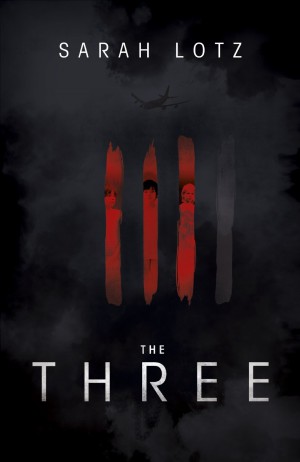
Review: THE THREE by Sarah Lotz (Hodder)

LotzS-TheThreeA brilliant thriller. A must-read. And one of my new favourite books.

“They’re here… The boy. The boy watch the boy watch the dead people oh Lordy there’s so many… They’re coming for me now. We’re all going soon. All of us. Pastor Len warn them that the boy he’s not to­­—”

The last words of Pamela May Donald (1961-2012)

Black Thursday. The day that will never be forgotten. The day that four passenger planes crash, at almost exactly the same moment, at four different points around the globe.

There are only four survivors. Three are children, who emerge from the wreckage seemingly unhurt. But they are not unchanged.

And the fourth is Pamela May Donald, who lives just long enough to record a voice message on her phone.

A message that will change the world.

The message is a warning.

This wasn’t what I was expecting. I think I saw a positive comment from Lauren Beukes on Twitter, but other than that, didn’t know too much about it. So it was with great anticipation that I started reading it. And I loved it. It’s unusual, brilliantly written and expertly constructed, utterly gripping, frequently chilling, and always fascinating. It’s also really difficult to review, but very easy to praise. Continue reading

“The Library of Unrequited Love” by Sophie Divry & Siân Reynolds (trans.) (MacLehose Press)

Divry-TheLibraryOfUnrequitedLoveA peculiar, endearing little book

One morning a librarian finds a reader who has been locked in overnight.

She starts to talk to him, a one-way conversation that soon gathers pace as an outpouring of frustrations, observations and anguishes. Two things shine through: her shy, unrequited passion for a quiet researcher named Martin, and an ardent and absolute love of books.

A delightful flight of fancy for the lonely bookworm in all of us…

What a peculiar little book. The Library of Unrequited Love is a 98-page, stream-of-consciousness, single-paragraph monologue. Ordinarily, such a description would be an automatic turn-off for me. This, however, was a very endearing read.

Someone has been locked in a library over-night, and in the morning an old librarian finds him as she prepares to open up. Rather strangely, instead of being particularly concerned, the librarian goes on a great, long, free-form ramble that covers a broad-range of topic – from libraries, books, librarians-vs.-readers, society, and, of course, Martin (who has attracted her eye and is the emerges-late-in-the-story focus of the title).

Given its extremely brief length, it’s difficult to know how to approach it for a review. Reynolds has done a great job with the translation, and there’s a great flow to the narrative. We really get a sense of the librarian’s character, her biases and tastes. There’s a wealth of information and great commentary, too – especially on the subject of libraries. Here are just a couple of nuggets.

First, a thought on the strange people they attract, but also why they’re important in the Summer:

“… libraries do attract mad people. Especially in summer. Of course, if you closed the libraries during the summer holidays, you wouldn’t see them. No more lunatics, poor people, children on their own, students who’ve failed their exams, no more little old chaps, no more culture and no more humanity. When I think that some mayors dare to close their libraries in August. Just to cut down on costs. Barbaric. Think of it: when the town’s sweltering in the heat, the shops are all shut, the swimming baths are full, people’s purses are empty, their pay’s too low, and they’re brooding over their problems in the shade, with the tar melting on the road, the house of culture could be opening its arms to all those children lost in an ocean of urban idiocy, but no, his nibs the Mayor has closed the library … What’s the little old pensioner going to do in August? I’ll tell you: he gets up on Tuesday morning, he takes the only bus of the day, and he toddles along slowly to the entrance of the library, because for twenty-four hours he’s been looking forward to a nice long day spent in an air-conditioned reading room, leafing through his favourite newspapers, and then like a stab in the back, or Napoleon’s coup d’etat, my poor little pensioner sees the criminal notice on the door: Closed until September … Nothing is sadder than an empty library.”

And also this amusing interpretation of the never-ending war that takes place in a library:

“I’ll tell you how it works. The library is the arena where every day the Homeric battle begins between books and readers. In this struggle, the librarians are the referees. In this arena, they have a part to play. Either they’re cowards and take the side of the mountain of books, or they bravely help the worried reader. And in this fight, you have to let your conscience be your guide. But librarians aren’t automatically on the side of the humans, don’t be fooled. You don’t realize, but you’re a flock of sheep in our hands, you think you’re gambolling about free as air, but there are wolves everywhere lying in wait for you, cyclops, sirens, naked nymphs, oh, the pity of it … A barricade only has two sides and I know which side I’m on, comrade. I’m here to help the poor, depressed, thirsty reader faced with the crushing prestige of the Army of Books.”

Overall, then, I would strongly recommend this to anyone who was brought up visiting libraries and thinks of them fondly, any bibliophile, and also anyone who has a couple of hours to fill and doesn’t want to dive in to a new full-length novel quite yet.

A peculiar, endearing, very well-written novella. Definitely recommended.