 I spotted Natasha Pulley‘s next novel, The Half Life of Valery K, while browsing NetGalley this morning. Pulley is an author I still have yet to read (no idea why), even though I’ve bought all of her books — each of which sounds fantastic. (I blame Kindle Out-of-Sight Syndrome.) I hope to get caught up as soon as I can. The author’s new novel, apparently based on real events, sounds particularly intriguing. Here’s the synopsis:
An epic Cold War novel set in a mysterious town in Soviet Russia.
In 1963, in a Siberian prison, former nuclear specialist Valery Kolkhanov has mastered what it takes to survive: the right connections to the guards for access to food and cigarettes, the right pair of warm boots, and the right attitude toward the small pleasures of life so he won’t go insane. But one day, all that changes: Valery’s university mentor steps in and sweeps him from the frozen camp to a mysterious unnamed city. It houses a set of nuclear reactors, and surrounding it is a forest so damaged it looks like the trees have rusted from within.
In City 40, Valery is Dr. Kolkhanov once more, and he’s expected to serve out his prison term studying the effect of radiation on local animals. But as Valery begins his work, he is struck by the questions his research raises. Why is there so much radiation in this area? What, exactly, is being hidden from the thousands who live in the town? And if he keeps looking for answers, will he live to serve out his sentence?
Natasha Pulley’s The Half Life of Valery K is due to be published by Bloomsbury in North America and in the UK, on July 26th.
 It was the cover for Erin Swan‘s upcoming new novel, Walk the Vanished Earth, that originally caught my attention. However, pitched as being “in the tradition of Station Eleven, Severance and The Dog Stars” (two of which I’ve read and very much enjoyed), the synopsis further cemented my interest in it. Due out in May, here’s what it’s about:
 There has been a string of novels over the past few years that take place in and adjacent to the 1970s music scene — most notably, Taylor Jenkins Reid’s Daisy Jones & the Six, Emma Brodie’s Songs in Ursa Major, Jessica Anya Blau’s Mary Jane, and Glenn Dixon’s Bootleg Stardust, to name but four. As it happens, I’m a big fan of this (sub-)genre, so I’m very much looking forward to Sarah Priscus‘s debut novel, Groupies, which “shines a bright light on the grungy yet glittery world of 1970s rock ‘n’ roll and the women – the groupies – who unapologetically love too much in a world that doesn’t love them back.” Here’s the synopsis:
 The American crime and mystery genres are oversubscribed with novels and series set in the big cities — especially New York and Los Angeles (with a surprisingly large number set in Minnesota, too). There is a growing number of author setting their novels elsewhere.* A notable upcoming example is Eli Cranor’s
  The cover for Nebula Award-winning author Rachel Swirsky‘s upcoming new novella, January Fifteenth was unveiled a little while ago, and it caught my attention. After reading the synopsis, my interest was further piqued:
 Next year, Tor Books are due to publish the first book in Maurice Broaddus‘s new Astra Black trilogy: a sci-fi epic that explores the struggles of members of the interstellar Muungano empire — a far-reaching coalition of city-states that stretches from O.E. (original earth) to Titan — as it faces an escalating series of threats. I’ve enjoyed what I’ve read of Broaddus’s previous work, and I’m rather looking forward to giving this a try. Here’s the synopsis:
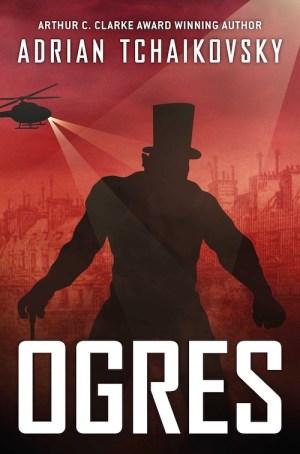 A new book from Adrian Tchaikovsky is always great news. Next year,
  I can’t remember when or where I first heard about Max Gladstone‘s upcoming new novel, Last Exit (probably from a catalogue), but after the cover was revealed my interest was well and truly piqued — I know we’re not supposed to judge a book by it’s cover, but just look at it. Described as “American Gods meets The Dark Tower in Last Exit,” I think this is going to be a good one. Here’s the synopsis:
 Civilian Reader