Review: THE LAST MAGAZINE by Michael Hastings (Blue Rider Press)

9780399169946_LastMagazineThe_JK_r2.inddA dual-personality novel from the late journalist

The year is 2002. Weekly newsmagazines dominate the political agenda in New York and Washington. A young journalist named Michael M. Hastings is a twenty-two-year-old intern at The Magazine, wet behind the ears, the only one in the office who’s actually read his coworker’s books. He will stop at nothing to turn his internship into a full-time position, and he’s figured out just whom to impress: Nishant Patel, the international editor, and Sanders Berman, managing editor, both vying for the job of editor in chief.

While Berman and Nishant try to one-up each other pontificating on cable news, A.E. Peoria — the one reporter seemingly doing any work — is having a career crisis. He’s just returned from Chad, where, instead of the genocide, he was told by his editors to focus on mobile phone outsourcing, which they think is more relevant. And then, suddenly, the United States invades Iraq — and all hell breaks loose. As Hastings loses his naïveté about the journalism game, he must choose where his loyalties lie — with the men at The Magazine who can advance his career or with his friend in the field who is reporting the truth.

Michael Hastings was one of the best young journalists in America before his death last year. Best known, perhaps, for his Rolling Stone piece that got General Stanley McChrystal fired (a media and political furore that was overblown in the extreme, in my opinion). He wrote excellent books (including The Operators, a much-expanded account of his time with McChrystal) and excellent feature articles for multiple publications. He also, as it turned out, wrote The Last Magazine, a fictional account of his time at Newsweek. Published posthumously, it took me a while to get my hands on the book, and I have very mixed feelings about what I found. Continue reading

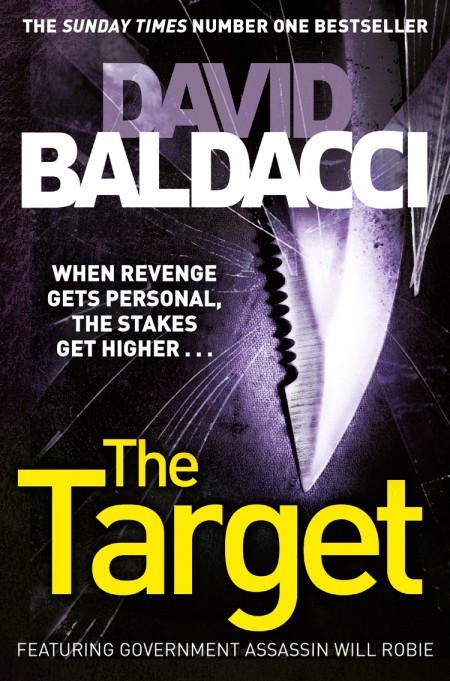
Review: THE TARGET by David Baldacci (Macmillan/Grand Central)

Baldacci-WR3-TargetUKThe third Will Robie thriller sets him and Jessica Reel on a collision courts with the Hermit Kingdom…

The President knows it’s a perilous, high-risk assignment. If he gives the order, he has the opportunity to take down a global menace, once and for all. If the mission fails, he would face certain impeachment, and the threats against the nation would multiply. So the president turns to the one team that can pull off the impossible: Will Robie and his partner, Jessica Reel.

Together, Robie and Reel’s talents as assassins are unmatched. But there are some in power who don’t trust the pair. They doubt their willingness to follow orders. And they will do anything to see that the two assassins succeed, but that they do not survive.

As they prepare for their mission, Reel faces a personal crisis that could well lead old enemies right to her doorstep, resurrecting the ghosts of her earlier life and bringing stark danger to all those close to her. And all the while, Robie and Reel are stalked by a new adversary: an unknown and unlikely assassin, a woman who has trained her entire life to kill, and who has her own list of targets – a list that includes Will Robie and Jessica Reel.

The Target is another great addition to this relatively-new series from Baldacci. Taking the popular central character of government assassin, the author has managed to forge a somewhat original path. The novel is gripping, excellently-paced, and well-researched. As has become the norm with Baldacci’s novels, I really enjoyed reading this. Continue reading

Quick Reviews: BULLSEYE, THE INNOCENT, and THE HIT by David Baldacci (Macmillan/Grand Central)

Baldacci-WR-0to2UK

Two novels and a short story introducing a new hero from one of the modern masters of thriller fiction…

I really enjoyed all three of these stories. I also read them quite a while ago, in preparation for the release of The Target. I’m not sure why I didn’t get around to posting reviews of them sooner, but I wanted to mention them here. Because they’re excellent. I’ll keep things short, though… Continue reading

“The Last Man” by Vince Flynn (Simon & Schuster / Atria Books)

Flynn-LastManUKThe final Mitch Rapp novel

An invaluable CIA asset has gone missing, and with him, secrets that in the wrong hands could prove disastrous. The only question is: Can Mitch Rapp find him first?

Joe Rickman, head of CIA clandestine operations in Afghanistan, has been kidnapped and his four bodyguards executed in cold blood. But Mitch Rapp’s experience and nose for the truth make him wonder if something even more sinister isn’t afoot. Irene Kennedy, director of the CIA, has dispatched him to Afghanistan to find Rickman at all costs.

Rapp, however, isn’t the only one looking for Rickman. The FBI is too, and it quickly becomes apparent that they’re less concerned with finding Rickman than placing the blame on Rapp.

With CIA operations in crisis, Rapp must be as ruthless and deceitful as his enemies if he has any hope of finding Rickman and completing his mission. But with elements within his own government working against both him and American interests, will Rapp be stopped dead before he can succeed?

The Mitch Rapp series is in many ways the one that kick-started my passion for international and espionage thrillers. After reading Transfer of Power, the novel that introduced Rapp as the man who takes back the White House from terrorists, I quickly caught up with the rest of the series, and have read every one since. The Last Man is, sadly, the last novel. Flynn passed away last year, after a long battle with cancer. It’s an awkward ending, however. Thankfully, though, while the novel began shakily, it ended strongly. Long-time fans of the series and characters won’t be disappointed, as this is another fast-paced, gripping international thriller, featuring all of the key series characters.

One of the first things to jump out at me was just how aggressive Rapp is at the start of the novel. True, he’s a CIA assassin, who has had a decades-long career killing people all over the world, so how cuddly could he ever be, really? Nevertheless, he came across as far more aggressive and even downright mean when dealing with others. It felt like a real departure from how I remembered the character. The previous two novels Flynn wrote focused on Rapp’s early career, taking us to his first missions working for the CIA. This can, perhaps, account for the apparent shift in character – it’s been years since I read a novel when the ‘present day’ Rapp was at the centre of the story (a couple before the early ear novels focused more on one-time Rapp protégé Mike Nash). I’d accept, therefore, that I just forgot how the character was from before. At the same time (just to add yet more qualifiers), it definitely felt like he was just more aggressive and confrontational by default, rather than as a result of what’s going on around him. Maybe the novel’s naysayers have a point, that Rapp’s special status has made him more arrogant and given him a sense of invincibility (physical and political). He came across as though he was acting more macho and dick-swinging, rather than just being the Most Badass in Any Room.

Given just how much of an asshole he can be, this was one of the first times in the whole series when Flynn wasn’t able to always keep me on Rapp’s side, even when we know he’s pushing the envelope and bending rules just that little bit too far. Despite belabouring this impression, what I’ve come to consider the Rapp normalcy did reassert itself after I passed the 25% mark(ish).

Around this 25%-mark, Rapp is seriously injured, too. It allowed the author and character to take a look at Rapp’s life and SOP with a bit more depth. His memories are all screwed up, many of them missing, thanks to the head injury he sustains. We see him navigating the slow return of memories – both good and bad – and the way he processes them made him a more interesting and nuanced character. The presence of Louie Gould, too, added an extra level of tension (I won’t remind fans who he is, nor will I spoil it for new readers).

His injury is just one of a couple of factors that make Rapp more interesting as the novel progresses. True, he is still preternaturally gifted at his job, but he is kept grounded by mistakes and miscalculations (the cause of his injury, for example, is the result of a rash – though effective – last-minute tactical move). This humanising of Rapp, something that was not always as evident in the earlier novels, I thought was a welcome development – he’s not a super-human, faultless killing machine, anymore.

Flynn-LastManAs the novel continues, we learn of a larger conspiracy, which ended up being pretty well-told. There are the usual forces foreign and domestic working against Rapp, his comrades and CIA Director Irene Kennedy (who is always excellent). The final quarter of the novel is a fast-paced resolution that I could not put down, and I turned the final page at 2am. Flynn’s gift for constructing engaging, briskly-paced thrillers really was superb, and few authors writing in the same sub-genre could match him (David Baldacci and Kyle Mills are perhaps the only two I consider better).

There were a couple of moments when Flynn’s own politics and obvious affection and support for the clandestine and more force-oriented US governmental institutions shines through, coupled with less-than-positive portrayals of diplomatic actors. This doesn’t take up much of the novel, which also means he doesn’t offer the normal balance that I’ve always liked in his novels. The author was known for courting the conservative press in order to promote his novels – fair enough, as a conservative himself, why shouldn’t he? – but the fact that he didn’t lampoon liberals or Rapp’s opponents unnecessarily, always saved his novels from becoming ham-fisted anti-liberal screeds. Villains, foreign and domestic, were appropriately diabolical or (more likely) petty politicians, but were not limited to the Democratic Party. In The Last Man, however, it is far more about the investigation than the political forces at play behind the scenes – which is a pity, as Flynn really was very good at writing that part, too.

In all, then, a very good final novel, if not an excellent one. Nevertheless, I will seriously miss my annual fix of new fiction from Vince Flynn. The quality of his novels will allow them to persevere and, I’m sure, remain in print for many years to come. If you are a fan of international espionage thrillers, then I highly recommend Flynn’s work.

R.I.P. Vince Flynn, 1966-2013

Novel Chronology: American Assassin, Kill Shot, Term Limits,* Transfer of Power, The Third Option, Separation of Power, Executive Power, Memorial Day, Consent to Kill, Act of Treason, Protect and Defend, Extreme Measures, Pursuit of Honor, The Last Man

* This is not actually a Mitch Rapp novel, but a couple of the characters within feature throughout the main series. It’s an excellent novel, too.

Guest Post: “Influences & Inspirations” by Duncan Jepson

JepsonDuncan-AuthorPic1During the last 150 years, China and the West have collided many times, virtually always on Chinese soil, and their relationship is heavily coloured by this history. Many in Asia are choosing and building their futures motivated by their own and their family’s experiences, ambitions and histories, much of it unclear and unknown to most in the West. The relationship between China and West is set to become more intense and complicated and we have to hope these two sides will work together rather than tear the world apart.

The story of Emperors Once More is about the collision of these different motivations and forces in China and among Chinese people, set against their position on the world stage. On a national level, the government is tasked with maintaining a union of a billion plus people so it does not crumble into chaos again, fighting the very human feeling of humiliation from centuries of defeat, both personal and national, the need to re-establish respect on the world stage, the clashes that will arise from the very practical need to obtain vital resources for the future and China’s new role in the global order. The story is also about those very personal experiences such as migration, subservience, colonialism, aspiration, ideology, revolution and tradition.

JepsonD-EmperorsOnceMore

This is also personal to me. As a Eurasian, I have often found myself stuck awkwardly in geography, sometimes feeling at home in no place in particular but persistently trying to be comfortable in both East and West. I have watched the older generation in Hong Kong, those having lived and grown up under colonial rule, feel the weight of a heavy glass ceiling whether due to limited education, lack of understanding of the governing culture or, at times, simply by race. To some there is a deep frustration and resentment to having been treated as what they feel is a foreigner in their own home. Thankfully the world has moved on and a young generation of Chinese don’t see themselves this way – many are now of a new global generation.

The premise of Emperors Once More is that, in 2017, China has bailed out the West, but the West has defaulted on its debt. For many Chinese, this has the same strong sense of bitterness as the humiliations of the Opium War, Rape of Nanjing and Boxer Rebellion. One man in Hong Kong, deeply affected by colonialism, wants to use this new collective anger and indignation to push Chinese to demand China use its global power to reclaim its rightful place in the world order. To achieve these ends, he will draw on both ancient rites and modern technology to commit a series of killings and provoke national rage.

I wanted a criminal with a purpose and an anger that is rooted deep in history and personal experiences, believing there are wrongs to be righted, and a hero who is of a new different world who sees a better future that does not have to pay for the past. I hope that this story pulls the reader into a full-bloodied crime tale while drawing on Chinese history, culture and mysticism.

***

Duncan Jepson is the award-winning director, producer and writer of five feature films. He also produced documentaries for Discovery Channel Asia and National Geographic Channel. He was the editor of the Asia-based fashion magazine West East and a founder and managing editor of Asia Literary Review. He is a social commentator on Asia and regularly writes for The New York Times, Publishing Perspectives and South China Morning Post. A lawyer by profession, he lives in Hong Kong.

Jepson’s Emperors Once More is out now, published in the UK by Quercus Books. Jepson is also the author of All the Flowers in Shanghai. Be sure to follow Duncan on Twitter and Goodreads.

Mini-Review: “La Santasima” by Teresa Frohock

Frohock-LaSantisimaA brilliant, dark short story from one of my favourite authors.

It’s also a story that any review of length will ruin. It’s timely, incisive and haunting – it is a blending of the supernatural with the ongoing illegal immigration across the US-Mexican borders. Frohock has written a brilliant story that highlights the dangers and issues that those desperate to enter the States will face, as well as the people who will take advantage of and prey on their desperation. At the same time, it is a touching story of family ties.

Here’s the synopsis…

Sebastian’s friend Carlos claims that La Santa Muerte watches over the poor, the ones that the Church abandons. He promises Sebastian that La Santa Muerte will be his patron saint, that she will protect him and grant his wishes.

Death comes for us all. Keep her as your friend.

Sebastian is disappointed as prayer after prayer is rejected by the saint, and he loses faith. One night his sister Lucía joins him, and La Santa Muerte answers their prayer to bring their brother home…

On top of that, the eBook has a great piece by the author at the end, talking about the genesis of the story. If you haven’t read Frohock’s work, yet, you must. Best of all, La Santisima is free on Smashwords!

President Obama in Comics: An Interesting and Peculiar Selection from the Sub-Sub-Genre…

President Obama has already featured in a number of comic books: be they comic/graphic adaptations of his life story, campaign-biography style one-shots, or cameos in established series comic series (such as Marc Guggenheim’s Avenging Spider-Man, below). Few presidents have excited the imaginations of such a broad segment of the American public and creative industries as has the 44th president. As someone who is interested in the cross-over areas of politics, media and pop culture, these past five years have been a fertile time for alternative presidential coverage.

BarackObama-01

Boom Studios’ Barack Obama 2012 Election Issue

ObamaComicCovers

Barack Obama: The Comic Book Biography (IDW, 2012); Marvel’s Amazing Spider-Man: Election Day Cover, 2008 (above) and interior pages (below)

AmazingSpiderMan-ElectionDay-Interior0

Most recently, IDW Comics published The Other Dead (currently at issue #4), which is elevator-pitched as “Zombie Animals Devour the World”. The longer-form description sounds like a familiar, fauna-twist on The Walking Dead:

“As a weary community braces for the onslaught of an incoming superstorm, an even more insidious force grows right under their noses! When a sudden outbreak turns every animal in sight into raging, flesh-craving monsters, a colorful cast of characters will have no choice but to contend with THE OTHER DEAD!”

But, as the series unfolds, and the infection spreads across America, a diverse cast of characters – “ranging from a demon-obsessed death metal band to a paranoid survivalist to the President of the United States himself” – will try to contend with and combat “the most unpredictable zombie outbreak in history.” I don’t have any interior page previews featuring the president, but of the 11 cover variants that have thus-far been revealed for the first four issues, there are two (#1 and #4) that feature President Obama prominently, toting some serious firepower:

OtherDead-ObamaCovers

The Other Dead issues #1-4 are out now, published by IDW Comics. The series is written by Joshua Ortega and Digger T. Mesch, cover artwork is by Kevin Eastman, interior artwork is by Qing Ping Mui, and colouring by Blond.

“Silken Prey” by John Sandford (Putnam/Simon & Schuster)

Sandford-23-SilkenPreyUKMurder, scandal, political espionage, and an extremely dangerous woman. Lucas Davenport’s going to be lucky to get out of this one alive.

Very early one morning, a Minnesota political fixer answers his doorbell. The next thing he knows, he’s waking up on the floor of a moving car, lying on a plastic sheet, his body wet with blood. When the car stops, a voice says, “Hey, I think he’s breathing,” and another voice says, “Yeah? Give me the bat.” And that’s the last thing he knows.   

Davenport is investigating another case when the trail leads to the man’s disappearance, then — very troublingly — to the Minneapolis police department, then — most troublingly of all — to a woman who could give Machiavelli lessons. She has very definite ideas about the way the world should work, and the money, ruthlessness, and sheer will to make it happen.

No matter who gets in the way.

I’m a huge fan of Sandford’s Minnesota-based crime thrillers. In fact, I would say that he’s probably my favourite thriller author bar none. Silken Prey is the 23rd novel in his Lucas Davenport series, and the series just keeps firing on all cylinders. This time, Sandford turns his attention to politics, which always offers new and ‘exciting’ ways in which an investigation can become muddled, dangerous, or even impossible. Lucas is tasked by the Democratic governor to investigate what appears to be a political framing of the Republican Senator. Making things really tricky, of course, is the fact that they are all in the middle of the election. Party politics, dirty tricks, extreme suspicion, and a deadly killer (or two) operating on the sidelines? This is Davenport. He can handle it. Maybe…

The novel displays Sandford’s easy, inviting prose style, the wry humour that has always made this series stand out, and also his engaging and endearing characters. The friendship between Lucas and his various colleagues feels very natural – after 23 novels, how could it not be? The antagonists of the piece are well-drawn, avoiding cartoon-ish cliché or exaggeration. It was nice to see Kidd and Lauren make an appearance, as it feels like a really long time since we saw them last (the two of them had their own, four-book series earlier in Sandford’s career – and I would highly recommend those, too). The novel is uncluttered, unpretentious, and very focused. It’s not a blockbuster thriller, with a focus on character way more than guns or action-scenes.

The ending was just a smidge muddled, as if the author felt he needed to wrap things up relatively quickly, but I think he nevertheless manages to pull it off, and it wasn’t dissatisfying. It didn’t feel rushed, actually. The conclusion also leaves things open for further exploration in a later book (which I really hope Sandford does). I get the feeling that Sandford has some big plans for Davenport’s future, and I can’t wait to read the next book in the series. This far into a series, it is a testament to the author’s exceptional skill as a writer that he manages to make each new novel as gripping and addictive as the last. Long may this continue!

A short-and-sweet review, this. I don’t want to delve too much into the story, as there are a couple of switches and changes at certain points of the narrative. The synopsis, above, should suffice to give you as much as you need. All I can say is that John Sandford is a superb writer, and Silken Prey is yet another strong addition to his beloved series. I will really have to catch up with the companion series, which follows Davenport’s protégé (of sorts), Virgil Flowers. I’ve read the first in that series, but have six more to catch up on. I may plan to do that over Christmas and New Year.

Very highly recommended for all fans of crime thrillers.

“Kill Shot” by Vince Flynn (Simon & Schuster)

Flynn-KillShot

A second novel of Mitch Rapp’s early CIA career

For months, Mitch Rapp has been steadily working his way through a list of men, bullet by bullet. With each kill, the tangled network of monsters responsible for the slaughter of 270 civilians becomes increasingly clear. He is given his next target: a plump Libyan diplomat who is prone to drink and is currently in Paris without a single bodyguard.

Rapp finds him completely unprotected and asleep in his bed. With confidence in his well-honed skills and conviction of the man’s guilt, he easily sends a bullet into the man’s skull. But in the split second it takes the bullet to leave the silenced pistol, everything changes. The door to the hotel room is kicked open and gunfire erupts all around Rapp. In an instant the hunter has become the hunted. Rapp is left wounded and must flee for his life.

I am a huge fan of Vince Flynn’s novels – I’ve read them all except the latest, now. Sadly, the author passed away earlier this year, so there is actually only the one other novel (which I will read A.S.A.P.). Flynn’s novels are action-packed, tightly written, and always a great read. If you’ve never read any of the Mitch Rapp novels (or Term Limits, the set-in-the-same-time prequel of sorts), then I highly recommend that you do. Kill Shot was a little bit different, following on from American Assassin, the first novel set during Rapp’s very early career as a CIA assassin. It’s a very good novel.

The novel starts with a scene between Irene Kennedy and the CIA shrink, Lewis. They’re talking about Rapp, his incredible proficiency and fish-to-water acclimation to his new job – he’s only been with the Company for a year at this point, and is proving brutally efficient and competent at killing…

“I’m talking about the fact that he is a one-man wrecking ball. That he has methodically, in a little over a year, accomplished more than we have accomplished in the last decade. And let’s be brutally honest with each other.” Lewis held up a finger. “The ‘what’ that we are talking about is the stone-cold fact that he is exceedingly good at hunting down and killing men.”

There’s some nice foreshadowing for the future novels set after this discussion between the shrink and Irene (it continues off-and-on during the novel). For example, this snippet, which foreshadows Term Limits

“Justice is blind, and if you train a man to become judge, jury, and executioner . . . well, then you shouldn’t be surprised if he someday fails to see the distinction between a terrorist and a corrupt, self-serving bureaucrat.”

Rapp, in the meantime, is in Paris, executing one of the terrorists involved in the ring that took down the plane that killed his college sweetheart. The operation doesn’t go as planned, as someone was waiting for Rapp. The next morning, the news breaks in Washington that Libya’s Oil Minister has been killed along with three innocent civilians and four unidentified men. The French authorities are certain that the gunman is wounded and on the loose in Paris. Rapp’s handlers have only one choice, of course: deny any responsibility for the incident and pray that their secret asset stays that way, avoiding capture and dying quietly. Naturally, Rapp is unlikely to do so, and decides to get to the bottom of the situation, and hunt down the rat in the chain of command.

Rapp’s paranoia and relative newness in the business sets in motion a series of events dictated by his training and also belief that he’s been set up by someone very close to him – specifically, and for a short while, the potential that Irene was the one that spilled the beans:

“She was by necessity the person who knew the most about him, and the details of this mission. His orders came from her. If anyone were in a position to set him up it would be her.”

With nobody to trust, he resorts to his wits to get to the bottom of things, as the two sides – Rapp’s and the CIA’s – circle each other, attempting to ascertain the other’s motives. Slowly, though, the truth comes out, and Rapp is able to channel his… attentions in the appropriate direction.

The novel is not as fast-paced as Flynn’s previous novels, and felt slightly drawn out at times. Key events and moments helped maintain interest, however, as we see Rapp growing more into his new role, and everyone else coming to terms with just how good he is at his job. Flynn also offers a fair bit of discussion and commentary on the nature of psychosis and psychopathy and their potential connection to those with careers in the military – especially with regards to special forces.

Given the early setting, it was also interesting to see a different, undeveloped side of Stansfield’s, Irene’s and Rapp’s relationships. They trust his skills, but they have not yet developed the intense bond of trust that we saw even in Transfer of Power (a novel that helped light the fire under my thriller addiction).

I ended up not taking too many notes for this novel – this is not exactly a surprise, when it comes to thrillers or novels that I become engrossed in. It is a very good thriller, and I was drawn on throughout, devouring this far quicker than most novels I’ve read recently.

Overall, this is a very good novel. Not the author’s best, but certainly a must-read for fans of the series and also for thriller fans in general.

Vince Flynn’s final novel, The Last Man, is out now.

Series Chronology: American Assassin, Kill Shot, Term Limits, Transfer of Power, The Third Option, Separation of Power, Executive Power, Memorial Day, Consent to Kill, Act of Treason, Protect and Defend, Extreme Measures, Pursuit of Honor, The Last Man

Propaganda & Politics – When Historical Images Remain Relevant

I was at the British Library’s Propaganda: Power and Persuasion exhibition last week. I highly recommend anyone within easy reach of London visit the exhibition (open until September 17th). There are a good number of excellent displays, and even a couple that are relevant to content that has appeared on Civilian Reader. I’m putting together a longer post about a specific piece in the exhibition, but I thought I’d share another of my favourites here today. Namely, “Freedom American-Style” by B. Prorokov (1971):

FreedomAmericanStyle-1971-BProrokov

I shared this over on Politics Reader, too, but I thought some readers of this blog might also find it interesting. According to the British Library’s page on the poster:

“… New York’s famous Statue of Liberty is parodied as a look-out tower for the American police to observe its people, mocking the idea that it is a symbol of freedom. The poster attacks and subverts American propaganda that promoted the idea of the democratic freedom of the West.”

Given the considerable prison population in the United States, it would appear that Prorokov’s piece retains contemporary relevance, and probably will for quite some time to come…