Upcoming: “Steelheart” by Brandon Sanderson (Gollancz)

Spotted this on Amazon UK, while looking up info for any new Brandon Sanderson releases, and thought I’d share it on here:

Sanderson-Steelheart

Ten years ago, Calamity came. It was a burst in the sky that gave ordinary men and women extraordinary powers. The awed public started calling them Epics.

But Epics are no friend of man. With incredible gifts came the desire to rule. And to rule man you must crush his wills.

Nobody fights the Epics… nobody but the Reckoners. A shadowy group of ordinary humans, they spend their lives studying Epics, finding their weaknesses, and then assassinating them.

And David wants in. He wants Steelheart — the Epic who is said to be invincible. The Epic who killed David’s father. For years, like the Reckoners, David’s been studying, and planning — and he has something they need. Not an object, but an experience.

He’s seen Steelheart bleed. And he wants revenge.

Disclaimer: I work for Brandon’s UK Agent

Steelheart will be published in the UK by Gollancz in September 2013. I was lucky to get my mitts on a copy, though, and I blitzed through the first quarter of the novel last night – it’s a lot of fun. I’ll do a quick sort-of-review on here when I’ve finished it. If you’re a fan of super-heroes, but always wondered what humans would do if the super-powered persons all used their abilities for evil… Well, this could be the novel for you.

I also hope it’ll open up the sub-genre of super-hero fiction, as I’d like to read more of it. (And I’m writing one myself, actually…)

Here’s the US artwork for the novel (to be published by Delacorte in September as well):

Sanderson-SteelheartUS

Guest Post: Can there be such a thing as “Too Much Fantasy?” by David Emrys

David E. Emrys is the author of a couple of self-published fantasies. I got to chatting with him on Twitter, and he seemed like a good fellow. So I asked if he’d like to write something. And he did. So here it is.

image

Is the fantasy world over-populated? It’s a valid question and one that keeps raising its ugly head in the current era of ‘Lord of the Authors: The Fellowship of the Fantasy’.

Without battling out the topic of Indie vs Traditional, I want to take a moment and talk about fantasy worlds. A simple blog post can’t cover every single fantasy tome to have ever graced a book shelf (or a digital market place like Amazon, for all you e-publishing gurus), but we can highlight a few.

J.R.R. Tolkien with his elves, and his dwarves, his hobbits with their hairy feet, and his trolls. Ringwraiths, a dark lord, and a powerful artefact that is a curse to all those who bear it.

George R.R. Martin with his thrones, and his games, the squabbles of men, and the treachery, futility and thick-fast plots (oh, and if you’ve watched the TV adaptation, there’s a fair number of boobs, too).

Ursula K. Le Guin – if there was a Godmother of fantasy, it would be le Guin. Her stories are folklore brought to life, magic and mysticism intoned with a rich world building.

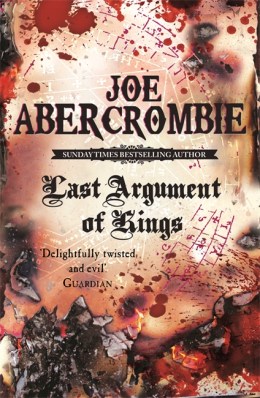
Robin Hobb, who’s back catalogue boasts more tomes than the knives of Joe Abercrombie’s cast (below) – claimed by Orson Scott Card to have “set the standard for the most serious fantasy novel”.

Peter V. Brett – demons galore! How ‘man’ (and woman!) can overcome their fears for what they believe is right.

Karen Miller strives to break down the old fantasy clichés, using them where she will, but bending and twisting them into something new, pushing ‘fantasy’ into a more ‘fantastical’ realm.

Mark Lawrence explores the moral depravity of a Prince who won’t let anything – or anyone – stand in his way, even if that involves burning the world just to keep warm.

Michael J. Sullivan brings bromance to the fold (Webster’s unofficial definition of bromance: “bro-mance, a combination of brother and romance, meaning ‘a brotherly romance’ between two males.” Often seen sharing large quantities of bruises, beauties, and beatings) with a healthy dose of death-defying escapades and swashbuckling adventures.

John Gwynne breaths fresh life into the folklore and legend side of fantasy, giving Giants, Wyrms and even Angels a gritty new lease with a Nordic/Celtic feel.

Brent Weeks forefronts assassins in one, and mages in another, but above all else they struggle with their own powers for further means.

Brandon Sanderson… Magic, need I say more? But then again, his world-building is second to none.

Joe Abercrombie touts more knives than any sane man should ever need, but lucky for us not all of his characters can be deemed sane enough to count or care for that matter. But when all is said and done, it’s down to being what you’re meant to be, and (as he often states by way of infamous barbarian Logen NineFingers) once you’ve got a task to do, it’s better to do it than live with the fear of it.

Helen Lowe, a relative newcomer to the fold, but with her fresh blood added to the mix, the 2012 Gemmell Award winner (Morningstar category) weighs in with a hefty dose of darker, grittier fantasy and a deeper meaning of how we treat each other.

I’ve barely even touched the surface here. I could go on for hours. James Barclay, David Gemmell (big daddy of British heroic-fantasy), Robert E. Howard, Patrick Rothfuss, Robert Jordan, Tamora Pierce, David Dalglish, Mazarkis Williams, Moses Sirergar III, Ben Galley, Steven Erikson, Christopher Paolini… ok, ok – I’ll stop, now.

So, the fantasy genre is a busy set of worlds. But each and every one of them is different. Yes, a lot of them share themes or creatures (elves, dragons, hobbits, dwarves, damsels in distress… hobbits, or other creatures with hairy feet?), but would you really say: “No more!” Heck, I’m sure if you asked a lot of these authors they’d admit to being inspired by one another. Of course they would.

Ok, let’s imagine if someone said “No more” to Robert Jordan. Would we have the Peter V. Bretts, and Christopher Paolinis of today? “Put that pen down, David Gemmell…”, and voila, no John Gwynnes or James Barclays. How many would we lose if Robert E. Howard had run out of ink on the first page, and Conan had been lost to an unfinished sentence?

IMAGINE THE CHAOS if someone told J.R.R. Tolkien to shave his hobbit and write a rom-com? Think of the children, pray for their futures!

Publishing is an ever changing industry, and fantasy is an ever changing realm of possibilities. If you’re Indie or Traditional, reader or writer… could you really say NO to one last fantasy? And before you start culling dwarves, shaving hobbit feet, or cashing in dragons’ fangs and hoards for the last copy of 50 Shades of Grey, just remember:

A Fantasy author isn’t just for Christmas. They’re for life.

(And even then, they’ll think of a way to come back and haunt you from the afterlife – they are, after all, in the business of fantasy.)

***

D.E.M. Emrys is the author of two eBooks in his Wroge Elements fantasy series: From Man to Man (UK/US – currently free on both) and It Began With Ashes (UK/US).

EmrysDEM-WrogeElements

Upcoming: “Blood Song” by Anthony Ryan (Ace)

RyanA-RS1-BloodSong

Anthony Ryan’s Blood Song was originally self-published, but Penguin snapped it up in 2012. I know a few other reviewers have already read the novel, and general consensus seems to be that it’s one to watch.

An epic fantasy exploring themes of conflict, loyalty and religious faith.

We have fought battles that left more than a hundred corpses on the ground and not a word of it has ever been set down. The Order fights, but often it fights in shadow, without glory or reward. We have no banners.

Vaelin Al Sorna’s life changes forever the day his father abandons him at the gates of the Sixth Order, a secretive military arm of the Faith. Together with his fellow initiates, Vaelin undertakes a brutal training regime – where the price of failure is often death. Under the tutelage of the Order’s masters, he learns how to forge a blade, survive the wilds and kill a man quickly and quietly.

Now his new skills will be put to the test. War is coming. Vaelin is the Sixth Order’s deadliest weapon and the Realm’s only hope. He must draw upon the very essence of his strength and cunning if he is to survive the coming conflict. Yet as the world teeters on the edge of chaos, Vaelin will learn that the truth can cut deeper than any sword.

Blood Song, the first book in Ryan’s Raven’s Shadow series, will be published by Ace Books in July 2013 in the US.

UPDATE: Rather quietly, it was announced that Orbit has bought publishing rights for the UK. The novel will be released as an eBook in April, and a Hardcover later in July. The UK artwork has been added to the top of the post, on the right.

“God’s War” by Kameron Hurley (Night Shade/Del Rey UK)

Hurley-GodsWar

The start of a new, unconventional SF trilogy

Nyx had already been to hell. One prayer more or less wouldn’t make any difference…

On a ravaged, contaminated world, a centuries-old holy war rages, fought by a bloody mix of mercenaries, magicians, and conscripted soldiers. Though the origins of the war are shady and complex, there’s one thing everybody agrees on…

There’s not a chance in hell of ending it.

Nyx is a former government assassin who makes a living cutting off heads for cash. But when a dubious deal between her government and an alien gene pirate goes bad, Nyx’s ugly past makes her the top pick for a covert recovery. The head they want her to bring home could end the war – but at what price?

The world is about to find out.

This is an unconventional, highly original and enjoyable debut sci-fi novel. I took my sweet time getting to it, for reasons I cannot fathom, but since its release in 2010 it’s received a lot of positive coverage from around the blogosphere. And now I know why. It’s not going to be to everyone’s taste, but it’s tightly written, well-constructed (for the most part), and… well, bonkers. I enjoyed this.

It also has one of the greatest, make-you-sit-up-and-take-note first sentences: “Nyx sold her womb somewhere between Punjai and Faleen, on the edge of the desert.”

The short Part One is a rapid-fire, near-riotous introduction to Nasheenian society and our main protagonist, Nyx. She is a somewhat troublesome, sometime rogue “bel dame” (a sanctioned bounty hunter and enforcer, I suppose). She’s been doing work on the side, which she really shouldn’t, and her sisters do not take kindly to this. We get a few hints of her past, but not too many until very near the end. She is caught, punished and imprisoned. Then we jump forward about seven years, and Nyx has moved on from her bel dame past and is working as a bounty hunter with a motley crew of violent and eccentric misfits.

The story is pretty grim, overall. The two main nations featured are at war with each other, and have been for quite some time. The two sides are constantly experimenting with new and innovative ways of causing mass-murder, often utilising the novel’s greatest creating: the bug-related bio-tech. (This is why the term “bugpunk” has been coined, and you’ll quickly see how suitable it is.) Nyx can be brutal (emotionally and physically) to those close to her. She’s reckless, cavalier, and self-destructive. Rhys, her pet magician (and the second ‘main’ character), is long-suffering, but they have a really interesting dynamic. They embody everything about each other’s culture that they don’t like, and yet they are drawn to each other nevertheless, and have created a mutually beneficial arrangement that seems to suit them both.

Hurley’s characters are pleasantly diverse, and I liked the imbalance towards more female characters. (Nasheenian society is matriarchal.) I enjoyed the way Hurley wrote them all, and I think she’s created a great society and world with which to keep writing in and for fans to keep reading (there are two more books in the series). Rasheeda, in particular, is creepy as all get out. And bonkers. The inclusion of shape-shifters was interesting, too (all that mucous must be a bit of a bitch, though…). The characters are interesting, three-dimensional and felt distinct from each other. I particularly liked Nyx’s crew, who created a dysfunctional family to follow. Rhys was a great character, and I liked all of his P.O.V. chapters. He’s a good lens through which we learn of the Nasheenian matriarchal society and the differences between that and his own, highly conservative Chenjan culture.

Bugs! Let’s get back to the bugs for a moment. They are everywhere and in almost everything: medicine (needles have eyes, because they seem to be specially engineered creatures), magicians control them for various means (healing, torture, light, espionage, security and surveillance, communications, etc.), and even some weapons have biological components. “Bio-tech”, in other words, on this world, is really “bug-tech”. Maybe my favourite things about this were the “bakkies”, which seem to be semi-organic (at least) buggies or cars. It’s all very weird, but detailed and very well-devised and realised on the page. Hurley never delves too deeply into how it all works – she gives us just enough to know what to picture, and then gets on with the story. Once the book ended, though, I felt like I had a pretty clear picture of how it all worked and fit together. Very cool.

Elements from early on in the novel are tied up quite nicely by the end (there’s a nice circle to the narrative). As a first novel, there is of course a lot of world-building going on, almost all of it very good and often fascinating, intricate. This can sometimes feel like it’s taking over the story, however: relegating the bounty hunt (or “note”, as it’s referred to on this world) to a near-peripheral status. I didn’t mind so much, as I enjoy reading about the world and its various societies. That being said, there were definite times when I had to remind myself that there was a narrative running through this, and it wasn’t just an exercise in imaginative social and cultural creation. This makes the end a little bit busy, in my opinion, although I will accept that I was distracted by the world-building, so I may have missed a couple of salient points from early on.

The writing is very good. I was willingly pulled on through the story, and read it relatively quickly.

Ultimately, I really enjoyed God’s War and, while flawed, I can certainly see how it has grabbed the attention of a number of discerning SFF fans. As I said, it’s unconventional, but it also draws from a lot of SFF traditions and plays around with almost all of them in new and interesting ways. Highly original, it really is about time God’s War was picked up by a UK publisher – which it now has been, by Del Rey UK (who are proving to have a pleasingly eclectic taste in titles).

Definitely recommended. I’ll be reading Infidel quite soon, followed shortly thereafter that by Rapture (both of which I already have from the US).

Interview with CHANDLER KLANG SMITH

84214936

Continuing my slow meander through Canadian publisher ChiZine’s stable of interesting and quirky authors, I bring you today a Q&A with Chandler Klang Smith, author of Goldenland Past Dark

Let’s start with an introduction: Who is Chandler Klang Smith?

I’m a novelist, an insatiable reader, an incurable daydreamer, a Midwestern transplant to New York City, and a graduate of Bennington College and the MFA Creative Writing program at Columbia University. I like carnivals, lost toys, forgotten Americana, and fairy tales with unhappy endings.

I thought we’d start with your fiction: Your latest novel, Goldenland Past Dark, was recently published by ChiZine. How would you introduce the novel to a potential reader?

Goldenland Past Dark tells the story of Webern Bell, a stunted hunchback, and his love affair with the circus, a show that gives him an outlet for creative expression. His bizarre childhood and struggles in young adulthood have given him tons of emotional material from the past, which he explores through haunting clown acts that come to him in dreams. But when reality confronts him – in the form of murder, heartbreak, and professional betrayal – he retreats so deeply into his fantasy world that he may never be able to find his way back out.

84214936

What inspired you to write the novel? And where do you draw your inspiration from in general?

My process with this book was unusual: I started out writing a collection of linked short stories about Webern’s childhood. But by the time I got to his adolescence, I realized that the real action began with his travels performing on the road; everything that preceded it had just been backstory. In general, my inspiration for a particular project comes from an image or set of images that I return to obsessively until I figure out what they mean. I do a lot of freewriting to try to access where in my subconscious that fascination is coming from.

How were you introduced to genre fiction? What’s your opinion of the genre today, and where do you see your work fitting into it?

I’m extremely resistant to characterizing fiction as “genre” or “literary.” Every subject or way of writing comes with certain expectations attached, and the job of the writer is to defy and exceed those expectations constantly. At least that’s what I try to do. At the AWP Conference this year, I saw author Benjamin Percy on a panel about literary writers tackling “popular” forms, and he addressed this issue better than I ever could. He said that writers try to set up all these little fences between categories, but for him the only fence is twenty feet high, electrified and topped with razor wire, between good writing and bad. I couldn’t agree more.

How do you enjoy being a writer and working within the publishing industry?

It’s challenging working in publishing when you’re a writer yourself, because you’re constantly confronted with the sobering realities of the marketplace. So much of the industry is about rejection: agents reject potential clients, editors reject agent’s submissions, customers and critics reject published novels. It has been helpful, though, because I’m now aware of just how important it is to grab and hold a reader’s attention from page one on.

ChandlerKlangSmith

When did you realize you wanted to be an author, and what was your first foray into writing? Do you still look back on it fondly?

I think I first realized I wanted to be a writer in sixth grade; before that I’d wanted to be a Muppeteer. Anyway, around that time, I embarked on my first major project, a very pretentious road novel about three middle schoolers running away from home in a stolen car and having a lot of long philosophical conversations on the way. I’d probably cringe if I read it now, but I suppose it was a good sign that I was so ambitious, despite having no idea what I was doing. Some things never change, I guess…

What other projects are you working on, and what do you have currently in the pipeline?

Right now, I’m working on my second novel, about a futuristic parallel universe version of New York City that’s under attack by fire breathing dragons. You can read a short excerpt from it here.

That sounds awesome…

What are you reading at the moment (fiction, non-fiction)?

White Noise by Don DeLillo.

What’s something readers might be surprised to learn about you?

Despite my interest in stage magic and clowning, I’m just about the clumsiest person on earth. I can’t even juggle.

What are you most looking forward to in the next twelve months?

I’m hoping to finish that aforementioned second novel. Keep your fingers crossed for me, as I’m a pretty slow writer!

Guest Post: “Libraries and Civilization” by Jo Walton (& Giveaway!)

Walton-AmongOthersUKIn 2004, I went to the World Science Fiction Convention in Boston, and after the con I went with some friends to see the Mary Baker Eddy Library and its amazing Mapparium, It’s a globe made entirely of stained glass which you can walk inside – it has room for maybe a dozen people. It has amazing acoustics, which the guide encouraged us to test. People were doing various things, and I did my standard thing I do when asked to “say something”, Keats “On First Looking Into Chapman’s Homer”. I’ve been using it for mic tests for years. Inside the globe it sounded wonderful, even more wonderful than usual, because of the acoustics and because of being surrounded by the glowing glass world. It’s a sonnet about the amazing wonderful power of reading. In it, Keats is all excited about having read Chapman’s translation of Homer. He compares reading it to finding a new planet and even to discovering the Pacific.

Walton-AmongOthersThat’s how I feel about reading too, reading opens up marvellous exciting new vistas, reading can take you to other worlds and give you experiences you couldn’t ever have imagined.

And it’s also how I feel about libraries. Libraries are where they keep all the books, where you can find books even if you don’t have any money, where you can have new worlds open up to you even if you’re a kid whose parents don’t care about books. Fund your libraries for a better tomorrow.

Among Others is a fantasy novel about the power of reading science fiction, and the power of finding other people to talk to about the books you care about. It’s about a young science fiction reader who has fantasy problems – she has to deal with magic and witches and fairies with their own agenda… but she has books and libraries, so she knows everything will be all right.

***

GIVEAWAY! (Worldwide!)

Pretty simple, really – there are three copies of Among Others up for grabs. All you have to do is email your name and address to:

civilian.reader[at]hotmail[dot]co.uk

I will select the winners on Monday 25th March, 2013, and contact them via email and also in the comments thread, below.

Review: BEFORE THEY ARE HANGED by Joe Abercrombie (Gollancz/Pyr)

AbercrombieJ-FL2-BeforeTheyAreHangedUK1The awesome, second novel in the First Law trilogy

Bitter and merciless war is coming to the frozen north. It’s bloody and dangerous and the Union army, split by politics and hamstrung by incompetence, is utterly unprepared for the slaughter that’s coming. Lacking experience, training, and in some cases even weapons the army is scarcely equipped to repel Bethod’s scouts, let alone the cream of his forces.

In the heat-ravaged south the Gurkish are massing to assault the city of Dagoska, defended by Inquisitor Glokta. The city is braced for the inevitable defeat and massacre to come, preparations are made to make the Gurkish pay for every inch of land… but a plot is festering to hand the city to its beseigers without a fight, and the previous Inquisitor of Dagoska vanished without trace. Threatened from within and without the city, Glokta needs answers, and he needs them soon.

And to the east a small band of malefactors travel to the edge of the world to reclaim a device from history – a Seed, hidden for generations – with tremendous destructive potential. A device which could put a end to war, to the army of Eaters in the South, to the invasion of Shanka from the North – but only if it can be found, and only if its power can be controlled…

I am a relative newcomer to Joe Abercrombie’s First Law series. Despite buying (and subsequently losing) all of his novels. I read the first book, The Blade Itself, and while I enjoyed it a great deal, I didn’t quite see the genius that so many of my friends and fellow reviewers saw. Then I read Before They Are Hanged. NOW I get it. This is a fantastic book, that had me hooked from the first page onwards. Joe Abercrombie is, frankly, a fantasy genius. Continue reading

Upcoming: “The Tyrant’s Law” by Daniel Abraham (Orbit)

Abraham-D&C-3-TheTyrantsLawDan Abraham is one of my favourite authors. Despite the very odd (and annoying) fact that his books are so often books I Save For Later… Anyway, The Tyrant’s Law is the third book in Abraham’s current fantasy series, The Dagger & the Coin, which began with the excellent The Dragon’s Path and was followed by the as-yet-unread-by-me The King’s Blood.

The great war cannot be stopped.

The tyrant Geder Palliako had led his nation to war, but every victory has called forth another conflict. Now the greater war spreads out before him, and he is bent on bringing peace. No matter how many people he has to kill to do it.

Cithrin bel Sarcour, rogue banker of the Medean Bank, has returned to the fold. Her apprenticeship has placed her in the path of war, but the greater dangers are the ones in her past and in her soul.

Widowed and disgraced at the heart of the Empire, Clara Kalliam has become a loyal traitor, defending her nation against itself. And in the shadows of the world, Captain Marcus Wester tracks an ancient secret that will change the war in ways not even he can forsee.

The Tryant’s Law will be published in the US and UK by Orbit, in May 2013.

Upcoming: “Riyria Chronicles” by Michael Sullivan (Orbit)

Later this year, Orbit are publishing two more novels set in Michael Sullivan’s Riyria fantasy world. The two books are set before Theft of Swords and the Riyria Revelations series, but do not have to be read first – they fill in some details that are alluded to in the first series (which also includes Rise of Empire and Heir of Novron).

Sullivan-RiyriaChronicles

First up is The Crown Tower, which chronicles Royce and Hadrian’s first job together:

Two men who hate each other. One impossible mission. A Legend in the making.

A warrior with nothing to fight for is paired with a thieving assassin with nothing to lose. Together they must steal a treasure that no one can reach. The Crown Tower is the impregnable remains of the grandest fortress ever built and home to the realm’s most valuable possessions. But it isn’t gold or jewels the old wizard is after, and this prize can only be obtained by the combined talents of two remarkable men. Now if Arcadias can just keep Hadrian and Royce from killing each other, they just might succeed.

And secondly, The Rose and the Thorn, in which we see the soon-to-be-legendary “Riyria” starting to take shape:

Two thieves want answers. Riyria is born.

For more than a year Royce Melborn has tried to forget Gwen DeLancy, the woman who saved him and his partner Hadrian Blackwater from certain death. Unable to get her out of his mind, the two thieves return to Medford but receive a very different reception – Gwen refuses to see them. The victim of abuse by a powerful noble, she suspects that Royce will ignore any danger in his desire for revenge. By turning the thieves away, Gwen hopes to once more protect them. What she doesn’t realize is what the two are capable of – but she’s about to find out.

The Crown Tower will be published in August 2013, with The Rose and the Thorn following in September 2013. I’m really looking forward to these.

*

Riyria Revelations: The Viscount and the Witch, Theft of Swords, Rise of Empire, Heir of Novron

Also on CR: Interview with Michael Sullivan, Guest Post (Heroic vs. Gritty Fantasy)

Upcoming: “Drakenfeld” by Mark Charan Newton (Tor)

Longtime readers of the blog will know that I am a big fan of Mark Charan Newton’s work. His debut series, Legends of the Red Sun, just got better and better with each new book, until the brilliant conclusion in The Broken Isles. Today, Mark unveiled the artwork for his next novel, Drakenfeld:

NewtonMC-Drakenfeld

I think we can all agree that it’s very eye-catching. The novel is the first in a new series, and sounds pretty fantastic. Here’s the synopsis:

“I am Lucan Drakenfeld, second son of Calludian, Officer of the Sun Chamber and peace keeper. Although sometimes it seems I am the only person who wishes to keep it …”

The monarchies of the Royal Vispasian Union have been bound together for two hundred years with treaties and laws maintained and enforced by the powerful Sun Chamber. As a result, a long harmony has existed, nations have flourished, and civil wars are a thing of the past. But corruption, deprivation and murder will always find a way to thrive…

Upon receiving news of his father’s death and recalled to his home city of Tryum, Drakenfeld is soon embroiled in a mystifying case. King Licintius’ sister, Lacanta, has been found brutally murdered during a night of festivities – her beaten and bloody body discovered in a locked temple. Despite hundreds of revellers, no one saw anything. With rumours of dark spirits and political assassination, Drakenfeld soon has his work cut out for him trying to separate superstition from certainty.

With his assistant, Leana, he embarks on the biggest and most complex investigation of his career, revisiting the ancient streets of his past, tracking down leads, interviewing suspects and making new enemies in his search for the truth.

His determination to find the killer soon makes him a target, as the underworld of Tryum focuses on this new threat to their power…

Drakenfeld will be published in the UK by Tor in October 2013. Which is also the month that Scott Lynch’s Republic of Thieves is being published. So, it’ll be one of the best months ever…

More on CR: Reviews of The Nights of Villjamur, City of Ruins, The Book of Transformations, The Broken Isles; Interview with Mark (2011) & Catch-Up Interview (2012)