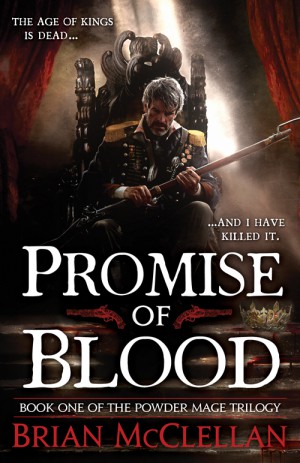
It’s been a pretty great couple of weeks, in terms of new books and comics that have arrived and been purchased. I thought it might be nice to just write a little something about the books that have arrived, and a few that I’ve bought, as it might take me a while to get around to reading and reviewing them all.
*
 Daniel Abraham, The Tyrant’s Law (Orbit)
The great war cannot be stopped.
The tyrant Geder Palliako had led his nation to war, but every victory has called forth another conflict. Now the greater war spreads out before him, and he is bent on bringing peace. No matter how many people he has to kill to do it.
Cithrin bel Sarcour, rogue banker of the Medean Bank, has returned to the fold. Her apprenticeship has placed her in the path of war, but the greater dangers are the ones in her past and in her soul.
Widowed and disgraced at the heart of the Empire, Clara Kalliam has become a loyal traitor, defending her nation against itself. And in the shadows of the world, Captain Marcus Wester tracks an ancient secret that will change the war in ways not even he can forsee.
The mighty Daniel Abraham! Perhaps one of the busiest authors writing today, not to mention one of the most talented, this is the third novel in his The Dagger & the Coin epic fantasy series. I devoured the first in the series, The Dragon’s Path, but the second novel was published around one of my hectic transatlantic moves, and therefore slipped by the wayside. With this volume firmly in my grasp, though, I have no excuse not to get off my ass and catch up. Watch this space!
Also on CR: Interview with Daniel Abraham
*
 Susan Cain, Quiet (Penguin)
At least one-third of the people we know are introverts. They are the ones who prefer listening to speaking, reading to partying; who innovate and create but dislike self-promotion; who favor working on their own over brainstorming in teams. Although they are often labeled “quiet,” it is to introverts that we owe many of the great contributions to society – from van Gogh’s sunflowers to the invention of the personal computer.
Passionately argued, impressively researched, and filled with indelible stories of real people, Quiet shows how dramatically we undervalue introverts, and how much we lose in doing so. Taking the reader on a journey from Dale Carnegie’s birthplace to Harvard Business School, from a Tony Robbins seminar to an evangelical megachurch, Susan Cain charts the rise of the Extrovert Ideal in the twentieth century and explores its far-reaching effects. She talks to Asian-American students who feel alienated from the brash, backslapping atmosphere of American schools. She questions the dominant values of American business culture, where forced collaboration can stand in the way of innovation, and where the leadership potential of introverts is often overlooked. And she draws on cutting-edge research in psychology and neuroscience to reveal the surprising differences between extroverts and introverts.
Perhaps most inspiring, she introduces us to successful introverts – from a witty, high-octane public speaker who recharges in solitude after his talks, to a record-breaking salesman who quietly taps into the power of questions. Finally, she offers invaluable advice on everything from how to better negotiate differences in introvert-extrovert relationships to how to empower an introverted child to when it makes sense to be a “pretend extrovert.”
This extraordinary book has the power to permanently change how we see introverts and, equally important, how introverts see themselves.
A bit of non-fiction, this has been quite the popular little book. As someone who considers themselves an introvert, I’m rather interested to see what’s inside.
*
 C. Robert Cargill, Dreams & Shadows (Gollancz)
DREAMS AND SHADOWS takes us beyond the veil, through the lives of Ewan and Colby, young men whose spirits have been enmeshed with the otherworld from a young age, and follows the boys from their star-crossed adolescences to their haunted adulthoods.
We are taken inside the Limestone Kingdom, a parallel universe where whisky-swilling genies and foul-mouthed wizards argue over the state of the metaphysical realm. Having left the spirit world and returned to the human world, Ewan and Colby discover that the creatures from this previous life have not forgotten them, and that fate can never be sidestepped.
This novel is one I’m very excited about. Like a lot of novels I can’t wait to read, I end up Saving Them For Later. I will be diving into this hopefully very soon. I’ve heard nothing but good things, and it has been described as “part Neil Gaiman, part Guillermo Del Torro, part William Burroughs”. So that sounds pretty awesome. Watch this space.
*
Jon Courtenay-Grimwood, Outcast Blade & Exiled Blade (Orbit)

As the Byzantine and German emperors plot war against each other, Venice’s future rests in the hands of three unwilling individuals:
The newly knighted Sir Tycho. He defeated the Mamluk navy but he cannot make the woman he loves love him back. Tortured by secrets, afraid of the daylight, he sees no reason to save a city he hates.
The grieving Lady Giulietta. Virgin. Mother. Widow. All she wants is to retire from the poisonous world of the Venetian court to mourn her husband in peace. But her duty is to Venice: both emperors want her hand in marriage and an alliance with Europe’s richest city. She must choose, knowing that whichever suitor she rejects will become Venice’s bitterest enemy.
Lastly, a naked, mud-strewn girl who crawls from a paupers’ grave on an island in the Venetian lagoon and begins by killing the men who buried her.
Between them, they will set the course of history.
I loved The Fallen Blade, the first novel in this series. I thought the author had written something both engaging and brave (the first chapters are written in a confusing, swirling manner, to match the main character’s mental state – this put off some readers). Another victim of my multiple-moves, with the publication of the final book in the trilogy, I can get cracking with it! [The synopsis above is for The Outcast Blade – to include that for the third book would have meant big spoilers.]
Also on CR: Interview with Jon Courtenay-Grimwood, Guest Post
*
 Leigh Evans, The Trouble with Fate (Tor)
WHAT SHE DOESN’T KNOW MIGHT KILL HER: Hedi looks normal. Yet that’s taken effort. Her fellow Starbucks baristas don’t see her pointed ears, fae amulet or her dark past, and normal is hard for a half-fae, half-werewolf on the run. Hedi’s life changed ten years ago, when her parents were murdered by unknown assassins. She’s been in hiding with her loopy aunt Lou since, as whatever they wanted she’s determined they won’t get it. Things change when wolves capture Lou, forcing Hedi to steal to free her – for if she can offer up a fae amulet like her own they may trade. But it belongs to a rogue werewolf named Robson Trowbridge, who betrayed Hedi on the night of her greatest need. Over forty-eight hours, Hedi will face the weres of Creemore, discover the extent of her fae powers and possibly break her own heart in the process.
I’m quite interested in trying this out. It’s inching up my TBR mountain… So many books, so little time…
Also on CR: Interview with Leigh Evans (video)
*
 Stella Gemmell, The City (Bantam Press)
The City is ancient, layers upon layers. Once a thriving metropolis, it has sprawled beyond its bounds, inciting endless wars with neighboring tribes and creating a barren wasteland of what was once green and productive.
In the center of the City lives the emperor. Few have ever seen him, but those who have recall a man in his prime, though he should be very old. Some grimly speculate that he is no longer human, if he ever was. A small number have come to the desperate conclusion that the only way to stop the war is to end the emperor’s unnaturally long life.
From the mazelike sewers below the City, where the poor struggle to stay alive in the dark, to the blood-soaked fields of battle, where few heroes manage to endure the never-ending siege, the rebels pin their hopes on one man – Shuskara. The emperor’s former general, he was betrayed long ago and is believed to be dead. But, under different aliases, he has survived, forsaking his City and hiding from his immortal foe. Now the time has come for him to engage in one final battle to free the City from the creature who dwells at its heart, pulling the strings that keep the land drenched in gore.
I have actually started this novel already, but I started it in what became an insanely busy week. After four days, I’d managed to read only 70 pages. I have, therefore, put it aside for a little while until I get a bit more settled and can give it my proper attention. I really liked what I’d read (I’d really like to run an excerpt on the site, too), so I will be getting back to it. My silence and the lack of a review should not be taken as disinterest or disappointment.
*
 Peter Higgins, Wolfhound Century (Gollancz)
Investigator Vissarion Lom has been summoned to the capital in order to catch a terrorist – and ordered to report directly to the head of the secret police. A totalitarian state, worn down by an endless war, must be seen to crush home-grown terrorism with an iron fist.
But Lom discovers Mirgorod to be more corrupted than he imagined: a murky world of secret police and revolutionaries, cabaret clubs and doomed artists. Lom has been chosen because he is an outsider, not involved in the struggle for power within the party. And because of the sliver of angel stone implanted in his head.
Wolfhound Century is a superb novel, this is a second copy I’ve someone managed to get, and I’ve already reviewed it here. There seems to be a slight uptick in interest in novels that have a Russian flavour to them, and I consider myself one of the people who would like to see more in this vein. Not too much, but maybe a couple of others that draw on this rich, atmospheric and fascinating culture.
*
 Joe Hill, N0S4R2 (Gollancz)
Summer. Massachusetts.
An old Silver Wraith with a frightening history. A story about one serial killer and his lingering, unfinished business.
Anyone could be next.
We’re going to Christmasland…
Charlie Manx burned a man to death in his black 1938 Rolls Royce Wraith, but that’s not the worst of it. Rumor has it that he kidnapped dozens of children, taking them to a place he calls “Christmasland.” The only child ever to escape was a very lucky girl named Victoria McQueen.
Vic has a gift – she can ride her bike through the Shorter Way bridge and she’ll come out the other side wherever she needs to be, even if it’s hundreds of miles away. Vic doesn’t tell anyone about her ability; no one would understand.
When Charlie Manx finally dies after years in prison, his body disappears…after the autopsy. The police and media think someone stole it, but Vic knows the truth: Charlie Manx is on the road again…
As with Gemmell’s The City (above), Hill’s latest horror opus is another victim of a recently busy, stressful week. I’ve read a third of the novel, and I’ll be sure to finish it off in the next couple weeks at least. Hill’s gift for writing incredibly real-feeling characters is on full display. His fiction and comics pack such a wallop (emotional, visual, atmospheric) that I frequently find myself struggling to find the language to review them…
I also recently picked up one of Hill’s other novels, Horns (which will soon be hitting the big screen in a movie adaptation starring Daniel Radcliffe).
*
 Mur Lafferty, The Shambling Guide to New York City (Orbit)
Because of the disaster that was her last job, Zoe is searching for a fresh start as a travel book editor in the tourist-centric New York City. After stumbling across a seemingly perfect position though, Zoe is blocked at every turn because of the one thing she can’t take off her resume – human.
Not to be put off by anything – especially not her blood drinking boss or death goddess coworker – Zoe delves deep into the monster world. But her job turns deadly when the careful balance between human and monsters starts to crumble – with Zoe right in the middle.
A novel that has been on my radar for a good long while, I hope to read this in a couple of books (so maybe starting it by the end of next week?). Watch this space!
*
Jeff Noon, Pollen & Vurt (Tor)

Take a trip in a stranger’s head. Travel rain-shot streets with a gang of hip malcontents, hooked on the most powerful drug you can imagine. Yet Vurt feathers are not for the weak. As the mysterious Game Cat says, ‘Be careful, be very careful’. But Scribble isn’t listening. He has to find his lost love. His journey is a mission to find Curious Yellow, the ultimate, perhaps even mythical Vurt feather. As the most powerful narcotic of all, Scribble must be prepared to leave his current reality behind.
I’ve never read anything by Jeff Noon. Both of these novels (which are both re-issues) sound pretty intriguing. Therefore, I’m going to do my best to get to them A.S.A.P. Anyone else read them…?
The sweet death of Coyote, master taxi driver, was only the first.
Soon people are sneezing and dying all over Manchester. Telekinetic cop Sybil Jones knows that, like Coyote, they died happy – but even a happy death can be a murder. As exotic blooms begin to flower all over the city, the pollen count is racing towards 2000 and Sybil is running out of time.
*
 Nicole Peeler, Tempest Reborn (Orbit)
Anyan may be trapped in an evil dragon and Blondie may be gone, but Jane knows one thing: she’s not about to give up. She’s ready to tear down heaven and earth to save her lover, despite those who believe he’s lost.
Luckily for Jane, those who’ve given up on Anyan do not include those closest to her. Defying The Powers That Be, Jane and Company form their own crack squad of misfits, in whose hands the fate of the world may well rest.
With a little help from her friends, the Universe, and lots of snacks, Jane embarks on her greatest adventure yet, confident that with great sacrifice comes great reward. The question is, who will be that sacrifice?
This is the sixth book in the Jane True series. Orbit (for the UK and Down Under market) has re-packaged the series in a much better overall design. I’d like to try it, but I’m not sure when I’d get around to reading all previous five books before this one… I’ll add it to my Series To Try list, and keep it in mind for the future.
*
 Lilith Saintcrow, The Red Plague Affair (Orbit)
The service of Britannia is not for the faint of heart – or conscience…
Emma Bannon, Sorceress Prime in service to Queen Victrix, has a mission: to find the doctor who has created a powerful new weapon. Her friend, the mentath Archibald Clare, is only too happy to help. It will distract him from pursuing his nemesis, and besides, Clare is not as young as he used to be. A spot of Miss Bannon’s excellent hospitality and her diverting company may be just what he needs.
Unfortunately, their quarry is a fanatic, and his poisonous discovery is just as dangerous to Britannia as to Her enemies. Now a single man has set Londinium ablaze, and Clare finds himself in the middle of distressing excitement, racing against time and theory to find a cure. Miss Bannon, of course, has troubles of her own, for the Queen’s Consort Alberich is ill, and Her Majesty unhappy with Bannon’s loyal service. And there is still no reliable way to find a hansom when one needs it most…
The game is afoot. And the Red Plague rises.
This is the second novel in the Bannon & Clare series (there is also a novella – The Damnation Affair – that takes place between this and The Iron Wyrm Affair). A steampunk investigative series, this looks like it would be popular with fans of the myriad, proliferating series in the same sub-genre, but perhaps especially for fans of James P. Blaylock’s St. Ives series…?
*
 Charles Stross, The Bloodline Feud (Tor)
Miriam knows there’s no smoke without fire. And she’s about to get burnt…
The Family Trade and The Hidden Family – The first two installments of the Merchant Princes series combined in one volume.
Miriam Beckstein is a successful reporter for a hi-tech magazine. So when she discovers a huge money-laundering scam, she thinks she’s hit the big time. But when she takes it to her editor, she’s not only fired, but receives death threats. That’s just the beginning.
To distract her furious daughter, Miriam’s adopted mother unearths mementos from her real mother, murdered when she was an infant. But these reveal a secret that will ultimately throw governments into disarray. For what Miriam thinks is a simple locket has the power to fling her into an alternate timeline. In this less-developed world, knights on horseback wield automatic weapons, and world-skipping assassins lurk on the other side of our reality. Here, her true family runs a criminal empire – and they want her back. But Miriam has other plans.
I reviewed the two novels (and the third in the series) collected in this omnibus a few years back, when they were first released in the UK. I loved the concept, and I’m interested to read the rest of the series. (Tor will be releasing another two omnibus editions – The Traders’ War and The Revolution Trade – in May and June 2013.)

*
 Ian Tregillis, Necessary Evil (Orbit)
The history of the Twentieth Century has been shaped by a secret conflict between technology and magic. When a twisted Nazi scientist devised a way to imbue ordinary humans with supernatural abilities – to walk through walls, throw fire and see the future – his work became the prized possession of first the Third Reich, then the Soviet Army. Only Britain’s warlocks, and the dark magics they yield, have successfully countered the threat posed by these superhuman armies.
But for decades, this conflict has been manipulated by Gretel, the mad seer. And now her long plan has come to fruition. And with it, a danger vastly greater than anything the world has known. Now British Intelligence officer Raybould Marsh must make a last-ditch effort to change the course of history – if his nation, and those he loves, are to survive.
If there’s a single regular or casual reader of this blog who hasn’t figured out that Tregillis is one of my favourite authors, you’re just not paying attention… This is a masterful conclusion to the Milkweed Triptych, and I can’t recommend the series enough.
Also on CR: Reviews of Bitter Seeds, The Coldest War, Necessary Evil, Guest Post
*
Chuck Wendig, The Blue Blazes (Angry Robot) & Gods & Monsters: Unclean Spirits (Abaddon)

Meet Mookie Pearl.
Criminal underworld? He runs it.
Supernatural underworld? He hunts in it.
Nothing stops Mookie when he’s on the job.
But when his daughter takes up arms and opposes him, something’s gotta give…
The first in a new urban fantasy series in which lovable thug Mookie Pearl must contend with the criminal underworld, the supernatural underworld, a new drug that makes the invisible visible, and a rebellious teen daughter who opposes him at every turn.
I’m a big fan of Wendig’s writing, despite not being quite as good as I should be about keeping up-to-date. I haven’t read either of the Miriam Black books (Blackbirds and Mockingbird – both also published by Angry Robot Books), for example. Nevertheless, I do hope to get to these two A.S.A.P. Both of these novels are the start of new series. Gods & Monsters, however, is the first novel in a shared-setting for Abaddon books, and further volumes will be written by other authors – though I wouldn’t be surprised if Wendig revisits it in the future.
Five years ago, it all went wrong for Cason Cole. He lost his wife and son, lost everything, and was bound into service to a man who chews up human lives and spits them out, a predator who holds nothing dear and respects no law. Now, as the man he both loves and hates lies dying at his feet, the sounds of the explosion still ringing in his ears, Cason is finally free.
The gods and goddesses are real. A polytheistic pantheon – a tangle of divine hierarchies – once kept the world at an arm’s length, warring with one another for mankind’s belief and devotion. It was a grim and bloody balance, but a balance just the same. When one god triumphed, driving all other gods out of Heaven, it was back to the bad old days: cults and sycophants, and the terrible retribution the gods visit on those who spite them. None of which is going to stop Cason from getting back what’s his…
*
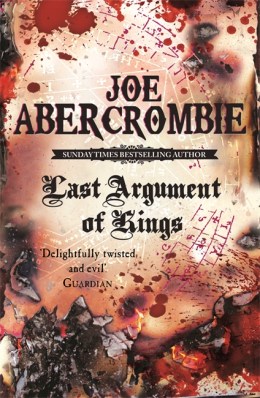
Other recent acquisitions include Joe Abercrombie’s Best Served Cold and The Heroes (Gollancz): in the course of one of my near-endless moves (the life of a vagrant has some downsides), my entire collection of Abercrombie’s novels (all 1st Editions) were… misplaced. I have searched high and low, but eventually had to accept that they were lost. So I completed my eBook set. And am currently reading Last Argument of Kings. Another Gollancz book, I also recently bought the eBook edition of Scott Lynch’s Lies of Locke Lamora – this is a novel I keep giving my copy of away, spreading it around friends and family. This time, I decided to get an eBook copy, in preparation for a re-read of books 1 & 2 before The Republic of Thieves comes out in October. It also means I can’t give it away…
Any of these catch your eye? Anything new you’ve got recently that you think might be of interest to CR readers?
 A strong finish to The First Law trilogy