Book Haul, End of June 2013…

BooksReceived-20130622

A final Books Received post for June, and it’s an absolute doozy. Four of these are among my Most Anticipated for 2013. Read on for some more info about these books…

Allston-XWing-MercyKillAaron Allston, Star Wars – X-Wing: Mercy Kill (Arrow)

The intrepid spies, pilots, and sharpshooters of Wraith Squadron are back in an all-new Star Wars adventure, which transpires just after the events of the Fate of the Jedi series!

Three decades have passed since Wraith Squadron carried out its last mission. Taking on the most dangerous and daring operations, the rogues and misfits of the elite X-Wing unit became legends of the Rebellion and the Second Galactic Civil War, before breaking up and going their separate ways. Now their singular skills are back in vital demand — for a tailor-made Wraith Squadron mission.

A powerful general in the Galactic Alliance Army, once renowned for his valor, is suspected of participating in the infamous Lecersen Conspiracy, which nearly toppled the Alliance back into the merciless hands of the Empire. With orders to expose and apprehend the traitor—and license to do so by any and all means—the Wraiths will become thieves, pirates, impostors, forgers… and targets, as they put their guts, their guns, and their riskiest game plan to the test against the most lethal of adversaries.

Ah, Star Wars. My all-time favourite franchise, probably. I’ve read pretty much every book/novella/short story set after Episode IV, and a handful set before (I’m not a fan of the prequel-trilogy fiction, really). That being said, for some reason I’ve not yet finished the latest nine-book story-arc, Fate of the Jedi. I only have the final book, Apocalypse, to read – it was one of the books I had to leave back in New York, so I’m not sure when I’ll be able to get it read. I’ll have a look in the local library, I suppose. I bring this up because Mercy Kill is set after Apocalypse (and before Crucible, which I already have as an eARC via NetGalley). Really have to get on with it. This may, actually, be the longest break since 2007 when I haven’t read a Star Wars novel… Weird.

*

JamesH-WhatMaisieKnewHenry James, What Maisie Knew (Penguin)

After her parents’ bitter divorce, young Maisie Farange finds herself shuttled between her selfish mother and vain father, who value her only as a means for provoking each other. Maisie – solitary, observant, and wise beyond her years – is drawn into an increasingly entangled adult world of intrigue and sexual betrayal until she is finally compelled to choose her own future.

Published in 1897 as Henry James was experimenting with narrative technique and fascinated by the idea of the child’s-eye view, What Maisie Knew is a subtle yet devastating portrayal of an innocent adrift in a corrupt society.

Don’t know much about the novel, but I know a bit about the author. So, when this arrived in the mail, I was rather intrigued. It’s a slim volume, so I’m hoping to squeeze it into my reading schedule in the not-to-distant-future.

*

Grimwood-LastBanquetJonathan Grimwood, The Last Banquet (Canongate)

Jean-Marie Charles d’Aumout is many things. Orphan, soldier, diplomat, spy, lover. And chef.

This is his story.

We meet Jean-Marie d’Aumout as a penniless orphan eating beetles by the side of a road. His fate is changed after an unlikely encounter finds him patronage and he is sent to military academy. Despite his frugal roots, and thanks to it and courage in great measure, he grows up to become a diplomat and spy.

Rising through the ranks of eighteenth-century French society, he feasts with lords, ladies and eventually kings, at the Palace of Versailles itself.

Passionate love, political intrigue and international adventure abound in Jean-Marie’s life, but his drive stems from a single obsession: the pursuit of the perfect taste. Three-Snake Bouillabaisse, Pickled Wolf’s Heart and Flamingo Tongue are just some of the delicacies he devours on his journey toward the ultimate feast.

But beyond the palace walls, revolution is in the air and the country is clamouring with hunger of a different kind.

SFF fans will also know Jonathan Grimwood as Jon Courtenay Grimwood – author of superb science fiction and an excellent historical vampire trilogy (The Assassini). I managed to miss a lot of the press surrounding this novel (it’s not SFF, so it’s perhaps not surprising that it didn’t get much attention). Nevertheless, I really like the way Grimwood writes, so I’m looking forward to reading this.

Incidentally, it’s interesting that this has a food-related premise. I’ve been noticing a few of those popping up in submissions at work, and also seen mention online from a couple of other aspiring authors. Has there been something in the water…? Needless to say, I imagine Grimwood’s will be the best, and I’m eager to get to it.

Also on CR: Interview with Jonathan Grimwood, Guest Post

*

Lawrence-EmperorOfThornsMark Lawrence, Emperor of Thorns (Voyager)

The path to the throne is broken – only the broken may walk it.

To reach the throne requires that a man journey. Even a path paved with good intentions can lead to hell, and my intentions were never good.

The Hundred converge for Congression to politic upon the corpse of Empire, and while they talk the Dead King makes his move, and I make mine. The world is cracked, time has run through, leaving us clutching at the end days, the future so bright that those who see it are the first to burn. These are the days that have waited for us all our lives. These are my days. I will stand before the Hundred and they will listen. I will take the throne whoever seeks to thwart me, living or dead, and if I must be the last emperor then I will make of it such an ending.

This is where the wise man turns away. This is where the holy kneel and call on God. These are the last miles, my brothers. Don’t look to me to save you. Don’t think I will not spend you. Run if you have the wit. Pray if you have the soul. Stand your ground if courage is yours. But don’t follow me.

Follow me, and I will break your heart.

Does this really need an explanation or introduction? The final part of Lawrence’s debut fantasy trilogy, there are a lot of expectations. I’ve been told Mark manages to pull it all off, so I have very high hopes indeed. Watch this space…

Also on CR: Interview with Mark Lawrence

*

NewtonMC-DrakenfeldMark Charan Newton, Drakenfeld (Tor)

“I am Lucan Drakenfeld, second son of Calludian, Officer of the Sun Chamber and peace keeper. Although sometimes it seems I am the only person who wishes to keep it …”

The monarchies of the Royal Vispasian Union have been bound together for two hundred years by laws maintained and enforced by the powerful Sun Chamber. As a result, nations have flourished but corruption, deprivation and murder will always find a way to thrive.

Receiving news of his father’s death Sun Chamber Officer Lucan Drakenfeld is recalled home to the ancient city of Tryum and rapidly embroiled in a mystifying case. The King’s sister has been found brutally murdered – her beaten and bloody body discovered in a locked temple. With rumours of dark spirits and political assassination, Drakenfeld has his work cut out for him trying to separate superstition from certainty. His determination to find the killer quickly makes him a target as the underworld gangs of Tryum focus on this new threat to their power.

Embarking on the biggest and most complex investigation of his career, Drakenfeld soon realises the evidence is leading him towards a motive that could ultimately bring darkness to the whole continent. The fate of the nations is in his hands.

Long-time readers of CR will know that I am a big fan of Newton’s novels – the four Legends of the Red Sun books were superb. As a result, I’ve been eager to read Drakenfeld ever since Mark announced it on his website a few months ago (I forget the actual date). Really looking forward to reading this. Hopefully very soon.

Also on CR: Interview with Mark Charan Newton, Follow-Up Interview

*

Stenson-FiendUKPeter Stenson, Fiend (Random House)

When Chase sees the little girl in umbrella socks savaging the Rottweiler, he’s not too concerned. As someone who’s been smoking meth every day for as long as he can remember, he’s no stranger to such horrifying, drug-fueled hallucinations. But as he and his fellow junkies discover, the little girl is no illusion. The end of the world really has arrived. And with Chase’s life already destroyed beyond all hope of redemption, armageddon might actually be an opportunity — a last chance to hit restart and become the person he once dreamed of being. Soon Chase is fighting to reconnect with his lost love and dreaming of becoming her hero among the ruins. But is salvation just another pipe dream?

Propelled by a blistering first-person voice and featuring a powerfully compelling anti-hero, Fiend is at once a brilliant portrait of addiction, a pitch-black comedy, and the darkest, most twisted love story you’ve ever read — not to mention one hell of a zombie novel.

I have a guest post upcoming from Stenson, telling the story of how he came to write the novel. It’s a good piece, and I’m eager to share it with people. (It goes live on July 4th.) This sounds like a really interesting spin on the zombie apocalypse genre.

*

Wexler-ThousandNamesUKDjango Wexler, The Thousand Names (Del Rey UK)

Enter an epic fantasy world that echoes with the thunder of muskets and the clang of steel—but where the real battle is against a subtle and sinister magic….

Captain Marcus d’Ivoire, commander of one of the Vordanai empire’s colonial garrisons, was resigned to serving out his days in a sleepy, remote outpost. But that was before a rebellion upended his life. And once the powder smoke settled, he was left in charge of a demoralized force clinging tenuously to a small fortress at the edge of the desert.

To flee from her past, Winter Ihernglass masqueraded as a man and enlisted as a ranker in the Vordanai Colonials, hoping only to avoid notice. But when chance sees her promoted to command, she must win the hearts of her men and lead them into battle against impossible odds.

The fates of both these soldiers and all the men they lead depend on the newly arrived Colonel Janus bet Vhalnich, who has been sent by the ailing king to restore order. His military genius seems to know no bounds, and under his command, Marcus and Winter can feel the tide turning. But their allegiance will be tested as they begin to suspect that the enigmatic Janus’s ambitions extend beyond the battlefield and into the realm of the supernatural—a realm with the power to ignite a meteoric rise, reshape the known world, and change the lives of everyone in its path.

This is one of my most-anticipated debuts of 2013, and I’ve been itching to get to it. I’ll probably be reading this very soon (I have some time with minimal commutes coming up, so no fear of the HC getting beaten to hell in my bag).

Also on CR: Interview with Django Wexler, Guest Post

Guest Post: “After Apocalypse” by Gail Z. Martin

Martin,GZ-ReignOfAshMaybe it’s a sign of the times, but we seem to be obsessed with the end of the world.

Sure, such fascinations, both literary and religious, have come and gone in times past. It’s just our luck to live in the midst of a resurgence of end-of-the-world fatalism.

Pick your poison—climate change, asteroid collision, bio-warfare, zombies, or mad scientists, there are plenty of ways to die. Personally, I prefer magic.

In Ice Forged, and the upcoming Reign of Ash, Books 1 and 2 in my Ascendant Kingdoms Saga, mages on both sides of a devastating war use magic as their doomsday weapon. They manage to destroy civilization on their continent, and magic itself.

Apocalypse-by-mage was a twist that intrigued me. Magic, in the world of the Ascendant Kingdoms, does for them what technology does for us—heals the sick, makes routine tasks easier, reduces effort, and controls the environment. Long ago, people used to do those things without magic, but since the wild power was harnessed so that it could be controlled by humans, people have forgotten the old ways.

That makes it rough when the magic stops working.

There’s a fantastic TV series about “Life After People” that shows just how quickly the modern world falls apart—literally—when people are suddenly removed and no one is left to maintain what has been built. I watched those shows, riveted, as it speculated that in about 250 years after all people disappeared, the world would heal itself and most of our structures would be largely obliterated. We’re not as important as we think we are.

That concept served well as I imagined the apocalypse in Ice Forged. Not only do survivors of the war endure hardship because of the fire that rained down from the skies in a powerful magic strike, they also suffer because there is no magic. Few people know how to treat wounds, protect crops from pests, or do many other essential tasks. Where magic was used for infrastructure, either as a repair patch or to do something important, like keeping back the sea at the sea wall, magic’s failure results in additional disaster. Not only that, but the once-harnessed magic, returned to the wild, becomes a violent force of nature, creating dangerous storms and unnatural monsters.

So when exiled convict and disgraced lord Blaine McFadden discovers that he might be the only one who can restore the magic, the stakes are high. Trying to bring magic back might cause Blaine’s death, and there’s no guarantee the attempt will work. Even if he can restore the magic, it may not function the way it did before, and in any event, the kingdom is in rubble, its leaders dead.

It’s been said that “fortune” is the combination of “danger” and “opportunity.” If you define it that way, then Blaine McFadden is a very “fortunate” man.

*

The Hawthorn Moon Sneak Peek Event includes book giveaways, free excerpts and readings, all-new guest blog posts and author Q&A on 21 awesome partner sites around the globe. For a full list of where to go to get the goodies, visit the Ascendant Kingdoms website.

Book Giveaway on Twitter: Every day from June 21-28, I’ll be choosing someone at random from my Twitter followers to win a free signed book. Invite your friends to follow me – for every new 200 followers I gain between June 21-28, I’ll give away an additional book, up to 20 books!

*

Gail Z. Martin is the author of Ice Forged in her new The Ascendant Kingdoms Saga (Orbit Books), plus The Chronicles of The Necromancer series (The Summoner, The Blood King, Dark Haven and Dark Lady’s Chosen) and The Fallen Kings Cycle (The Sworn and The Dread). She is also the author of two series on eBook short stories: The Jonmarc Vahanian Adventures and the Deadly Curiosities Series. Her books are available in bookstores worldwide and on Kindle, Kobo and Nook.

Interview with BRIAN McCLELLAN

Brian McClellan’s debut fantasy, Promise of Blood, has caused quite a splash in the SFF community. It blends fast-paced story-telling with a new and interesting world, and a plethora of interesting and engaging characters. Brian has already featured on Civilian Reader a few of times already. He has written two guest posts – on his favourite novel, and also Protagonist Ages in Epic Fantasy – and I have reviewed the novel already, too. He was kind enough to take some time to answer my questions about his fiction, writing practices, and more… Continue reading

Guest Post: “Why I Didn’t Write My Book in an Elevator” by Jack Skillingstead

Skillingstead-LifeOnThePreservationUSHere’s the so-called elevator pitch for my new novel, Life On The Preservation.

A man discovers his city is caught in a time loop. He fears he may be losing his mind. Then a girl from outside the loop arrives. They find each other and solve the mystery. It’s Dark City meets Groundhog Day.

I never actually delivered this pitch. In fact, I only wrote it just now. One time I did find myself in an elevator with David Hartwell, who is the senior editor at Tor Books. I wasn’t even tempted to blurt a pitch at him. All I said was, “Nice tie.” David is famous for his ties. After that, we did what most people do on elevators. We stared at the doors and waited.

On publication day, which was May 28th, I did a public reading from, Life On The Preservation. The reading took place at the University Bookstore in Seattle, Washington. Duane Wilkins, who runs the excellent science fiction section of the store and who is probably as well-read as anyone ever has been in our genre, had this to say in his introduction:

“I don’t know how to explain this book.”

Then he stared into space for a while, repeated himself, and suggested I might do better at describing Life On The Preservation. Presumably, he believed I could describe my own novel because, after all, I’d written it. But I couldn’t, even though I’m a fairly articulate person. If I’d had my elevator pitch handy I might have recited the thing, but I doubt it. Besides, I only wrote the elevator pitch five minutes ago.

People who like to give writing advice will often tell you that if you can’t describe your book in one paragraph you probably don’t have a saleable idea. If that’s true, I’m living in the wrong universe. Though I have described both of my novels in one or two paragraphs, I did it only after the books were finished and sold and the publishers asked me to do it, so they would have some copy to put on the back of the book and to advertise it in catalogues and around the internet.

Skillingstead-LifeOnThePreservationUKThe truth is, you don’t know what your book is about until you’ve written it, and if the book is any good it lives in the details – details that you discover along the way. At my University Bookstore reading I could have described LOTP as a story of alien destruction, time loops, transhuman survival in an environment of outlaw art, paranoid estrangement and redemption. I could even have said its secret theme concerned living in the world you create – whether you acknowledge you’ve created it or not.

But, while true enough, that description isn’t anything but a laundry list of related generalities. And I must say that, generally, I distrust generalities. Before I wrote LOTP I took several stabs at the one-paragraph description. I even tried to outline chapters. It felt a little like looking at a slide show from a vacation I hadn’t yet enjoyed. Here’s a pretty picture of a beach with random people lying around! Yes, the people are strangers, ciphers, and the beach looks like any other beach. But there it is! And I’m going!

My early efforts of transforming Life On The Preservation from a short story to a novel looked something like a generic beach with sun-bathing ciphers. This is because I was desperate to get organized and write a novel that pushed all the right buttons – you know, the buttons that would make people love the book and shower me with contracts and money. Of course, those first attempts to expand Preservation turned out to be abysmal failures. I learned that – for me, at least – there is only one way to discover whatever it is that might be original within myself. I had to go there and document the journey every inch of the way. Only then could I begin to organize my fancy slide show.

*

Life on the Preservation was published by Solaris Books on June 6th. Here’s the synopsis…

Inside the Seattle Preservation Dome it’s always the Fifth of October, the city caught in an endless time loop. “Reformed” graffiti artist Ian Palmer is the only one who knows the truth, and he is desperate to wake up the rest of the city before the alien Curator of this human museum erases Ian’s identity forever. Outside the Dome, the world lies in apocalyptic ruin. Small town teenager Kylie is one of the few survivors to escape both the initial shock wave and the effects of the poison rains that follow. Now she must make her way across the blasted lands pursued by a mad priest and menaced by skin-and-bone things that might once have been human. Her destination is the Preservation, and her mission is to destroy it. But once inside, she meets Ian, and together they discover that Preservation reality is even stranger than it already appears.

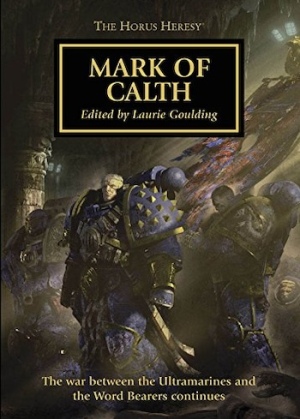
Review: MARK OF CALTH ed. Laurie Goulding (Black Library)

Various-HH25-MarkOfCalthThe latest Horus Heresy Anthology

In this all-new collection of Horus Heresy stories, witness the untold tales of the Underworld War.The Heresy reached Calth without warning. In just a few hours of betrayal and bloodshed, the proud warriors of the XIIIth Legion – Guilliman’s own Ultramarines – were laid low by the treachery of their erstwhile brothers of the XVIIth. Now, as the planet is scoured by solar flares from the wounded Veridian star, the survivors must take the fight to the remaining Word Bearers and their foul allies, or face damnation in the gloomy shelters beneath the planet’s surface.The battle for Calth is far from over

I’ve enjoyed all of the Horus Heresy anthologies that Black Library has produced. So I was very happy when I received this as a gift from a friend. I’ve liked some anthologies more than others, it’s true. But in each one, I think the authors have done a great job of advancing the overall story of the larger Galactic Civil War, as well as fleshing out the mythology of the event that has dictated much of the development of the Warhammer 40,000 universe. Mark of Calth takes a slightly different approach, focussing on the after-effects of the Word Bearers’ assault on Calth (as portrayed in Dan Abnett’s Know No Fear). It’s a good selection of stories, certainly, but I definitely think it’s time to move the HH story beyond Calth… (I have high hopes for Vulkan Lives, the next novel in the series, by Nick Kyme; and the soon-to-be-more-widely-released Promethean Sun novella, also by Kyme). So, one after the other, here are some short thoughts on the stories herein… Continue reading

Excerpt: THE BEST OF ALL POSSIBLE WORLDS by Karen Lord (Jo Fletcher Books)

untitled

Karen Lord is also the author of Redemption in Indigo, which I first heard of at the Kitschies Award ceremony back in February 2013. It immediately went on to my to-be-purchased list (I’m still getting around to it!). Luckily, I do have a copy of The Best of All Possible Worlds, the author’s second and already-critically-acclaimed novel, which I hope to read as soon as possible. In the meantime, I offer you this taste of the novel, courtesy of Lord’s UK publisher, Jo Fletcher Books…

*

THE BEST OF

ALL POSSIBLE WORLDS

by Karen Lord

BEFORE…

He always set aside twelve days of his annual retreat to finish up reports and studies, and that left twelve more for everything else. In earlier times, he had foolishly tried retreats within commreach of his workplace, and that was not at all helpful. There would always be some crisis, something for which his help would be required. As his salary and sense increased, he took his retreats further and further away, until at last he found himself going off-planet to distant temples where the rule of silence and solitude could not be broken by convenient technologies.

This season, he had chosen Gharvi, a place with small wooden buildings scattered about a huge temple of stone, all set within the rain shadow of a mountain range. An endless ocean, both vista and inspiration, ran parallel to the mountains, and a beach between the two offered long walks to nowhere on either side. A place of two deserts, some said, for sea and land were bleak together – one boundless, one narrow, and both thirsty.

There was a place at home very like it, which had probably influenced his choice, but the sky was unique. The atmosphere was the cloudy blueish-lavender of a recently bioformed planet and the sun was scorching bright. It was so unlike the cool, strong blues and gentle sunlight of his home world that for the first few days he kept his head down and his door closed till nightfall.

On the twelfth day, he took his handheld, replete with work well completed, and put it in the box outside his hermitage door. He cooked and ate his evening lentils, slept soundly through the night and rose to prepare his morning porridge. There was a little water left over from the day before (he was ever frugal), but to have enough for washing he had to fetch the new day’s supply from the box. The young acolytes of the temple always put sufficient water and food into each hermit’s box before dawn. It was enough to stay clean, to fill the solar pot with porridge or pottage and to sip and slake the constant thirst that was the natural consequence of dry air and silence. The acolytes would also take away his handheld and safely transmit its contents to his workplace.

But his handheld was still there.

He paused, confused by this disconnect in the seamless order of the temple’s routine. He stared at the untouched box. He looked up and frowned in puzzlement at the squat shape of the temple, vaguely visible through a haze of heat, blown sand and sea spray.

Then he shrugged and went on with his day, a little dustier, a little thirstier but convinced that an explanation would eventually be made manifest.

The following morning, well before dawn, the sound of the box lid closing woke him from a sleep made restless by dreams of dryness. He waited a bit, then went to bring in the supplies and drink deeply of the water. His handheld was gone and a double ration of food sat in its place. He did not even peer into the darkness to catch sight of the tardy acolyte. Order had been restored.

‘Dllenahkh, with your level of sensitivity and strength, you must go on retreat regularly.’ So he had been told, long ago, by the guestmaster of his monastery. ‘You are constantly looking to set things to rights, even within yourself. A retreat will teach you again and again that you are neither indispensable nor self-sufficient.’

Put bluntly, learn to stop meddling. Commitment is important, detachment equally so. He congratulated himself on his developing ability to keep curiosity in check and spent the next few days in undisturbed meditation and reflection.

One day, after a long morning meditation, he felt thirsty and decided to fetch more water from his supply box. He stepped out with his glass drinking bowl in hand and set it on the edge of the box while he tilted the half-lid and reached inside. His hands were steady as he poured water smoothly from the heavy narrownecked jug. Moving slowly, he straightened and took a moment of blissful idleness, the jug left uncovered near his feet, to squint at the sun glare on the desert beach and the desert ocean, and to feel the coolness of the water creeping into his palms as he held the bowl and waited to drink. It was a child’s game, to hold a bowl of water and mark the increase of thirst with masochistic pleasure, but he did it sometimes.

He brought the bowl to his mouth and had a perfect instant of pale-blue ocean, bright blue glass and clear water in his vision before he blinked, sipped and swallowed.

Many times after, when he tried to recall, his mind would stop at that vivid memory – the neatly nested colours, the soothing coolness of the glass – and not wish to go any further. It was not long after that, not very long at all, that the day became horribly disordered.

A man walked out of the ocean, his head darkly bright with seawater and sunlight. He wore a pilot’s suit – iridescent, sleek and permeable – which would dry as swiftly as bare skin in the hot breeze, but his hair he gathered up in his hands as he approached, wringing water from the great length of it and wrapping it high on the crown of his head with a band from his wrist.

Recognition came to Dllenahkh gradually. At first, when the figure appeared, it was a pilot; then, as it began to walk, it was a familiar pilot; and finally, with that added movement of hands in hair, it was Naraldi – a man well known to him, but not so well known as to excuse the early breaking of a retreat. He opened his mouth to chide him. Six more days, Naraldi! Could anything be so important that you could not wait six more days? That was what he intended to say, but another thought came to him. Even for a small planet with no docking station in orbit, it was highly uncommon for a mindship to splash down so close to land that a pilot could swim to shore. Although he knew Naraldi, they were not so close as to warrant a visit at this time and in this place.

The pilot slowed his step and looked uncertainly at him with eyes that streamed from the irritation of salt water.

‘Something terrible has happened,’ Dllenahkh said simply.

Naraldi wiped at his wet face and gave no reply.

‘My mother?’ Dllenahkh prompted to break the silence, dread growing cold and heavy in his stomach.

‘Yes, your mother,’ Naraldi confirmed abruptly. ‘Your mother, and my mother, and . . . everyone. Our home is no more. Our world is—’

‘No.’ Dllenahkh shook his head, incredulous rather than upset at the bitterness and haste of Naraldi’s words. ‘What are you saying?’

He remembered that he was still thirsty and tried to raise the bowl again, but in the meantime his hands had grown chilled and numb. The bowl slipped. He snatched at it, but only deflected it so that it struck hard on the side of the water jug and broke just in time to entangle his chasing fingers.

‘Oh,’ was all he said. The cut was so clean, he felt nothing. ‘I’m sorry. Let me . . .’ He crouched and tried to collect the larger fragments but found himself toppling sideways to rest on one knee.

Naraldi rushed forward. He grasped Dllenahkh’s bleeding right hand, yanked the band from his hair and folded Dllenahkh’s fist around the wad of fabric. ‘Hold tight,’ he ordered, guiding Dllenahkh’s left hand to clamp on to his wrist. ‘Don’t let go. I’ll get help.’

He ran off down the beach towards the temple. Dllenahkh sat down carefully, away from the broken bits of glass, and obediently held tight. His head was spinning, but there was one small consolation. For at least the length of time it took Naraldi to return, he would remember the words of the guestmaster: he would not be curious, he would not seek to know, and he would not worry about how to right the tumbled world.

***

Karen Lord’s The Best of All Possible Worlds is published by Jo Fletcher Books in the UK, and Del Rey in the US (both covers, below the synopsis).

The Sadiri were once the galaxy’s ruling élite, but now their home planet has been rendered unlivable and most of the population destroyed. The few groups living on other worlds are desperately short of Sadiri women, and their extinction is all but certain.

Civil servant Grace Delarua is assigned to work with Councillor Dllenahkh, a Sadiri, on his mission to visit distant communities, looking for possible mates. Delarua is impulsive, garrulous and fully immersed in the single life; Dllenahkh is controlled, taciturn and responsible for keeping his community together. They both have a lot to learn.

LordK-BestOfAllPossibleWorlds

Interview with BENJAMIN PERCY

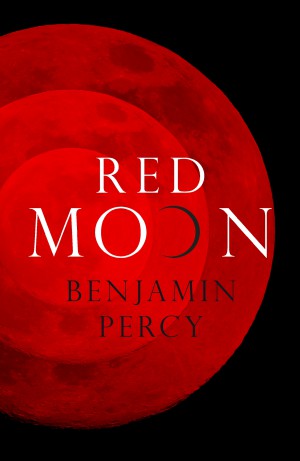
PercyB-RedMoonUKBenjamin Percy is the author of the excellent Red Moon – which I consider one of the best novels of the year (and certainly within the top ten in the past few years). I thoroughly enjoyed what he did with the werewolf mythology, and also how he wove into his narrative many of today’s social issues and prejudices. I had the pleasure of very briefly meeting him at the Arthur C. Clarke Awards (he sat behind me). Last week, he was kind enough to take a few minutes to answer some questions for Civilian Reader…

Who is Benjamin Percy?

An author with sideburns sharp enough to cut and a voice deep enough to crumble the foundations of buildings and set hair aflame. He has summited mountains, performed brain surgery, and juggled flaming chainsaws — all at the same time! Continue reading

Artwork: Queens of the Stone Age, “… Like Clockwork”

So, a break from book covers and comic artwork, but I first saw this at London Bridge tube station, and it really caught my eye…

QOTSA-LikeClockwork

No idea what the album’s like, and I have to admit they are not a favourite band of mine (in fact, I’ve never liked any of their stuff enough to keep an album…). Just thought I’d share the image, which was done by someone known as “Boneface”.

Here’s the title-track’s music video…

Guest Post: “On Editing & Writing…” by Jonathan Strahan

FearsomeJourneys-2013On writing tips for new writers from someone who has never written a story, but has read a few

Many thanks to Civilian Reader for letting me stop by and chat about editing and writing. I’ve been thinking about what you might say to a new writer who wanted to write a short story, a great one (who’d want to write anything else?) When I first started to work on a list of tips on how to write a terrific short story I drew a blank. I’ve not written a short story since high school, so I’m no expert. I’ve not even thought about writing a short story myself. But then I realized that, like you, I read. I read a lot. And what I mostly read is short fiction. So, it’s possible I might have picked up an idea or two.

1. Write

This might seem obvious, but no one has ever finished a short story without sitting down and actually writing. I have a folder full of stops and starts on a handful of short stories and novels, but none of them are finished. So, do that. Write. Write every day and finish what you start.

2. Re-write

I know you think you’re finished when you write “The End” at the end of your newly minted short story. You probably are. But it’s possible, just possible, that there’s still a little bit of work left to do. Put it in a drawer for a week, and come back to it fresh. Suddenly you’ll see, if you’re at all like me when I write anything, all sorts of problems with it. You might also let a trusted reader see it. Get their feedback, try to listen to it with an open mind, and be willing to re-write.

3. Read

The only way to learn how to write a great short story is to read great short stories. Read them a lot and think about them. Try to work out how they work and why. Pick a writer whose work you love and see how their stories work. If you love fantasy stories, try the work of Fritz Leiber or Ursula Le Guin, and see if you can unpick their stories. They knew what they were doing.

4. Keep it short

We are talking about writing short stories after all, so keep it short. You probably only want a single plot line (the story) and a single point of view character (the person whose eyes we’re seeing the story though). Longer stories, novellas and short novels, can sometimes have subplots and more than one point of view character, but basically you only need one.

5. Make your story work

I don’t mean make it great. Of course you’re going to do that. What I mean is make your words count. Everything you write in a short story should do more than one thing. Setting builds character, voice advances plot, and so on. Look very carefully at each scene in your story. You won’t have many of them – this is short after all – so make sure each scene does more than one thing. Each scene should build setting, develop character and move the story forward. Avoid scenes that only do one thing. You want to avoid your story being dull (which it was never going to be, but you know what I mean) and making sure your scenes are doing the heavy lifting helps.

If you’ve already written a great short story you probably know all of this stuff, and possibly far more. If you’re just starting out, though, it might help. And if you are starting out keep going. You’ll probably write some stinkers. You’ll possibly write some stories that are almost exactly like stories written by people whose work you love. That’s fine. That’s what you should be doing. You have to write through that so you can get to the stories that only you can tell, the ones that are definitely going to be great. And when you do, send them to me. I love great short stories.

*

Fearsome Journeys is out now, published by Solaris Books.

“The 5th Wave” by Rick Yancey (Penguin)

Yancey-5thWaveA Sinister new YA Dystopia Series

After the 1st wave, only darkness remains. After the 2nd, only the lucky escape. And after the 3rd, only the unlucky survive. After the 4th wave, only one rule applies: trust no one.

Now, it’s the dawn of the 5th wave, and on a lonely stretch of highway, Cassie runs from Them. The beings who only look human, who roam the countryside killing anyone they see. Who have scattered Earth’s last survivors. To stay alone is to stay alive, Cassie believes, until she meets Evan Walker. Beguiling and mysterious, Evan Walker may be Cassie’s only hope for rescuing her brother – or even saving herself. But Cassie must choose: between trust and despair, between defiance and surrender, between life and death. To give up or to get up.

There is a lot to like about this novel. The world-building is interesting, the characters are (for the most part) well-defined and well-written. The story is focused, giving it a quick-pace and addictive momentum. I really enjoyed reading this, despite one major niggle around the middle. Certainly, it’s easy to see why people have been talking about the series, and why Penguin think they are on to a winner. Among the better YA dystopia series, certainly.

The opening chapters offer one of the best introductions to a dystopian future I have read in a long while. We get a great sense of the environment in which Cassie, the first protagonist we follow, is operating and trying to survive. We also learn what the waves of alien attacks have done to the survivors, both physically (billions dead) and mentally (this is now paranoia city…).

“If you can’t trust anyone, then you can trust no one. Better to take the chance that Aunty Tilly is one of them than play the odds that you’ve stumbled across a fellow survivor. That’s friggin’ diabolical. It tears us apart. It makes us that much easier to hunt down and eradicate. The 4th Wave forces us into solitude, where there’s no strength in numbers, where we slowly go crazy from the isolation and fear and terrible anticipation of the inevitable… This is what the Others have done to us. You can’t band together to fight without trust. And without trust, there was no hope. How do you rid the Earth of humans? Rid the humans of their humanity.”

And so, survivors “put on a human face so no human face can be trusted. The only answer: Kill everyone or risk being killed by anyone.”

Most importantly, we get to know Cassie very quickly. Within about 5% of the novel (yes, read this on my Kindle), I felt I knew her pretty well, and certainly felt myself rooting for her. She is a bit true-to-type and is probably exactly what you expect from a YA heroine/hero, sure, but Yancey writes her well. She is a good guide, with an engaging, inviting voice. However, and this is my greatest issue with the book, this state of affairs did not last. I found Cassie’s character changed completely once she met Evan. She went from being hyper-self-sufficient to, effectively, totally-dependent (paranoid still, but dependent nonetheless). This weakened her. Though, she’s also not blind to the strangeness of her situation…

“Somehow the fact that I was rescued by a very good-looking guy with a lopsided grin and large, strong hands is the most unnerving thing that has happened to me since the Others arrived.”

Her interest in Evan, while sometimes a bit over-the-top, is also quite well done, reflecting the conflicted, bumbling, hormone-influenced confusion when it comes to people teenagers develop crushes on:

“What?” Smiling that damned lopsided, sexy grin, shoulders up, hands stuffed deep in his pockets with a sort of aw-shucks attitude, which I guess is meant to drive me the good kind of crazy. What is it about him that makes me want to slap him and kiss him, run from him and to him, throw my arms around him and knee him in the balls, all at the same time? I’d like to blame the Arrival for the effect he has on me, but something tells me guys have been doing this to us for a lot longer than a few months.

All of the other protagonists go through pretty realistic evolutions. The army has been collecting surviving teens and children, transporting them to the training facility, leaving adults behind for… clean-up. The militarisation of the young is troubling, certainly, but it is addressed through the eyes of some of those recruits. (A lot of YA novels seem to promote weapons-skills…) Our second main perspective is presented through Ben, who comes to be known as “Zombie” at the training camp. He develops into a more interesting character than Cassie, by the end of the book. All of his comrades are varied characters, and interesting to read about, too – certainly Ringer, who I enjoyed: she’s clearly a little mad, closed off (maybe edging towards sociopathic, actually). Sammy, whose call-sign is “Nugget”, was another good character, so very young and yet thrust into such horrific situations, brutal training, and a grueling environment.

Some of the early chapters with Evan felt a little muddled. As did some attempts to create uncertainty in the reader – there were at least two scenes that felt like attempts to make us question what we knew, when we’d already been doing that, and throwing these in ruined the tension and were obvious, and just a little artless. Minor niggles, I suppose, but they were clear. On the whole, though, Yancey’s prose is tight and well-crafted. It’s nothing spectacular, but he has a clear style, and one that pulls the reader on through the story.

Overall, though, Yancey has created a sinister, atmospheric and gripping alien-invasion-dystopia. The Waves are well-conceived, with the eponymous wave utterly devious.

The 5th Wave is flawed, but it’s gripping and well-executed. I definitely recommend it, and can’t wait for the next book in the series.