“The Last Man” by Vince Flynn (Simon & Schuster / Atria Books)

Flynn-LastManUKThe final Mitch Rapp novel

An invaluable CIA asset has gone missing, and with him, secrets that in the wrong hands could prove disastrous. The only question is: Can Mitch Rapp find him first?

Joe Rickman, head of CIA clandestine operations in Afghanistan, has been kidnapped and his four bodyguards executed in cold blood. But Mitch Rapp’s experience and nose for the truth make him wonder if something even more sinister isn’t afoot. Irene Kennedy, director of the CIA, has dispatched him to Afghanistan to find Rickman at all costs.

Rapp, however, isn’t the only one looking for Rickman. The FBI is too, and it quickly becomes apparent that they’re less concerned with finding Rickman than placing the blame on Rapp.

With CIA operations in crisis, Rapp must be as ruthless and deceitful as his enemies if he has any hope of finding Rickman and completing his mission. But with elements within his own government working against both him and American interests, will Rapp be stopped dead before he can succeed?

The Mitch Rapp series is in many ways the one that kick-started my passion for international and espionage thrillers. After reading Transfer of Power, the novel that introduced Rapp as the man who takes back the White House from terrorists, I quickly caught up with the rest of the series, and have read every one since. The Last Man is, sadly, the last novel. Flynn passed away last year, after a long battle with cancer. It’s an awkward ending, however. Thankfully, though, while the novel began shakily, it ended strongly. Long-time fans of the series and characters won’t be disappointed, as this is another fast-paced, gripping international thriller, featuring all of the key series characters.

One of the first things to jump out at me was just how aggressive Rapp is at the start of the novel. True, he’s a CIA assassin, who has had a decades-long career killing people all over the world, so how cuddly could he ever be, really? Nevertheless, he came across as far more aggressive and even downright mean when dealing with others. It felt like a real departure from how I remembered the character. The previous two novels Flynn wrote focused on Rapp’s early career, taking us to his first missions working for the CIA. This can, perhaps, account for the apparent shift in character – it’s been years since I read a novel when the ‘present day’ Rapp was at the centre of the story (a couple before the early ear novels focused more on one-time Rapp protégé Mike Nash). I’d accept, therefore, that I just forgot how the character was from before. At the same time (just to add yet more qualifiers), it definitely felt like he was just more aggressive and confrontational by default, rather than as a result of what’s going on around him. Maybe the novel’s naysayers have a point, that Rapp’s special status has made him more arrogant and given him a sense of invincibility (physical and political). He came across as though he was acting more macho and dick-swinging, rather than just being the Most Badass in Any Room.

Given just how much of an asshole he can be, this was one of the first times in the whole series when Flynn wasn’t able to always keep me on Rapp’s side, even when we know he’s pushing the envelope and bending rules just that little bit too far. Despite belabouring this impression, what I’ve come to consider the Rapp normalcy did reassert itself after I passed the 25% mark(ish).

Around this 25%-mark, Rapp is seriously injured, too. It allowed the author and character to take a look at Rapp’s life and SOP with a bit more depth. His memories are all screwed up, many of them missing, thanks to the head injury he sustains. We see him navigating the slow return of memories – both good and bad – and the way he processes them made him a more interesting and nuanced character. The presence of Louie Gould, too, added an extra level of tension (I won’t remind fans who he is, nor will I spoil it for new readers).

His injury is just one of a couple of factors that make Rapp more interesting as the novel progresses. True, he is still preternaturally gifted at his job, but he is kept grounded by mistakes and miscalculations (the cause of his injury, for example, is the result of a rash – though effective – last-minute tactical move). This humanising of Rapp, something that was not always as evident in the earlier novels, I thought was a welcome development – he’s not a super-human, faultless killing machine, anymore.

Flynn-LastManAs the novel continues, we learn of a larger conspiracy, which ended up being pretty well-told. There are the usual forces foreign and domestic working against Rapp, his comrades and CIA Director Irene Kennedy (who is always excellent). The final quarter of the novel is a fast-paced resolution that I could not put down, and I turned the final page at 2am. Flynn’s gift for constructing engaging, briskly-paced thrillers really was superb, and few authors writing in the same sub-genre could match him (David Baldacci and Kyle Mills are perhaps the only two I consider better).

There were a couple of moments when Flynn’s own politics and obvious affection and support for the clandestine and more force-oriented US governmental institutions shines through, coupled with less-than-positive portrayals of diplomatic actors. This doesn’t take up much of the novel, which also means he doesn’t offer the normal balance that I’ve always liked in his novels. The author was known for courting the conservative press in order to promote his novels – fair enough, as a conservative himself, why shouldn’t he? – but the fact that he didn’t lampoon liberals or Rapp’s opponents unnecessarily, always saved his novels from becoming ham-fisted anti-liberal screeds. Villains, foreign and domestic, were appropriately diabolical or (more likely) petty politicians, but were not limited to the Democratic Party. In The Last Man, however, it is far more about the investigation than the political forces at play behind the scenes – which is a pity, as Flynn really was very good at writing that part, too.

In all, then, a very good final novel, if not an excellent one. Nevertheless, I will seriously miss my annual fix of new fiction from Vince Flynn. The quality of his novels will allow them to persevere and, I’m sure, remain in print for many years to come. If you are a fan of international espionage thrillers, then I highly recommend Flynn’s work.

R.I.P. Vince Flynn, 1966-2013

Novel Chronology: American Assassin, Kill Shot, Term Limits,* Transfer of Power, The Third Option, Separation of Power, Executive Power, Memorial Day, Consent to Kill, Act of Treason, Protect and Defend, Extreme Measures, Pursuit of Honor, The Last Man

* This is not actually a Mitch Rapp novel, but a couple of the characters within feature throughout the main series. It’s an excellent novel, too.
An Interview with ALMA KATSU

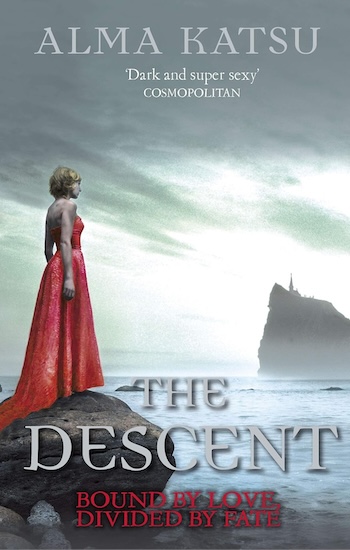
KatsuA-I3-DescentUKA few days ago, a copy of Alma Katsu’s third novel, The Descent dropped through the mailbox. It is the third novel in the author’s The Immortal trilogy, but I didn’t (at the time) know too much about the series or the author, so I took the opportunity to send her some questions.

Who is Alma Katsu?

As a girl, I wanted to have a magical, fantastical life but the outlook was kind of narrow and grim, and I think that’s why I turned to creating my own worlds in fiction. Then, funnily enough, I ended up having a life that was the stuff of fantasy: working in intelligence, traveling, doing all this technical, math-y stuff that I never would’ve thought possible for a little storyteller. Lesson: you never know where life will take you. Continue reading

Theodore Roosevelt Responds to a Lampooning Review. Or, “This Probably Couldn’t Happen Today, on the Internet”

GoodwinDK-BullyPulpitUKAnyone who knows me, or perhaps anyone who reads my other blog, Politics Reader (yeah, I know, there’s a theme to the blog names), will undoubtedly have come across my interest in Theodore Roosevelt, his presidency and time. I am fascinated by the period of American history between (approx.) 1880 and the start of World War I. Given this interest, I devour pretty much any book I can get my hands on that focuses on that time and the people who shaped American history and politics then. At the moment, I’m reading Doris Kearns Goodwin’s excellent, exhaustively-researched The Bully Pulpit. The book is about Theodore Roosevelt, William Howard Taft and the media. Today, I came across an amusing passage, which I thought I would share, here.

First, some context. Theodore Roosevelt was US president from 1901-08, first ascending to the Presidency after the assassination of William McKinley. Alongside his storied career in public service, he was a prolific author – between 1882-1919, he had 45 books and collections (of essays and letters) published. Finley Peter Dunne was a writer and humourist from Chicago, who wrote the nationally syndicated “Mr. Dooley” satires and lampoons.

In the fall of 1899, a copy of The Rough Riders, Roosevelt’s wartime memoir, came across Dunne’s desk. “Mr. Dooley’s” book review in Harper’s Weekly mocked Roosevelt’s propensity for placing himself at the center of all action: “Tis Th’ Biography iv a Hero by Wan who Knows. Tis Th’ Darin’ Exploits iv a Brave Man be an Actual Eye Witness,” Mr. Dooley observed. “If I was him, I’d call th’ book, ‘Alone in Cubia.’” Three days after this satirical assessment amused readers across the country, Roosevelt wrote to Dunne: “I regret to state that my family and intimate friends are delighted with your review of my book. Now I think you owe me one; and I shall exact that when you next come east to pay me a visit. I have long wanted the chance of making your acquaintance.” (pp.257-8)

GoodwinDK-BullyPulpitUSThe full review is the first in Mr. Dooley’s Philosophy (which is available as a PDF online – pp.13-18). collected Dunne was clearly touched by Roosevelt’s letter, and in his reply to Roosevelt, accepting the invitation, he also said:

“… the way you took Mr. Dooley is a little discouraging. The number of persons who are worthwhile firing at is so small that as a matter of business I must regret the loss of one of them. Still if in losing a target I have, perhaps, gained a friend I am in after all.” (p.258)

Dunne never had to regret the loss of TR as a target, however. The reviewer continued to poke fun at TR (“the nation’s premiere target” as Goodwin calls him) for years to come, and the two remained friends throughout.

Today, when an author responds to a negative or critical review – especially on the internet – it never seems to go well for the author (see, for example, who-knows-how-many self-published authors lashing out at bloggers; or even the more recent, bizarre-and-quite-pathetic reaction to Ben Aaronovitch’s polite pointing out of a review’s factual misunderstanding). The above response and exchange between Dunne and Roosevelt… It could never happen today. Which is a real shame.

[I am currently reading The Bully Pulpit for review on Politics Reader. The book was provided by Goodwin’s UK publisher, Viking/Penguin. In the US, the book is published by Simon & Schuster.]

“Silken Prey” by John Sandford (Putnam/Simon & Schuster)

Sandford-23-SilkenPreyUKMurder, scandal, political espionage, and an extremely dangerous woman. Lucas Davenport’s going to be lucky to get out of this one alive.

Very early one morning, a Minnesota political fixer answers his doorbell. The next thing he knows, he’s waking up on the floor of a moving car, lying on a plastic sheet, his body wet with blood. When the car stops, a voice says, “Hey, I think he’s breathing,” and another voice says, “Yeah? Give me the bat.” And that’s the last thing he knows.   

Davenport is investigating another case when the trail leads to the man’s disappearance, then — very troublingly — to the Minneapolis police department, then — most troublingly of all — to a woman who could give Machiavelli lessons. She has very definite ideas about the way the world should work, and the money, ruthlessness, and sheer will to make it happen.

No matter who gets in the way.

I’m a huge fan of Sandford’s Minnesota-based crime thrillers. In fact, I would say that he’s probably my favourite thriller author bar none. Silken Prey is the 23rd novel in his Lucas Davenport series, and the series just keeps firing on all cylinders. This time, Sandford turns his attention to politics, which always offers new and ‘exciting’ ways in which an investigation can become muddled, dangerous, or even impossible. Lucas is tasked by the Democratic governor to investigate what appears to be a political framing of the Republican Senator. Making things really tricky, of course, is the fact that they are all in the middle of the election. Party politics, dirty tricks, extreme suspicion, and a deadly killer (or two) operating on the sidelines? This is Davenport. He can handle it. Maybe…

The novel displays Sandford’s easy, inviting prose style, the wry humour that has always made this series stand out, and also his engaging and endearing characters. The friendship between Lucas and his various colleagues feels very natural – after 23 novels, how could it not be? The antagonists of the piece are well-drawn, avoiding cartoon-ish cliché or exaggeration. It was nice to see Kidd and Lauren make an appearance, as it feels like a really long time since we saw them last (the two of them had their own, four-book series earlier in Sandford’s career – and I would highly recommend those, too). The novel is uncluttered, unpretentious, and very focused. It’s not a blockbuster thriller, with a focus on character way more than guns or action-scenes.

The ending was just a smidge muddled, as if the author felt he needed to wrap things up relatively quickly, but I think he nevertheless manages to pull it off, and it wasn’t dissatisfying. It didn’t feel rushed, actually. The conclusion also leaves things open for further exploration in a later book (which I really hope Sandford does). I get the feeling that Sandford has some big plans for Davenport’s future, and I can’t wait to read the next book in the series. This far into a series, it is a testament to the author’s exceptional skill as a writer that he manages to make each new novel as gripping and addictive as the last. Long may this continue!

A short-and-sweet review, this. I don’t want to delve too much into the story, as there are a couple of switches and changes at certain points of the narrative. The synopsis, above, should suffice to give you as much as you need. All I can say is that John Sandford is a superb writer, and Silken Prey is yet another strong addition to his beloved series. I will really have to catch up with the companion series, which follows Davenport’s protégé (of sorts), Virgil Flowers. I’ve read the first in that series, but have six more to catch up on. I may plan to do that over Christmas and New Year.

Very highly recommended for all fans of crime thrillers.

“Kill Shot” by Vince Flynn (Simon & Schuster)

Flynn-KillShot

A second novel of Mitch Rapp’s early CIA career

For months, Mitch Rapp has been steadily working his way through a list of men, bullet by bullet. With each kill, the tangled network of monsters responsible for the slaughter of 270 civilians becomes increasingly clear. He is given his next target: a plump Libyan diplomat who is prone to drink and is currently in Paris without a single bodyguard.

Rapp finds him completely unprotected and asleep in his bed. With confidence in his well-honed skills and conviction of the man’s guilt, he easily sends a bullet into the man’s skull. But in the split second it takes the bullet to leave the silenced pistol, everything changes. The door to the hotel room is kicked open and gunfire erupts all around Rapp. In an instant the hunter has become the hunted. Rapp is left wounded and must flee for his life.

I am a huge fan of Vince Flynn’s novels – I’ve read them all except the latest, now. Sadly, the author passed away earlier this year, so there is actually only the one other novel (which I will read A.S.A.P.). Flynn’s novels are action-packed, tightly written, and always a great read. If you’ve never read any of the Mitch Rapp novels (or Term Limits, the set-in-the-same-time prequel of sorts), then I highly recommend that you do. Kill Shot was a little bit different, following on from American Assassin, the first novel set during Rapp’s very early career as a CIA assassin. It’s a very good novel.

The novel starts with a scene between Irene Kennedy and the CIA shrink, Lewis. They’re talking about Rapp, his incredible proficiency and fish-to-water acclimation to his new job – he’s only been with the Company for a year at this point, and is proving brutally efficient and competent at killing…

“I’m talking about the fact that he is a one-man wrecking ball. That he has methodically, in a little over a year, accomplished more than we have accomplished in the last decade. And let’s be brutally honest with each other.” Lewis held up a finger. “The ‘what’ that we are talking about is the stone-cold fact that he is exceedingly good at hunting down and killing men.”

There’s some nice foreshadowing for the future novels set after this discussion between the shrink and Irene (it continues off-and-on during the novel). For example, this snippet, which foreshadows Term Limits

“Justice is blind, and if you train a man to become judge, jury, and executioner . . . well, then you shouldn’t be surprised if he someday fails to see the distinction between a terrorist and a corrupt, self-serving bureaucrat.”

Rapp, in the meantime, is in Paris, executing one of the terrorists involved in the ring that took down the plane that killed his college sweetheart. The operation doesn’t go as planned, as someone was waiting for Rapp. The next morning, the news breaks in Washington that Libya’s Oil Minister has been killed along with three innocent civilians and four unidentified men. The French authorities are certain that the gunman is wounded and on the loose in Paris. Rapp’s handlers have only one choice, of course: deny any responsibility for the incident and pray that their secret asset stays that way, avoiding capture and dying quietly. Naturally, Rapp is unlikely to do so, and decides to get to the bottom of the situation, and hunt down the rat in the chain of command.

Rapp’s paranoia and relative newness in the business sets in motion a series of events dictated by his training and also belief that he’s been set up by someone very close to him – specifically, and for a short while, the potential that Irene was the one that spilled the beans:

“She was by necessity the person who knew the most about him, and the details of this mission. His orders came from her. If anyone were in a position to set him up it would be her.”

With nobody to trust, he resorts to his wits to get to the bottom of things, as the two sides – Rapp’s and the CIA’s – circle each other, attempting to ascertain the other’s motives. Slowly, though, the truth comes out, and Rapp is able to channel his… attentions in the appropriate direction.

The novel is not as fast-paced as Flynn’s previous novels, and felt slightly drawn out at times. Key events and moments helped maintain interest, however, as we see Rapp growing more into his new role, and everyone else coming to terms with just how good he is at his job. Flynn also offers a fair bit of discussion and commentary on the nature of psychosis and psychopathy and their potential connection to those with careers in the military – especially with regards to special forces.

Given the early setting, it was also interesting to see a different, undeveloped side of Stansfield’s, Irene’s and Rapp’s relationships. They trust his skills, but they have not yet developed the intense bond of trust that we saw even in Transfer of Power (a novel that helped light the fire under my thriller addiction).

I ended up not taking too many notes for this novel – this is not exactly a surprise, when it comes to thrillers or novels that I become engrossed in. It is a very good thriller, and I was drawn on throughout, devouring this far quicker than most novels I’ve read recently.

Overall, this is a very good novel. Not the author’s best, but certainly a must-read for fans of the series and also for thriller fans in general.

Vince Flynn’s final novel, The Last Man, is out now.

Series Chronology: American Assassin, Kill Shot, Term Limits, Transfer of Power, The Third Option, Separation of Power, Executive Power, Memorial Day, Consent to Kill, Act of Treason, Protect and Defend, Extreme Measures, Pursuit of Honor, The Last Man

Upcoming: “Abaddon: The Talon of Horus” by Aaron Dembski-Bowden (Black Library)

DembskiBowden-A1-TalonOfHorus

I had no idea this cover had been released, yet, but while on Goodreads adding my latest read to my Currently Reading shelf (Aaron Dembski-Bowden’s Helsreach), I saw this listed among his novels. Complete with a cover. So I did some more digging/Googling, and this post is the result.

Abaddon: Talon of Horus is the first in a new series of novels focussing on the Black Legion and their leader – former first captain of the Luna Wolves/Sons of Horus (who will be familiar to readers of the Horus Heresy series). Naturally, I’m extremely excited about reading this. The author is one of my favourites, period. (Although, that being said, I’m struggling a bit with Helsreach…) Also, as a more personal aside, Abaddon was my favourite model from the Warhammer 40,000 range, when I was younger and paid more attention.

Can’t wait for this. I’m ready for it to be April 2014, now!

Here’s an early synopsis, which I found on Simon & Schuster Canada’s catalogue…

The rise of Abaddon, successor to Horus and Warmaster of the Black Legion.

When Horus fell, his Sons fell with him. A broken Legion, beset by rivalries and hunted by their erstwhile allies, the former Luna Wolves have scattered across the tortured realm of the Eye of Terror. And of Abaddon, greatest of the Warmaster’s followers, nothing has been heard for many years. But when Horus’s body is taken from its resting place, a confederation of legionaries seek out the former First Captain, to convince him to embrace his destiny and continue what Horus began.

Aaron is also the author of brilliant The First Heretic (Horus Heresy), and the superb Night Lords trilogy (Soul Hunter, Blood Reaver, and Void Stalker), among others.