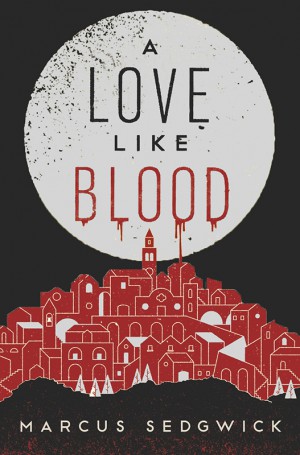
Excerpt: THINGS HALF IN SHADOW by Alan Finn (Gallery Books)

FinnA-ThingsHalfInShadowToday, we have an excerpt from Alan Finn‘s Things Half in Shadow, a historical and supernatural thriller. Published by Gallery Books in the US today, here is the synopsis:

Postbellum America makes for a haunting backdrop in this historical and supernatural tale of moonlit cemeteries, masked balls, cunning mediums, and terrifying secrets waiting to be unearthed by an intrepid crime reporter.

The year is 1869, and the Civil War haunts the city of Philadelphia like a stubborn ghost. Mothers in black continue to mourn their lost sons. Photographs of the dead adorn dim sitting rooms. Maimed and broken men roam the streets. One of those men is Edward Clark, who is still tormented by what he saw during the war. Also constantly in his thoughts is another, more distant tragedy — the murder of his mother at the hands of his father, the famed magician Magellan Holmes… a crime that Edward witnessed when he was only ten.

Now a crime reporter for one of the city’s largest newspapers, Edward is asked to use his knowledge of illusions and visual trickery to expose the influx of mediums that descended on Philadelphia in the wake of the war. His first target is Mrs. Lucy Collins, a young widow who uses old-fashioned sleight of hand to prey on grieving families. Soon, Edward and Lucy become entwined in the murder of Lenora Grimes Pastor, the city’s most highly regarded — and by all accounts, legitimate — medium, who dies mid-séance. With their reputations and livelihoods at risk, Edward and Lucy set out to find the real killer, and in the process unearth a terrifying hive of secrets that reaches well beyond Mrs. Pastor.

Blending historical detail with flights of fancy, Things Half in Shadow is a riveting thriller where Medium and The Sixth Sense meet The Alienist — and where nothing is quite as it seems…
Continue reading

Upcoming Orbit Titles (Spring/Summer 2015)

Orbit unveiled the covers for their Spring/Summer 2015 releases today (US/UK – although, they’re mostly the same), and I thought I’d share some of the ones that caught my eye, here. I present them without commentary, but I will say the Peeler cover is rather eye-catching not only because of its bold colouring, but because it’s rather amusing.

Daniel Abraham, The Spider’s War (Dagger & Coin #5)

Abraham-D&C-5-TheSpidersWar

*

James S.A. Corey, Nemesis Games (Expanse #5)

CoreyJSA-E5-NemesisGames

*

N.K. Jemisin, The Fifth Season

Jemisin-FifthSeason

This is the way the world ends. Again.

Three terrible things happen in a single day. Essun, a woman living an ordinary life in a small town, comes home to find that her husband has brutally murdered their son and kidnapped their daughter. Meanwhile, mighty Sanze – the world-spanning empire whose innovations have been civilization’s bedrock for a thousand years – collapses as most of its citizens are murdered to serve a madman’s vengeance. And worst of all, across the heart of the vast continent known as the Stillness, a great red rift has been been torn into the heart of the earth, spewing ash enough to darken the sky for years. Or centuries.

Now Essun must pursue the wreckage of her family through a deadly, dying land. Without sunlight, clean water, or arable land, and with limited stockpiles of supplies, there will be war all across the Stillness: a battle royale of nations not for power or territory, but simply for the basic resources necessary to get through the long dark night. Essun does not care if the world falls apart around her. She’ll break it herself, if she must, to save her daughter.

*

Nicole Peeler, Jinn & Juice

PeelerN-Jinn&Juice

Cursed to be a jinni for a thousand years, Leila nears the end of her servitude – only to be bound once again against her will. Will she risk all to be human?

Born in ancient Persia, Leila turned to her house Jinni, Kouros, for help escaping an arranged marriage. Kouros did make it impossible for her to marry – by cursing Leila to live a thousand years as a Jinni herself.

If she can remain unBound, Leila’s curse will soon be over. But Ozan Sawyer, a Magi with the ability to See, Call, and Bind jinn has other plans.

Oz needs Leila to help him penetrate Pittsburgh’s steel-soaked magic, a juice potent but poisonous to supernatural creatures, in order to find a missing girl with her own mysterious connection to Kouros. Unfortunately for Leila, becoming Bound to Oz may risk more than just her chance to be human once more – it could risk her very soul…

Jinn and Juice is the first in a new series by fantasy writer, Nicole Peeler, set in a world of immortal curses, powerful jinni and belly dancing.

*

Kim Stanley Robinson, Aurora

RobinsonKS-Aurora

*

Angus Watson, Clash of Iron (Iron Age #2)

WatsonA-2-ClashOfIron

LEADERS ARE FORGED IN THE FIRES OF WAR

Iron Age warriors Dug and Lowa captured Maidun castle and freed its slaves. But now they must defend it.

A Roman invasion is coming from Gaul, but rather than uniting to defend their home, the British tribes go to battle with each other – and see Maidun as an easy target.

Meanwhile, Lowa’s spies infiltrate Gaul, discovering the Romans have recruited British druids. And Maidunite Ragnall finds his loyalties torn when he meets Rome’s charismatic general, Julius Caesar.

War is coming. Who will pay its price?

Guest Post: “Tower of Babel” by Aidan Harte

AidanHarte-AuthorPicMasons, like writers, learn the hard way to choose their foundation carefully. The strength of that first stone defines the structure, sets the tone. Accordingly, Chapter One of Spira Mirabilis begins with blasphemy. The Last Apprentice of Concord whips up a Children’s Crusade and instead of sending them to fight the approaching coalition led by Contessa Scaligeri, he sets them to construct a new cathedral. This is a recreation of the Tower of Babel, that structure torn down by an outraged God who then “confounded the language of all the Earth,” for good measure.

Finishing The Wave Trilogy, I found myself toiling in Babel’s shadow. This influence can be partly ascribed to the setting – cathedral building was medieval society’s engine, the focus of mathematics, engineering, art and devotion – but what troubled me was what Nimrod’s Tower says about creation. It condemns all creation as a blasphemous encroachment. What more damning indictment of the hubris of storytelling than a tower reaching to heaven, swatted aside by the greatest creator of all? The Middle East’s attitude to idolaters has always swayed between hostility and ambivalence. No accident then that Scheherazade, like Babel, springs from the fertile soil between the Euphrates and the Tigres. The lovely slave girl forever spinning yarns to keep her head from tumbling is, I like to think, the patron saint of storytelling. Her story reveals the secret of all stories: once you get in the habit of it, it’s easier to keep going than to stop.

HarteA-WaveTrilogy2014

There’s always a new twist, a cliff-hanger to escape, a long lost uncle to appear, a reconciliation or – better yet – a quarrel to be had. The deeper one is immersed, the more improbabilities one will accept. Watch the end of any Hitchcock film; it will seem overwrought, even silly, but only because you haven’t earned the heightened emotions the last act demands. Plenty of wonderful stories, like political careers, simply capsize before the finish line. The final season of The Wire is a catastrophe, but it seems churlish to say so. Instead we echo the builders of Babel: ‘Shame how it ended, but wasn’t she splendid?’

It’s a bittersweet thing to leave a place you’ve lived in for years but I’m finally saying addio to Etruria. No matter how much we rehearse farewells, they are almost always anticlimactic. Only a committed Austinian can recall the last lines of Pride and Prejudice:

“With the Gardiners, they were always on the most intimate terms. Darcy, as well as Elizabeth, really loved them; and they were both ever sensible of the warmest gratitude towards the persons who, by bringing her into Derbyshire, had been the means of uniting them.”

I know – yawnsville, right? Dear Jane is simply putting the chairs away and turning out the lights, but we’ve enjoyed the evening’s entertainment so much that we can’t complain if it ends in diminuendo. First impressions matter. Endings? Not so much. That last Parthian shot won’t mar a wonderful story or salvage a dull one. The battle’s won or lost long before then. Famous farewells, then, are necessarily a rare species. There’s Gatsby with his green light and boat going nowhere and Sydney Carton doing that far, far better thing. My favourite comes from Tracy Chevalier’s The Girl with the Pearl Earring. ‘A maid comes free’ is the final bittersweet flourish which makes this poignant tale linger.

Parting pickings are slim because it is a truth universally concealed that most writers are too preoccupied leaving the stage with dignity to craft something beautiful. But endings should be fashioned as carefully as the keystone that completes the arch, and not afterthoughts. Readers are well used to preposterous final acts when the air suddenly escapes. The sound of that rushing air is usually a Calvary horn. When it toots, it’s time to get your coat. The technical term is Deus Ex Machina, or God from the Machine. The phrase, as every eager Lit Grad know, originates in Greek theater when Zeus or one of his progeny would drop down and resolve things with a thunderbolt.

In Spira Mirabilis I throw a spanner in the divine machinery, asking what if God wants to help, but is powerless. I posit that God was not merely offended by Nimrod’s Tower, He was threatened. The Apprentice’s Tower is a knife to sever earth and heaven, and Contessa Scaligeri is the only one who can stop him. High stakes then. Does it come off, or does it come crashing down, leaving me with the poor hod-carriers at Babel, unpaid and gibbering nonsense?

Let’s see when the dust settles.

***

Aidan Harte is the author of The Wave TrilogyIrenicon, The Warring States and Spira Mirabilispublished in the UK by Jo Fletcher Books. Spira Mirabilis will be published on March 27th (eBook) and April 3rd (hardcover).

Also on CR: Interview with Aidan Harte, Guest Post (Yesterday That Never Was), Excerpt of Irenicon

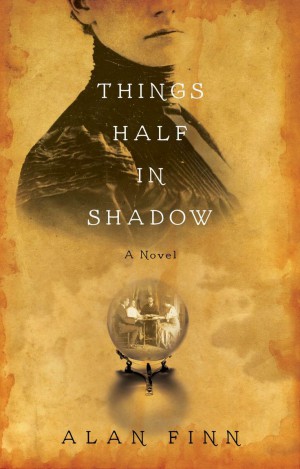
“A Love Like Blood” by Marcus Sedgwick (Mulholland)

Sedgwick-ALoveLikeBloodA gripping, chilling psychological thriller

“I’ve chased him for over twenty years, and across countless miles, and though often I was running, there have been many times when I could do nothing but sit and wait. Now I am only desperate for it to be finished.”

In 1944, just days after the liberation of Paris, Charles Jackson sees something horrific: a man, apparently drinking the blood of a murdered woman. Terrified, he does nothing, telling himself afterwards that worse things happen in wars.Seven years later he returns to the city – and sees the same man dining in the company of a fascinating young woman. When they leave the restaurant, Charles decides to follow…

A Love Like Blood is a dark, compelling thriller about how a man’s life can change in a moment; about where the desire for truth – and for revenge – can lead; about love and fear and hatred. And it is also about the question of blood.

This wasn’t what I was expecting. I had expected a good novel, with perhaps a supernatural component. Instead, what I found was an excellent psychological thriller about obsession and the science and mythology of blood. Sedgwick’s first novel for adults is damned good, and a must-read of the year. Continue reading

An Interview with TOBY VENABLES

Venables-HOS1-KnightOfShadows

Today, an interview with horror author Toby Venables, whose latest novel Knight of Shadows was recently published by Abaddon Books. We chatted about the changing nature of genre fiction, writing, undead vikings, and a 12th Century James Bond…

Let’s start with an introduction: Who is Toby Venables?

He’s a fictional construct I’ve been working on for several decades, with mixed success. I just couldn’t nail who or what this character was. He worked as an artist (badly), busked a bit, then worked at a press agency, then got a job in the library of a Cambridge College (alongside Simon Blackwell, who went on to create Armstrong and Miller’s street-talking airmen, and writer of The Thick Of It – it was basically a waiting room for aspiring writers). Finally he got involved in magazine journalism and became an editor, and things seemed to be getting somewhere. He launched magazines in Cambridge, Oxford and Bristol, doing interviews with all manner of celebs. He chatted with Bill Bailey and Eddie Izzard. He met one of his childhood heroes, Ray Harryhausen. He even turned down dinner with Cate Blanchett. It was all starting to come together, in a rather name-droppy kind of a way. Then it all changed again. He went freelance, working as a copywriter, started teaching film stuff at Anglia Ruskin University, and began writing film scripts – one of which went through a long period of development and is even now awaiting the green light. Then suddenly novels happened when he pitched an apparently daft idea – Vikings and zombies – to Abaddon, and they said “yes”. Because it was four fifths historical novel, that led to Knight of Shadows. But also a kind of semi-career in academia as “the zombie guy”. (Are you still following this? Not that these things aren’t interesting, but it’s all a bit chaotic, story-wise.)

I think I’m finally getting somewhere with him, but it’s been a long haul – I wouldn’t blame someone for having got fed up with it around 1992.

Venables-HOS1-KnightOfShadows

Your latest novel, Hunter of Sherwood: Knight of Shadows, was published by Abaddon in October. How would you introduce the novel to a potential reader? Is it part of a series?

It’s set during the Third Crusade, when Richard the Lionheart is off fighting – possibly never to return – and Robin Hood is having his merry way with England. But it’s not primarily about Hood. Our hero is Guy of Gisburne – the man traditionally cast as the villain in the Hood legends. And it is not merely the same old tale told from Gisburne’s perspective. He is an agent for Prince John and a true hero, and Hood is far from the great saviour we have come to know. In fact, he is a psychopath. The trouble is, half of England seems to think he’s wonderful… Originally, it was to be a series, much like Abaddon’s Pax Britannia (steampunk), or Malory’s Knights of Albion (Arthurian, obvs), but after discussions we decided to make it a trilogy – which was fine by me, as it meant I got to write them all, and also had the opportunity to develop a more distinct story arc that would unfold through the three books. There are gaps in the timeline, though, so there is potential to go back and see what Gisburne got up to in the summer of 1192, for example. I think some short stories about his lesser missions would be great. But first things first…

What inspired you to write the novel? And where do you draw your inspiration from in general?

VenablesT-VikingDeadThe “inspiration” was, initially, very journalistic. It was a brief, in effect, brought to me by Abaddon’s Commissioning Editor David Moore, who had the idea to do a series which featured Guy of Gisburne as a kind of 12th century James Bond. Who could resist that..? Because I’d written The Viking Dead for Abaddon, which had a historical setting, he thought I might be a good candidate to take this on, then I fleshed it out and built the story, the characters and the motivations that made the cogs mesh. So, it was kind of a gauntlet thrown down – the sort of challenge that I absolutely love – and I’m immensely grateful to David and Abaddon for the opportunity to do it. Such challenges don’t suit every writer, but they are a spur for me.

In general, though, what inspires me most is cinema. Although I’m working primarily in prose, overall I’m more influenced by films than by other prose fiction, and I think anyone reading the books will spot that. I try to write in a cinematic way, but also I do make direct – or, sometimes, rather obtuse – references to films I love. In Knight of Shadows there’s a Fistful of Dollars bit, a Raiders of the Lost Ark bit, a First Blood bit… I even crowbarred a reference to The Italian Job. And there are some obvious thematic connections with The Dark Knight. But all those things have a place in the story that is completely logical (let’s face it, many of those films already owe a huge debt to classic stories, legends and folklore). It’s important that it’s not just gratuitous – but also I want to relate the action to things that people will know. That’s partly to give it a relevance and immediacy, but also to bring home the fact that those people were, in many ways, just as bold, resourceful, fallible or funny as we are now. Often I find I want to emphasise the familiar, rather than the exotic, which is perhaps an unusual approach for what is loosely termed “fantasy”. It’s easy to see the past as some kind of foreign land. Maybe it is that, to some extent – but it’s a foreign land from which we all came. For me, part of the excitement of history is seeing its direct relevance to today, and finding those points of connection. Maybe that’s why “a 12th century James Bond” struck such a chord.

Venables-MovieInfluences

How were you introduced to genre fiction?

Crikey. When was it ever not there..? There’s an example I often cite, which is the Beowulf and Grendel story. It was read out to us at school, and the whole bit with the wrenching off of the arm left a strong impression. I think it was the first time I was conscious of something being “horror” – of being simultaneously repelled and excited. I still love that story, and intend to write a version of it some day. A big, dark, monstrous novel. Then as I grew up I started to read a lot of science fiction. I kind of worked backwards, starting with 2000AD, then Ray Bradbury and classic hard SF writers like Asimov, Clarke and A.E. Van Vogt, then H.G. Wells, then Frankenstein. Kind of an archaeological excavation of SF. I also had a very nerdy Tolkien period when I was about 14. I made up totally impractical alphabets and watched the whole of Wagner’s Ring Cycle on TV. I still love that. It’s like proto-cinema.

How do you enjoy being a writer and working within the publishing industry? Do you have any specific working, writing, researching practices?

My background is in journalism, and much of what I’ve learned, and my approach to writing, is coloured by that. I was a very undisciplined writer before that, hardly ever finishing anything. Working in journalism taught me about deadlines, and that sometimes getting something done is better than getting it perfect. We’d all love more time to hone what we do, I think, but striving for perfection can become a bottomless pit from which the finished work never emerges. It’s good for the ego to make occasional mistakes and to learn to live with them. The books for Abaddon were written very quickly, with little opportunity to fuss over them. I still did, but at least there was an editor telling me to stop. Otherwise I’d still be faffing about with the twentieth draft of The Viking Dead, and have nothing in print.

Research is something I adore, but if you’re not careful it can become all-consuming – a pleasant diversion from the actual work of writing. It is important to me that things are feasible within their period. I have also woven a lot of actual history (and quite a few historical characters) into the mix, and have tried to ensure that it all fits. But there comes a point where you have to put the research aside – having, hopefully, absorbed enough of it – and just let the characters do their thing. I do sometimes obsess over small details – I’d rather include something real than make it up, if there is indeed something real to be drawn upon – but overall I try not to be pedantic. Some hard-line historical reenacters will not do a thing unless they can find a specific precedent for it in the historical record. I’m not like that. As long as it is possible – and logical, and interesting – I’m happy. People then were not so different from us – just as intelligent, creative and eccentric – and so would have used their ingenuity just as much as we do. Probably more so, through sheer necessity. That’s my fundamental approach. Basically, if a thing was possible, someone probably did it, which opens up some interesting possibilities – such as dreaming up 12th century gadgets for this 12th century James Bond.

When did you realize you wanted to be an author, and what was your first foray into writing? Do you still look back on it fondly?

Venables-AuthorPicHa ha – kind of… I’ve always been a writer. I just didn’t realise it. At university I studied English Literature and Art History, but also did studio work (painting, sculpting, etc.). At one point it looked like I might be an artist – and, in fact, I worked as a printmaker for a year after uni (making angst-ridden, Munch-style views of Cambridge that no one actually wanted to buy) – but nearly all of the artwork I did during the three years of my degree involved words. I should have caught the clue, really.

The first writing I remember doing was a ghost story in primary school. Our English teacher read it out, and said nice things about the description. Grown-up kind of things really. He was a wonderful teacher – not at all patronising, which was a rare thing. Looking back, the fact that he treated it as a piece of writing and not something by a kid made a huge difference. It was incredibly encouraging. Naturally, given this early success, I wrote several sequels, and even developed a recurring character. Later, when I was a teenager, I wrote a totally unpublishable “novel” – part SF, part comedy, part psychedelic concept album. If that sounds bad, it was, it really was… It was actually written in a series of episodes, Dickens-style, and several school friends became devoted readers. But Dickens it ain’t. Some bits of it were quite good, but mostly it was just a bit embarrassing, pandering to my captive audience. And I blatantly nicked elements from everywhere: The Hitchhikers’ Guide, TV programmes, films and anything else that we were into. It was full of in-jokes. I just made it up as I went along, which was how I thought novels were written at the time. Consequently, it had a really crappy, cobbled together soap-style ending. I still have it somewhere. Hopefully it’ll never see the light of day, though it probably taught me more than I realise.

What’s your opinion of the genre today, and where do you see your work fitting into it?

It’s incredibly rich and diverse at the moment, with lots of crossovers from one genre to another, and also one medium to another. Harry Potter, swiftly followed by Peter Jackson’s Tolkien adaptations, have changed the entire landscape – so much so, it’s hard to remember what it was like before. My wife is also a writer, and when we were first touting TV scripts around about ten years ago, the big frustration was that no one here wanted genre. They thought it wasn’t viable on British TV and repeatedly said “We’d love to make this, but we just can’t…” Then Dr. Who came back, and it all went bananas – genre everywhere. The massive growth of the internet has meant that fan fiction has kind of gone crazy, too. That’s inspired and revealed a lot of new talent. There’s a down side to all this, though – and I don’t just mean 50 Shades of Grey. Spurred by this appetite for genre, publishers and writers have started tapping completely new markets – essentially the people who were never really into genre before, but who seem like they might respond a “lite” version. So, we now have some very undemanding, rather wishy-washy stuff out there. I’ve nothing against Twilight and others in themselves – there’s room for it all – but they’re just not my thing. Some of these are the literary equivalent of alcopops – hard stuff made into brightly coloured, fizzy drinks so they’re palatable for teenagers who don’t want their tastes challenged. Mostly I feel it’s a lost opportunity, because cinema shows us that it’s possible to do user-friendly stuff and still say something worthwhile, as with all those great films of the ’80s – ET, Back to the Future, Gremlins, and so on. The key difference is that those were made by people who were really into it, and who knew their genre inside-out. Now we have examples of genre by people who apparently aren’t really into genre, for an audience that isn’t really into genre. That’s never gonna set the world on fire – though some people will hate me for saying so.

Where I fit into all this, I have no idea! I think the direction I would like to go is historical fiction, with the occasional horror/SF mash-up. I like unexpected combinations. I just want it to surprise me, and I think most readers want that too. The wizards/dwarves/dragons variety of fantasy isn’t really my thing – at least in terms of what I want to write. The Beowulf novel, when I get around to it, will feature a big dragon, however. It’s old skool – not a noble creature that someone with a funny name has to bond with so he/she can ride it like a big scaly horse, but a ravening monster. Something that has to be destroyed.

What other projects are you working on, and what do you have currently in the pipeline?

The current thing is the second book of the Gisburne series, whose working title is The Red Hand. It’s about a crazed killer who Gisburne is tasked with stopping and the action takes place mostly in and around medieval London. Think Silence of the Lambs meets Sherlock Holmes – with swords. I’m also planning something rather different, albeit using similar geography – a steampunkish zombie extravaganza set in Victorian London. It’s called Zombie & Son, and is kind of all my favourite 19th century novels put into a blender. With zombies. It begins in a very real, gritty world – no fantasy elements at all – but gradually spirals out of control until London has become a kind of surreal hell on earth (insert joke poking fun at the state of modern London here…). There’s also a screenplay which is waiting to get made. It’s completely different – a contemporary heist/action movie with kind of a western feel to it.

What are you reading at the moment (fiction, non-fiction)?

Fiction: Kim Newman’s Anno Dracula. I’ve been meaning to read it for years, but also Zombie & Son (see above) is also set in late Victorian London with some steampunkish elements. Best to make sure I’m not just rewriting what Kim wrote 20 years ago. That would be silly. I don’t think it’s likely – they’re actually very different worlds – but it’s nice to have an excuse to call this “research”. Also, I just got Dan Simmons’ Song of Kali, which I am very much looking forward to. I absolutely loved The Terror – nine parts amazing historical novel, and one part mind-bending horror. Fabulous book. Song of Kali has been described as one of the most terrifying novels ever written. Who can resist that?

Venables-Reading

Non-fiction: lots of books about things medieval – especially 12th century London (for book two). It’s a tricky period in some respects; the next century is when things really take off and the city undergoes massive expansion, so most of the studies of medieval London tend to focus on the 13th-14th centuries (unlike Paris, for which there’s masses of detailed information about the year 1200). But that in itself makes the earlier period of the place interesting to me. Lots of things just beginning, lots of unrealised potential.

What’s something readers might be surprised to learn about you?

I won the Keats-Shelley Memorial Prize in 2001, for an essay on Shelley’s “Ozymandias”. The (rather modest) prize was £1,000 and I spent it on a cherry red Fender Telecaster. Very rock ‘n’ roll – or it would be if I was actually any good on it.

What are you most looking forward to in the next twelve months?

52 weekends! I might even get away with idling on some of them… But also, the second Guy of Gisburne book will be finished (I hope) and out. Then I’ll be on to book three, and embarking on Zombie & Son in between. That takes me back to my zombie roots, but steampunk style – and I get to destroy Victorian London along the way. Can’t wait.

***

Both Knight of Shadows and Viking Dead are out now in paperback and eBook!
“The Crystal Cave” by Mary Stewart (Hodder)

StewartM-M1-CrystalCaveOne of the best-loved interpretations of the Merlin Myth

Fifth century Britain is a country of chaos and division after the Roman withdrawal. This is the world of young Merlin, the illegitimate child of a South Wales princess who will not reveal to her son his father’s true identity. Yet Merlin is an extraordinary child, aware at the earliest age that he possesses a great natural gift – the Sight.

Against a background of invasion and imprisonment, wars and conquest, Merlin emerges into manhood, and accepts his dramatic role in the New Beginning – the coming of King Arthur.

Hm. How to review a book that is well-written, well-conceived, but didn’t fire one’s imagination? In brief, I suppose, is the best answer. I received this as part of the Hodderscape Review Project, which has been a great way to try out some classics of genre fiction. True, only one has truly wormed its way into my mind (Stephen King’s The Shining), but I am very happy that I’ve had the opportunity to read these books (this is the third so far). I’m especially looking forward to the next title in the project (by none other than Ursula le Guin…). The Crystal Cave, however, must also be put on the Shelf of Classics That Disappointed.

Despite this, there is a fair bit to like in this novel. Stewart’s prose is well-crafted and fluid – it reminded me of Robin Hobb’s Assassin’s Apprentice, actually, in style. The characters are interestingly portrayed and well-drawn. Despite these things, the story itself just didn’t grab me enough to make me love it. This is one of the first novels that, after I told friends and family that I was going to read it, was universally met with comments along the line of, “It’s great!” and “It’s fantastic!” Sadly, I just didn’t get swept up by it. The story took too long to get going. I did, however, enjoy how Stewart brought in Merlin’s gift of Sight into the story, and developed it over the course of this first book – he first comes across as incredibly observant, and then we start to see his knowledge of things he couldn’t possible know.

As far as Merlin/Arthur interpretations go, I can certainly see why this has been so popular, and how that popularity endures today. Of the many other versions of this story that I have read (most recently, I think, DC Comics’ Demon Knights and Maurice Broaddus’s Knights of the Breton Court), this is probably the best conceived and in-depth.

It is perhaps the long-game approach that Stewart took that makes the novel not really work for me. It suffers from being too obviously the first part of a series – the characters, ideas and so forth aren’t developed enough, and I didn’t think the plot moved forward enough. Sadly, this means I haven’t got the bug to seek out the rest of the series. At least, I am not in any hurry. As someone who will happily sit through thousands of pages of epic fantasy trilogies (most recently, Joe Abercrombie and Peter V. Brett – both authors for whom I had some catching up to do), it is perhaps strange to say this book didn’t work for me.

That’s quite possibly the most carefully-written, sitting-on-the-fence review I’ve ever written. I’m not proud of it. I just couldn’t rustle up much verve to dig deeper. Which is never a good sign when it comes to a novel. I’m sure, in the future, I’ll give this another try. As it stands, though, it didn’t work for me, and I don’t want to belabour the point.

Upcoming: “A Love Like Blood” by Marcus Sedgwick (Hodder)

Sedgwick-ALoveLikeBloodAn ARC of this novel dropped through my mailbox a little while ago, and I had no idea what it was about. Nor could I find much information about it. Naturally, this made me ever-more intrigued (love me a good mystery book…). Publisher Hodder has now unveiled the artwork and synopsis, so here it is…

I’ve chased him for over twenty years, and across countless miles, and though often I was running, there have been many times when I could do nothing but sit and wait. Now I am only desperate for it to be finished.

In 1944, just days after the liberation of Paris, Charles Jackson sees something horrific: a man, apparently drinking the blood of a murdered woman. Terrified, he does nothing, telling himself afterwards that worse things happen in wars.

Seven years later he returns to the city – and sees the same man dining in the company of a fascinating young woman. When they leave the restaurant, Charles decides to follow…

A LOVE LIKE BLOOD is a dark, compelling thriller about how a man’s life can change in a moment; about where the desire for truth – and for revenge – can lead; about love and fear and hatred. And it is also about the question of blood.

When I read this, it will be the first of Sedgwick’s novel I read. Rather looking forward to it.

An Interview with PAULA BRACKSTON

Brackston-Author

Paula Brackston lives in a wild, mountainous part of Wales. She is an author and Visiting Lecturer. Before becoming a writer, Paula tried her hand at various career paths, with mixed success. These included working as a groom on a racing yard, as a travel agent, a secretary, an English teacher, and a goat herd. Everyone involved (particularly the goats) is very relieved that she has now found a job she is actually able to do properly – and that is, write fiction. Her latest ‘series’ is The Shadow Chronicles, the second book of which – The Winter Witch – is published tomorrow in the UK.

Who is Paula Brackston?

A descendent of the Witches of the Blue Well, possessed of dangerous magic and ancient knowledge, cunningly disguised as an ordinary mortal, mother of two, walker of the dog, maker of meals, who also writes a bit.

The Winter Witch, the sequel to The Witch’s Daughter, will be published tomorrow by Constable & Robinson. How would you introduce the series to a potential reader, and what can fans of the first expect in the second?

BrackstonP-2-WinterWitchAh, well, you see, there are no sequels, as yet. Each book in The Shadow Chronicles is a stand alone. They have in common an exploration of witches through the ages, following the experiences of a witch as the main character. All kinds of witches, in different eras and settings, each with their own distinct magic and story.

What inspired you to write the novel? And where do you draw your inspiration from in general?

I live in the Brecon Beacons National Park, so I wake up each day to the most inspirational landscape you could imagine. That certainly formed the basis of not just the setting for The Winter Witch, but the characters such a place produces too. More generally, I am inspired by wilderness and wildness, by individuals who make their own way in the world, and by courage. Particularly courage, I think, as I am such a timid creature. I love inhabiting brave characters who overcome adversity. It makes me feel stronger, and I hope that works for my readers as well.

How were you introduced to genre fiction?

As a reader I have never made a distinction between categories of fiction. I struggle with the whole idea of literary and commercial being two different things – surely a good book is a good book? That books will be written about different things, in various styles, traditions and settings, is what makes reading such an exciting experience.

Which is how I feel about writing, too. When I’m working on a story I don’t think about how it will sit in a certain genre, or how it will be seen. I am interested only in the story, and I strive to find the best way I can to tell it. The placing, categorising, and marketing of the finished thing I leave up to people who understand such things far better than I do.

How do you enjoy being a writer and working within the publishing industry? Do you have any specific working, writing, researching practices?

BrackstonP-1-WitchsDaughterI have the best job in the world! Maybe not the most important, prestigious, or well paid, but still the best. I get to spend all day dreaming things up and then writing them down, creating my own little world and peopling it with characters that move me, having them dash about doing all manner of stuff I’d never dare do. All this and shortbread – what’s not to like?

When did you realize you wanted to be an author, and what was your first foray into writing? Do you still look back on it fondly?

I’ve always written, but it took me years to believe I could actually Be A Writer. Still feels strange when I tell people how it is I make my living and what it is I do. The turning point came when I was living and working in London and missing the mountains very much. I came up with a plan to ride a horse around Wales for a month or so and write about it. I pitched the idea to some publishers and one commissioned it. I had to breathe into a paper bag for a bit when I realised this meant I had to give up my job and my home, leave the city, find a horse, do the actual trekking and then write a Proper-Book-Someone-Might-Actually-Want-To-Buy. It all turned out rather well. The trek was a blast, the book found a small but appreciative readership, I relocated permanently to Wales, and somehow I had become a writer. There seemed no going back after that.

What’s your opinion of the genre today, and where do you see your work fitting into it?

See above.

What other projects are you working on, and what do you have currently in the pipeline?

If I listed them all you’d mark me down as some sort of butterfly-brained lunatic, so I’ll cherry pick. I’ve just started another Shadow Chronicles book. I love this stage of the process, as it’s all hope and expectation and excitement and hasn’t yet had a chance to be nibbled at by doubt and uncertainty.

I’m also putting together ideas for books three and four in my fantasy-crime series, but that’s another interview entirely!

And I’ve just had one of my screenplays short-listed for some production funding, so there will be work to be done there, too.

What are you reading at the moment (fiction, non-fiction)?

I’m currently half way through The Luminaries (by Eleanor Catton) and loving it, though I am having to pay very close attention to keep up. It thoroughly deserves its place as a Booker Prize contender. Last month I read and enjoyed The Potter’s Hand (gorgeous) by A.N. Wilson, May We Be Forgiven (deceptively deep) by A.M. Homes, and An Evening of Long Goodbyes (brilliantly funny) by Paul Murray.

Brackston-Reading

What’s something readers might be surprised to learn about you?

In my twenties, I spent a year at an agricultural college learning how to drive tractors and train racehorses. Neither skill seems particularly useful at the moment, but I don’t like to think of time being wasted, so you can reliably expect both activities to pop up in my books at some point.

What are you most looking forward to in the next twelve months?

Ooh, what to pick? What to pick? There’s the publication of The Winter Witch in the UK right about now; The Witch’s Daughter coming out in paperback here in December; the German edition of the first in my fantasy-crime series due out just before Christmas; my next witchy book, The Midnight Witch, is out in hardback in the USA in March; I’m thoroughly enjoying writing the fourth book of The Shadow Chronicles at the moment…. I should imagine a little lie down sometime next summer would be very nice indeed.

***

The Winter Witch is published by Corsair in the UK and Thomas Dunne Books in the US. To find out more about Paula Brackston and her novels, be sure to visit her website.

Brackston-WinterWitch-BlogTourPoster

Excerpt: THE WINTER WITCH by Paula Brackston (Constable & Robinson)

Very happy to be able to share this extract from Paula Brackston’s latest novel, The Winter Witch (the sequel to The Witch’s Daughter). The novel, part of the Shadow Chronicles series, is published today by Constable & Robinson in the UK.

BrackstonP-2-WinterWitch

***

Chapter 4

How dare he touch my books! He was rifling through my possessions, as if they belong to him now. As, indeed, they do. As I belong to him, I suppose. Am I to be left nothing of myself ? I lift the lid from the crate once more, just to reassure myself that nothing has been taken. No, they are all here. He was looking at Pilgrim’s Progress. Has he ever read it, I wonder? Has he any interest in stories? I have seen no books in the house thus far. Perhaps he keeps them to himself, in his room. The room he will no doubt expect me to share with him one day. What would a man like Cai read? A man who has lived all his life in one place, save for droving, what would he choose to read?

Dada selected these books. Each and every one meant something to him; his choices were never whimsical or left to fate. He had his favourites. This one, with its fine red leather binding, he never tired of – Tales from the Thousand and One Nights. How he loved this book! And how I loved to hear him read from it, or to recount tales from memory, as he often did. The cover feels warm, as if my dada had just this minute left off reading it. As I run my thumb across it the title spells itself out to me, cut into the leather, even though the gilding has long been rubbed away by palm and lap. A heavy sadness settles upon me, as it so often does when I recall the pain of his leaving.

When I remember how he was one day there, and the next not. And how when he went away he took my voice with him.

Of a sudden I am overcome by weariness. The journey, the dragging sorrow of homesickness, this strange house, unfamiliar society, the heat… all have taken their toll so that now all I wish to do is sleep. And yet I fear still I will not be able to. If I clutch Dada’s book close against me, tight to my heart, it may be I can bring to mind some- thing of the warmth of his presence. Here, I will lay myself down on the rug in this pool of sunshine that brightens the colours of the woven wool. I close my eyes and wish I could go to where dear Dada is. But he is lost to me. So many times I have tried to find him, to travel as only I can to be near him. But he is gone. So completely. The only comfort left to me is to remember. To revisit those soft-edged images and rememberings of my time with him. To recall one of those precious moments my memory has entombed and preserved like an ancient treasure. A moment when he was close to me. I shut my ears to the cry of the serf ’s cuckoo outside. I curl myself around the book, burying my nose in the dry, powdery pages so as to keep away the bitter aroma of burnt vegetables and sulphurous coal fumes that drift up the stairs. I screw my eyes tight shut, allowing only the dappled dance of the sun on my lids. Slowly images appear. A dark night, still and warm. A fire, outside, at the far end of the garden. And at last, Dada, sitting beside it, his face illuminated by the flames. He always preferred to be out of the house, much to Mam’s displeasure. So long as the weather would allow it, after eating he would retreat to this quiet little place, assemble twigs and branches, and within minutes would be settled by a cheerful blaze, his clay pipe in his hand, an ease relaxing his shoulders. An ease which eluded him when he was forced to remain enclosed with slate or thatch separating him from the stars. I would clamour for him to tell me a tale and, after a token resistance, he would agree, sucking on his pipe, eyes raised to heaven as if looking for divine guidance for his story selection. And then he would begin. Oh, he was an excellent storyteller! My young mind, flexible as willow, would follow the twists and turns of the adventure, pictures flashing bright before my eyes, the howls of wolves or the singing of maidens filling the night sky around me. I was enthralled. Spellbound. Indeed, most of his best-loved tales turned upon some sort of magic. Magic, he told me, was some- thing to be taken seriously.

‘Travellers understand about magic,’ said he. ‘I’m not claiming they’re all sorcerers and such like, only that they know magic when they see it. Your Romany ancestors crisscrossed the globe, Morgana, and on their travels they saw many marvelous things and encountered many wonderful beings. That’s how they gained their knowledge, from distant lands and strange customs of even stranger people. Travelling was my habit, my natural state, you might say, until your mother caught me in her web.’ He laughed. ‘She’s a good woman, your mam, but she’s not like you and me, girl.’ He leaned forward, dropping his voice to a conspiratorial level. ‘You have the magic blood in you, Morgana. I’ve seen it. Do not fear it, as some do. It is a gift, though there are times you may not think it so.’ He sucked hard on his pipe, which had gone out. He paused to light a spill in the fire and touch the glowing end to the bowl of tobacco. Abundant smoke temporarily obscured him, slowly dispersing, wisps of it curling from his nose. I was seven years old and I had a dragon for a father.

‘If you are not able to travel,’ he told me, ‘the next best thing is to read. Read all you can, girl. And store up that knowledge, for you never know when you will need it.’ He paused, sitting straight, looking thoughtfully at me. I have often, over the years, tried to see what was behind that expression, what it was he was trying to tell me. ‘A person has to tread his own path, Morgana. Life will set things to pulling you in all directions, tugging you this way and that.’ He puffed once more, leaning back so that the light from the fire could scarcely reach him, two smokinesses rendering him faint, ghostlike. The only substantial thing about him was his voice. ‘Tread your own path,’ said he once more.

The next morning he was gone, and I never saw him again.

The memory lulls me to sleep and when I awake some hours have passed and the room is in darkness save for a short candle flickering on the windowsill. I am surprised to find the patchwork quilt has been taken from the bed and placed snugly over me. Cai must have done it. Must have come to speak with me, found me sleeping, and thought to make me more comfortable. The man is a riddle. I might sooner have expected him to wake me and tell me to make his supper. I rise and peer out of the window. The night is bright, constellations clear, the moon aglow. It is hard to judge the exact hour, but the house is quiet, as if I am the only one awake.

I drop the quilt on to the bed and snatch up my woollen shawl instead. I take the candle and lift the latch on my door carefully. Again, as I pass the door to Cai’s bedroom, I sense something out of kilter with the still silence of the night. I have the sensation of being observed. I pull my shawl tighter about me and continue downstairs. I have already identified those boards and stairs which complain at my footfalls, so I am able to descend to the kitchen quietly. The fire in the range is out. There is a faint smell of smoke lingering, but the unpleasant evidence of my calamitous attempt at cooking has gone. The table is cleared and everything returned to its proper place. Conflict unsettles me. I am glad proof of my clumsiness has been erased, but I am uncomfortable at the thought of my husband having to wash away the grime of my error. It should not fall to him. And now I feel strangely in his debt. Hunger rumbles in my stomach and I fetch a lump of cheese and a hunk of bread from the pantry. I am about to sit on the window seat when I see Cai is sleeping in the carver at the far end of the table. I wonder I have not woken him with my blundering about. How often, I wonder, has he fallen asleep down here? I remember after Dada went away I would sometimes find Mam in her chair by the kitchen range. She would explain it away as having been overtired and having drifted off. Only later did she admit to me she found her bed too lonely. Does he still miss his first wife so? Am I to compete with a ghost?

Now I notice the corgis curled at his feet. Bracken opens one eye, recognizes me, surely more by scent than sight in the dimly lit room, gives a half-hearted wag of his tail and goes back to his slumbers.

Hush, little one! Do not wake your master.

Cai is sleeping deeply. I am close enough to reach out and touch him. He looks younger, somehow. In repose his features lose something of the sternness that I see. Or at least, I see it when he looks at me. Am I so perpetually bothersome? His collarless shirt is of good quality, and that is a fine woollen waistcoat. I can see the fob and chain of a gold watch. He likes to look… respectable, I think. Even when at home, tending his livestock. Not the image some of the drovers have, with their long coats and rough ways. I admit, though, he has always presented himself well. On the occasions when I saw him at Crickhowell market he was well turned out, despite being on the move with the herds. Mam and I sold cheese there when we could, buying cheap milk from Spencer Blaencwm’s dairy where we worked. Mam would pick wild garlic and together we would churn it into creamy rounds to sell. Business was always good when the drovers came through. That is where Cai first saw me. He could have been under no illusions as to what I was. A dairy maid with a sometime cheese stall at the smallest market in the shire. He would come to inspect our wares on the evening of his arrival, and in the morning before the drove went on its way. Then he would visit on his return journey, when he was unencumbered by his many charges. A year and a half of passing through and pausing. Snatched moments in which to convince himself he had found a suitable bride. And to convince Mam my future lay with him. I will say, he purchased a large amount of cheese! Perhaps it was that which led him to believe I might be capable of cooking. I recall he did his best to look prosperous, sensible, dependable.

And now look at him. Longer eyelashes than a man should be blessed with. Skin tanned from the outdoor life, but not yet weathered. His hair is streaked gold by the summer sun. There are several years between our ages, yet as he sleeps I see the boy in him. Unsure of himself. Vulnerable. Oh! He is stirring. I have no wish to be found standing here, watching him. He mumbles something, his eyes still closed. Both dogs lift their heads from their paws. I hasten from the kitchen and back to my own room.

Upcoming: “The Mole: The Cold War Memoir of Winston Bates” by Peter Warner (Thomas Dunne)

WarnerP-TheMoleAnother book I spotted in the publisher’s catalogue (I do like going through them, from time to time). This sounds a little different, and one more for the thriller crowd, although it may appeal to a wider audience, given the synopsis…

The fictitious memoir of an unlikely foreign spy planted in Washington, D.C., in the years after World War II

Recruited by a foreign power in postwar Paris and sent to Washington, Winston Bates is without training or talent. He might be a walking definition of the anti-spy. Yet he makes his way onto the staff of the powerful Senator Richard Russell, head of the Armed Services Committee. From that perch, Bates has extensive and revealing contacts with the Dulles brothers, Richard Bissell, Richard Helms, Lyndon Johnson, Joe Alsop, Walter Lippman, Roy Cohn, and even Ollie North to name but a few of the historical players in the American experience Winston befriends — and haplessly betrays for a quarter century.

A comedy of manners set within the circles of power and information, Peter Warner’s The Mole is a witty social history of Washington in the latter half of the twentieth century that presents the question: How much damage can be done by the wrong person in the right place at the right time?

Written as Winston’s memoir, The Mole details the American Century from an angle definitely off center. From Suez, the U-2 Crash, the Bay of Pigs, Vietnam, and Watergate, the novel is richly and factually detailed, marvelously convincing, and offers the reader a slightly subversive character searching for identity and meaning (as well as his elusive handler) in a heady time during one of history’s most defining eras.

Peter Warner’s The Mole: The Cold War Memoir of Winston Bates is due to be published in October 2013 in the US, by Thomas Dunne Books.