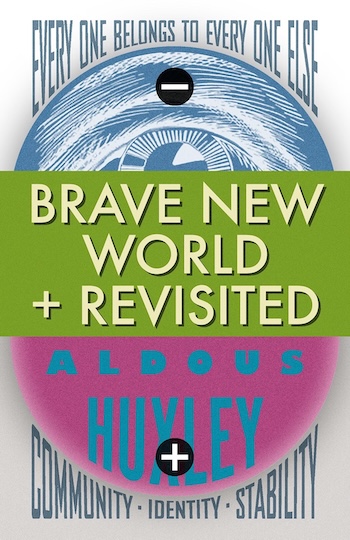
 A classic dystopia; and the worst book to make me think
EVERYONE BELONGS TO EVERYONE ELSE
Welcome to New London. Everybody is happy here. Our perfect society achieved peace and stability through the prohibition of monogamy, privacy, money, family and history itself. Now everyone belongs.
You can be happy too. All you need to do is take your Soma pills.
Nearly thirty years after the publication of Brave New World, Huxley checked the progress of his prophecies against reality in Brave New World Revisited and argued that many of his fictional fantasies had grown uncomfortably close to the truth. Sharing his views on issues such as overpopulation, propaganda, the art of selling and brainwashing, Huxley gives a vigorous, astute analysis of the nature of power and authority in modern society. Brave New World Revisited is an urgent and powerful appeal for the defence of individualism still alarmingly relevant today.
Huxley’s Brave New World (1932) is probably one of the most famous British/Western dystopian novels, after George Orwell’s Nineteen Eighty-Four. Deemed a prophetic classic by many, it remains in print (in many, many different editions) on both sides of the Atlantic. The Wall Street Journal called it a “masterpiece… one of the most prophetic dystopian works of the 20th century”. While Huxley has managed to stumble into some astute cultural/social commentary that is ahead of its time, I do not think this a good book. Continue reading

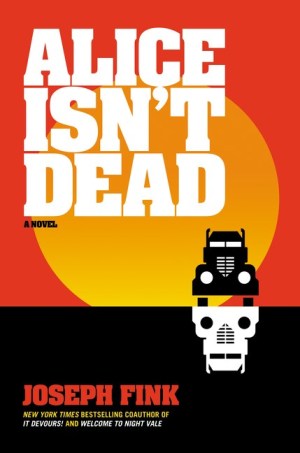 I must be one of the few fans of SFFH who hasn’t fallen down the Nightvale rabbit hole. I just haven’t had the time to check out the podcast properly (although I know many people who love it, and have enjoyed the snippets I’ve caught). Anyway, I spotted a listing for this novel on Edelweiss and it caught my attention. Joseph Fink‘s Alice Isn’t Dead is due to be published by

