“Created: The Destroyer” by Warren Murphy & Richard Sapir (Sphere)

MurphyW-D01-CreatedTheDestroyerUKLong-running, mega-selling pulp thriller series makes it over to the UK

One legendary hero. One epic series.Sentenced to death for a crime he didn’t commit, ex-cop Remo Williams is rescued from the electric chair at the eleventh hour and recruited by a secret government organisation named CURE. From this moment, he ceases to officially exist.From now on, he will be an assassin, targeting criminals who are beyond the law. Remo’s trainer is a grouchy old Korean named Chiun, whose mastery of the terrifyingly powerful martial art of Sinanju makes him the deadliest man alive.Together Remo and Chiun set forth on their epic, impossible mission to vanquish every enemy of democracy – every bad guy who thinks they can escape justice.This is a new era in man’s fight against the forces of evil.This is the time of the Destroyer.

According to the press release, this series (which clocks in at 50 books!) has sold more than 50 million copies. That’s pretty impressive. First published in 1971, Created: The Destroyer is an interesting first book in an early government assassin thriller series. A literary ancestor of Vince Flynn et al, the novel was interesting and, sadly, disappointing. Continue reading

Guest Post: “The Magnificent Liar” by Tim Powers

Continuing Tim Powers’s blog tour, I present to you a guest post about the colourful ‘hero’ Edward John Trelawny.

The Magnificent Liar

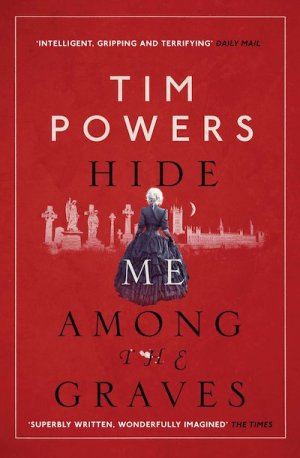
PowersT-HideMeAmongTheGravesUKPBHide Me Among the Graves had a number of colorful characters in it — I can say that with all due modesty, since I cheated and took real people who really lived for characters: Dante Gabriel Rossetti, a genius painter who lost his health and his mind to chloral hydrate addiction; Christina Rossetti, a devout celibate recluse who nevertheless worked face-to-face with London’s prostitutes to reform them and wrote reams of poetry about guilt and reproachful ghosts; and Algernon Swinburne, possibly the best English-language poet since Shelley, who furiously dissipated his gifts with alcohol and sado-masochistic obsessions – but the most fascinating of this circle was a man whose greatest accomplishment was telling lies about his own life.

Edward John Trelawny managed — largely by living a long time – to be a central character in the Italian circle that included Lord Byron and Percy Shelley in the 1820s, and also a prominent figure in the London of the 1860s, a close friend of many of the Pre-Raphaelite painters and poets. The only other figure I can think of right now who did the same kind of era-straddling is Neal Cassady, who was the friend and inspiration of Jack Kerouac and Allan Ginsberg in the 1950s and then, after the Beat phenomenon had petered out, went on to be the same for Ken Kesey and his Merry Pranksters in the late ’60s. Continue reading

An Interview with PAULA BRACKSTON

Brackston-Author

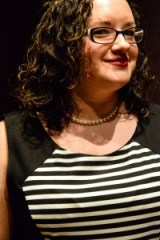
Paula Brackston lives in a wild, mountainous part of Wales. She is an author and Visiting Lecturer. Before becoming a writer, Paula tried her hand at various career paths, with mixed success. These included working as a groom on a racing yard, as a travel agent, a secretary, an English teacher, and a goat herd. Everyone involved (particularly the goats) is very relieved that she has now found a job she is actually able to do properly – and that is, write fiction. Her latest ‘series’ is The Shadow Chronicles, the second book of which – The Winter Witch – is published tomorrow in the UK.

Who is Paula Brackston?

A descendent of the Witches of the Blue Well, possessed of dangerous magic and ancient knowledge, cunningly disguised as an ordinary mortal, mother of two, walker of the dog, maker of meals, who also writes a bit.

The Winter Witch, the sequel to The Witch’s Daughter, will be published tomorrow by Constable & Robinson. How would you introduce the series to a potential reader, and what can fans of the first expect in the second?

BrackstonP-2-WinterWitchAh, well, you see, there are no sequels, as yet. Each book in The Shadow Chronicles is a stand alone. They have in common an exploration of witches through the ages, following the experiences of a witch as the main character. All kinds of witches, in different eras and settings, each with their own distinct magic and story.

What inspired you to write the novel? And where do you draw your inspiration from in general?

I live in the Brecon Beacons National Park, so I wake up each day to the most inspirational landscape you could imagine. That certainly formed the basis of not just the setting for The Winter Witch, but the characters such a place produces too. More generally, I am inspired by wilderness and wildness, by individuals who make their own way in the world, and by courage. Particularly courage, I think, as I am such a timid creature. I love inhabiting brave characters who overcome adversity. It makes me feel stronger, and I hope that works for my readers as well.

How were you introduced to genre fiction?

As a reader I have never made a distinction between categories of fiction. I struggle with the whole idea of literary and commercial being two different things – surely a good book is a good book? That books will be written about different things, in various styles, traditions and settings, is what makes reading such an exciting experience.

Which is how I feel about writing, too. When I’m working on a story I don’t think about how it will sit in a certain genre, or how it will be seen. I am interested only in the story, and I strive to find the best way I can to tell it. The placing, categorising, and marketing of the finished thing I leave up to people who understand such things far better than I do.

How do you enjoy being a writer and working within the publishing industry? Do you have any specific working, writing, researching practices?

BrackstonP-1-WitchsDaughterI have the best job in the world! Maybe not the most important, prestigious, or well paid, but still the best. I get to spend all day dreaming things up and then writing them down, creating my own little world and peopling it with characters that move me, having them dash about doing all manner of stuff I’d never dare do. All this and shortbread – what’s not to like?

When did you realize you wanted to be an author, and what was your first foray into writing? Do you still look back on it fondly?

I’ve always written, but it took me years to believe I could actually Be A Writer. Still feels strange when I tell people how it is I make my living and what it is I do. The turning point came when I was living and working in London and missing the mountains very much. I came up with a plan to ride a horse around Wales for a month or so and write about it. I pitched the idea to some publishers and one commissioned it. I had to breathe into a paper bag for a bit when I realised this meant I had to give up my job and my home, leave the city, find a horse, do the actual trekking and then write a Proper-Book-Someone-Might-Actually-Want-To-Buy. It all turned out rather well. The trek was a blast, the book found a small but appreciative readership, I relocated permanently to Wales, and somehow I had become a writer. There seemed no going back after that.

What’s your opinion of the genre today, and where do you see your work fitting into it?

See above.

What other projects are you working on, and what do you have currently in the pipeline?

If I listed them all you’d mark me down as some sort of butterfly-brained lunatic, so I’ll cherry pick. I’ve just started another Shadow Chronicles book. I love this stage of the process, as it’s all hope and expectation and excitement and hasn’t yet had a chance to be nibbled at by doubt and uncertainty.

I’m also putting together ideas for books three and four in my fantasy-crime series, but that’s another interview entirely!

And I’ve just had one of my screenplays short-listed for some production funding, so there will be work to be done there, too.

What are you reading at the moment (fiction, non-fiction)?

I’m currently half way through The Luminaries (by Eleanor Catton) and loving it, though I am having to pay very close attention to keep up. It thoroughly deserves its place as a Booker Prize contender. Last month I read and enjoyed The Potter’s Hand (gorgeous) by A.N. Wilson, May We Be Forgiven (deceptively deep) by A.M. Homes, and An Evening of Long Goodbyes (brilliantly funny) by Paul Murray.

Brackston-Reading

What’s something readers might be surprised to learn about you?

In my twenties, I spent a year at an agricultural college learning how to drive tractors and train racehorses. Neither skill seems particularly useful at the moment, but I don’t like to think of time being wasted, so you can reliably expect both activities to pop up in my books at some point.

What are you most looking forward to in the next twelve months?

Ooh, what to pick? What to pick? There’s the publication of The Winter Witch in the UK right about now; The Witch’s Daughter coming out in paperback here in December; the German edition of the first in my fantasy-crime series due out just before Christmas; my next witchy book, The Midnight Witch, is out in hardback in the USA in March; I’m thoroughly enjoying writing the fourth book of The Shadow Chronicles at the moment…. I should imagine a little lie down sometime next summer would be very nice indeed.

***

The Winter Witch is published by Corsair in the UK and Thomas Dunne Books in the US. To find out more about Paula Brackston and her novels, be sure to visit her website.

Brackston-WinterWitch-BlogTourPoster

Guest Post: “SEEDS IN THE DESERT” by Peter Liney (Detainee Blog Tour)

Liney-DetaineeI’m not exactly sure when THE DETAINEE started to take shape in my mind. For a long time I had this notion that I wanted to write a book about the human spirit, about the fact that, no matter how dark the situation, given hope, we always find a way to survive. Like those seeds that lie dormant in the desert, year in, year out, waiting for rain, and when it comes, suddenly burst into the most beautiful of life. Or the victims of kidnapping, political prisoners, those held for no reason and often under the most appalling of circumstances, where do they find the will to survive? To wait for the arrival of that shower of life-giving rain? Continue reading

Guest Post: “How Do You make Non-Humans Seem Human?” by Madeline Ashby

AshbyM-AuthorPicMadeline Ashby is the author of the critically-acclaimed vN and iD science fiction novels, the first two books in the Machine Dynasty series (published by Angry Robot Books). Her protagonist is a “von Neumann machine, a self-replicating humanoid robot”. This made me wonder how one goes about making a non-human character relatable and sympathetic? When I was told Madeline was available for guest posts, I jumped at the chance to ask her about this. So, without further ado…

*

How Do You Make Non-Humans Seem Human?

by Madeline Ashby

How do you make non-humans seem human? Well, with self-replicating humanoids designed to love and serve humans, it’s not that difficult. At least, it’s not for me. In vN and iD, the robots love humans enough to spend significant amounts of time with them. They have long-term relationships, both at home and at work. The longer they live, the better they learn to “pass,” as human, or at least to behave in the most human way possible.

But that’s not the real issue. The real issue is making them read as human – making them leap off the page in the way that three-dimensional human characters do in other books. I try to do that in a few different ways. Continue reading

Interview with CHRISTIAN SCHOON

Schoon-ZennScarlett

Debut author Christian Schoon was born in the American Midwest, and started his writing career in earnest as an in-house writer at the Walt Disney Company in Burbank, California. (Which is rather cool…) After moving from LA to a farmstead in Iowa several years ago, he continues to work as a freelance and also now helps re-hab wildlife and foster abused/neglected horses. An interesting fellow, I thought it would be a great idea to interview him. Apparently, along with writing, he was once shot by a hometown cop…

Let’s start with an introduction: Who is Christian Schoon?

Just another guy with a book… Grew up in the American Midwest, worked my way through college playing in rock bands, doing odd jobs; got a degree in Journalism, moved to LA, hired on as a copywriter at Disney, then freelanced, wrote some TV scripts for teen and kids’ sci-fi and fantasy shows; moved back to Midwest, bought an old farmstead, got involved with several animal welfare groups; wrote a sci fi series, found a great agent, he sold the series to a fabulous publisher. And voila.

ChristianSchoon

I thought we’d start with your fiction: Your debut novel, Zenn Scarlett, was recently published by Strange Chemistry. How would you introduce the novel to a potential reader? Is it part of a series?

The novel chronicles an eventful, well, very eventful, interlude in the life of a young girl in her novice year of training to be an exoveterinarian. Zenn is specializing the care and treatment of alien animals at the Ciscan Cloister Exovet Clinic and school on a colonized Mars that’s been cut-off from contact with Earth. Her alien patients are often huge, occasionally deadly and always fascinating. She’s love her courses, but she’s got a few problems. An absent father not communicating, a local towner boy showing an unusual and distracting interest in her just as end of term tests begin, a sudden surge of incidents at the cloister where animals escape their enclosures or exhibit uncharacteristically violent behavior and, oddest and most disturbing: she feels that she’s started… sharing the thoughts of some of her alien patients.

This is the first novel in a series. The sequel is well underway and will be published early next year.

Schoon-ZennScarlett

What inspired you to write the novel? And where do you draw your inspiration from in general?

The Zenn Scarlett series grew out of my earlier-mentioned work with several animal welfare groups and the awesome veterinarians I met; some of these vets have developed unique skill sets in dealing with large, exotic and sometimes dangerous animals. This, along with my deep geek-love for all things science fictional, made Zenn’s adventures a logical progression for me once I started looking for a fresh creative challenge.

Lampman-RustysSpaceShipHow were you introduced to genre fiction?

Well, there was Rusty’s Space Ship back in grade school, followed up quickly by the work of Golden Age sci-fi masters like Edgar Rice Burroughs, Asimov, Heinlein and that school of writers.

How do you enjoy being a writer and working within the publishing industry? Do you have any specific working, writing, researching practices?

So far (knock on synthwood) my experience with the world of books and publishing has been solidly fab. My agent is a genre-savvy guy who immediately “got” Zenn and saw the book’s potential. My editor at Strange Chemistry is equally well-versed and has provided valuable feedback and made sure Zenn Scarlett was ready for release into the wild. As for work habits, I try to get as much of my writing as possible done in the morning. Afternoons are then used for any research and for wasting large chunks of time surfing favorite author and book sites.

When did you realize you wanted to be an author, and what was your first foray into writing? Do you still look back on it fondly?

Writing appealed to me from a fairly early age since I could go off on my own and do the work, get feedback, do whatever polishing was needed and have the project completed. I’m not really a team-player sort. I like my space. My first challenging writing work was done as an in-house copy and scriptwriter in the home video division of the Walt Disney Company in Burbank, and yes I do look back on those years with great fondness. Even though this did demand that I buck up and “play for the team,” my colleagues there were a truly wonderful bunch of creative and warm individuals and they made my time at Disney a pleasure. But I never really encountered an office-type setting similar to this again, and quickly decided work-from-home freelancing was the thing for me.

Disney-Studio

What’s your opinion of the genre today, and where do you see your work fitting into it?

With all the publishing options available today there’s more great genre writing materializing before our eyes almost every day. The problem, of course, is winnowing through the surging tsunami of chaff to find the good stuff. And blogs like this one are often one of the most effective screening systems readers can turn to in order to track down their next read.

With any luck, my own writing will find its way to exactly this kind of platform and rise into the field of vision of those hungry-for-better readers and trigger some friendly word-of-mouth attention.

What other projects are you working on, and what do you have currently in the pipeline?

My main effort just now is the sequel to Zenn Scarlett. I’m also mulling a streampunkish sort of TV series that I will hopeful be able to turn my attention to once Zenn’s follow-on adventure is nailed down.

Fleming-BritainAfterRomeWhat are you reading at the moment (fiction, non-fiction)?

I’m reading several great new Strange Chemistry titles just now: a riveting sci-fi thriller, Playing Tyler by T.L. Costa and an eerie interpretation of a classic SF tale, Tainted by A.E. Rought. In non-fiction, I’m just about finished with Britain After Rome: The Fall and Rise 400–1070. This is a great glimpse into the real-world dystopia that was Britain in the wake of Rome’s collapse. It’s also very Game of Throne-ish, of course.

What’s something readers might be surprised to learn about you?

I was once shot at by the police in my tiny Minnesota home town. Details on request…

What are you most looking forward to in the next twelve months?

No surprise here: the publication of Zenn Scarlett: May 7 in the US/Canada, May 2 in the UK. After that, I’ll start looking forward to the release of the sequel. Yeah, predictable.

*

For more about Zenn Scarlett, it’s sequel and Christian himself, be sure to check out Goodreads, his Author Blog, his Twitter, and also his Strange Chemistry Author Page.

“The Wolf Gift” by Anne Rice (Arrow/Random House)

Rice-WolfGift-UKPB

After reinventing the Vampire for modern literature, Anne Rice turns her attentions to Werewolf mythology with great success

MAN OR MONSTER?

After a brutal attack Reuben finds himself changing. His hair is longer, his skin is more sensitive and her can hear things he never could before.

Now he must confront the beast within him or lose himself completely.

I’m sure I’ve mentioned it before on the site, but Anne Rice is one of my favourite authors. Reading the Vampire Chronicles was a turning point in my life as a reader, and indeed set me on the path that turned me into as voracious a reader as I am today. The Vampire Lestat and Queen of the Damned have been re-read so many times, I almost know them off by heart. It was with great interest, therefore, that I started reading The Wolf Gift – after redefining vampire fiction with her novels, I was really interested to see what Rice could do with that other supernatural mainstay, the werewolf. What she’s come up with is pretty great.

As the story opens, our protagonist, Reuben, has been sent by the San Francisco Observer to write a piece about the uncertain future of the giant house at Nideck Point. He quickly falls in love with the grand mansion, and also a little with the elegant heiress, Marchent Nideck. It is a chance encounter between two unlikely people, one that leads to a magical evening that ends in a brutal and bloody attack. Stumbling about in the dark house, Reuben is bitten by an unseen beast. As dawn breaks, he is whisked to a San Francisco hospital (his mother is a leading surgeon, luckily). Kept under observation, Reuben starts undergoing a terrifying yet seductive transformation. His family and doctors are confounded by his recuperation and apparently-altered state.

Reuben’s transformation quickens after he leaves the hospital, and he soon assumes – temporarily each night – a savage, wolfen aspect. Strangely (and this is something that really set The Wolf Gift apart from Rice’s contemporary authors dabbling in werewolf fiction), in this were-state, Reuben develops the ability to sniff out, literally, evil. What follows is Reuben’s attempt to reconcile the beast component of his new gift and his apparent drive to do good. After the attack at Nideck Point, his editor assigns him the job of writing about each new “Man Wolf” attack and sighting. His nightly activities have San Franciscans and, eventually, others much further afield, enthralled: a Wulfen Super-Hero? Who has heard of such a thing? In addition, Reuben, with the help of a new ally and love-interest, attempts to find out more about his progenitors and his specie’s history. What is the connection with the mansion? How many others like him are there, prowling the night?

The story is fast-paced, and is nigh-impossible to put down. I really loved the overall pacing. Specifically, the fact that Reuben’s change isn’t sudden, nor is it particularly dramatic. He retains his humanity and mental faculties, and experiences heightened senses overall. He retains his personality, power of speech and so forth. I am particularly happy that Rice doesn’t have him turn into some over-sexed, cavorting, hirsute boy-toy.

As with the author’s vampire series, there is a sensual/sexual component to Reuben’s new state, but it is more a general pleasure at his new aspect and abilities, coupled with a near-orgasmic feeling that overcomes him during the change. It’s easy for a non-fan to poke fun at the current state of vampire and werewolf fiction, and the tendency for authors to, effectively, introduce these beasties into stories that are little more than Mills & Boon with supernatural overtones. Thankfully, Rice does not do this, and once again shows just how much can be done with these classic horror-creatures. This is a highly-original take on the werewolf mythology, and is as atmospheric and engrossing as her previous novels.

I’ve never really been able to put my finger on what it is, specifically, about Rice’s writing style and stories that hooks me so completely. The author’s prose is always expertly crafted, very fluid and her characters are always three-dimensional and stand-out examples of whatever type they have to be. The cast of The Wolf Gift is no exception. Reuben, his family, Laura, Felix et al, are all interesting, three-dimensional characters.

The Wolf Gift really offers a great reinterpretation of the werewolf myth: it’s very Rice-ian, in that it has far more nuance and grounding in mysterious, supernatural history. In fact, I think I only have one niggle with the novel, and that is that I think the book could have been longer. Rice’s descriptive passages were more sparse than I have come to expect from the author.

An interesting break with the norm for ‘origin’ stories, is that instead of front-loading the novel with history and bringing us up-to-date, Rice makes us wait, building up the narrative nicely to a very philosophical ‘history’ at the end. I think I would have preferred more history, but that comes from a deep, abiding affection for the author’s Vampire Chronicles and the historical portions of those tales. Whether Lois’s, Lestat’s, Marius’s, or Enkil & Akasha’s histories, they remain some of my all-time favourite passages – I have yet to find an author who can write the past as seductively and atmospherically as Rice.

It would be no exaggeration to say that the Vampire Chronicles marked a huge turning point in my reading (tastes and habits – never before did I spend hours on end, and days at a time reading one author’s books). And, multiple reads later, they are novels that have lived up to my fond memories.

Where Rice’s vampires were largely loners, or only tolerable of company for shorter periods of time, her werewolves are inherently pack animals. How Reuben straddles his past life and his new one is very nicely done. Her other characters find themselves in similar situations. The way they handle Reuben’s changes are also interesting: his surgeon mother, struggling to make sense of test results (or lack thereof), unable to understand what’s happening to her “Sunshine Boy”. His priest brother, whom he confides in, struggling to place Reuben’s new aspect within his belief system. Only one character’s interactions with Reuben were a little difficult to accept: Laura’s acceptance from first sight never rang true for me – I think I know what Rice was aiming for, but it needed more time to develop, in my humble opinion. Laura’s arrival in the novel was… surprising, and in the hands of any other author, that relationship would have likely been a disaster of poorly-written “erotic” supernatural bestiality. Stuart’s addition to the story was also rather sudden, and I think his part in the story, and rather rapid introduction, could have done with some better integration.

The Wolf Gift is a perfect example of how supernatural fiction does not have to be Mills & Boon With Beasties. Rice isn’t trying to make us comfortable, and Reuben’s bestial side is vividly portrayed. His vigilante acts are brutal and bloody. Rice really knows how to show-and-not-tell, though, which only makes her novels that much better than so very many of her contemporaries. (Much of what happens is obvious, but the “sex” scenes are very short, and non-graphic, and often off-screen).

Overall, this is a great novel. This is an interesting new set of characters, and I really hope we get to read more about them and the history of these werewolves.

Highly recommended.

***

Rice-WolfGift-UKBlogTour

For more on Anne Rice’s novels, be sure to visit her website, her Facebook page, and follow her on Twitter. For Friday’s Arrow Books competition, visit their Facebook page.