Hinterkind, Vol.1 – “The Waking World” (Vertigo)

Hinterkind-01-ArtWriter: Ian Edginton | Artist: Francesco Trifogli

In a post-apocalyptic world where humans have been pushed to the edge of extinction by the creatures of fantasy and fables, THE HINTERKIND tells the story of one young woman’s quest to fulfill her destiny and put the world right again.

Fifty-seven years after an unspecified biological event has all but wiped out the human race, a green hand has moved over the face of the Earth. Leaf, root and shoot have steadfastly smothered the works of man, remorselessly grinding the concrete, glass and steel back into the minerals from whence they came. Mother Nature is reclaiming what’s rightfully hers but she’s not the only one…

The Hinterkind have returned. They come from hiding places in the lost corners of the world: Centaurs, Satyrs, Elves, Dwarves, Ogres, Trolls, Werewolves, Vampires…

They’re also known as “the Hidden,” “the Twilight People,” the “walkers-in-shadow,” collective names for the menagerie that mankind has hung its tales of myth and magic upon – but these aren’t fairy tale creatures. They are flesh, blood and passion, and they have a long simmering hatred of humanity.

They are a divergent species. Exotic evolutionary try-outs that couldn’t compete with the rapacious ape. Hunted to near extinction through fear and ignorance, they fled to the great forests and deserts, losing themselves in the shrinking wilderness of an ever-expanding world.

Now the wilderness is the world and mankind is in the minority.

Collects: HINTERKIND #1-6

This is a strange, promising, and yet somewhat flawed start to a new series.

The first issue presents a fantastic post-apocalyptic world – one in which human society has been near-destroyed, global populations brought to the brink of extinction. Our protagonists are based in Central Park, New York, and have built a working community: foraging for leftover items in the over-grown city around them, hunting the wildlife. It’s a stunning start, actually, and I was immediately drawn to the setting. The characters and writing were strong, and they were well-realised by the artwork.

Hinterkind-01-Interior6

Then things started to get a bit weird, and this is where (for me) the series stumbled: it became very busy, and the story grew expansive so quickly, that the mash-up of genres started to feel like it was trying too hard. I hesitated for a bit, deciding on how much detail this review should go in to, but I think it’s worth pointing some things out: there are army survivors similar to Buffy’s Initiative (only, weirder), the sidhe and other fairytale creatures have proliferated across the world, and the post-apocalyptic environment can cause mutations. All of this is revealed over this one book. I feel it may have been better to unveil the overall world more gradually, teasing us with possibilities, rather than dumping them all on in very quick succession.

Nevertheless, there’s a lot to enjoy in this book. The artwork is eye-catching; the writing is well-composed; and the characters are pretty interesting. I’m certainly looking forward to reading volume two, when it’s available.

Not the best start to a new Vertigo series, but still better than a lot of other publishers’ new books.

Hinterkind-Vol.1-Contents

Original Issue Covers #1-6, by Greg Tocchini

“Galveston” by Nic Pizzolatto (Sphere)

PizzolattoN-GalvestonUKAn interesting, if flawed debut thriller

Roy Cady is by his own admission “a bad man”. With a snow flurry of cancer in his lungs and no one to live for, he’s a walking time-bomb of violence. Following a fling with his boss’s lover, he’s sent on a routine assignment he knows is a death trap. Yet after a smoking spasm of violence, Roy’s would-be killers are mostly dead and he is mostly alive.

Before Roy makes his getaway, he finds a beaten-up woman in the apartment, and sees something in her frightened, defiant eyes that causes a crucial decision. He takes her with him on the run from New Orleans to Galveston, Texas, permanently entwining their fate along a highway of seedy bars and fleabag hotels, a world of treacherous drifters, pick-up trucks, and ashed-out hopes, with death just a car-length behind.

Only after finishing this novel, did I learn that Pizzolatto is the creator of HBO’s critically-acclaimed True Detective series (starring Woody Harrelson and Matthew McConnaughey). I can certainly see it, now, though. This is a good thriller: very well-written and fast-paced. However, it also left me slightly dissatisfied at the end.

The story is told from the perspective of Roy, a bagman for a crook in New Orleans. After the set-up (mentioned in the synopsis, above), he escapes bruised and brutalised, taking with him Rocky (Raquel), the partner of a prostitute who was turning a trick at the home of the trap. Roy soon finds that, despite a desire to ditch Rocky (and her toddler ‘sister’, Tiffany, who they pick up on the way to Texas), he can’t seem to follow through. Ruminating on his life and his pending death-by-cancer, he develops a wary connection with Rocky and Tiffany. Definitely attracted to Rocky, he is unwilling to allow himself to accept any of her advances – at first, somewhat business-like, but later perhaps genuine. Instead, he plays a role of protector and, in some ways, rehabilitator – a somewhat ironic role, given his own past actions (not to mention present/future actions that he commits over the course of the story).

Pizzolatto writes incredibly well: his prose is stripped back, fluid and sparse. There isn’t a redundant phrase or extraneous word in sight. This has the positive effect of making this a very quick read (I read the first 10% on a Saturday night, after finishing another novel, and blitzed through the rest on Sunday). However, it does also mean certain things aren’t developed too much. There is a fever-like quality to Roy’s recollection and narrative – he is, after all, a practicing alcoholic who necks one hell of a lot of bourbon in these pages…

By the end of the novel, I felt pretty invested in these characters’ fates. But, given the very brisk pacing, by the brutal end, the dénouement was robbed of some impact, while remaining tragic. It was a peculiar feeling, really. Slightly disconnected.

Nevertheless, Galveston is still well-worth checking out. Pizzolatto has a great style, and can only get better. I am definitely looking forward to reading his next novel, and also watching True Detective.

Mini-Review: “The Owl Who Liked Sitting on Caesar” by Martin Windrow (Bantam Press)

WindrowM-OwlWhoLikedSittingOnCaesarAn endearing memoir of one man and his owl

When author Martin Windrow met the tawny owlet that he christened Mumble, it was love at first sight. Raising her from a fledgling, through adolescence and into her prime years, Windrow recorded every detail of their time living together (secretly) in a south London tower block, and later in a Sussex village. This is the touching, intriguing and eccentric story of their 15-year relationship, complete with photographs and illustrations of the beautiful Mumble. Along the way, we are given fascinating insight into the ornithology of owls – from their evolution and biology to their breeding habits and hunting tactics. The Owl Who Liked Sitting on Caesar is a witty, quirky and utterly charming account of the companionship between one man and his owl.

This is a book that doesn’t require much of a review. It is an endearing, amusing, and also moving account of an editor’s life and experiences as the owner of an owl. An interesting, short book.

“Perched on the back of a sunlit chair was something about 9 inches tall and shaped rather like a plump toy penguin with a nose-job. It appeared to be wearing a one-piece knitted jumpsuit of pale grey fluff with brown stitching, complete with an attached balaclava helmet. From the face-hole of the fuzzy balaclava, two big, shiny black eyes gazed up at me trustfully. Kweep, it said quietly.”

Windrow recounts his various experiences with Mumble (and the short tenure of his first owl), and there are so many moments that bring a smile or even laugh, as he recounts the rather cat-like affections and mannerisms of his pet owl. (Indeed, Windrow says owls are basically cats with wings). To avoid cute-overload, the author alternates some chapters of his experiences with more informational chapters – for example, one on the biology of owls, one (really interesting) chapter on their place in folklore and mythology, and so forth.

A quick read, that will make you smile and also tug on your heartstrings, The Owl Who Liked Sitting on Caesar is an enjoyable book. It perhaps could have done with being a bit shorter: the anecdotes have a slightly repetitive quality about them, without ever losing the obvious sense of affection Windrow felt for his pet and companion. A different book to what I normally read, it was nevertheless a quick and endearing diversion.

Upcoming: GEMSIGNS by Stephanie Saulter, US Edition (Quercus)

I’m a big fan of Stephanie Saulter’s Revolution series. The first novel, Gemsigns, was released in the UK last year. The wait is nearly over for US readers, though, as it will be hitting shelves in May. It also has a different cover:

SaulterS-GemsignsUS

Here’s the synopsis…

For years a deadly syndrome that targeted adolescents threatened to decimate the human race, but a cure was ultimately developed by altering the human genome. The corporations that invented the cure then began to use the process to genetically engineer an entirely new class of workers. Known as Gems, these modified humans were physically and mentally adapted for jobs that could not be undertaken by normal human beings, and branded with a gemsign: glowing, neon-coloured hair or some other visible difference, engineered into their anatomy, forever setting them apart from the Norms they were bred to serve.

Now, decades later, the Gems are fighting for their rights, and for freedom from the companies that created them. As violence begins to threaten the severely stratified society, an international conference is scheduled to decide this critical civil rights issue once and for all. In advance of the conference, Dr. Eli Walker has been commissioned to gather detailed findings on the Gems. As an apolitical, nonpartisan figure in the debate, Walker’s analysis promises to be pivotal in deciding the fate of the Gems.

But with vast corporate profits at stake, and with the bloodthirsty religious zealots of the Godgangs determined to rid the earth of these “unholy” creations, the Gems are in a fight for their very lives against violent and powerful adversaries who will stop at nothing to keep them enslaved forever.

Also on CR: Guest Post by Stephanie Saulter, Excerpt of Gemsigns

Interview with JEN WILLIAMS

WilliamsJen-AuthorPicLet’s start with an introduction: Who is Jen Williams?

I’m a writer from south-east London. I wear odd socks and live with my partner and our cat. I have a Lego fixation and I own too many notebooks. I don’t get as much sleep as I would like, but then I like to sleep a lot. I think those are the important things covered.

Your debut novel, The Copper Promise, is out now through Headline. How would you introduce the novel to a new reader?

I like to describe it as epic sword and sorcery, so you still get a fat book that could conceivably be used as a blunt weapon, but the story moves at a tremendous pace. Two sell-swords of dubious morals are employed by a mysterious lord to explore the haunted Citadel of Creos, only to find that not only does their employer have a destructive agenda of his own, but that the Citadel is forbidden for very good reasons. A terrible force is unleashed on the world, and our heroes have to deal with it, even though it looks like they won’t actually get paid.

What inspired you to write the novel? And where do you draw your inspiration from in general?

At the time, I had a few short stories out in the world, and I thought it would be interesting to release a series of novellas. I was also just coming out the other side of a serious Dragon Age: Origins obsession (a fantasy RPG videogame from Bioware) and my love of traditional fantasy had been reignited. I’d written books in various subgenres before, such as Urban Fantasy and Post-Apocalyptic Fantasy, or just Weird Secondary World stuff, but I’d never written something that was dragons, caverns, dungeons and taverns. I decided it would be fun to embrace all those lovely trappings of traditional fantasy, whilst writing them with a modern edge – there were a number of tropes I wanted to twist and play with, such as the Loveable Rogue, the Honorable Knight, and the Minions of the Dark Lord. I started writing the first novella (The Copper Promise: Ghosts of the Citadel) and fell in love with the world and the characters so much the quick novella project quickly became a big fat book.

WilliamsJ-CopperPromise

Also on CR: Review of Copper Promise

How were you introduced to reading and genre fiction?

My very first exposure to the fantasy genre was probably stealing my brother’s Fighting Fantasy books so I could look at the scary pictures. A few years later I remember picking up The Fellowship of the Ring from the library shelf simply because it was so huge, and I figured reading such a thing would make me look really clever (I think I was about ten years old at the time). It was the first book I fell in love with, as well as the book that made me love reading. From that moment on I read almost exclusively in genre, hopping madly from Stephen King to Terry Pratchett to Neil Gaiman.

How do you enjoy being a writer and working within the publishing industry?

I love it. I’ve written a number of books and stories, with many probably doomed to remain forever hidden on a memory stick, but I don’t believe I ever really thought I would get here: to have an agent, a publishing contract, to see my book on the shelves of actual bookshops. It seemed like too wild a dream, the sort of thing that happens to other people, and there’s part of me that still doesn’t quite believe it. There’s also a sense of validation too: when I was growing up everyone told me that writing would be too difficult a career path, and so you spend much of your time worrying that you’ve made a mistake. What if I’m deluded? What if I should be doing something else entirely with my life? When someone comes to you and says, “Oh, I really loved that character. And I laughed so much at this bit. Also, why aren’t these two having sex yet?” you can breath a big sigh of relief because to that person at least, you took the right path.

The novel was originally serialised. How did this impact your approach to writing the story? Do you have any specific working, writing, researching practices?

The book was originally split into four novellas. The tricky part of such a structure was making sure that each section had its own complete story to tell, as well as advancing the wider, overall story of the book. It was also important that the book not seem disjointed or like a series of short stories, so themes and character development had to be consistent too. The fun part was being able to have a number of slightly evil cliffhangers, and getting away with cutting out a lot of what I think of as “transition stuff”: moving the characters to where they need to be, or showing the passage of time. From a practical point of view, this meant editing each novella as if it were its own book, and then putting the whole lot together into one document and editing it again with a view to how it worked as a complete manuscript.

When did you realize you wanted to be an author, and what was your first foray into writing? Do you still look back on it fondly?

I’ve had an interest in stories and wanting to write them for as long as I can remember. Two of the first presents I asked for at Christmas were a desk and a typewriter, and I cheerfully plonked out stories about dragons and pirates all day long. My first “proper” attempt at writing was a somewhat sprawling, heavily Pratchett-influenced book about a rogue witch and her scheming witch-mother. I started writing it one day after a particularly bad shift at work, and over the course of a couple of years it eventually became book-sized, and I even finished it. That book was significant for me because up until then I hadn’t believed that I could write an entire book, and although it’s full of enormous rookie mistakes and blundering cock-ups, I still have a lot of affection for it.

What’s your opinion of the genre today, and where do you see your work fitting into it?

I think fantasy is in a healthy place at the moment, with a greater emphasis on a kind of realism, not just in the depiction of violence and the consequences of violence, but also in the depiction of characters. This feels like a good change, a move away from the lighter approach of farm boys who reveal themselves to be long lost princes, towards a genre that is taking itself a little more seriously. That is to say, we value what we do and we’re approaching it with the seriousness it deserves.

Which probably sounds like an odd thing to say given that The Copper Promise, as a piece of sword and sorcery with an emphasis on monsters and magic, is a slight step away from the Grimdark trend. What I hope is that the book takes the bits and pieces we loved from old school, pulp fantasy – the wild magic and the dungeons and the spectacle – and applies a modern approach, adding a degree of realism to the characters. I was very keen, for example, to have a female character who was not reliant on a male character to give her purpose as a love interest or a catalyst, and a gay character whose story is central to the entire plot, and so on. Generally I think fantasy is moving towards being more inclusive, and that’s definitely a good thing.

What other projects are you working on, and what do you have currently in the pipeline?

I’m in the midst of editing the follow-up to The Copper Promise, which is a slightly darker book but with the same themes of magic and monsters and general mayhem-making. Writing a sequel to a debut novel is an interesting and slightly alarming experience, because while I was finishing the first draft of book two, The Copper Promise was receiving its first reviews; it’s very hard not to get fixated on that, not to mention the added weight of deadlines and getting paid for the work. Behind the anxiety though I’ve had a great time hanging out with these characters again, and I’m already looking forward to getting into the third book.

What are you reading at the moment (fiction, non-fiction)?

As I’m knee deep in the editing swamp I’m finding it difficult to concentrate on a single book – once your brain is stuck in hyper-critical mode it’s very hard to turn it off – but I’ve just started Brandon Sanderson’s The Way of Kings, which has some of the most spectacular magic I’ve ever read, and Ash by Mary Gentle, which is an extraordinarily vivid experience. I’m not quite sure why I’ve decided to read two such enormous books at the same time, but when I need a break from all the epic I’m dipping in and out of Twisted Histories, a short story anthology edited by Scott Harrison, in which I also happen to have a short story, The Tides of Avalon.

WilliamsJen-Reading

What’s something readers might be surprised to learn about you?

Despite writing a book that cheerfully embraces many of the tropes, I’ve never actually played Dungeons and Dragons myself. I was always far too shy as a kid to play a game that involved, well, talking to other people, and although as an adult I’m a fan of RPG video games I still have yet to sit down with the D20 and a dungeon master. Shameful, really.

What are you most looking forward to in the next twelve months?

Lots of book related stuff! Sending book two back to my editor and starting work on book three towards the end of the year, as well as continuing to fiddle with my notes on the fantasy series I’ll be writing once this current trilogy is finished. I’m very much looking forward to going to my first Fantasycon this year, and returning to Nineworlds in August, where I may even be convinced to attempt some sort of cosplay. Stranger things have happened.

*

Be sure to check out Jen Williams’s website, Twitter and Facebook for more information on her novels and writing.

Mini-Review: “Mr. Penumbra’s 24-Hour Bookstore” by Robin Sloan (Atlantic Books)

SloanR-MrPenumbras24HourBookstoreAn endearing novel about bibliophilia and the advance of technology

Recession has shuffled Clay Jannon out of his life as a Web-design drone and serendipity coupled with sheer curiosity has landed him a new job working the night shift at Mr. Penumbra’s 24-Hour Bookstore. And it doesn’t take long for Clay to realize that the quiet, dusty book emporium is even more curious than the name suggests. There are only a few fanatically committed customers, but they never seem to actually buy anything, instead they simply borrow impossibly obscure volumes perched on dangerously high shelves, all according to some elaborate arrangement with the eccentric proprietor.

The store must be a front for something larger, Clay concludes, and soon he has plugged in his laptop, roped in his friends (and a cute girl who works for Google) and embarked on a high-tech analysis of the customers’ behaviour. What they discover is an ancient secret that can only be solved by modern means, and a global-conspiracy guarded by Mr. Penumbra himself… who has mysteriously disappeared.

This is a very quick, endearing read. The synopsis really tells you all you need to know. This novel is, in many ways, a love-letter to both bookstores and books, and also modern technology and all it allows us to do. Clay’s background in the tech industry collides with his new job, after discovering the strange goings-on at Mr. Penumbra’s store. With the help of some friends, and eventually the strange, fanatical repeat-customers/borrowers, he uncovers a peculiar society with a peculiar belief.

Written with obvious love for both the new and old, Sloan weaves and engrossing, endearing and gripping story. The novel is filled with the author’s observations about the slowly disappearing (though still highly important) book and publishing industries, and the near-hyperactive growth of the tech and internet sectors. The protagonist’s geekiness is well-done, if ever-so-slightly cliché (a couple of things raised a disappointed eyebrow, but these are minor elements to the story, and easily dismissed).

If you enjoy gentle tales surrounding a love for books, reading, and technology, then Mr. Penumbra’s 24-Hour Bookstore is a must-read. If you are after just a fun, quick read, then this is a must-read. Highly recommended.

Review: HALF BAD by Sally Green (Penguin)

GreenS-HalfBadPBThe most frustrating novel I still couldn’t stop reading

You can’t read, can’t write, but you heal fast, even for a witch.

You get sick if you stay indoors after dark.

You hate White Witches but love Annalise, who is one.

You’ve been kept in a cage since you were fourteen.

All you’ve got to do is escape and find Mercury, the Black Witch who eats boys. And do that before your seventeenth birthday.

Easy.

I have very, very mixed feelings about Half Bad. On the one hand, Green writes very well – there isn’t a bad sentence or garbled phrase in sight. The pacing is excellent. But, the story was in many ways deeply troubling, not to mention buried by certain choices the author made to make the novel more “gritty” (as she admits in the author’s acknowledgments at the end). Usually, I drop novels I don’t like very quickly, but with this one I kept reading. Partly because I was intrigued, but eventually because I was hopeful that the story-proper would begin at some point. Sadly, the novel did not properly deliver. Continue reading

Upcoming: EDGE OF TOMORROW (Movie)

Another interesting sci-fi movie coming out this year. Tom Cruise seems to be enjoying the uptick in popularity of the genre (see also: Oblivion, which was much better than I expected). Emily Blunt is also great. I’m looking forward to this, think it has a fair bit of promise. Check out the trailer:

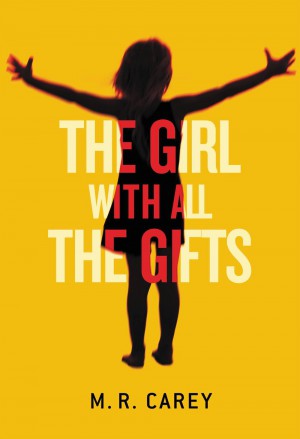
Review: THE GIRL WITH ALL THE GIFTS by M.R. Carey (Orbit)

CareyMR-GirlWithAllTheGiftsA superb novel, one of my favourite so far this year

Melanie is a very special girl. Dr. Caldwell calls her “our little genius”. Every morning, Melanie waits in her cell to be collected for class. When they come for her, Sergeant keeps his gun pointing at her while two of his people strap her into the wheelchair. She thinks they don’t like her. She jokes that she won’t bite, but they don’t laugh. Melanie loves school. She loves learning about spelling and sums and the world outside the classroom and the children’s cells. She tells her favourite teacher all the things she’ll do when she grows up. Melanie doesn’t know why this makes Miss Justineau look sad.

I have long been familiar with Carey’s comics work – mainly the amazing Lucifer and The Unwritten, both of which I am addicted to. It took me a long time to get around to reading this novel, though, for reasons I cannot quite figure out. Long-time readers of the blog will know I’m a fan of certain types of post-apocalyptic-zombie novels. The Girl With All the Gifts is absolutely brilliant, and one of this year’s Must Reads. I loved it. Continue reading

Upcoming: JUPITER ASCENDING (Movie)

This looks like a lot of fun…