Review: TRAITOR’S BLADE by Sebastien de Castell (Jo Fletcher Books)

deCastellS-GC1-TraitorsBladeAn all-round brilliant fantasy debut, and one of the best I’ve read in a decade.

Falcio is the first Cantor of the Greatcoats. Trained in the fighting arts and the laws of Tristia, the Greatcoats are travelling Magisters upholding King’s Law. They are heroes. Or at least they were, until they stood aside while the Dukes took the kingdom, and impaled their King’s head on a spike.

Now Tristia is on the verge of collapse and the barbarians are sniffing at the borders. The Dukes bring chaos to the land, while the Greatcoats are scattered far and wide, reviled as traitors, their legendary coats in tatters.

All they have left are the promises they made to King Paelis, to carry out one final mission. But if they have any hope of fulfilling the King’s dream, the divided Greatcoats must reunite, or they will also have to stand aside as they watch their world burn…

Every so often, a debut novel comes along that knocks your expectations out of the park. Scott Lynch’s The Lies of Locke Lamorra is one of those novels. Peter V. Brett’s The Painted Man is another. Sebastien de Castell’s Traitor’s Blade needs to be added to that list. I loved this. Continue reading

“The Copper Promise” by Jen Williams (Headline)

WilliamsJ-CopperPromiseA fun fantasy adventure

There are some far-fetched rumours about the caverns beneath the Citadel…

Some say the mages left their most dangerous secrets hidden there; others, that great riches are hidden there; even that gods have been imprisoned in its darkest depths.

For Lord Frith, the caverns hold the key to his vengeance. Against all the odds, he has survived torture and lived to see his home and his family taken from him … and now someone is going to pay. For Wydrin of Crosshaven and her faithful companion, Sir Sebastian Caverson, a quest to the Citadel looks like just another job. There’s the promise of gold and adventure. Who knows, they might even have a decent tale or two once they’re done.

But sometimes there is truth in rumour.

Soon this reckless trio will be the last line of defence against a hungry, restless terror that wants to tear the world apart. And they’re not even getting paid.

Lots of people have discussed the rise of grimdark, the loss of fun and adventure in fantasy of late. Personally, I’m rather fond of grimdark. I’m also rather fond of more fun-loving, adventure- and quest-focused fantasies of the ‘classic’ mould. The Copper Promise manages to straddle both of these camps rather skillfully. A lot of people are going to like this.

And, indeed, there’s a lot to like: some good protagonists to guide us through the world, plenty of action to be survived and enjoyed (as a spectator), dragons to fight and be killed by, dungeons to explore, treasure to be found, magic to be wielded, and pirates to fend off. The world is well-drawn and well-developed, and feels fully-formed very quickly. Readers will be drawn to the Band of Adventurers-style story that we’re thrown in to pretty much right off the bat. It was great to see the story unfold, and the heroes’ struggle against what they unleash from beneath the Citadel is epic and varied.

And yet. The Copper Promise didn’t excite me as much as I had expected. Yes, it was fun. Yes, I kept reading and Williams can certainly write both more serious and also wittier sections. But. It took me a while to really get hooked into the story. There were moments of exposition that verged on info-dumping (especially near the beginning). While well-written, the characters didn’t seem too inspired at first blush, and seemed to come right out of Fantasy Central Casting: a mischievous, reckless thief; a taciturn, moralistic and conflicted former knight. They were, however, pretty well-written characters, and Williams fleshed them out well over the course of the novel.

I felt that Wydrin’s quips and/or snark near the beginning of the novel sometimes verged too close to Lorelai Gilmore-like frequencies – it was like we were really meant to know that the character was sarcastic and feisty, and maybe it was a bit overdone. True, it fits her cavalier, act-first-think-later attitude to adventuring (and looting), and it did balance out later. But it irked me at the beginning (perhaps a result of my mood at the time I read it, perhaps not). Lord Frith, Wydrin and Sebastian’s benefactor, is a less grimdark version of Abercrombie’s Inquisitor Glokta, only high-born and less misanthropic, but equally driven and focused on his cause. Perhaps that’s a rather lazy comparison (Frith was also crippled by torture), but the connection popped into my head immediately after reading the prologue and then again after we are reunited with him and he hires Wydrin and Sebastian. Speaking of the three of them, they worked pretty well as a group, and I enjoyed reading about their exploits.

The issues I had with the novel were minor, but they were also clear. Along with the aforementioned niggles with regards to the characters, there were also occasional pacing issues – when the narrative felt a little uneven. And at other times, the characters’ speech patterns shifted from more ‘natural’ to forced or affected, which felt a little jarring as they were predominantly written in a very natural, engaging way – there were even a few moments of what felt like Renaissance Fair-esque weirdness near the beginning. I also think it could have done with being just a bit shorter – tightening up may have helped with the pacing issues.

A lot of people will like this novel. For me, this is a good novel, and one that looks back at what used to make fantasy so much fun and addictive and contemporizes it rather well. The sense of adventure, the quirky characters… a big, fuck-off dragon. That kind of thing. But, after finishing, I was not left with the sense that this had been a spectacular read. It will certainly be interesting to see what the author comes up with next. Williams can definitely write, and has obvious talent and love for the genre (there are so many lovingly adopted tropes and genre conventions that are gleefully included and tweaked).*

A cautious recommendation, therefore. If you are looking for a fantasy novel that has a classic sense of fun coupled with a more contemporary style, then The Copper Promise should suit your needs. I look forward to reading Williams’s second novel.

***

The Copper Promise was received from both Headline and also as part of the Hodderscape Review Project.

* I am, of course, purely speculating about any levels of authorial glee.

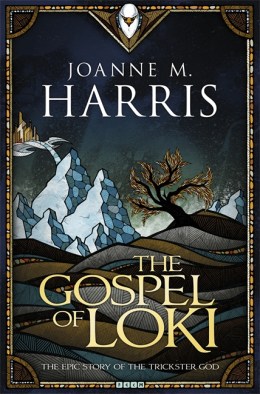
Review: THE GOSPEL OF LOKI by Joanne M. Harris (Gollancz)

HarrisJ-GospelOfLokiUKAn excellent, modern take on the beloved Trickster

“Loki, that’s me.

“Loki, the Light-Bringer, the misunderstood, the elusive, the handsome and modest hero of this particular tissue of lies. Take it with a pinch of salt, but it’s at least as true as the official version, and, dare I say it, more entertaining.

“So far, history, such as it is, has cast me in a rather unflattering role.

“Now it’s my turn to take the stage.”

With his notorious reputation for trickery and deception, and an ability to cause as many problems as he solves, Loki is a Norse god like no other. Demon-born, he is viewed with deepest suspicion by his fellow gods who will never accept him as one of their own and for this he vows to take his revenge.

I’ve mentioned before how Loki seems to be everywhere, these days. From comic books to blockbusters, the Trickster is just growing in popularity. Now we have The Gospel Of Loki, Joanne Harris’s first fantasy novel for adults. Unsurprisingly, given Harris’s well-established gifts as a writer, this is a well-written, engaging novel. It’s quirky, amusing throughout, with an undercurrent of darkness and menace. This is a lot of fun. Continue reading

“The Circle” by Dave Eggers (Knopf)

EggersD-TheCircleAn interesting, timely and disturbing novel

When Mae Holland is hired to work for the Circle, the world’s most powerful internet company, she feels she’s been given the opportunity of a lifetime. The Circle, run out of a sprawling California campus, links users’ personal emails, social media, banking, and purchasing with their universal operating system, resulting in one online identity and a new age of civility and transparency. As Mae tours the open-plan office spaces, the towering glass dining facilities, the cozy dorms for those who spend nights at work, she is thrilled with the company’s modernity and activity. There are parties that last through the night, there are famous musicians playing on the lawn, there are athletic activities and clubs and brunches, and even an aquarium of rare fish retrieved from the Marianas Trench by the CEO. Mae can’t believe her luck, her great fortune to work for the most influential company in America — even as life beyond the campus grows distant, even as a strange encounter with a colleague leaves her shaken, even as her role at the Circle becomes increasingly public.

The Circle is the first novel I’ve read by Eggers. It is also one of the creepiest books I’ve ever read. The novel revolves around Mae Holland, a new hire at The Circle – a massive, Google-meets-Facebook-type social media goliath. We follow her story as she navigates the company, its quirks, and also its never-ending evolution. We see her life turned upside down as she strives to rise in the Circle’s ranks, to adopt and embrace its new innovations. Completing the Circle becomes an obsession, and despite clear signs of its negative impact on her life and those of her loved ones, the inexorable pull of the company, the sense of community, and compulsion to be a part of something proves too much for Mae to resist.

What made this novel so unsettling was how Eggers has extrapolated an all-too plausible (albeit slippery-slope) evolution of social media. The author’s not subtle, either, and it sometimes felt like he is trying to bludgeon the reader with his own negative feelings about social media and its ubiquitous place in contemporary life. At the same time, he has a point. As The Circle continues to evolve, and gobble up ever-more resources, technology and, above all else, access to its users’ private lives, we see an unprecedented erosion of privacy. More than that, though, is that this erosion is voluntarily embraced by Circle users.

Despite the anvil-from-the-sky approach to delivering his point, Eggers has written an accessible, engaging and above-all thought-provoking novel. It will make you analyse your own social media use, and probably make you adjust your habits, too…

An important, if unsubtle, novel, The Circle is certainly recommended reading for anyone who embraces a well-connected life.

“Breach Zone” by Myke Cole (Headline/Ace Books)

ColeM-SO3-BreachZoneUKThe explosive conclusion to Myke Cole’s first trilogy

The Great Reawakening did not come quietly. Across the country and in every nation, people began “coming up Latent,” developing terrifying powers — summoning storms, raising the dead, and setting everything they touch ablaze. Those who Manifest must choose: become a sheepdog who protects the flock or a wolf who devours it…

In the wake of a bloody battle at Forward Operating Base Frontier and a scandalous presidential impeachment, Lieutenant Colonel Jan Thorsson, call sign “Harlequin,” becomes a national hero and a pariah to the military that is the only family he’s ever known.

In the fight for Latent equality, Oscar Britton is positioned to lead a rebellion in exile, but a powerful rival beats him to the punch: Scylla, a walking weapon who will stop at nothing to end the human-sanctioned apartheid against her kind.

When Scylla’s inhuman forces invade New York City, the Supernatural Operations Corps are the only soldiers equipped to prevent a massacre. In order to redeem himself with the military, Harlequin will be forced to face off with this havoc-wreaking woman from his past, warped by her power into something evil…

In this, the final part of Cole’s first trilogy, we have an excellent conclusion. Not only do we see the events of the last three books come together, but the story digs deeper and offers more than either of its predecessors. The author has really pulled out all the stops for this one, and written a really fantastic novel.

The novel is set predominantly in Manhattan, with a few scenes and events taking place in or around the New York area – for example, Bookbinder is on a ship off the coast, testing a new device just as the action kicks off. Harlequin is at the centre, which I liked, as it turns out he is a far more nuanced character than we might have seen in the previous novels (which were through the eyes of people who often were on the wrong side of him). As he takes command of the incursion on Manhattan, we get to see him in action, struggling to keep the hordes from the Source at bay, while also attempting to marshal allies from the Manhattan Selfer underground and also keep the military and law enforcement forces available in line and manning the barricades.

The action is as well-written and realistic as before, with plenty of intense moments that place the reader right alongside the combatants, in the thick of the fighting. I particularly enjoyed seeing the sorcerers let loose, unleashing their myriad powers in devastating and creative ways – the way Cole has developed and devised the various ‘schools’ of magic is fantastic, and he always surprises with the ways in which the powers can be interpreted, and yet still grounded (somewhat) in reality. It was also great to read about the urban conflict taking place in neighbourhoods I have spent many a day walking. I don’t know why everyone seems so keen on destroying New York City in fiction, TV and movies…

What I found most interesting with this novel was how the action was not the best element. In fact, it faded slightly into the background for me. I thought the flashback chapters, detailing Harlequin’s past with Scylla, were absolutely superb, and showed that Cole is not just an excellent military-sci-fi writer. (True, we knew this from Control Point and Fortress Frontier, but in Breach Zone his talent really shines on all fronts.) With this, his third novel, Cole has well and truly arrived. He has written a novel that is just better in every way. The balance between action, character development and world-building was spot-on. As with the previous two novels, I also really liked the use of chapter epigraphs to add further colour and background to the world/reality he has created.

As I mentioned on Twitter when I was reading it, Breach Zone is like a perfect blend of Marvel’s Avengers and the Battle for Helms Deep. Only, better. To draw another comparison to comics, it’s not difficult to see similarities between Scylla and X-Men antagonist Magneto, as she espouses a similar reorientation of society, with the latents on top. Cole’s use of the flashbacks to detail her evolution from high-powered CEO to prisoner of the SOC was deftly done, fleshing out her character and showing us the dangers of government paranoia, overreach and overreaction. She’s a tragic figure, and her relationship with Harlequin just one of the casualties of a frightened government’s policies to control that which it cannot control, nor understand.

If you haven’t read any of these novels, yet, I strongly urge you to do so. I’ve been saying it ever since I read Control Point, but with each novel it becomes clearer: Myke Cole is a fantastic new talent, and if each of his novels improves on the last, it won’t be long before we see him climbing ever-higher on the bestseller list.

Highly recommended.

***

Also on CR: Interview with Myke Cole, Guest Post (Influences & Inspirations)

Myke Cole’s Shadow Ops trilogy – Control Point, Fortress Frontier and Breach Zone – are published by Headline in the UK and Ace Books in the US.

“Legion of the Damned” Digital Anthology (Black Library)

Various-BL-LegionOfTheDamnedCollection

A collection of short stories all focused on that enigmatic Space Marines legion, the Legion of the Damned, from some of Black Library’s best up-and-comers and a couple of not-quite-old-hands. The Legion are a peculiar addition to the WH40k lore. I remember when they first made models for them (they were a custom job by one of their professional modellers, if I remember correctly). Since then, there’s no doubt that they’ve fleshed out the background and the story of who and what the Legion is. Sadly, I haven’t been keeping up-to-date with more than the fiction set in Games Workshop’s science fiction and fantasy systems for well over a decade. As a result, these six stories contained some interesting new detail. I still don’t have a full picture of how the Legion ‘works’, but by no means does this bother me. These authors have done a great job of writing tales that tap into the horror and menace of the Legion of the Damned, and their mysterious appearances on the battlefields of the 41st millennium. I’ll deal with each of the stories individually, below…

I read the stories as individual short stories on my Kindle, so I have no idea if I read them in the order that the collection is compiled. I’ve listed them in the order I read them.

David Annandale, THE DARK HOLLOWS OF MEMORY

The sinister limbo of winter is falling on the Imperial archive world of Mnemosyne. A great fog rolls in, one that will not dissipate for months. With it comes unimaginable hell for the planet’s citizens as the Chaos Space Marines of the Company of Misery stage a brutal invasion. But as the defenders of Mnemosyne fall before the Traitors, something moves in the mist. There are phantoms abroad, warriors of darkness and flame. The Company of Misery is now confronted by the Legion of the Damned, and the terrified scribes of the Librarium find themselves caught in a war between the armies of horror and terror.

This was a really good story. It’s peculiar, atmospheric, well-paced and very well-written. I also liked the battle in the library-feel to it. Just right for a short story, I think. A tricky story to write about without ruining the ending. Needless to say, the Legion of the Damned and their aesthetic and tactics are perfectly suited to Annandale’s skills and style of writing – he does a great job of evoking the sinister-spookiness of the Legion. The author continues to impress, with each new piece of fiction. I’ll have to bump his latest Space Marine Battles novella, Stormseer, up the TBR (e-)mountain.

*

Josh Reynolds, REMORSELESS

After a gruelling siege, the Iron Warriors scent victory over their eternal enemies the Imperial Fists. Alongside their grand battalions is a host of Traitor Guardsmen – Skaranx is unique amongst their number, a killer of Angels. As he stalks his singular prey, he encounters Space Marines the likes of which he has never seen before. Remorseless, these warriors are beyond life and death. They are damned and so, he realises chillingly, is he…

This story didn’t start as slickly as I’ve come to expect from Reynolds. It certainly improved tremendously and quickly as the story unfolded, though. The antagonist, who is also the narrator, is sufficiently brutal and twisted. The near-claustrophobic urban battlefield setting is well-written and presented, and adds to the frantic combat and atmosphere of chaos. I imagined this could be filmed with close-focus handicam, all shaky and intense (like a baroque, military sci-fi version of the Jason Bourne movies). By the end of the story, this has turned into a very good, engaging cat-and-mouse battle. If the mouse was a genhanced killing machine, and the cat was just a creepier, more efficient killing machine…

*

L.J. Goulding, ANIMUS MALORUM

Fighting against ork invasion, Fourth Captain Erices and his few surviving warriors are prepared to sell their own lives dearly in the name of the Imperium. However, when dark legionnaires led by the mysterious Brother-Sergeant Centurius emerge from the catacombs to aid in the defence of the city, it becomes worryingly unclear what exactly they might expect in return…

This story takes on a very interesting aspect of the Legion of the Damned’s presence in the WH40k universe. Specifically, what happens after the battle? It’s a nice alternative approach to the Legion: after all, they are only usually presented on the field of battle. I had never read any fiction or background text that discussed what happens next. Animus Malorum is a well-written tale, with a superb, sinister twist at the very end. I didn’t see that coming. Very cool indeed.

*

Graeme Lyons, FROM THE FLAMES

Battle-brother Seoc of the Invaders is alone. With his brothers dead around him, killed by the avatar of an alien war god, he prepares to sell his life dearly and join the Emperor in eternity. Until something emerges from the flames… Spectral Space Marines, their black armour adorned with symbols of fire and death, move to engage the enemy, but can Seoc survive the battle between the bloody-handed horror and the terrible revenants?

This was more a micro-story, really, but it is nevertheless a pretty good one. It’s a very quickly-paced battle scene, which offers an interesting and inspired way to deal with a burning enemy (Eldar Avatar) and what that means for burning saviours (the Legion of the Damned squad that does the battlefield equivalent of a drive-by). It was a very good decision to keep this short, as it gave the story more punch.

*

C.Z. Dunn, SHIP OF THE DAMNED

Far from home, Sister Agentha travels aboard an ancient pilgrim vessel, providing a sacred light in the vast darkness of the void. However, on answering a mysterious distress signal, she soon finds herself with far more to contend with than the ignorance of children as plague zombies flood the decks and wreak bloody havoc on the faithful. Trapped in the belly of the ship with death on all sides, Agentha’s only hope is a mysterious black object taken from a group of refugees… but will it send help, and what will be left of them when it does?

I really liked that this story was focused on a female non-combatant: Sister Agentha, who is effectively a teacher (although, one with considerable faculty for violence, seeing as everyone from her order is still trained to battle the foes of the Emperor). She confiscated a shiny metallic ball from one of her students, something he picked up after the shuttle he was originally on was left adrift, dropped by space marines in black armour. The pilgrim vessel the characters inhabit answers a distress signal that proves to contain… plague zombies! It’s been a while since I read anything about those gribbly beasties. The story is atmospheric and tense. Good stuff.

*

Nick Kyme, VOTUM INFERNUS

Fleeing in the aftermath of a terrible defeat, troopers of the Vostroyan Firstborn are being hunted by dark eldar. A pair of wyches, a brother and sister, plan to make brutal sport of the mon’keigh. But as the mists thicken a strange figure appears on the battlefield, one clad in armour of blackest night. Who are “the Damned” and what do they want with this world and the souls upon it…?

What happens when warriors who employ and embody fear are faced with an enemy more terrifying? This is a pretty interesting story. Sometimes, the description went a bit further than necessary, creating tautologies, but it’s still a solid addition to the collection. It’s perhaps not Kyme’s best, but does the trick. In addition, the twist at the end was unexpected and pretty cool.

*

General Thoughts…

There is a slight feeling of repetition, if you read all of these stories together. This is neither the fault of the authors, nor me saying that the stories are all the same (just see what I’ve written, above). Rather, the nature of the Legion of the Damned and how they “work” in the WH40k setting means there are only a limited number of ways to describe (particulars aside) their appearance on a battlefield and also their physical aspect (for example, from Lyons’s piece, “Hulking black shadows wreathed in witchfire, they are of sinister aspect, ebon armour decorated with arcane sigils made of what looks like bone” – this tells you everything you need to know, and is a variation on what’s to be found in all these stories – and probably the Space Marine Battles: Legion of the Damned novel, too…). Overall, though, I enjoyed reading these stories. If you’re looking for short stories set in the WH40k universe, with a slightly more dark, horror-feel to them, then this collection should suit perfectly.

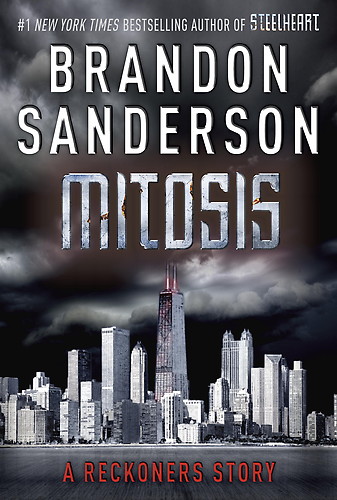
Review: MITOSIS by Brandon Sanderson (Gollancz)

Sanderson-R-MitosisUSA good short story stop-gap between Steelheart and Firefight

Epics still plague Newcago, but David and the Reckoners have vowed to fight back.

Sanderson self-published this short story, set in the same world as his first super-hero novel, Steelheart. I rather enjoyed the novel (which was the first of the author’s that I’ve read), and when I stumbled across this I was very happy to be able to dive back into the world he’s created. I’m not going to include an official synopsis, as that will give away the ending of Steelheart.

Nevertheless, what you need to know (for both the novel and Mitosis) is that in this reality, super-heroes exist – something happened that bestowed upon a small percentage of the global population special powers. Unlike in the super-hero comic books of Marvel, DC, et al, the power has very much gone to most of these powered individuals’ heads, and they started using them for their own ends. In Chicago, Steelheart reigned supreme with a coterie of other powereds. Steelheart the novel was the story of a fight against this tyranny, spear-headed by an insurgent group known as the Reckoners and their new ‘recruit’, who is a bit of a geek, and has been cataloguing the powered dictators and criminals as a means to learn of their weaknesses.

Mitosis deals with a single powered individual: Mitosis. The story moves quickly, and there is a rather nifty homage (perhaps) to Agent Smith from second and third The Matrix movies. That is all I shall say on the specific plot of this story.

If you are familiar with Sanderson’s writing – be it The Way of Kings or his Mistborn series – then you are sure to know what to expect: brisk, engaging and professional storytelling. The man can certainly write, and I intend to get more of his novels read by the end of this year. [Famous last words, perhaps, but I managed to read three of the four authors I promised to last year…]

Short, but well-worth reading to hold you over until the release of Firefight.

***

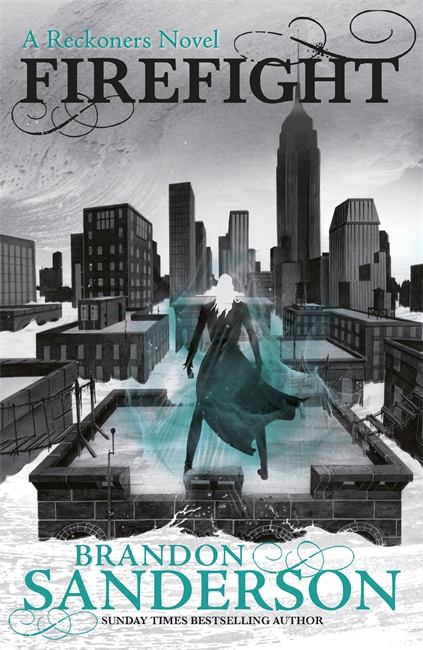
UPDATE: When I first wrote this, Gollancz had yet to announce the UK cover art, which I have now included below. The UK hardcover edition also includes an excerpt from Firefight and also some character sketches. It’s a really great little book. Perfect for any fan of Sanderson’s writing.

Sanderson-R2-FirefightUK

“Shovel Ready” by Adam Sternbergh (Headline)

SternberghA-ShovelReadyThe start to an interesting new dystopian series…

“I don’t want to know your reasons. I don’t care. Think of me as a bullet. Just point.”

Spademan used to be a garbage man. That was before the dirty bomb hit Times Square, before his wife was killed, before New York became a burnt-out shell. Now the wealthy spend their days tapped into virtual reality; the rest have to fend for themselves in the streets. Now there’s nothing but garbage.

So he became a hit man. He doesn’t ask questions, he works quickly, and he’s handy with a box-cutter.

When he’s hired to kill the daughter of a high-profile evangelist, Spademan’s life is upended. He will have to navigate two worlds – both the slick fantasy and the wasteland reality – to finish the job, clear his conscience, and make sure he’s not the one who winds up in the ground.

In the final few months of 2013, there was quite a bit of buzz around the genre sites related to this book. It has received a slew of great blurbs from respected and excellent authors. It was with great anticipation, therefore, that I dove into it when I received an ARC (quite a while ago, so I’ve been sitting on this review for some time). I enjoyed the novel, and Sternbergh offers up a rather convincing dystopian future, but one that at the same time felt slightly half-baked. The author has written a tightly-plotted novel that is certainly immediate and gripping. It left me wanting more, but not always in a good way.

Right off the bat, I should mention that this is another novel that dispenses with “proper” punctuation – specifically, there are no speech marks to indicate dialogue. This seems to be a style that is becoming popular again – before this, my latest read to take this path was Lavie Tidhar’s excellent The Violent Century. Unlike Tidhar’s latest offering, however, the lack of “normal” dialogue punctuation was confusing more often than I would like: the lack of differentiation between characters speaking would sometimes clash or merge less-than-seamlessly with Spademan’s internal monologue.

The main character, Spademan, is a “different kind of psycho”. He is quietly sociopathic, a product of an uncaring and dehumanizing New York city. Devastated by a dirty bomb, New Yorkers have either fled the city wholesale, barricaded themselves into their homes, or retreated to the outer boroughs. Wealthy and not alike have also retreated to a new, online reality – something akin to a steroidal, higher-tech Second Life – where ‘normal’ life can continue. This is where the bulk of international trade takes place, and the world of financial transactions in particular has retreated from the real world entirely, it seems. Interestingly, and related to the story contained herein, mega-churches have gleefully adopted the new technology as well. [That is all I shall say on that matter…]

The story moves at a breakneck pace, and we’re introduced to a number of interesting and varied, as well as believable, characters from a number of New York neighbourhoods and walks of life. His target and new job turns out to be not at all what he expected.

“Truth is, I have no idea what the next step should be. I’ve had jobs get out of hand, but not like this. I was hired to kill her, not adopt her.”

As someone who was having an extended moment of frustration with what felt like ever-increasingly-long Big Book Fantasies, its slim length was certainly welcome. I enjoyed the pace, but there was a sacrifice: world-building. Not only is the world beyond New York fleshed out at all, really (save the quotation, below), it also meant the world’s logic failed – I ended up not buying that so many people would remain in New York City. Suspending that frustration, though (and there were times when that was difficult), I did rather enjoy the novel.

“As for the rest of it, in in-between part, I hear it’s relatively clean and still open for business, like a plucky dollar store. No longer the land of milk and honey, maybe, but at least you can still get high-grade pharmaceuticals on every street corner on the cheap… Really, it’s just New York that got nuked, cordoned off, shut down, shunned. Capital of the world, cut loose to drift into the sea. The country’s soul, on a funeral pyre.”

The fact that New Yorkers stay in the city, despite the dirty bomb’s destruction and lingering radiation, and also the violence that rose in place of order, reminded me of the New York mentality Brian Wood showed in his masterful DMZ comic series. However, I think it worked much better in the graphic novel series – here, it felt that there wasn’t as much thought put into the world-building as there perhaps should have been. Bits and pieces felt forced, and to then not be fleshed out… Well, Sternbergh’s brevity was not always a boon (though, I repeat, it was refreshing amidst a sea of new, massive doorstoppers).

SternberghA-ShovelReadyUSAs the first book in a series, I’m hoping Sternbergh takes some of the time in his next (and future?) novels to flesh out this dystopian reality. As it stands, this is an engaging thriller, which happens to be set in a dilapidated New York City. Spademan is a good protagonist, and I’d like to read more, but this novel didn’t do enough to establish the world, and given the gaps, why people would remain in the city.

Recommended, therefore, but with the aforementioned caveats. An author to watch, certainly.

*   *   *

Shovel Ready is published by Headline in the UK (Jan.14/Jul.3 eBook/PB) and Crown in the US.

Christmas Fiction Review Catch-Up: Jonathan Dee, A.S.A. Harrison & John Niven

I am falling terribly behind on my reviews. So, in order to get caught up a bit more on the backlog, I’ll be combining some reviews into thematic posts (of sorts). This one takes a look at three non-SFF novels I’ve read recently.

***

DeeJ-AThousandPardonsJonathan Dee, A Thousand Pardons (Corsair)

Ben and Helen Armstead have reached breaking point and it takes one afternoon – and a single act of recklessness – for Ben to deal the final blow to their marriage, spectacularly demolishing everything they built together.

Helen and her teenage daughter Sara leave for Manhattan where Helen takes a job in PR – her first in many years – and discovers she has a gift for spinning crises into second chances. But can she apply her professional talent to her personal life?

I rather enjoyed this. It was a quick read, but not perfect. The novel starts out with the sudden, spectacular dissolution of Helen’s marriage to Ben, who is quite the narcissist experiencing quite the midlife crisis and breakdown. The first part of the novel follows Helen as she makes her way to New York, and stumbles into a PR job. She has a knack for coaxing out appropriate, believable apologies out of her clients. For a short time, she is able to enjoy this success. Then the novel brings Ben back into the narrative, and we get a more even-handed impression of the two characters – while I had enjoyed reading about Helen, and it did take a little while before reorienting myself for Ben’s side of the story, the novel benefited from them both being central. Dee’s prose is fluid, and I rattled through this novel at quite the pace. At times, though, things moved perhaps a little too fast – Helen’s advancement in the PR business jumps ahead slightly, and Dee doesn’t give much time over to Helen and Sara’s new lives in the big city. I think the author could have spent some more time exploring what each of the characters was going through.

Nevertheless, A Thousand Pardons is an enjoyable novel about a marriage in ruins and a family in crisis; about the limits and joys of self-invention; and about the peculiar seduction of self-destruction. It is also the tale of redemption and forgiveness, of sorts, and the enduring connection families can feel with each other, despite some of the most difficult of circumstances. It’s not a bad introduction to Dee’s fiction, and I enjoyed it enough to convince me to pick up The Privileges at some point in the not-too-distant future.

*

HarrisonASA-TheSilentWifeUKPBA.S.A. Harrison, The Silent Wife (Headline)

Todd Gilbert and Jodie Brett are in a bad place in their relationship. They’ve been together for twenty-eight years, and with no children to worry about there has been little to disrupt their affluent Chicago lifestyle. But there has also been little to hold it together, and beneath the surface lie ever-widening cracks. HE is a committed cheater. SHE lives and breathes denial. HE exists in dual worlds. SHE likes to settle scores. HE decides to play for keeps. SHE has nothing left to lose. When it becomes clear that their precarious world could disintegrate at any moment, Jodie knows she stands to lose everything. It’s only now she will discover just how much she’s truly capable of…

Oh, how I wanted to love this book. For months, it seems, I’ve seen so much praise and a constant trickle of links for great and gushing reviews on Twitter. The book itself is covered in eye-catching blurbs from prominent authors, reviewers, and so forth. So how was it? Well… Politely? It wasn’t for me. Bluntly honest? I was bored. Throughout. I didn’t like either of the main characters. He is a douche, a lecherous cheater, who seems to only appreciate what his wife does for him and the fact that she’s attractive. She is fastidious to a fault, ordered and lacking any impulsiveness and rather bland:

“Meticulous planning has its merits. Life at its best proceeds in a stately manner, with events scheduled and engagements in place weeks if not months ahead. Scrambling for a last-minute date is something she rarely has to do, and she finds it demeaning.”

Now, I understand that both of the characters were probably meant to come across as either a complete ass (him) or quietly in denial about everything (her), but damn it doesn’t make for interesting reading. The synopsis above is not the whole synopsis. I cut the following:

“A chilling psychological thriller portraying the disintegration of a relationship down to the deadliest point when murdering your husband suddenly makes perfect sense.”

I found this as chilling as tepid tap water. That being said, in terms of prose and construction, The Silent Wife is very competent. The author’s prose are very well constructed, which is really the only reason I kept reading. That bit about the novel being a “chilling psychological thriller”? I was waiting for that to happen right up until I turned the final page. Maddeningly bland. This was the biggest let down of the year, I was left wondering if what I bought and read was the same book everyone else had been talking about…

*

NivenJ-StraightWhiteMaleJohn Niven, Straight White Male (William Heinemann)

Kennedy Marr is a novelist from the old school. Irish, acerbic, and a borderline alcoholic and sex-addict, his mantra is drink hard, write hard and try to screw every woman you meet.

He’s writing film scripts in LA, fucking, drinking and insulting his way through Californian society, but also suffering from writers block and unpaid taxes. Then a solution presents itself – Marr is to be the unlikely recipient of the W.F. Bingham Prize for Outstanding Contribution to Modern Literature, an award worth half a million pounds. But it does not come without a price: he must spend a year teaching at the English university where his ex-wife and estranged daughter now reside.

As Kennedy acclimatises to the sleepy campus, inspiring revulsion and worship in equal measure, he’s forced to reconsider his precarious lifestyle. Incredible as it may seem, there might actually be a father and a teacher lurking inside this “preening, narcissistic, priapic, sociopath”. Or is there.

This was a very pleasant surprise. There was a bit of a rocky start – the first couple of chapters painted an awful picture of the protagonist, and I worried that I’d always struggle to engage with him. However, Niven very quickly surprised. Straight White Male ended up being one of my favourite reads of the year.

Kennedy, our protagonist, starts off as one ugliest protagonists I’ve read about. He’s kind of awful: spoiled, wasteful, a drunkard, lewd, a sex addict with an unhealthy disrespect for women (sleeping with someone in the cloak room at his wedding, juggling multiple porn platforms at once)… He’s a complete narcissist. He’s not a pleasant guide for a lot of the opening chapters, which did make me wonder if I wanted to continue reading. Everyone else Kennedy interacts with is as well-written as this asshole, which made me stick with it, and eventually we learn why Kennedy is the way he is, and see his character develop. Niven can definitely write, and write very well, which kept me coming back. So, if you aren’t a fan of anti-hero protagonists, I’d recommend still sticking with the book, as it gets very good.

I really liked the way Kennedy gets to say and do all the things I bet many people living and working in or with Hollywood would love to say to all the self-important, pompous “artistes” with inflated senses of their own genius… He doesn’t shy away from opining on their flaws (or shouting  them at prima donna, uneducated actors). His internal and external commentary is often very funny. He’s also honest about why he does certain things. Kennedy is also not sparing on his frustrations with the publishing industry, either.

“Busy jumping from rewrite to polish to dialogue pass because, of course, all this was easier (and much more remunerative) than spreading his intestines across the page for two fucking years writing a novel. Because the only things he wanted to write about he couldn’t. He wasn’t blocked so much as… finished. The novel? That was a man’s business. He was done with it. Not that anyone knew that yet of course.”

What was most interesting, however, is how Niven slowly unveiled the tragic story of Kennedy’s sister, and how that has effected his behaviour. A lot of what he does, in the end, seems like avoidance and alcohol-fuelled coping and distraction. After the story shifts to the UK, things move quite a bit faster, too, which was a little disappointing. I would have liked some more… well, everything, really. Rather than reading that as an indictment of the novel, consider it my way of saying I wish it had been longer, because it was so good. Which it was.

Straight White Male is a very good novel on some of the many neuroses and coping mechanisms to which men can turn. Funny, irreverent, touching, and well-written, this is definitely recommended.

Uncanny X-Men, Vol.1 – “Revolution” (Marvel NOW)

UncannyXMen-Vol.01A so-so ‘start’ to a new Uncanny X-Men series…

Writer: Brian Michael Bendis | Artist: Chris Bachalo (1-4), Frazier Irving (#5) | Inks: Jaime Mendoza, Tim Townsend, Al Vey, Victor Olazaba & Frazier Irving | Colours: Chris Bachalo & Frazier Irving

The true flagship X-Men series returns… NOW! In the wake of the Phoenix event, the world has changed and is torn on exactly what Cyclops and his team of outlaw X-Men are – visionary revolutionaries or dangerous terrorists? Whatever the truth, Cyclops, Emma Frost, Magneto, and Magik are out in the world gathering new mutants and redefining the name Uncanny X-Men. But the challenges that they must overcome are fierce: once again, robotic Sentinels hunt the team and the mutants they protect… but when you find out who’s doing the hunting, your jaw will drop! And if that’s not enough, there’s a mole on Cyclops’s team – but who is it?

Collects: Uncanny X-Men #1-5

This is not a bad start to one of the Marvel NOW re-launch titles. Nevertheless, I had some issues with it, but they are more related to the overall direction of the Marvel NOW titles than this series per se. So: some good, some middling.

UncannyXMen-Vol.01-Interior3

Sentinels!

Yes, Uncanny X-Men is quite fun, and this book has a cheeky and gentle wit and humour running throughout – Bachalo’s artwork is a wonderful medium to realise this on the page, too. I’ve really grown to like it from Wolverine & the X-Men, despite initially not being too sure if I did. Speaking of W&tXM, the humour in Uncanny X-Men is very reminiscent of that, so I wonder if it is a conscious effort or just something Bachalo brings to the books he’s working on? Either way, I enjoyed it.

That being said… I understand that Cyclops, Emma Frost and Magick are struggling with their powers – they’re misfiring, malfunctioning, or out of control. They all were infused by the Phoenix Force in Avengers vs. X-Men, after all – and, if I remember correctly, there was a mention of at least Scott’s difficulties coming to terms with his reduced control and powers in AvX: Consequences (or possible in volume one of All-New X-Men?). But… Why is Magneto having difficulty with his powers? He wasn’t taken over by the Phoenix Force. I don’t remember that coming up before, nor any reason being given for it.

UncannyXMen-Vol.01-Interior1

The new mutants Cyclops & Co. have added to their numbers – new young recruits, people manifesting new powers since the arrival and dispersal of the Phoenix Force, are fun. It does mean, though, that we’re seeing another series that is probably trying to attract younger readers, something more in common with Wolverine & the X-Men (another similarity, perhaps only brought to mind lazily by Bachalo’s involvement). This despite fertile ground to explore a number of deeper issues. For example, who is culpable for the whole AvX mess (as they point out, it was Iron Man’s mistake that split the Phoenix Force into five hosts in the first place…). There is plenty they could explore with this series, but instead it looks like they’re going to wander off into other areas (the final chapter of the book turns the focus on to Magick and her misfiring powers). Revolution felt sadly unfulfilling and thin.

UncannyXMen-Vol.01-Interior2

Love this bit. “Did he actually call a time-out?”

I don’t know, ultimately, what I think about this book. Some of it I really liked (the art and humour), but some of it irked me because I think the whole franchise may have made some real problems for itself with these endless mass Events, crossovers, etc. I’ll probably still check out book two, but I’m in no hurry to do so. So this is recommended, but perhaps for real Marvel fans only, and not for just-casual readers.

UncannyXMen-01B-SkottieYoung

Skottie Young’s Variant Cover for #1
[Because I can’t pass up an opportunity to share Young’s work…]