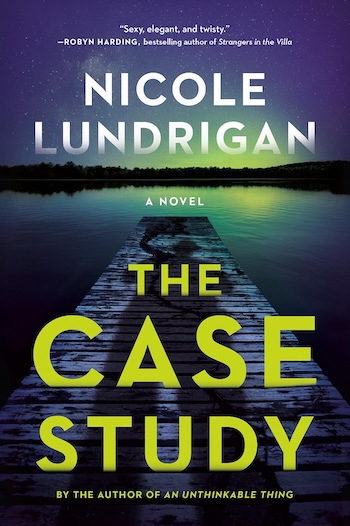
 Let’s start with an introduction: Who is Nicole Lundrigan?
I’m a Toronto-based author. My education was in science, but I started writing fiction on a whim many years ago, my tenth novel was just released in May. My previous book was a bestseller, and my work has been shortlisted twice for the Crime Writers of Canada’s Best Crime Novel award. I write at the kitchen table, with a slew of stickie-notes, and my senior dog is usually snoring not far away. Each of my books has (at least one) murder in it.
Your latest novel, The Case Study, was just published by Viking. How would you introduce it to a potential reader?
The Case Study is a psychological thriller that follows the obsessions of two women: One is the wife of a psychiatrist, and the other is the murderous subject of his famous case study. Mia is fixated on her husband’s patient, and begins watching their recorded therapy sessions. And Lainey, who developed a rare delusion after killing her uncle, grows increasingly interested in her doctor — and his family. The book is dark and the behaviours get quite unhinged, but it (mostly) works itself out by the end.
What inspired you to write the novel? And where do you draw your inspiration from in general?
By the time I’m finished with a book, I often struggle to remember what sparked the idea in the first place. I believe the initial glimmer for The Case Study was two-fold. I had a discussion with my agent where she mentioned a criminal case from the 1950s. (I can’t say which one as that would be a spoiler.) I also happened across a reference to Cotard’s Syndrome (‘walking corpse’ syndrome) — a rare psychiatric delusion wherein a person believes they have died. I’m guessing those ideas jelled and started to percolate.
Do you remember when you first discovered thriller/mystery fiction?
My love of crime fiction emerged from reading non-fiction. When I was a kid, my mother read a lot of true crime. I’d sneak those books when I was far too young to be reading them, and I suspect that had some sort of subconscious impact on me. I’ve always been intensely curious about why people do dark things. That’s generally what I examine in my books.
When did you realize you wanted to be an author, and what was your first foray into writing? Do you still look back on it fondly?
I’m fairly certain I never consciously thought ‘I want to be an author’. I wrote random articles for a couple of years — on everything from blood spatter analysis to sea turtle conservation — and at some point had the very naïve idea… why not try a book? I genuinely had no clue what that entailed, but I approached it with my usual life attitude of ‘how hard can it be?’ Harder than expected, it turns out.
Do you have any specific working, writing, researching practices?
When I’m working on a book, I try to write every day. I also have a ‘word bank’, and on good days, I ‘deposit’ words, and on bad days, I make a ‘withdrawal’. I never write from start-to-finish. Usually, I edit as I go along or have several distinct sections I’m working on simultaneously. As I don’t outline, there are a lot of adjustments as things develop. With research, it’s the rabbit-hole approach. Sometimes I discover random tidbits that shape the book… or maybe those tidbits find me.
What’s your opinion of the genre today, and where do you see your work fitting into it?
Everything is evolving, and I try not to spend too much time contemplating the genre. One day, I could see an article about how saturated the thriller market is, and the next, a write-up on readers’ voracious appetite for crime. Giving it too much weight would only dampen creativity.
My books are not typical ‘thrillers’. They are often described as ‘slow burn’ and ‘gothic’ with a creeping sense of dread. With my (morally grey) characters, I explore deviant personalities and maladaptive behaviours. For that reason, I imagine my work fits snugly into the ‘psychological thriller’ category.
Do you have any other projects in the pipeline, and what are you working on at the moment?
I do have an idea that has taken shape. So far I’m enjoying the process, which has to be a good sign. I tend not to share too much. Isn’t there a saying, never talk about your plans?
What are you reading at the moment (fiction, non-fiction)?
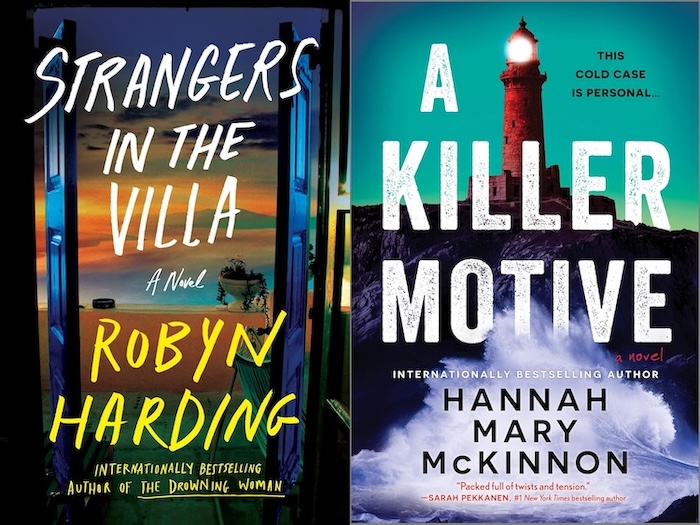
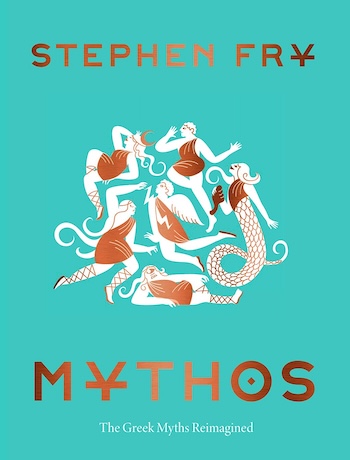
I just finished reading Robyn Harding’s latest, Strangers in the Villa, and have started A Killer Motive by Hannah Mary McKinnon. I recently listened to Mythos by Stephen Fry and that was such a treat.
If you could recommend only one novel or book to someone, what would it be?
This is an impossible question as I know nothing about the ‘someone’. So it would have to be a book that is accessible, engaging, and leaves the reader slightly richer… As I typed that, a book came to mind: ‘The Arrival’ by Shaun Tan. It’s about a move, a physical relocation, and depicts the fear, unfamiliarity, and loneliness of change. Plus the small acts of kindness that bring hope and connection. But the themes can reflect an emotional journey as well, where the world no longer looks how it’s supposed to. My kids and I found it to be a beautiful book that brought a simple but profound awareness with a message of empathy. And he accomplishes it all without a single word.
What’s something readers might be surprised to learn about you?
I’m usually claustrophobic but managed to suppress it in my early twenties when I worked on an archaeological dig beneath a tiny old church. We excavated human skeletal material from brick crypts, and it involved crawling (sometimes sliding) over a dirt floor with a *very* low ceiling.
What are you most looking forward to in the next twelve months?
I’m sure I could come up with a lie or two, but the truth is, I focus on the present. Today, I am looking forward to a mid-morning coffee, some slow-fetch with my old buddy, writing for a couple of hours, a crossword or book, and then meeting a friend for dinner. All nice things.
*
Nicole Lundrigan’s The Case Study is out now, published by Viking in North America and in the UK.
 Civilian Reader
I enjoyed this interview. I will have to get one of her books now!Sent from my iPhoneOn Aug 19, 2026,
LikeLike