 Tomorrow, ECW Press are due to publish Grey Dog by Elliott Gish — a “subversive” literary horror debut that “disrupts the tropes of women’s historical fiction with delusions, wild beasts, and the uncontainable power of female rage”, it sounds like this deserves quite a wide readership. To celebrate the release, the publisher has provided us with a short excerpt to share with our readers. First, though, here’s the synopsis:
The year is 1901, and Ada Byrd — spinster, schoolmarm, amateur naturalist — accepts a teaching post in isolated Lowry Bridge, grateful for the chance to re-establish herself where no one knows her secrets. She develops friendships with her neighbors, explores the woods with her students, and begins to see a future in this tiny farming community. Her past — riddled with grief and shame — has never seemed so far away.
But then, Ada begins to witness strange and grisly phenomena: a swarm of dying crickets, a self-mutilating rabbit, a malformed faun. She soon believes that something old and beastly — which she calls Grey Dog — is behind these visceral offerings, which both beckon and repel her. As her confusion deepens, her grip on what is real, what is delusion, and what is traumatic memory loosens, and Ada takes on the wildness of the woods, behaving erratically and pushing her newfound friends away. In the end, she is left with one question: What is the real horror? The Grey Dog, the uncontainable power of female rage, or Ada herself?
 BH Panhuyzen‘s debut novel, A Tidy Armageddon is due out next week. It has been described as a mix of “heart-felt journey of human resilience” and “action-filled suspense”. To mark the novel’s imminent publication, ECW Press has provided CR with an excerpt to run. First, of course, here’s the official synopsis:
 Today, we have an excerpt from Bob Kroll‘s upcoming novel The Punishing Journey of Arthur Delaney, which is due to be published by
 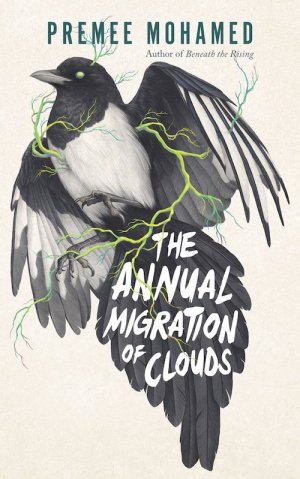 I wrote The Annual Migration of Clouds all in a rush in 2019 after seeing a single tweet from an entomologist I followed (I didn’t even read the paper right away!) containing the phrase ‘heritable symbiont.’ My imagination yanked the reins from my hands and went galloping across a blank document I think literally hours later; dimly I suspected the paper was probably about Wolbachia, a bacterial genus that inhabits some insects and affects their reproduction and behaviour, but I was too excited about the possibilities for a human disease. And ofcourse there are human diseases and syndromes caused by infections that affect our behaviour, as well as examples in various other species (Cordyceps is the obvious one, but there’s also Toxoplasmosis, many infections that cross the blood-brain barrier, certain parasitic infections of the gut, etc).
 Civilian Reader