Review: DEADLANDS by Lily Herne (Much-In-Little/Constable & Robinson)

Herne-MR1-DeadlandsAn interesting new Post-Zomebie-Apocalypse Series

Welcome to the Deadlands, where life is a lottery.

Since the apocalypse, Cape Town’s suburbs have become zombie-infested Deadlands. Human survivors are protected from the living dead by sinister, shrouded figures – the Guardians. In return, five teenagers are “chosen” and handed over to them for a mysterious purpose: this year, Lele de la Fontein’s name is picked.

But Lele will not stick around and face whatever shady fate the Guardians have in store for her. She escapes, willing to take her chances in the Deadlands.

Alone, exiled and unable to return home, she runs into a misfit gang of renegade teens: Saint, a tough Batswana girl; Ginger, a wise-cracking Brit; and handsome Ash, a former child soldier. Under their tutelage, Lele learns how to seriously destroy zombies and together they uncover the corruption endemic in Cape Town, and come to learn the sickening truth about the Guardians …

I first heard about the mother-daughter writing team Lily Herne at World Fantasy Con 2013 in Brighton. I was walking along the signing corridor and Jared of Pornokitsch pulled me aside and introduced me to them. Since then, I have read The Three by Sarah Lotz (the mother of the duo), which I think will most likely be one of my Top 5 reads of 2014. Then, despite having a signed copy of Deadlands, I spotted the first two books in the series on sale for Kindle. I snapped them both up, and started reading Deadlands right away. And, I must say, I really enjoyed it. Continue reading

EVERNESS by Ian McDonald (Jo Fletcher/Pyr/Audible)

McDonald-Everness1to3UK

A mixed-media reading experiment…

There is not one you. There are many yous. There is not one world. There are many worlds. Ours is one among billions of parallel earths.

When Everett Singh’s scientist father is kidnapped from the streets of London, he leaves young Everett a mysterious app on his computer. Suddenly, this teenager has become the owner of the most valuable object in the multiverse — the Infundibulum — the map of all the parallel earths, and there are dark forces in the Ten Known Worlds who will stop at nothing to get it. They’ve got power, authority, the might of ten planets — some of them more technologically advanced than our Earth — at their fingertips. He’s got wits, intelligence, and a knack for Indian cooking.

To keep the Infundibulum safe, Everett must trick his way through the Heisenberg Gate that his dad helped build and go on the run in a parallel Earth. But to rescue his dad from Charlotte Villiers and the sinister Order, this Planesrunner’s going to need friends. Friends like Captain Anastasia Sixsmyth, her adopted daughter, Sen, and the crew of the airship Everness.

Can they rescue Everett’s father and get the Infundibulum to safety? The game is afoot!

Ian McDonald’s science fiction YA series – comprised of Planesrunner, Be My Enemy and Empress of the Sun – has been widely praised across the SFF community and all over the press. Despite that, it has taken me a long time to get around to giving it a try. Needless to say, it’s a lot of fun, and deserves all of the glowing reviews it has received. A must-read sci-fi series.

McDonald-Everness1to3US

Everness US Covers

I am not much of an audiobook listener. Aside from a handful of Black Library audiodramas (usually clocking in at around an hour in length), I haven’t listened to many audiobooks since I was a kid – on our frequent, long drives between Germany and Austria, or Germany and the UK, we used to listen to The Lord of the Rings and Hitchhikers Guide to the Galaxy. However, I have received both printed and audio review copies of Ian McDonald’s critically-acclaimed Everness series. So, I decided to conduct an experiment, alternating between the print and audio depending on where I was – so, at the gym, on commutes, and walking into town, I would listen to the audiobooks; when I was at home, or in a café, I would read the books. This helped me get through them much quicker than I ordinarily would have (see below for more on this). This review will, therefore, be more of a comparison between the two mediums, rather than a book review proper.

Before I compare the audio- and print-book, however, I do just want to say that this series is really good. It’s action-packed, fun, well-composed and very well-written. Everett is a great protagonist, and I loved following his story. The book is filled with great observations, characters, and above all a great story. McDonald packs just as much science as action into his story, and, while there were a couple of moments when the explanations went on just a tad longer than the pacing supported, the author never talks down to his readers. It was great, fascinating stuff. Not only that, McDonald maintains the quality throughout, too – true, the first one has that New Series Fresh Feel, when everything is a new discovery. But, given the multi-dimensional storyline, each of these novels offers plenty of new discoveries and developments to experience and shape the characters (all of whom are developed well).

McDonald-Everness1to3AUD

Everness Audiobook Covers

So. The audiobooks. Narrated by Tom Lawrence, they are actually excellent. The production is clear and very good. Lawrence’s delivery was very good, and his voice – a mixture of Richard Hammond and Rupert Grint, I thought – conveys the story very well. I think there were only a couple of moments that didn’t work for me (some of his accents weren’t great, but this was easily forgivable). Lawrence didn’t emphasise or ham-up the witty asides, which made them all the better.

The thing that made the audiobooks less satisfying than the novels is something that is entirely my issue, rather than the quality of the audio versions: the pacing. I am someone who frequently devours novels, blitzing through those I enjoy as I become hooked and Must Find Out What Happens. With an audiobook, you’re stuck at the narrator’s speed, regardless of how much you enjoy it. This is probably obvious, but given my preference for reading quickly, my switching between print and audio did mean I got through the novels much quicker than the recorded length of the Audible editions. I also find it easier to keep track of what I’m reading, rather than listening to (unless it’s from repeat listens).

Overall, then, the Everness series is a must read (or listen), and both the print and Audible editions are fantastic. If, like me, you read very quickly, then I’d recommend the print editions. But, if you’ve recently over-dosed on reading (as I had, when I started listening to these), or want a change, then these Lawrence-narrated audiobooks are great, too.

Very highly recommended series.

***

The Everness series is published in the UK by Jo Fletcher Books, in the US by Pyr Books, and also by Audible. Be sure to check out Ian’s website and follow him on Twitter for more on his writing and novels.

Suicide Risk, Vol.1 (Boom Studios/Titan Comics)

SuicideRisk-Vol.1-ArtWriter: Mike Carey | Artist: Elena Casagrande

Even when there are only villains, being a hero makes you a…

Super-powered people are inexplicably rising from the streets and there’s a big problem: Too many supervillains, not enough superheroes. Heroes are dying, and cops are dying twofold. Humanity is underpowered in the face of their onslaught, and people are suffering untold casualties trying to stem the flow.

After barely surviving a super-powered bank heist gone horribly wrong, beat cop Leo Winters vowed to try and find a way to stop them. Following a lead, he discovered two lowlifes who seemed to be able to grant a person powers… for the right price. Thing is: you don’t get to choose which power. It’s seemingly random, a crap-shoot, a risk. Will Leo decide to take that risk? And why is it that even the heroes in this world eventually break?

Collects: Suicide Risk #1-4

I have long been a fan of Mike Carey’s work – his comic-series The Unwritten and Lucifer (Vertigo) are easily among my top five favourites; and his most recent novel, The Girl With All the Gifts (Orbit) is one of my favourite reads this year. Carey’s new original ongoing series is a great one. Anyone interested in superheroes should check this out. Continue reading

Review: THE ACCIDENT by Chris Pavone (Crown Publishing/Faber)

PavoneC-TheAccidentUSAn engaging suspense, featuring a secret manuscript, a conspiracy, and unwitting pawns caught in the middle.

As dawn approaches in New York, literary agent Isabel Reed is turning the final pages of a mysterious, anonymous manuscript, racing through the explosive revelations about powerful people, as well as long-hidden secrets about her own past. In Copenhagen, veteran CIA operative Hayden Gray, determined that this sweeping story be buried, is suddenly staring down the barrel of an unexpected gun. And in Zurich, the author himself is hiding in a shadowy expat life, trying to atone for a lifetime’s worth of lies and betrayals with publication of The Accident, while always looking over his shoulder.

Over the course of one long, desperate, increasingly perilous day, these lives collide as the book begins its dangerous march toward publication, toward saving or ruining careers and companies, placing everything at risk—and everyone in mortal peril.  The rich cast of characters—in publishing and film, politics and espionage—are all forced to confront the consequences of their ambitions, the schisms between their ideal selves and the people they actually became.

The action rockets around Europe and across America, with an intricate web of duplicities stretching back a quarter-century to a dark winding road in upstate New York, where the shocking truth about the accident itself is buried.

Pavone’s The Expats was an international bestseller – one I seem to have missed almost entirely. When The Accident popped up on NetGalley, though, its synopsis sent it right to the top of my Must Read titles. The story is located at the confluence of a number of my key interests: politics, media, international relations/espionage, and publishing. While the novel is not perfect, it is nevertheless a gripping, fast-paced thriller that entertained and gripped me from the start. Continue reading

Review: THE RADLEYS by Matt Haig (Canongate Books)

HaigM-RadleysAn unconventional, intelligent vampire novel

Just about everyone knows a family like the Radleys. Many of us grew up next door to one. They are a modern family, averagely content, averagely dysfunctional, living in a staid and quiet suburban English town. Peter is an overworked doctor whose wife, Helen, has become increasingly remote and uncommunicative. Rowan, their teenage son, is being bullied at school, and their anemic daughter, Clara, has recently become a vegan. They are typical, that is, save for one devastating exception: Peter and Helen are vampires and have – for seventeen years – been abstaining by choice from a life of chasing blood in the hope that their children could live normal lives.

One night, Clara finds herself driven to commit a shocking – and disturbingly satisfying – act of violence, and her parents are forced to explain their history of shadows and lies. A police investigation is launched that uncovers a richness of vampire history heretofore unknown to the general public. And when the malevolent and alluring Uncle Will, a practicing vampire, arrives to throw the police off Clara’s trail, he winds up throwing the whole house into temptation and turmoil and unleashing a host of dark secrets that threaten the Radleys’ marriage.

I really enjoyed this. I also read it quite a while ago, which is why I’m going to keep the review rather brief. It’s a different and original take on vampires – one that blends commentary on contemporary British society, middle-class life and anxieties, and is presented with a deft, light touch. Continue reading

“Nate in Venice” by Richard Russo (Kindle Single)

RussoR-NateInVeniceA short story from Pulitzer-prize winning author of Empire Falls

After a tragic incident with a student, Nate, a professor at a small New England college, retires from teaching and from life. He ends his self-imposed exile with a tour-group trip to Venice in the company of his overbearing, mostly estranged brother. Nate is unsure he’s equipped for the challenges of human contact, especially the fraternal kind. He tries to play along, keep up, mixing his antidepressants with expensive Chianti, but while navigating the labyrinthine streets of the ancient, sinking city, the past greets him around every corner, even in his dreams: There’s the stricken face of the young woman whose life he may have ruined, and there’s Julian, the older brother who has always derided and discounted him. Is Nate sunk? Is the trip, the chance to fall in love — in fact, his whole existence — merely water under the ponte?

This is only the second thing by Russo that I’ve read. I recently also read (and thoroughly enjoyed) Straight Man, which I hope to review at some point in the near future. I have also acquired his Pulitzer-prize-winning Empire Falls, which is very high on my TBR mountain. When this popped up on Amazon UK’s Kindle Singles page, I thought it would be a great, quick read to fill in a gap between full-length novels. I was not wrong.

The story follows Nate, who has come on this trip with his estranged brother. He is getting on in years, and has fled a strange event related to a student back home. As he tries to figure out why his brother is giving him such a hard time, while also considering his fellow travellers, we get to know what happened to him back home. As it turns out, it’s probably not what you were thinking. I thought it was a real good change from the norm, too. Interesting characters, a quick, engaging plot. What more can one want from a short story? This is, overall, a really well-written bit of fiction, very much focused on the characters.

What drew me to the story was not just because I enjoyed Russo’s novel – although, they do share some elements. I am really drawn to fiction set in or connected with universities. In this case, the protagonist is a professor, and as such the story contains some interesting (and familiar to me) commentary on universities and teaching. For no other reason than they interested me, and because I’ve experienced similar things as both a student and teaching assistant, here are a couple of examples.

First up, that somewhat depressing moment of marking the first round of essays for a class:

“… that first batch of essays was depressingly dismal. Their authors were not stupid — the lively classroom discussions had proved that much — but the writing they produced was breathtakingly incoherent. All their academic lives, they’d been cutting and pasting from the Internet — a phrase here, a sentence there—creating a pastiche of observations linked by little more than general subject matter. Individual sentences, lifted from their original context and plopped down in a foreign one, varied wildly in tone and style. Given a list of transitional phrases — but, rather, on the other hand, while, hence — the essay’s alleged authors would’ve been helpless to choose the one that correctly expressed the relationship between juxtaposed assertions, had such a relationship by chance occurred. Whole paragraphs were maddeningly free of both mistakes and meaning.”

The awkwardness of essay hand-back sessions, when hitherto spoon-fed and pampered students, not as brilliant as their parents have no doubt always told them, realise that completing the assignment is not enough to get an A…

“Handing back student essays, especially the first batch, was invariably an unpleasant duty, marking as it did the end of the academic honeymoon. Here they’d all been getting along so well, pretending to be the best of friends, and now this. A grade. Having briefly imagined that this class would be different, they now understood it wasn’t. Betrayed again.”

And the frustrating reality of students not realising that clarity is oh-so-very-important.

“… students, even the English majors, were content for their meaning to loiter in the shadows of their murky prose, as if clarity were a shared responsibility between writer and reader. His prose workshops flew in the face of their unshakable conviction that the essays they turned in were a private matter between them and him, sort of like therapy or confession.”

Anyway, back to the review. This is a short, well-written and well-constructed short story. Nate in Venice is a great introduction to Russo’s writing and style, and was a very enjoyable read. Very much recommended.

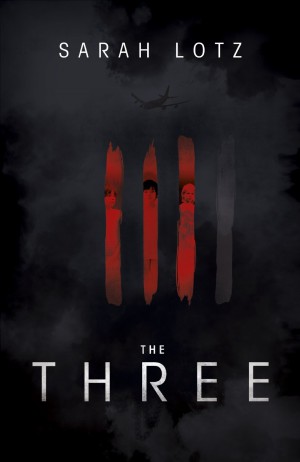
Review: THE THREE by Sarah Lotz (Hodder)

LotzS-TheThreeA brilliant thriller. A must-read. And one of my new favourite books.

“They’re here… The boy. The boy watch the boy watch the dead people oh Lordy there’s so many… They’re coming for me now. We’re all going soon. All of us. Pastor Len warn them that the boy he’s not to­­—”

The last words of Pamela May Donald (1961-2012)

Black Thursday. The day that will never be forgotten. The day that four passenger planes crash, at almost exactly the same moment, at four different points around the globe.

There are only four survivors. Three are children, who emerge from the wreckage seemingly unhurt. But they are not unchanged.

And the fourth is Pamela May Donald, who lives just long enough to record a voice message on her phone.

A message that will change the world.

The message is a warning.

This wasn’t what I was expecting. I think I saw a positive comment from Lauren Beukes on Twitter, but other than that, didn’t know too much about it. So it was with great anticipation that I started reading it. And I loved it. It’s unusual, brilliantly written and expertly constructed, utterly gripping, frequently chilling, and always fascinating. It’s also really difficult to review, but very easy to praise. Continue reading

“The Library of Unrequited Love” by Sophie Divry & Siân Reynolds (trans.) (MacLehose Press)

Divry-TheLibraryOfUnrequitedLoveA peculiar, endearing little book

One morning a librarian finds a reader who has been locked in overnight.

She starts to talk to him, a one-way conversation that soon gathers pace as an outpouring of frustrations, observations and anguishes. Two things shine through: her shy, unrequited passion for a quiet researcher named Martin, and an ardent and absolute love of books.

A delightful flight of fancy for the lonely bookworm in all of us…

What a peculiar little book. The Library of Unrequited Love is a 98-page, stream-of-consciousness, single-paragraph monologue. Ordinarily, such a description would be an automatic turn-off for me. This, however, was a very endearing read.

Someone has been locked in a library over-night, and in the morning an old librarian finds him as she prepares to open up. Rather strangely, instead of being particularly concerned, the librarian goes on a great, long, free-form ramble that covers a broad-range of topic – from libraries, books, librarians-vs.-readers, society, and, of course, Martin (who has attracted her eye and is the emerges-late-in-the-story focus of the title).

Given its extremely brief length, it’s difficult to know how to approach it for a review. Reynolds has done a great job with the translation, and there’s a great flow to the narrative. We really get a sense of the librarian’s character, her biases and tastes. There’s a wealth of information and great commentary, too – especially on the subject of libraries. Here are just a couple of nuggets.

First, a thought on the strange people they attract, but also why they’re important in the Summer:

“… libraries do attract mad people. Especially in summer. Of course, if you closed the libraries during the summer holidays, you wouldn’t see them. No more lunatics, poor people, children on their own, students who’ve failed their exams, no more little old chaps, no more culture and no more humanity. When I think that some mayors dare to close their libraries in August. Just to cut down on costs. Barbaric. Think of it: when the town’s sweltering in the heat, the shops are all shut, the swimming baths are full, people’s purses are empty, their pay’s too low, and they’re brooding over their problems in the shade, with the tar melting on the road, the house of culture could be opening its arms to all those children lost in an ocean of urban idiocy, but no, his nibs the Mayor has closed the library … What’s the little old pensioner going to do in August? I’ll tell you: he gets up on Tuesday morning, he takes the only bus of the day, and he toddles along slowly to the entrance of the library, because for twenty-four hours he’s been looking forward to a nice long day spent in an air-conditioned reading room, leafing through his favourite newspapers, and then like a stab in the back, or Napoleon’s coup d’etat, my poor little pensioner sees the criminal notice on the door: Closed until September … Nothing is sadder than an empty library.”

And also this amusing interpretation of the never-ending war that takes place in a library:

“I’ll tell you how it works. The library is the arena where every day the Homeric battle begins between books and readers. In this struggle, the librarians are the referees. In this arena, they have a part to play. Either they’re cowards and take the side of the mountain of books, or they bravely help the worried reader. And in this fight, you have to let your conscience be your guide. But librarians aren’t automatically on the side of the humans, don’t be fooled. You don’t realize, but you’re a flock of sheep in our hands, you think you’re gambolling about free as air, but there are wolves everywhere lying in wait for you, cyclops, sirens, naked nymphs, oh, the pity of it … A barricade only has two sides and I know which side I’m on, comrade. I’m here to help the poor, depressed, thirsty reader faced with the crushing prestige of the Army of Books.”

Overall, then, I would strongly recommend this to anyone who was brought up visiting libraries and thinks of them fondly, any bibliophile, and also anyone who has a couple of hours to fill and doesn’t want to dive in to a new full-length novel quite yet.

A peculiar, endearing, very well-written novella. Definitely recommended.

“Cataveiro” by E.J. Swift (Del Rey UK)

Reviewed by H.

SwiftEJ-2-CataveiroUKSwift nimbly avoids the sophomore slump, with another solid novel.

A shipwreck.

And one lone survivor.

For political exile Taeo Ybanez, this could be his ticket home. Relations between the Antarcticans and the Patagonians are worse than ever, and to be caught on the wrong side could prove deadly.

For pilot and cartographer Ramona Callejas, the presence of the mysterious stranger is one more thing in the way of her saving her mother from a deadly disease.

All roads lead to Cataveiro, the city of fate and fortune, where their destinies will become intertwined and their futures cemented for ever…

Cataveiro is the sequel to Swift’s beautifully-written debut, Osiris. Continuing the story of the world, this is a very good follow up, improving on the first in pretty much every way.

The story at first felt rather disconnected to the events of the series opener. This was somewhat frustrating, given how much I enjoyed reading Vikram’s and Adelaide’s story. This does mean that it would probably not be too difficult for a new reader to start here (although, given the quality of Osiris, I would still recommend you read that, too). The many new ideas, locales, and characters made Cataveiro feel like a new beginning. The lack of any form of lengthy recap for the events of the first book, perhaps even suggest that Osiris is unnecessary. An odd decision, but it works. The fact that Vikram remained rather peripheral to the story, for the most part, was also a little disappointing to begin with. The more I read, though, the more invested I became in the new protagonists and their stories.

The author’s prose is as good as before (in fact, better), and the story does a great job of building the readers’ image of this future. It’s difficult to not be impressed by the world-building. Swift offers an engaging explanation of how the “land” world works, and offers commentary on the old ways that led to the environmental disasters that gave rise to this somewhat devastated world. Cataveiro also introduces us to two new characters. Both of them – Ramona and Taeo – are well-realised on the page, and develop nicely over the course of the novel. They are engaging guides to this part of the world.

Overall, Swift has produced another beautifully-written novel. There’s no doubt, also, that Cataveiro is a better novel than Osiris. The pacing is still relatively slow – this is something I struggled with when reading Osiris, and probably my only real criticism of Swift’s debut. The author has addressed this, here, though, making this a much more satisfying, fluid read. Nevertheless, the world, commentary, characters and – above all – story are interesting and engaging enough to keep us reading until the end. Fans of the first novel should definitely take to this sequel, although I’d be surprised if many weren’t similarly thrown by the apparent disregard of the events in Osiris. I’m certainly intrigued to see what happens in the final volume of the trilogy.

Cataveiro – and Osiris – might not be for all sci-fi fans, but there’s no doubt that Swift is a very talented writer, who is honing her craft wonderfully (in these two novels and also her shorter fiction). I expect she will very soon become a real force to be reckoned with. Definitely an author to watch. If you enjoy beautifully-written, literary science fiction, with less focus on being an action-packed blockbuster, then The Osiris Project is a must read.

Also on CR: Interview with E.J. Swift

*

For more on Swift’s writing and novels, be sure to follow her on Twitter, Facebook, Pinterest, and visit her Website.

“Stormseer” by David Annandale (Black Library)

AnnandaleD-SMB-StormseerWhite Scars vs. Orks, with a dash of Eldar…

The green-skinned hordes of the Overfiend of the Octavius system have long been a thorn in the Imperium’s side – and now, with human worlds caught in the crossfire between the orks and eldar, that thorn will be removed. Temur Khan and his brotherhood descend upon Lepidus Prime to cleanse it of the green taint. The swift and brutal hammer to the Imperial Guard’s anvil, the White Scars strike hard and fast – but when the orks reveal a super-weapon, it may take more than just power to win the day?

I’m a big fan of Annandale’s Black Library fiction, and Stormseer is a great example of just why I think he’s so good. This is the first of three novellas in the Space Marine Battles series, all of which are connected to the same campaign. Fast and furious, excellently written and well-paced, this is an excellent novella. A must-read for fans of the White Scars and Warhammer 40,000 in general.

The story starts off with an excellent battle scene, which is a perfect example of the White Scars’ rather headlong approach to warfare. The action on the battlefront is only half the story, however, and we alternate between there and a lone Stormseer’s mission behind enemy lines. Accompanied by some scouts, and driven by a vague psychic vision, he infiltrates and investigates an ork manufacturing plant, joined by some mysterious Eldar. What they find explains the orks’ mysterious ability to be everywhere on the battlefield.

The story was less battle-heavy than I was expecting, but of course Annandale does not skimp on the action, which is well-presented and described (without going over the top). He does an excellent job of providing a proper story, rather than just an excuse to kill some orks in ever more brutal fashion (or “bolter-porn”, as it’s known).

There’s some mystery, and also allusion to what else is going on elsewhere in the wider campaign, with a mention of the Salamanders and Raven Guard (who, I assume, are the stars of the other two novellas). Despite the brief length, Annandale’s characters are well-rounded and believable (as super-humans and aliens go). His prose is fluid and well-constructed.

David Annandale is one of Black Library’s best new(ish) authors. If you haven’t read any of his stuff yet, you really should. Stormseer is a great place to start.