Audio Review: “Bonkers: My Life in Laughs” by Jennifer Saunders (Audible / Viking)

SaundersJ-BonkersPBAn excellent, amusing memoir

“As the steady march of time takes its toll on my memory and the vultures circle, I thought I should have a stab at recollecting how it all happened…”

Jennifer Saunders’s brilliant comic creations have brought joy to millions for three decades. From Comic Strip to Comic Relief, from Bolly-swilling Edina in Absolutely Fabulous to Meryl Streep in Mamma Mia, her characters are household names.

But it’s Jennifer herself who has a place in all our hearts. This is her funny, touching and disarmingly honest memoir, filled with stories of friends, laughter and occasional heartache – but never misery.

From her childhood on RAF bases, where her father was a pilot, to her life-changing encounter with a young Dawn French, on to success and family, the book charts her extraordinary story, including the slip ups and battles along the way.

I have been a fan of Saunders’s ever since I was a kid, and my father introduced me to Absolutely Fabulous. The series, which is excellent and everyone should watch, had a lasting impact on my family’s and my own lexicon. Countless times we have made comments to each other, instinctively knowing its origin. Hilarity ensues, strangers shuffle away. Anyway, I picked up Bonkers, and although it started off a little strangely, I thought it was a brilliant, honest, amusing memoir from one of Britain’s greatest comics.

Saunders takes us through her childhood and education in a something of a monotone, which was a little strange. She speaks with great affection about her parents and family life. I also really liked that she spoke of her tendencies to fantasise and daydream as a child and teenager. I did very much the same thing. After her story moves to her early years struggling as a comic and performer, though, things get far more interesting and amusing. We learn of how and where she met Dawn French, her long-time writing partner and friend. The stories about the early sets in a strip club, the first movie projects, the French & Saunders Show, and – most interestingly of all for me – Absolutely Fabulous. She also speaks of her battle with cancer (which I had no clue about until I listened to this), and her doomed movie project with Meg Ryan. And her amusing work on French projects, and the international stardom she gained from the cult following Absolutely Fabulous gained.

Before my recent bout of memoir reading, I had only ever read biographies about politicians and historically significant individuals (usually for work), so one of the great things about listening to memoirs of comedians is finding out the stories behind some of my favourite TV series and movies. Bonkers is not about dishing the dirt, and Saunders is honest and fair when discussing any difficult or strained relationship. She doesn’t point fingers, pass blame (not that there’s much of that needed), and she’s always respectful to those she’s worked with.

If you are a fan of Saunders’s comedy, then you really should read or listen to this. The audio book is excellently produced, and it was a real pleasure to listen to Saunders tell her story. Recommended.

***

Bonkers is published in audiobook by Audible, and in print and eBook by Viking.

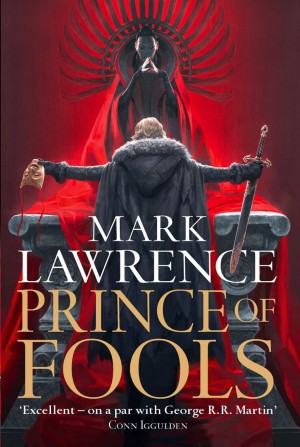
Review: PRINCE OF FOOLS by Mark Lawrence (Voyager/Ace Books)

LawrenceM-RQW1-PrinceOfFoolsUKA new trilogy and hero, and still just as good…

The Red Queen is old but the kings of the Broken Empire fear her as they fear no other.

Her grandson Jalan Kendeth is a coward, a cheat and a womaniser; and tenth in line to the throne. While his grandmother shapes the destiny of millions, Prince Jalan pursues his debauched pleasures. Until he gets entangled with Snorri ver Snagason, a huge Norse axe man, and dragged against his will to the icy north.

In a journey across half the Broken Empire, Jalan flees minions of the Dead King, agrees to duel an upstart prince named Jorg Ancrath, and meets the ice witch, Skilfar, all the time seeking a way to part company with Snorri before the Norseman’s quest leads them to face his enemies in the black fort on the edge of the Bitter Ice.

Experience does not lend Jalan wisdom; but here and there he unearths a corner of the truth. He discovers that they are all pieces on a board, pieces that may be being played in the long, secret war the Red Queen has waged throughout her reign, against the powers that stand behind thrones and nations, and for higher stakes than land or gold.

Mark Lawrence returns with the first in a great new trilogy set in the same world as his critically-acclaimed Broken Empire trilogy. As long-time readers of the blog will know, I really enjoyed Lawrence’s debut, Prince of Thorns. He is without doubt one of the best new fantasy authors, and if you like your fantasy dark, twisty, and very well-written, then you really do need to give his work a try. Prince of Fools introduces us to a new pair of heroes – Prince Jalan and his Viking companion, Snorri. I really enjoyed this novel. Continue reading →

“Lost For Words” by Edward St. Aubyn (Picador)

StAubynE-LostForWordsAn enjoyable, cutting short novel about literary awards and ‘literary people’

The judges on the panel of the Elysian Prize for Literature must get through hundreds of submissions to find the best book of the year. Meanwhile, a host of writers are desperate for Elysian attention: the brilliant writer and serial heartbreaker Katherine Burns; the lovelorn debut novelist Sam Black; and Bunjee, convinced that his magnum opus, The Mulberry Elephant, will take the literary world by storm. Things go terribly wrong when Katherine’s publisher accidentally submits a cookery book in place of her novel; one of the judges finds himself in the middle of a scandal; and Bunjee, aghast to learn his book isn’t on the short list, seeks revenge.

Lost For Words is the first novel of St. Aubyn’s that I’ve read. And it was, thankfully, very good. It’s rather short, too, which actually gives it a little more punch. If you have any interest in the publishing industry, industry awards, and the people connected to either/both of these, then you should really give this a try. A fun, short, and cutting satire of the publishing industry.

Imagine all of the negative stereotypes that are connected with publishing and authors. Write them into a story about a literary award that is somewhat controversial – because it’s a) an award, b) sponsored by a morally flexible corporation, and c) rather politicised. Don’t forget to include the unqualified and judges with their own agendas (can there ever truly be a qualified and unbiased judge?). Now watch as their egos, insecurities, narcissism and pettiness takes over.

This is a rather fun novel. There were times when I thought it might be a bit too much of an in-joke, but St. Aubyn writes so well (not to mention concisely) that I think anyone who just likes reading good fiction should like this. Throughout reading Lost For Words, characters that were scarily familiar to real people I have come across in real life – from editors, agents, reviewers, authors – that this was a rather uncomfortable, yet very funny and shrewdly observant read. Nobody is safe, and the author takes his razor sharp pen to pretty much every facet of the publishing industry.

StAubynE-LostForWordsUSThere were some moments when the characters’ pretentiousness took over a bit, as was no doubt the author’s intent, but this does mean some passages drag. Just as time would slow right down if you were actually in conversation with these pseudo-intellectual, pompous blowhards… None of the characters are especially likeable – to say they are flawed would be a massive understatement. They are universally narcissistic, if sometimes gifted. The judges are either clueless, pursuing non-relevant (or misunderstood) agendas, and at odds with each other. The long- and short-list authors are bundles of anxieties and arrogance. Katherine was a particularly unsympathetic character, and I thought the damage she leaves in her wake – especially what befalls her editor – was rather underdeveloped. Not uninteresting to read about, though.

I think the novel could actually have done with being a bit longer – the balance of certain scenes felt off to me, or as if he wanted to include this example of silliness, then this one, then another, without always trying to tie it all together. A bit of a literary hit list, perhaps?

About a third of the way through this, I bought the first novel in St Aubyn’s better known, critically-acclaimed Patrick Melrose series – Never Mind. I hope to get to it very soon. Lost For Words is definitely recommended.

Mini-Review: “Valour’s Trial” by Tanya Huff (Titan Books)

HuffT-C4-ValoursTrialUK

Reviewed by H.

Huff’s Military Sci-Fi series returns for a strong fourth installment!

Unexpectedly pulled from battle, Gunnery Sergeant Torin Kerr of the Confederation Marines finds herself in an underground POW camp that shouldn’t exist, where her fellow marine prisoners have lost all will to escape. Now, Torin must fight her way not only out of the prison, but also past the growing compulsion to lie down and give up – not realizing that her escape could alter the entire course of the war.

Four books in, and Tanya Huff is still keeping this series interesting and engaging. Much of what I liked in the first three books can also be said for this one. The characters are pretty much all engaging and well-developed. Torin Kerr remains a fantastic heroine. The action sequences are fantastic. And the setting is well-realised. So, I’ll keep this short, to avoid repeating myself too much. Needless to say, though, this is another great addition to the series.

Torin Kerr still saves the day, through her dedication not only to the Confederation but also to the members of her team (whoever they happen to be on any given adventure). In Valour’s Trial, after waking up in a hellish prison, Kerr and some new comrades are up against a hitherto unknown enemy. After a short while, she attempts an escape with some of her fellow prisoners. While breaking out, she discovers that some of the Others – the opposition in the war in which she has been fighting – are also held captive. Who, then, are their gaolers? What does this mean for the wider war effort?

As before, it’s great to see how Torin deals with the obstacles that her adventurous (perilous) career keeps throwing in front of her. She’s a great character, and thus far has never been dull. Reading about her is entertaining. Huff has done a great job in this novel of writing some great characters – they’re really well-rounded and enjoyable guides to the world/universe, most of all Torin. The humour remains – perhaps a little too similar and repetitive after four books – which adds a welcome levity to certain scenes, and avoids the series from becoming too bleak.

The ending of the novel offers some tantalising possibilities for the next in the series, The Truth of Valour, too. It’ll be interesting to see how different that novel will be. If you have any interest in military science fiction, or science fiction in general really, then Tanya Huff’s Confederation series is a must-read. Highly recommended. Can’t wait to get my hands on the next one!

For Fans of: Rachel Bach, Jack Campbell, Ann Aguirre, David Weber, Elizabeth Moon, Jean Johnson, Mike Shepherd

Quick Reviews: BULLSEYE, THE INNOCENT, and THE HIT by David Baldacci (Macmillan/Grand Central)

Baldacci-WR-0to2UK

Two novels and a short story introducing a new hero from one of the modern masters of thriller fiction…

I really enjoyed all three of these stories. I also read them quite a while ago, in preparation for the release of The Target. I’m not sure why I didn’t get around to posting reviews of them sooner, but I wanted to mention them here. Because they’re excellent. I’ll keep things short, though… Continue reading →

Coffin Hill, Vol.1 – “Forest of the Night” (Vertigo)

CoffinHill-Vol.01An excellent start to a new series

Following a night of sex, drugs and witchcraft in the woods, Eve Coffin wakes up naked, covered in blood and unable to remember how she got there. One friend is missing, one is in a mental ward-and one knows that Eve is responsible.

Years later, Eve returns to Coffin Hill, only to discover the darkness that she unleashed ten years ago in the woods was never contained. It continues to seep through the town, cursing the soul of this sleepy Massachusetts hollow, spilling secrets and enacting its revenge.

Set against the haunted backdrop of New England, COFFIN HILL explores what people will do for power and retribution.

Collects: Coffin Hill #1-7

In Coffin Hill, novelist Caitlin Kittredge (Black London series) has written an engaging, eerie, and above all superb tale of witchcraft, childhood mistakes and family legacies. Inaki Miranda – perhaps best known for work on Fairest – realises the book beautifully. This book doesn’t really need much of a review. If you are a fan of horror, suspense, witches, and weirdness, then this is a great book for you. I really enjoyed this.

Book starts with Eve Coffin basking in unwanted attention after solving a serial-killer case as a rookie cop. Unfortunately, when she returns home, she stumbles across an altercation between her roommate and a disgruntled, armed boyfriend. Leaving the force, she returns to her childhood home of Coffin Hill, and almost immediately finds herself embroiled in a weird, supernatural case linked to certain events of her childhood.

CoffinHill-01-Interior6

As events in the present get progressively stranger and more dangerous, Eve must overcome local suspicions, and a potentially homicidal old acquaintance. All the while navigating the emotional battlefield of reuniting with an old flame. Who, as it happens, is now sheriff and investigating another strange disappearance in the woods…

Coffin Hill has a superb opening story-arc. It is a brilliant mix of suspense, supernatural, crime-thriller, and the beginnings (potentially) of a family saga. There are, of course, hints to larger and greater things, none of which are resolved here. This is ok – after I turned the final page, I was definitely eager for more. The artwork is stunning, and Inaki Miranda is probably one of my favourite artists working in comics. The images are clean and brilliantly composed, while the colouring makes the book both moody and strikingly vivid.

Very highly recommended. This is a must-read new series.

CoffinHill-01to03-CoverArt

“Speed of Dark” by Elizabeth Moon (Orbit)

MoonE-SpeedOfDark2002A superb, endearing, and moving modern classic

Lou is different to “normal” people. He interacts with the world in a way they do not understand. He might not see the things they see, however, but he also sees many things they do not. Lou is autistic.

One of his skills is an ability to find patterns in data: extraordinary, complex, beautiful patterns that not even the most powerful computers can comprehend. The company he works for has made considerable sums of money from Lou’s work. But now they want Lou to change – to become “normal” like themselves. And he must face the greatest challenge of his life. To understand the speed of dark.

As I’m sure a lot of other reviewers have found, Speed of Dark is not the easiest of novels to review. Reading Speed of Dark was illuminating, engaging, and moving. Lou is a powerful and endearing voice, and to get a glimpse of how his mind works and how he sees the world was fascinating. I don’t know nearly as much about autism as I should, but I felt Moon has written an intelligent and nuanced tale of an autistic man’s experiences in a world that doesn’t know how to accept him as he is, nor properly understand how he sees the world. This is a great novel, and it is absolutely clear to me why it won a Nebula Award.

To get it out of the way quickly, I think there was only one weakness to the novel, and that was the fact that plot felt somewhat of a secondary concern. This is not strictly speaking a bad thing, as Lou and his colleagues are universally interesting characters to spend time with. The plot centres around the innovative “cure” for autism, and the characters’ decisions of whether or not they want to take it, and therefore become more like the “normals”. The ending felt just a tad rushed and truncated, and I’m still not sure how I actually feel about Lou’s choice (I won’t spoil it, though).

What a cure for autism would mean is something I’ve wondered about quite a bit, recently. It’s not something I’m very good at talking or writing about, but I did like the way Moon handled the issue and hypothetical, and also how her characters saw the choice.

Without doubt, the best thing about the novel is Lou’s voice. I loved reading the story told through his perspective – seeing the different ways he sees people and the world, his shrewd observations about how “normals” treat him so very differently, when they don’t have to (or, indeed, really shouldn’t). The different ways in which certain actions of his are treated as symptoms, while the same actions from a normal are considered, well… normal. Here’s an early example from the novel, when Lou is visiting his therapist, Dr. Fornum:

When she answers the phone I can look around her office and find the twinkly things she doesn’t know she has.  I can move my head back and forth so the light in the corner glints off and on over there, on the shiny cover of a book in the bookcase.  If she notices that I’m moving my head back and forth she makes a note in my record… It is called stereotypy when I do it and relaxing her neck when she does it…

In fact, this early scene with Dr. Fornum is filled with interesting and intelligent commentary on the treatment and impression of those with autism in society today. I’m sure there are many reviews that have used the following passage, but I thought it was superb and perfectly explains Lou’s situation:

If they aren’t going to listen, why should I talk?

I know better than to say that out loud. Everything in my life that I value has been gained at the cost of not saying what I really think and saying what they want me to say.

In this office, where I am evaluated and advised four times a year, the psychiatrist is not less certain of the line between us than all the others have been. Her certainty is painful to see, so I try not to look at her more than I have to. That has its own dangers; like the others, she thinks I should make more eye contact than I do. I glance at her now.

Dr. Fornum, crisp and professional, raises an eyebrow and shakes her head not quite imperceptibly. Autistic persons do not understand these signals; the book says so. I have read the book, so I know what it is I do not understand.

What I haven’t figured out yet is the range of things they don’t understand… I know some of what she doesn’t know. She doesn’t know that I can read. She thinks I’m hyperlexic, just parroting the words… She knows I work on a computer, she knows I went to school, but she has not caught on that this is incompatible with her belief that I am actually nearly illiterate and barely verbal… She does not like it when I use big words (as she calls them) and she tells me to just say what I mean.

MoonE-SpeedOfDark2014

The novel is filled with very-well-written passages, or almost beautifully-worded observations and descriptions. At one point, for example, Lou ponders the nature of his autism, and how or why he has it:

I do not think God makes bad things happen just so that people can grow spiritually. Bad parents do that, my mother said. Bad parents make things hard and painful for their children and then say it was to help them grow. Growing and living are hard enough already; children do not need things to be harder. I think this is true even for normal children. I have watched little children learning to walk; they all struggle and fall down many times. Their faces show that it is not easy. It would be stupid to tie bricks on them to make it harder. If that is true for learning to walk, then I think it is true for other growing and learning as well.

God is suppose to be the good parent, the Father. So I think God would not make things harder than they are. I do not think I am autistic because God thought my parents needed a challenge or I needed a challenge. I think it is like if I were a baby and a rock fell on me and broke my leg. Whatever caused it was an accident. God did not prevent the accident, but He did not cause it, either… I think my autism is an accident, but what I do with it is me.

As I said at the start, and is no doubt apparent at this point, this is a tricky novel to review. Overall, then, I would say that this novel is extremely well-written, delicately and intelligently handled, quite moving and even uplifting. It could be described as “low-SF”, as the cure and something at the end are pretty much the only science fictional part of the story.

Very highly recommended. This is a superb novel.

***

I received this novel as part of the Hodderscape Review Project. It is published in the UK by Orbit Books, and received a new cover this week (the second included in the review, above).

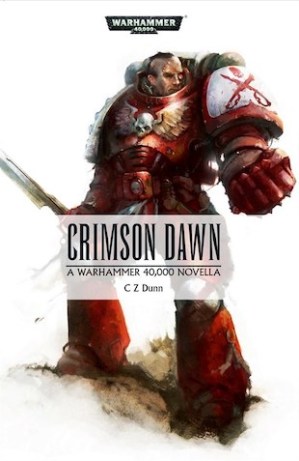
Short Story Review: “Crimson Dawn” by C.Z. Dunn (Black Library)

DunnCZ-WH40k-CrimsonDawnAn interesting eNovella, chronicling the beginnings of the Crimson Slaughter
In the entire galaxy there is nothing more cursed than a traitor.

Excommunicated, hated and hunted, the Crimson Slaughter turned from the Emperor’s Light and have since carved a bloody trail through the Imperium. But before they betrayed their oaths and turned to the worship of the Dark Gods, they were the Crimson Sabres, stalwart and loyal. This is the story of their fall, as Scout Captain Anzo Riegler, a lone voice of reason amidst Chaos, becomes an unwitting pawn in his Chapter’s demise.

I’m a fan of Dunn’s fiction. His short stories – particularly those focused on the Flesh Tearers chapter – have been great, visceral science fiction stories. Crimson Dawn is another good story, but it doesn’t have quite the punch of some of his previous work. Partly, this is due to the different type of story he’s trying to tell – the main character is a scout captain, so it’s unlikely that his tale will be one of out-and-out “bolter-porn”. Instead, this is a somewhat slower-paced story of the insidious nature of Chaos and the subtle corrupting force it can exert even on those who believe themselves to be pure of heart and mission. I think the story could have benefited from being a bit longer – this would have allowed for a slower reveal and a greater tension. It might also have allowed for more exploration of the Crimson Sabres, too. As an excommunicated chapter, and one that considers itself still loyal to the Golden Throne, it would have been nice to see a bit more exploration of what this meant. True, this is a novella, so there’s only so much soul-searching it can offer before it buries the story. There are hints at the end that this could be the first in a number of short stories detailing the Sabers’ fall. I would certainly welcome more.

There are some interesting elements to the story, but ultimately it didn’t impress as much as Dunn’s work has in the past. In much the same way as his Dark Vengeance novella didn’t really fire my imagination. This is better than that story, though, and I would still recommend it to fans of Warhammer 40,000. I just think he’s done better.

Mini-Review: “The Seventh Miss Hatfield” by Anna Caltabiano (Gollancz)

Caltabiano-SeventhMissHatfieldUKA Most Anticipated of 2014, sadly fails to live up to expectations…

Rebecca, a 15-year-old American, isn’t entirely happy with her life, comfortable though it is. Still, even she knows that she shouldn’t talk to strangers. So when her mysterious neighbour Miss Hatfield asked her in for a chat and a drink, Rebecca wasn’t entirely sure why she said yes. It was a decision that was to change everything.

For Miss Hatfield is immortal. And now, thanks to a drop of water from the Fountain of Youth, Rebecca is as well. But this gift might be more of a curse, and it comes with a price. Rebecca is beginning to lose her personality, to take on the aspects of her neighbour. She is becoming the next Miss Hatfield.

But before the process goes too far, Rebecca must travel back in time to turn-of-the-century New York and steal a painting, a picture which might provide a clue to the whereabouts of the source of immortality. A clue which must remain hidden from the world. In order to retrieve the painting, Rebecca must infiltrate a wealthy household, learn more about the head of the family, and find an opportunity to escape. Before her journey is through, she will also have – rather reluctantly – fallen in love. But how can she stay with the boy she cares for, when she must return to her own time before her time-travelling has a fatal effect on her body? And would she rather stay and die in love, or leave and live alone?

And who is the mysterious stranger who shadows her from place to place? A hunter for the secret of immortality – or someone who has already found it?

There is nothing more disappointing than high expectations that are so utterly dashed. There is much to recommend in the synopsis for this novel: immortality, time travel, a bit of romance, and what does appear like a pretty interesting and original premise. Sadly, however, it just failed to engage me at all. I really struggled to get through this.

I’ve been struggling with how best to write the review. I don’t want to just lay into it, as that is completely unconstructive. Too long a review will look like hedging or dissembling. Too short a review will look too dismissive. So, here are three(-ish) paragraphs of my thoughts…

There really wasn’t much in The Seventh Miss Hatfield that I particularly liked. The writing is mostly fine, but rather lacking in flair, and few phrases stood out as noteworthy – and those that did in the moment faded almost immediately. The characters, which should have been pretty interesting and complex, were simplistic and shallow. I did not buy first that the protagonist was from the 1950s, and then none of them felt like they were of the early 1900s (and Caltabiano’s momentary joke of having Rebecca go too far with her vocal affectation was of extremely fleeting amusement). The emotional reactions of the characters are bland or cliché. A lot of the novel seemed to draw heavily on a number of influences, and therefore felt like an amorphous chunk of déjà vu.

The way in which Rebecca is turned immortal by the sixth Miss Hatfield is clunky and all-too-easily accepted by the character. The main thrust of the plot is buried in a rather dull, all-too-familiar unrequited (for no reason that I could tell) romance. Henley’s acceptance of Rebecca’s appearance in his home, claiming to be his cousin, was stunningly easy and implausible. He sees through her ruse immediately, and yet still welcomes her with open arms and no questions asked. The real identity of one off-screen character was transparent from the start – the eventual reveal at the end left me muttering, “Do catch up, won’t you?” (Sorry to be so vague, there.)

I did like this bit, though, as I think it was the only bit in the book that came close to resonating:

“I used to love stories of adventure and books about regular people like me waking up one day and deciding to seek treasure, find their fortune.” Henley’s eyes crinkled in a smile. “I suppose I was like every boy in that way. I wanted adventure.”

“What happened?” I asked.

Henley looked confused.

“You said you used to love stories of adventure. What happened?”

“I grew up.” Henley’s words were hard, but he still had a smile on his face. “I put away the copy of Treasure Island I’d kept on my dresser for years. I knew I had to put my childhood away and become an adult.”

I’m sure there are plenty of people who believe the same. People reading this blog, though, are probably not among them. Holding on to a taste in adventure or fantasy fiction (and TV, movies, comics) is a healthy thing, I believe.

At first glance, this novel held a lot of promise. And yet, reading it, one gets the sense that it is unfinished. Despite its slim length, it wasn’t particularly focused. It was predictable, and lacked any particular depth. Maybe it could have been 50-100 pages longer, with more attention paid to making the characters more three-dimensional?

I don’t think I could recommend The Seventh Miss Hatfield without also heaping on plenty of caveats. The time-travel and immortality aspects of the story held huge potential – for excitement, adventure, and surprises. Sadly, none of this potential was realised.

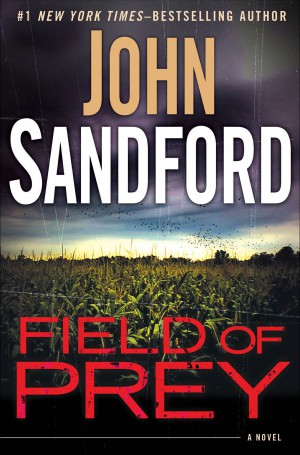
Review: FIELD OF PREY by John Sandford (Putnam/Simon & Schuster)

Sandford-24-FieldOfPreyUS24 books in, series still firing on all cylinders…

The night after the fourth of July, Layton Carlson Jr., of Red Wing, Minnesota, finally got lucky. And unlucky.

He’d picked the perfect spot to lose his virginity to his girlfriend, an abandoned farmyard in the middle of cornfields: nice, private, and quiet. The only problem was… something smelled bad – like, really bad. He mentioned it to a county deputy he knew, and when the cop took a look, he found a body stuffed down a cistern. And then another, and another.

By the time Lucas Davenport was called in, the police were up to fifteen bodies and counting. And as if that wasn’t bad enough, when Lucas began to investigate, he made some disturbing discoveries of his own. The victims had been killed over a great many years, one every summer, regular as clockwork. How could this have happened without anybody noticing?

Because one thing was for sure: the killer had to live close by. He was probably even someone they saw every day…

It really is quite impressive, the fact that this is the 24th book featuring Lucas Davenport (also known as the Prey Series) and it is so very good. Add to that the fact that Sandford is also writing the Virgil Flowers spin-off series as well (each gets a new book each year, for the past seven or eight years), and you start to realise just how talented and disciplined Sandford is as an author. I have read all of the Prey novels, and each one has been at the very least great and gripping. Field of Prey is no exception, but this time you can also add harrowing and intense. A great addition to the series. Continue reading →