 Something a little different for the blog today. Instead of an interview, here area a couple of video clips in which author Leigh Evans discusses her new novel, The Trouble With Fate. Here’s the synopsis for the first novel in Evans’ Mystwalker series:
WHAT SHE DOESN’T KNOW MIGHT KILL HER
Hedi looks normal. Yet that’s taken effort. Her fellow Starbucks baristas don’t see her pointed ears, fae amulet or her dark past, and normal is hard for a half-fae, half-werewolf on the run. Hedi’s life changed ten years ago, when her parents were murdered by unknown assassins. She’s been in hiding with her loopy aunt Lou since, as whatever they wanted she’s determined they won’t get it. Things change when wolves capture Lou, forcing Hedi to steal to free her – for if she can offer up a fae amulet like her own they may trade. But it belongs to a rogue werewolf named Robson Trowbridge, who betrayed Hedi on the night of her greatest need. Over forty-eight hours, Hedi will face the weres of Creemore, discover the extent of her fae powers and possibly break her own heart in the process.
First up, a clip of Leigh Evans discussing the characters in her novel:
And secondly, a clip in which Leigh discusses the setting of her novel:
But wait, there’s more!
To celebrate the release of The Trouble With Fate, Macmillan have offered a couple of copies of the book for a giveaway.
Just leave your entry in the comments thread, or email me at the usual email address.
Interview with CHANDLER KLANG SMITH

Continuing my slow meander through Canadian publisher ChiZine’s stable of interesting and quirky authors, I bring you today a Q&A with Chandler Klang Smith, author of Goldenland Past Dark…
Let’s start with an introduction: Who is Chandler Klang Smith?
I’m a novelist, an insatiable reader, an incurable daydreamer, a Midwestern transplant to New York City, and a graduate of Bennington College and the MFA Creative Writing program at Columbia University. I like carnivals, lost toys, forgotten Americana, and fairy tales with unhappy endings.
I thought we’d start with your fiction: Your latest novel, Goldenland Past Dark, was recently published by ChiZine. How would you introduce the novel to a potential reader?
Goldenland Past Dark tells the story of Webern Bell, a stunted hunchback, and his love affair with the circus, a show that gives him an outlet for creative expression. His bizarre childhood and struggles in young adulthood have given him tons of emotional material from the past, which he explores through haunting clown acts that come to him in dreams. But when reality confronts him – in the form of murder, heartbreak, and professional betrayal – he retreats so deeply into his fantasy world that he may never be able to find his way back out.

What inspired you to write the novel? And where do you draw your inspiration from in general?
My process with this book was unusual: I started out writing a collection of linked short stories about Webern’s childhood. But by the time I got to his adolescence, I realized that the real action began with his travels performing on the road; everything that preceded it had just been backstory. In general, my inspiration for a particular project comes from an image or set of images that I return to obsessively until I figure out what they mean. I do a lot of freewriting to try to access where in my subconscious that fascination is coming from.
How were you introduced to genre fiction? What’s your opinion of the genre today, and where do you see your work fitting into it?
I’m extremely resistant to characterizing fiction as “genre” or “literary.” Every subject or way of writing comes with certain expectations attached, and the job of the writer is to defy and exceed those expectations constantly. At least that’s what I try to do. At the AWP Conference this year, I saw author Benjamin Percy on a panel about literary writers tackling “popular” forms, and he addressed this issue better than I ever could. He said that writers try to set up all these little fences between categories, but for him the only fence is twenty feet high, electrified and topped with razor wire, between good writing and bad. I couldn’t agree more.
How do you enjoy being a writer and working within the publishing industry?
It’s challenging working in publishing when you’re a writer yourself, because you’re constantly confronted with the sobering realities of the marketplace. So much of the industry is about rejection: agents reject potential clients, editors reject agent’s submissions, customers and critics reject published novels. It has been helpful, though, because I’m now aware of just how important it is to grab and hold a reader’s attention from page one on.

When did you realize you wanted to be an author, and what was your first foray into writing? Do you still look back on it fondly?
I think I first realized I wanted to be a writer in sixth grade; before that I’d wanted to be a Muppeteer. Anyway, around that time, I embarked on my first major project, a very pretentious road novel about three middle schoolers running away from home in a stolen car and having a lot of long philosophical conversations on the way. I’d probably cringe if I read it now, but I suppose it was a good sign that I was so ambitious, despite having no idea what I was doing. Some things never change, I guess…
What other projects are you working on, and what do you have currently in the pipeline?
Right now, I’m working on my second novel, about a futuristic parallel universe version of New York City that’s under attack by fire breathing dragons. You can read a short excerpt from it here.
That sounds awesome…
What are you reading at the moment (fiction, non-fiction)?
White Noise by Don DeLillo.
What’s something readers might be surprised to learn about you?
Despite my interest in stage magic and clowning, I’m just about the clumsiest person on earth. I can’t even juggle.
What are you most looking forward to in the next twelve months?
I’m hoping to finish that aforementioned second novel. Keep your fingers crossed for me, as I’m a pretty slow writer!
An Interview with MARIE BRENNAN
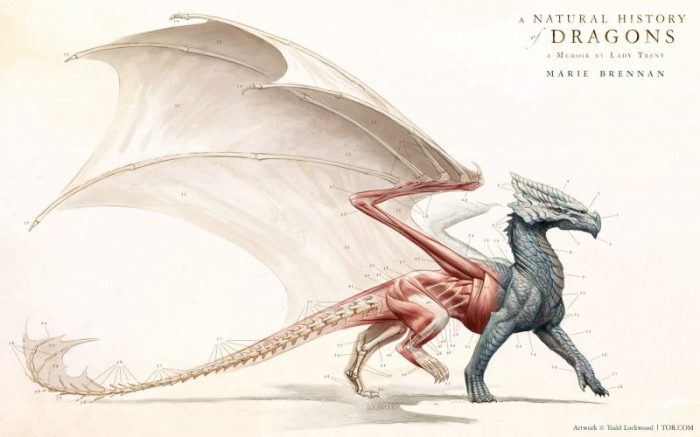
A Natural History of Dragons is a book I must read. And soon. It has been on my radar for quite a while. While I was dithering, I contacted Marie about an interview, and in the process learned about another recent novel. So, here are her thoughts on writing, psychic schools, and genre. Continue reading
An Interview with KAREN HEULER

Last week I posted an excerpt from Karen Heuler’s much-talked-about and anticipated The Inner City anthology. Naturally, I thought it would be a perfect opportunity to interview Karen as well, and ask her about the book, inspirations and also an old job with strange, alphabetical hiring practices…
Let’s start with an introduction: Who is Karen Heuler?
I’ve published over 60 stories in literary and speculative journals and anthologies. My first four books were published with university presses.
Your latest story collection, The Inner City, was recently published by ChiZine. Have you always written darker fiction?
I’ve been writing odd fiction for dozens of years. My first collection was published in 1995, and the New York Times review called it “haunting and quirky.” I thought then that I was firmly in the literary world and occasionally writing magic realism. I managed to get a lot of stories published in literary journals and won an award and was short-listed for others. But some of my favorite stories never found a home. I used to read science fiction and fantasy when I was in my twenties, but for some reason moved into mysteries after that (still mainlining literary fiction, though).
Sometime in the late ’90s or early aughts, I started looking more closely at people like Kelly Link and a lot of writers who were crossing back and forth between literary and genre – Lethem, Saunders, Bender, et al. I returned to speculative fiction in terms of trying to catch up on what I’d missed, and also because it became a world where the stories I loved the most might find a home. I was completely surprised when it turned out that I was writing dark fiction of any kind. And horror. Not me! I frighten easily. I creep out easily. But I do, indeed, write dark. I write dark and I scare easily. Luckily, ChiZine created a glow-in-the-dark fish for me so I would feel safer (note: see cover).

What inspired you to write the stories? And where do you draw your inspiration from in general?
What I think about most is how odd it is that we rarely experience “normal.” We have a standard in our heads of what our lives will be – or at the very least, should be – and it’s true, some people do have a great childhood, school popularity, a loving marriage, brilliant children, and a successful career. But it’s more common to experience failed love, menacing diseases, lack of recognition, and failed expectations. We live in a world shocked by earthquakes, falling meteors, cancer, flesh-eating diseases and a host of unexpected and unpredictable whims of fate. I work with this jarring alternate reality and to a certain extent, find an explanation for it. Secret city governments playing with you; scientists experimenting around you; people grabbing your hair and then your job – when you reveal the engine behind life’s arbitrariness, it all makes sense. And I, for one, want it to make sense.
How do you enjoy being a writer and working within the publishing industry? Do you have any specific working, writing, researching practices?
 Some of my earliest jobs were as an editorial assistant – the first was at Dell Crosswords, where the person in charge had a policy of only hiring women whose names began with C or K.
I later worked as an editor at a very small art publisher whose paychecks bounced. Whenever we got paid, we all raced to the bank to try to get there before the account was emptied out.
This has of course spilled over to my own habits. I try to send my stories out as soon as I can, so they can get to magazine editors before other stories do. I tell my students, however, to revise up to 10 times before sending out their stories. And never to send to magazines with editors whose names begin with C or K.
Aside from that, I pretty much write when I can, when I have something to write. I am not much good at writing to schedule; I usually end up just throwing things out when I try to force writing. And I believe very firmly that a lot of the preparation for writing is already happening in the back of the brain as long as you keep it stimulated with books, movies, and people. It’s all process.
When did you realize you wanted to be an author, and what was your first foray into writing? Do you still look back on it fondly?
I wrote a “book” when I was 11. I lost it a long time ago, gratefully. I then wrote poetry and what would now be called flash fiction when I was in my teens. Then a few stories and my first novel in my twenties. That and the next two novels were more exercises than successes. I think your early work is basically testing out your talent, trying to locate the area(s) where your writing works best.
What are you reading at the moment (fiction, non-fiction)?
 I’m re-reading Three Weeks in December by Audrey Schulman, reading James Tiptree’s stories, and trying to read a lot of stories in online magazines like Clarkesworld, Strange Horizons, and Daily Science Fiction. And I’m going through a huge backlog of New Yorker issues.
What’s something readers might be surprised to learn about you?
A native guide abruptly caught and then handed me a caiman while we were in a boat on the Amazon river. I handed it right back.
What are you most looking forward to in the next twelve months?
I’d love to finish a linked-story collection that’s been almost finished for the past six or seven years. I’ve got stories I’ve started that need to get finished. I have a novel coming out next January from Permuted Press [Glorious Plague]. But in the meantime, I’m enjoying life with The Inner City and ChiZine. Very much.
A Quick Chat with LIESEL SCHWARZ

I went to an author event the other week at Forbidden Planet in London (great store, FYI), for E.J. Swift and Liesel Schwarz (both debut authors published by the new-ish Del Rey UK). I knew of Emma, having interviewed her last year (check out her book, Osiris), but I had sadly not yet heard of Liesel’s novels. Schwarz’s debut, A Conspiracy of Alchemists,is out now in the UK, and I thought it would be a perfect time to find out more about the author’s work and thoughts on the genre.
Let’s start with an introduction: Who is Liesel Schwarz?
Who? Never heard of her! (only joking)
Your latest novel, A Conspiracy of Alchemists, was recently published by Del Rey in the UK. How would you introduce the novel to a potential reader? Is it part of a series?
A Conspiracy of Alchemists is the first book in a series of Steampunk novels featuring the intrepid Miss Eleanor Chance, dirigible pilot. It is an adventure novel in the spirit of writers like Jules Verne and H. Rider Haggard.

UK & Commonwealth | US
What inspired you to write the novel? And where do you draw your inspiration from in general?
The characters came to me one day while I was travelling home on the London Underground passing through Baker Street Station, which is the birth place of steam. I just had to write what they were saying down and the story grew from there.
I draw my inspiration from everything around me. I am a life-long fan of Nineteenth Century Gothic Literature and so I feel comfortable writing in that time and style.
How were you introduced to genre fiction?
I have always been a fan. I have been reading all kinds of genre fiction since I was a child, so it’s been part of my life forever.
 How do you enjoy being a writer and working within the publishing industry? Do you have any specific working, writing, researching practices?
Being an author is the best job in the world. Every day is a blessing. But writing is also very hard and there are so many things that count against writers, so it is often the best and worst of times.
I am fortunate in that I am able to write almost anywhere: On trains, busses, while waiting in line… it comes from juggling a day-job while following the dream.
When did you realize you wanted to be an author, and what was your first foray into writing? Do you still look back on it fondly?
I have always made up stories, so the tradition of story telling has always been a part of me. My first short story was published in a school yearbook when I was seventeen, but I only started writing seriously after I left university.
I can’t look back at some of my first attempts at writing. Most of it is too awful for words. But then every author has a secret manuscript lurking somewhere in a drawer or a hard drive somewhere which should never be allowed to see the light of day!
What’s your opinion of the genre today, and where do you see your work fitting into it?
I think that genre writing is a bit of a misnomer. “Genre” is really just the label booksellers put onto books so they can stack them on the shelves. There is no reason why “genre” or commercial writing cannot be to a literary standard. At the same time, I’ve read some “literary” fiction which wasn’t that good. In my view, it’s all the same thing.
But specifically, I think genre writing is going from strength to strength. In Romance, genre has outsold traditional works by levels that are exponential. And the same thing is happening with Fantasy and to a lesser degree Science Fiction. I think it’s a hugely exciting time to be a writer.
 What other projects are you working on, and what do you have currently in the pipeline?
I am currently busy writing the third book in the Chronicles of Light and Shadow. The second – A Clockwork Heart – which is the sequel to A Conspiracy of Alchemists will be out in June 2013. There are also a few other projects under negotiation, but I can’t say more than that at the moment. It’s all extremely exciting, though.
What are you reading at the moment (fiction, non-fiction)?
I’m terrible, because I often read as a writer, which means I am sometimes reading up to five books at a time.
 I have however recently just finished the excellent The Bowery Girl by Kim R. Taylor which was really good. In terms of non-fiction, I am currently reading a lot about traditional magic in early cultures, which is fascinating stuff.
What’s something readers might be surprised to learn about you?
I am a qualified lawyer and I once had dinner next to Nelson Mandela.
What are you most looking forward to in the next twelve months?
I am going to be at San Diego Comic Con in July this year. Appearing there as an author is something that is beyond exciting. Well, at least to someone as geeky as I am!
 Civilian Reader