Quick Q&A with SUSAN CHOI

Choi-Header

I’ve been trying to expand the coverage of the blog, into other genres and sub-genres of fiction. To this end, today I bring you a Q&A with author Susan Choi, author of My Education, organised by Penguin USA…

Your previous novels deal with high stakes: the Unabomber, kidnapping, wars overseas, terrorism. Did you find writing My Education, a story that deals with more typical problems of passion, ambition, and love, to be a different experience?

I did, in a good way. For all three of my previous books I did tons of research into Twentieth Century history, and politics, and ideology, and loved immersing myself in abstruse and challenging material, and then after finishing A Person of Interest, I had another baby (my second) and the very thought of research just made me pass out. I realized I wanted to write a book about people being young and falling in love and behaving stupidly, and that I probably didn’t need to do research for that. Now my kids are older and I’m getting sleep again at night and I’m back to doing abstruse research!  But this book was a great change for me.

What was your inspiration for this novel?

Hollinghurst-LineOfBeautyApart from wanting to avoid research, I was actually inspired in a very specific way by a book that I love, Allan Hollinghurst’s novel The Line of Beauty.  I haven’t been more enthralled, and admiring, of a novel in I don’t know how long.  And something about the way that book opens, with Nick in a bookstore thinking about a much older, more powerful man that he knows, and being so full of youthful moxie and naïveté, brought an opening scene, fully realized, into my mind.  That’s happened to me a couple of times, and it’s thrilling:  you know there’s a novel, and that you’ve found the entrance, but you have no idea what it contains.

You currently teach at Princeton University and both My Education and your last novel, A Person of Interest, feature professors as their protagonists, so it’s safe to assume you are well-versed in the culture of academia. How does your experience in the world of academia play out in your fiction?

I think I’m less well-versed in the culture of academia than poorly-versed in anything else. Esoteric worlds are hard to resist in fiction, and academia can be pretty esoteric. If I had more experience with the esoteric world of the CIA operative, or the mafia don, I’d definitely write about that. But, I am a professor’s daughter, and I guess that’s bequeathed a certain compulsion on my part to keep poking around in that region.

Motherhood impacts the relationship between Regina and Martha over the entire course of the novel; in the end, it seems to be one of the primary means through which they absolve the past. How have your own children affected your writing and your perception of the world?

SusanChoiOnly totally. Parenthood has completely rewired me. Things that used to enthrall me now bore me, and things I never used to notice now obsess me, and that’s just one aspect of it. I think a lot, now, about children’s lives. Much of what happens to Regina in this book, to my mind, is that she realizes that children are people.

Being a love story, what kind of tropes of romance were you wary of? What did you hope to bring to the table with this novel?

I always saw this first as a story about being young. It is a love story, but the love story is a vehicle for exploring the youthful innocence, and selfishness, and unsustainable craziness of being a young person in love, and of being a young person in general. I think this novel is my way of coming to terms with my not being particularly young anymore.

For Regina, any contemplation of sexual identity seems to be on the backburner. Did you have any intentional reason for refraining from that sort of discussion?

Identity politics are very popular with Regina’s classmates, but they’re just not a part of her being. I’d be dragging the story into didactic territory, and maybe turning it into one of the dreary, insincere term papers Regina writes, if I had her sitting around contemplating her sexual identity, when everything about this situation is equally unfamiliar to her: Martha isn’t just a woman, she’s married, she’s a mother, she’s much older and more accomplished than Regina. For Regina the entire relationship is singular and unprecedented.  She doesn’t think, “Oh, I’m a lesbian,”  any more than she thinks, “Oh, I’m a home wrecker.”  She’s just insanely in love – a condition that makes it hard for her to do much clear thinking at all.

What are a few of your favorite love triangles (or rather quadrangles, to be most accurate to My Education) in literature, TV, or film?

I think we’re talking about a love square consisting of two equilateral triangles sharing one side. I actually had to draw a picture just now, to figure this out. I can’t think of other examples of this particular geometry although I’m sure there must be some. I do love the triangle, as who doesn’t. Two of my favorite books of all time, The Great Gatsby and The Age of Innocence, feature famous triangles. I also love the sad and quiet triangle at the center of J.L. Carr’s magnificent short novel, A Month in the Country. The ménage, a different arrangement altogether, can be very endearing. I loved April Ludgate and her gay boyfriend and his gay boyfriend, on Parks and Recreation. I was sad when she dumped them, but they certainly deserved it.

Choi-Reading

What do you think of Chaucer and the body of literature Nicholas teaches? Was this of particular interest to you when you were a student, or did you do the research for the sake of this novel?

As of this writing, I know less about Chaucer than Regina did when Nicholas hired her as his teaching assistant. I just wanted a subject matter that felt as far as possible from the groovy poststructuralist stuff that Regina was studying.

Do you have anything else in the works or projects on the horizon?

I am back in the throes of a research obsession, but I don’t know where it will lead me, if anywhere. Once I spent a year researching pirates, and then I wrote American Woman, which takes place completely on land. So I will have to wait and see.

*

My Education is published by Penguin US on July 3rd 2013, and Short Books in the UK on July 4th.

ChoiS-MyEducation

Interview with BRIAN McCLELLAN

Brian McClellan’s debut fantasy, Promise of Blood, has caused quite a splash in the SFF community. It blends fast-paced story-telling with a new and interesting world, and a plethora of interesting and engaging characters. Brian has already featured on Civilian Reader a few of times already. He has written two guest posts – on his favourite novel, and also Protagonist Ages in Epic Fantasy – and I have reviewed the novel already, too. He was kind enough to take some time to answer my questions about his fiction, writing practices, and more… Continue reading
Interview with BENJAMIN PERCY

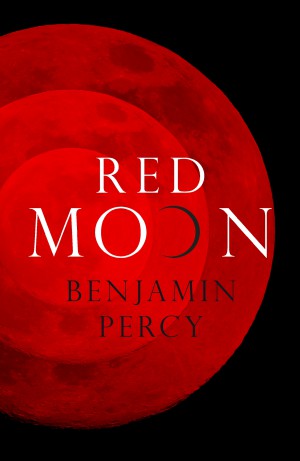
PercyB-RedMoonUKBenjamin Percy is the author of the excellent Red Moon – which I consider one of the best novels of the year (and certainly within the top ten in the past few years). I thoroughly enjoyed what he did with the werewolf mythology, and also how he wove into his narrative many of today’s social issues and prejudices. I had the pleasure of very briefly meeting him at the Arthur C. Clarke Awards (he sat behind me). Last week, he was kind enough to take a few minutes to answer some questions for Civilian Reader…

Who is Benjamin Percy?

An author with sideburns sharp enough to cut and a voice deep enough to crumble the foundations of buildings and set hair aflame. He has summited mountains, performed brain surgery, and juggled flaming chainsaws — all at the same time! Continue reading

Interview with WESLEY CHU

ChuW-Tao1-LivesOfTao

Wesley Chu’s debut, recently published by Angry Robot Books, has been taking critics by storm. It was, I thought, a great time to pester him for an interview. Luckily, it didn’t take too much convincing and I grilled him about his novels, writing, and more…

Let’s start with an introduction: Who is Wesley Chu?

Wesley Chu is a scotch drinking actor and former stuntman, specializing in niche token Asian roles where companies want to prove to consumers that they love diversity. You can also find Wesley playing roles such as security guard #4, gangster #9, businessman sitting on a designer couch, or human prop in background.

Oh, and Wesley wrote a book. His debut, The Lives of Tao is out now.

I thought we’d start with your fiction: Your latest novel, The Lives of Tao, was recently published by Angry Robot. How would you introduce the novel to a potential reader? Is it part of a series?

The Lives of Tao, the first in a planned trilogy, is a modern day science fiction about an alien, Tao, who inhabits an overweight loser and convinces him, kicking and screaming, to train and fight in a war over humanity’s evolution.

Along the way, Roen Tan, the said tubby loser, has his work cut out for him. He needs to lose weight, develop a stiff jab, find love, and stay alive while being hunted by a very powerful shadow organization that is bent on killing Tao, which unfortunately, requires Roen to die as well.

ChuW-Tao1-LivesOfTao

What inspired you to write the novel? And where do you draw your inspiration from in general?

I’m a sucker for the overachieving loser plot, except my losers don’t have fate or prophecy backing them up. I like real losers that weren’t tabbed thousands of years ago by some legend to be the special ray of sunshine the world has been waiting for.

I often use Rand and Harry as examples, but this time, I’m going to add a few more to the list. Little precious snowflakes like Luke, Frodo, Ender, and even Kirk aren’t my kind of heroes. If I had to choose a character that reminds me of Roen, I would say… Chunk from The Goonies.

I draw a lot of my inspiration from many aspects of my life. I’d like to think a person can get a good sense of who I am and what I’ve been through from reading the book. And in case you’re wondering, the answer is yes.

The Lives of Tao is not so much a science fiction novel but a manifesto on the eventual alien takeover of humanity. There are aliens afoot and if we don’t do something about it fast, we’re all in deep shit!

How were you introduced to genre fiction?

My English professor father brought me to a bookstore when I was kid. He took me to the literary section and said he’d buy any book I wanted. I’m sure he secretly hoped I’d pick up Machiavelli, Macbeth, Portnoy’s Complaint, or something equally literary.

I made a beeline toward the section of the bookstore with the pretty pictures and picked out The Misenchanted Sword by Lawrence Watt-Evans and A Spell for Chameleon by Piers Anthony. English Professor dad was very disapproving, but after a lot of crying and pouting (and book throwing I’m ashamed to add), I got my way. That’s basically when my love affair with SFF began.

Wesley-ChuHow do you enjoy being a writer and working within the publishing industry? Do you have any specific working, writing, researching practices?

Joining the writing community has been the most fulfilling experience of my life. For the first time in my professional career, I love my job. I mean, let’s face it. No little kid grows up thinking “I’m gonna work in corporate America and sit in a cubicle with red rugged walls all day staring at a computer screen. Yeah!”

As for writing practices, I used to be one of those trendy authors who went to cafés as if I was J.D. Salinger, trying to look cool and practice my “art”. These days, I sit at home in my bathrobe with a gallon of French pressed coffee and write. Once in a while, Eva Da Terrordale will drag my pasty ass out for a walk. It’s the only time my vampire white skin sees the sun.

When did you realize you wanted to be an author, and what was your first foray into writing? Do you still look back on it fondly?

I realized I wanted to be an author at a pretty young age. I remember reading The 101 Dalmatians once a day every day for a summer. You know, that’s a super hero level of OCD to be able to read the same damn book every day for three months. That was when I first fell in love with reading and became the super geek I am today.

The first short story I wrote was about the planets in the solar system running into each other, thus creating all the pock marks on their surfaces. The planets kept getting into fights until finally, King Sun got pissed off and enforced gravity on all of them. English Professor Father read it and said that the story “didn’t suck.” When an Asian parent says that you don’t suck at something, that usually means you’re actually might be pretty good. Thus, a writing career was born.

What’s your opinion of the genre today, and where do you see your work fitting into it?

Wow, that’s such an open ended question. It’s a great time to be a reader. There’s a lot of talent in speculative fiction right now and everyone has their own little style and niche. I do think there’s a tendency to chase trends, but the trends tend to be cyclical. Funny, I keep saying that but like the vampire and zombie thing won’t go away.

On the other hand, it’s tough to be a full time writer. It was never easy to begin with but it’s much harder now than say, back in the seventies. I think it’s a little sad that there are so many talented authors that can’t make a living on writing alone.

What other projects are you working on, and what do you have currently in the pipeline?

Well, The Deaths of Tao is dropping Oct 29th during World Fantasy in Brighton so I’m hoping for a little party on my first trip across the pond. If you’re within two hundred kilometer of Brighton, please come party with me. As for the third book, it’s up to the robot overlords and the fans.

On top of the Tao books, I have a series in the works that I’m very excited about. I’m keeping it under wraps for now but the idea came to me in a dream. I woke up and was like “WTF! I need to write this down immediately.”

What are you reading at the moment (fiction, non-fiction)?

I used to be a single threaded reader, as in I would read a book from beginning to end before I started another. No exceptions. Now, as an author, I no longer have that luxury to read to the very end if the book doesn’t grab me right away. I’ve started abandoning books at an alarming rate.

I just finished up a blurb request for an excellent book called Three by Jay Posey which should be out this fall. Next up will be either 2312, American Elsewhere, or um… The 7 Habits of Highly Effective People. I was recently informed at Wiscon that the world needs a better Wesley Chu.

Wesley-Chu-Reading

What’s something readers might be surprised to learn about you?

One of the scenes in the book is based on real events. I was the victim of an attempted mugging. Back then, I was young, overly confident, and a bit of an idiot. I was also a Kung Fu master (BTW, I use that master term very loosely). Or was it my Quasing who goaded me?

The mugger pulled a knife and wanted my stuff. The smart thing to do was to just give it to him and be on my way. But you know what? Kung Fu masters and vessels don’t give up their shit so easily, so I picked up these two wine bottles near the dumpster and tried to mug him. And yes, wine bottles are hard to break. The sad part of all this was that, in the moment, all that Kung Fu training went right out the window. I turned my inner caveman on and chased him for about ten or so yards before taking an adrenaline dump and nearly passing out.

What are you most looking forward to in the next twelve months?

This is my debut year so I told myself I’d debut right. That means I went ahead and had a big release party and planned to go to as many cons as possible. This year will be nine cons, including my first trip to the UK. I am pumped!

Not gonna lie; I love conventions. Chicon was my very first conn ever and I’m hooked. There’s no other place where a guy can hobnob with all these awesome and talented writers. Every time I’m at a con, it’s like I’m a hobbit back in the shire.

An Interview with DEBORAH HARKNESS

Harkness-ADiscoveryOfWitchesUKPB

Deborah Harkness’s A Discovery of Witches and it’s sequel, Shadow of Night, seem to have taken readers by storm (the former debuted on the New York Times Bestseller list at #2). The series features a mysterious, magical text, vampires and witches. It actually sounds pretty intriguing, and I should really get around to reading it at some point. (Emma already reviewed the first novel for CR, in February 2011.)

In celebration of the paperback release for the second novel (of three, in the All Souls trilogy), Harkness’s US publisher organised a Q&A. Below are some of her answers.

NB: I have tweaked the wording of the questions, but none of the author’s answers were changed, altered or truncated.

A DISCOVERY OF WITCHES, the first book in your series, begins with Diana Bishop stumbling across a lost, enchanted manuscript called “Ashmole 782”, in Oxford’s Bodleian Library. Your protagonists, Diana Bishop and Matthew Clairmont, are still trying to uncover its secrets in SHADOW OF NIGHT. You had a similar experience while you were completing your dissertation. What’s the story behind your real-life discovery, and how did it inspire the creation of these novels?

I did discover a manuscript – not an enchanted one, alas – in the Bodleian Library. It was a manuscript owned by Queen Elizabeth’s astrologer, the mathematician and alchemist John Dee. In the 1570s and 1580s he became interested in using a crystal ball to talk to angels. The angels gave him all kinds of instructions on how to manage his life at home, his work—they even told him to pack up his family and belongings and go to far-away Poland and Prague. In the conversations, Dee asked the angels about a mysterious book in his library called “the Book of Soyga” or “Aldaraia.” No one had ever been able to find it, even though many of Dee’s other books survive in libraries throughout the world. In the summer of 1994 I was spending time in Oxford between finishing my doctorate and starting my first job. It was a wonderfully creative time, since I had no deadlines to worry about and my dissertation on Dee’s angel conversations was complete. As with most discoveries, this discovery of a “lost” manuscript was entirely accidental. I was looking for something else in the Bodleian’s catalogue and in the upper corner of the page was a reference to a book called “Aldaraia.” I knew it couldn’t be Dee’s book, but I called it up anyway. And it turned out it WAS the book (or at least a copy of it). With the help of the Bodleian’s Keeper of Rare Books, I located another copy in the British Library.

Harkness-ADiscoveryOfWitchesPB

Are there other lost books like this in the world?

Absolutely! Entire books have been written about famous lost volumes – including works by Plato, Aristotle, and Shakespeare to name just a few. Libraries are full of such treasures, some of them unrecognized and others simply misfiled or mislabeled. And we find lost books outside of libraries, too. In January 2006, a completely unknown manuscript belonging to one of the 17th century’s most prominent scientists, Robert Hooke, was discovered when someone was having the contents of their house valued for auction. The manuscript included minutes of early Royal Society meetings that we presumed were lost forever.

SHADOW OF NIGHT opens on a scene in 1590s Elizabethan England featuring the famous School of Night, a group of historical figures believed to be friends, including Sir Walter Raleigh and playwright Christopher Marlowe. Why did you choose to feature these individuals, and can we expect Diana and Matthew to meet other famous figures from the past?

I wrote my master’s thesis on the imagery surrounding Elizabeth I during the last two decades of her reign. One of my main sources was the poem “The Shadow of Night” by George Chapman – a member of this circle of fascinating men – and that work is dedicated to a mysterious poet named Matthew Roydon about whom we know very little. When I was first thinking about how vampires moved in the world (and this was way back in the autumn of 2008 when I was just beginning A Discovery of Witches) I remembered Roydon and thought “that is the kind of identity a vampire would have, surrounded by interesting people but not the center of the action.” From that moment on I knew the second part of Diana and Matthew’s story would take place among the School of Night. And from a character standpoint, Walter Raleigh, Christopher Marlowe, George Chapman, and the other men associated with the group are irresistible. They were such significant, colorful presences in Elizabethan England.

Harkness-ShadowOfNight

In SHADOW OF NIGHT, we learn more about the alchemical bonds between Diana and Matthew. In your day job, you are a professor of history and science at the University of Southern California and have focused on alchemy in your research. What aspects of this intersection between science and magic do you hope readers will pick up on while reading SHADOW OF NIGHT?

Whereas A Discovery of Witches focused on the literature and symbolism of alchemy, in Shadow of Night I’m able to explore some of the hands-on aspects of this ancient tradition. There is still plenty of symbolism for Diana to think about, but in this volume we go from abstractions and ideals to real transformation and change – which was always my intention with the series. Just as we get to know more about how Elizabethan men and women undertook alchemical experiments, we also get to see Matthew and Diana’s relationship undergo the metamorphosis from new love to something more.

Did you have an idea or an outline for SHADOW OF NIGHT when you were writing A DISCOVERY OF WITCHES? Did the direction change once you sat down to write it?

I didn’t outline either book in the traditional sense. In both cases I knew what some of the high points were and how the plot moved towards the conclusion, but there were some significant changes during the revision process. This was especially true for Shadow Of Night, although most of those changes involved moving specific pieces of the plot forward or back to improve the momentum and flow.

The events in SHADOW OF NIGHT span the globe, with London, France, and Prague as some of the locales. Did you travel to these destinations for your research?

I did. My historical research has been based in London for some time now, so I’ve spent long stretches of time living in the City of London – the oldest part of the metropolis – but I had never been to the Auvergne or Prague. I visited both places while writing the book, and in both cases it was a bit like traveling in time to walk village lanes, old pilgrim roads, and twisting city streets while imagining Diana and Matthew at my side.

It’s perhaps lazy to refer to Twilight, given the inclusion of vampires in your novels. But, unlike Stephanie Meyer’s leading couple, Bella and Edward (who meet in the halls of a high school and, from my limited exposure to the movies, seem entirely controlled by their rampant hormones), your main characters Matthew and Diana are established academics who meet in the library of one of the most prestigious academic institutions in the world. Your vampires and witches drink wine together, practice yoga, and discuss philosophy. Did you conceive of these characters because of something you thought missing in the fantasy genre?

There are a lot of adults reading young adult books, and for good reason. Authors who specialize in the young adult market are writing original, compelling stories that can make even the most cynical grownups believe in magic. In writing A Discovery Of Witches, I wanted to give adult readers a world no less magical, no less surprising and delightful, but one that included grown-up concerns and activities. These are not your children’s vampires and witches.

HarknessD-AuthorPicA DISCOVERY OF WITCHES was a huge success, and has now been published in 37 countries. What’s your reaction to the novel’s success? Was it surprising how taken fans were with the novel?

It has been amazing – and a bit overwhelming. I was surprised by how quickly readers embraced two central characters who challenge our typical notion of what a heroine or hero should be. And I continue to be amazed whenever a new reader pops up, whether one in the US or somewhere like Finland or Japan – to tell me how much they enjoyed being caught up in Diana’s world.

Last summer, Warner Brothers acquired the movie rights to the All Souls trilogy (Pulitzer-Prize-winning writer David Auburn has been tapped to pen the screenplay). Are you looking forward to your novels being portrayed on the big screen? Any casting ideas, from family, friends or fans that have caught your fancy?

I was thrilled when Warner Brothers wanted to translate the All Souls trilogy from book to screen. At first I was reluctant about the whole idea of a movie, and it actually took me nearly two years to agree to let someone try. The team at Warner Brothers impressed me with their seriousness about the project and their commitment to the characters and story I was trying to tell. Their decision to go with David Auburn confirmed that my faith in them was not misplaced. As for the casting, I deliberately don’t say anything about that! I would hate for any actor or actress to be cast in one of these roles and feel that they didn’t have my total support. I will say, however, that many of my readers’ ideas involve actors who have already played a vampire and I would be very surprised if one of them were asked to be Matthew!

***

Fans of the novels can also join Deborah Harkness and her editor Carole DeSanti, the author of The Unruly Passions of Eugénie R, for a virtual book event on BookTalk Nation on June 4th at 2pm EST. You can join by phone and buy personalized copies of the book by ordering online here. For more about Harkness’s All Souls trilogy, be sure to check out her website.

A Discovery of Witches and Shadow of Night are published by Penguin in the US and Headline in the UK.

An Interview with BEN KANE

KaneB-Hannibal2-FieldsOfBlood

Despite my genuine love for historical fiction (I have read so many, but all before I started this blog, really), the genre hasn’t featured much on the site. Well, I’m hoping to address this in the coming months. First up, though, is this interview with Ben Kane, an author of awesome historical fiction.

Let’s start with an introduction: Who is Ben Kane?

A forty-something Irish ex-veterinary surgeon, who naively decided to write bestselling novels after backpacking for nearly three years through more than 60 countries. I’m an avid rugby fun, am too fond of beer, and I love books.

Let’s start with your latest novel, Hannibal: Fields of Blood, which is about to be published. How would you introduce the novel to a potential reader?

It’s set during the second war between Rome, and Carthage, when the great general Hannibal had invaded Italy. There are Roman and Carthaginian main characters, to show that neither side was ‘good’ or ‘bad’. This is not just a story of a war and battle – although there’s plenty of that in there! It’s about soldiers, comrades, families and how hard life was 2200 years ago, not just for men but for women.

KaneB-Hannibal2-FieldsOfBlood

What inspired you to write the novel and series?

I’m a lover of history, and always have been. Ancient history strikes a real chord with me, and there are few conflicts or leaders who appeal to me more than the Second Punic War, and Hannibal Barca. When the chance came for me to tell the story of this war, I jumped at it!

When did you realize you wanted to be an author, and what was your first foray into writing? Do you still look back on it fondly?

I fantasised about being a writer from about 1999/2000, but I didn’t start doing it regularly until 2003, when, as a vet, I had the weekend ‘on call’ from hell. At about one o’clock on a Saturday night/Sunday morning, I had been called out about six times in the previous five hours. That was after working a whole week, and all day Saturday. The pager went again, and I threw it against the wall and made a vow that I would not do this for the rest of my life. I started writing at once. No, I don’t look back on that moment fondly, but I’m glad it happened!

KaneB-Hannibal1-EnemyOfRome

What’s your opinion of the historical fiction genre today, and where do you see your work fitting into it?

I think that it has been going through a bit of a renaissance over the last ten years, which is terrific. For a period of perhaps twenty years before, it had been bit forgotten, a bit neglected. Now it seems that everyone loves it, from Hilary Mantel down. My work fits in somewhere close to Bernard Cornwell’s books ― at least that’s my aim! (Waits to be shot down in flames.)

What other projects are you working on, and what do you have currently in the pipeline?

I’m currently writing Clouds of War, the third book in the Hannibal series. Once I’m finished that, I’m moving 1500 years forward to the Hundred Years War. Crécy will be the first of at least three novels set during the bitter war between England and France that started in 1337 and lasted until 1453. Like all of my novels, I will have characters on both sides of the conflict, and at least one major female character.

What are you reading at the moment (fiction, non-fiction)?

I am midway through the third Tyrant novel by the amazing Christian Cameron. If you haven’t read any of his books, please start. He’s one of the best historical fiction writers out there. Any number of Roman texts are on my desk – one excellent one is The Navies of Rome by Pitassi.

BenKane-Reading

What’s something readers might be surprised to learn about you?

That, having walked on an unapproved crossing (minor road) into the Irish Republic, late at night, to do a calving, I was pursued upon my return to Northern Ireland by a car full of armed police, and soldiers.

What are you most looking forward to in the next twelve months?

Three things. Firstly, my annual one week holiday, without kids, with my wife. Also, finishing the current Hannibal novel and starting the new one on Crécy – a totally different time period.

Thanks so much for your time!

Thank you!

***

Hannibal: Fields of Blood is published in hardback and as an eBook on June 6th by Preface (UK). An eBook short story, Hannibal: Patrol, is available now. In addition, the latest in Kane’s other historical series, Spartacus: Rebellion, will be released in paperback tomorrow.

A quick Q&A with RICHARD FORD

Ford-HeraldOfTheStorm

A while back, I posted a quick “Upcoming” blog about Richard Ford’s new gritty fantasy, Herald of the Storm. It sounded pretty cool. So, naturally, I wanted to interview Richard. He was kind enough to say yes, and so, in advance of my review of the novel (coming soon), here are Richard’s answers…

Let’s start with an introduction: Who is Richard Ford?

Richard Ford is a thirty-something bloke from the gritty north who has, in recent years, become a bit of southern softie. He also writes stuff on occasion, in the hope that someone will read it, and possibly even like it.

He is definitely not the other Richard Ford, who writes literary fiction in the classic American tradition and wins Pulitzers.

I thought we’d start with your fiction: Your latest novel, Herald of the Storm, was recently published by Headline. How would you introduce the novel to a potential reader? Is it part of a series?

Herald of the Storm is the first book in the Steelhaven trilogy – an epic fantasy focusing on the lives of several disparate characters as they try and survive in the grim port of Steelhaven – a city on the brink of destruction. To put it more succinctly: it’s David Gemmel’s Legend meets HBO’s The Wire!

Ford-HeraldOfTheStorm-Equation

What inspired you to write the novel? And where do you draw your inspiration from in general?

Jealousy and envy are my main motivations. I’ve read quite a bit of epic fantasy and been blown away by it. Naturally I wanted to write my own, but make it grittier, bloodier and more potty-mouthed than anyone else’s. I think I’m pretty much there.

As for inspiration – I find I draw influences from everything and everywhere, be it other novels, films, comics, TV or even the news. Best place for gags or convincing dialogue is undoubtedly in the pub, and I’ll fight anyone who says different.

How were you introduced to genre fiction?

HillD-LastLegionaryQuartetMy earliest regular taste of genre fiction came from 2000 AD back in the early ’80s, closely followed by Douglas Hill’s Last Legionary novels. I was also massively influenced by the choose-your-own-adventure books of Joe Dever and Ian Livingstone and later Weiss and Hickman’s Dragonlance series.

How do you enjoy being a writer and working within the publishing industry? Do you have any specific working, writing, researching practices?

It’s what I’ve always wanted to do, so I shouldn’t complain really. I do complain though – long and loud. I wouldn’t recommend it to anyone who isn’t comfortable spending hours and hours in their own company with the constant shadow of self-doubt looming over them.

Being rather ill-disciplined and having the attention span of a Labrador puppy, I have to be quite methodical about the way I work. Everything is plotted out quite intricately and I have a daily word count target, which I almost always fail to hit.

When did you realize you wanted to be an author, and what was your first foray into writing? Do you still look back on it fondly?

I used to write and illustrate my own comics when I was a kid. It soon became clear I had all the illustration skills of a battered cod, so prose fiction was probably the way to go. It wasn’t until I got some decent feedback from a schoolteacher – Mr. Bontoft – when I was around 11 that I started to think seriously about doing it for a living (before that, I was on track to be an astronaut). Unfortunately, when I left Mr. Bontoft’s class all the positive acclaim ended, and I lost interest in it for quite a few years.

Everyone’s a critic, I suppose.

What’s your opinion of the genre today, and where do you see your work fitting into it?

I think the genre’s never been stronger, and choice for readers never more diverse. There’s been a bit of an online buzz that the grittier writers are steering fantasy away from its origins, but I just don’t buy that – read some R.E. Howard and tell me it’s not gritty. I think my work sits firmly on the back seat of the fantasy bus with all the other cool kids, but that’s not to say I don’t appreciate the nice kids at the front.

What other projects are you working on, and what do you have currently in the pipeline?

Work on book two in the Steelhaven trilogy continues apace. I’ve nicknamed it The-Book-That-Will-Not-Die, but I’ll slay it eventually, you just see if I don’t!

What are you reading at the moment (fiction, non-fiction)?

I’ve just finished The String Diaries by the brilliant Stephen Lloyd Jones (and I’m not just saying that because we share a publisher), and I’m about to start The Steel Remains by Richard K Morgan.

RichardFord-Reading

What’s something readers might be surprised to learn about you?

I once locked myself out of a hotel room stark naked, in true Frank Spencer style.

What are you most looking forward to in the next twelve months?

Hopefully I’ll have finished work on Steelhaven Three and the immense pressure and feelings of anxiety I currently experience on an hourly basis will have abated.

Oh, and the endless riches my writing will inevitably bring. I’m quite looking forward to that.

*

Herald of the Storm is out now, published by Headline.

Interview with CHRISTIAN SCHOON

Schoon-ZennScarlett

Debut author Christian Schoon was born in the American Midwest, and started his writing career in earnest as an in-house writer at the Walt Disney Company in Burbank, California. (Which is rather cool…) After moving from LA to a farmstead in Iowa several years ago, he continues to work as a freelance and also now helps re-hab wildlife and foster abused/neglected horses. An interesting fellow, I thought it would be a great idea to interview him. Apparently, along with writing, he was once shot by a hometown cop…

Let’s start with an introduction: Who is Christian Schoon?

Just another guy with a book… Grew up in the American Midwest, worked my way through college playing in rock bands, doing odd jobs; got a degree in Journalism, moved to LA, hired on as a copywriter at Disney, then freelanced, wrote some TV scripts for teen and kids’ sci-fi and fantasy shows; moved back to Midwest, bought an old farmstead, got involved with several animal welfare groups; wrote a sci fi series, found a great agent, he sold the series to a fabulous publisher. And voila.

ChristianSchoon

I thought we’d start with your fiction: Your debut novel, Zenn Scarlett, was recently published by Strange Chemistry. How would you introduce the novel to a potential reader? Is it part of a series?

The novel chronicles an eventful, well, very eventful, interlude in the life of a young girl in her novice year of training to be an exoveterinarian. Zenn is specializing the care and treatment of alien animals at the Ciscan Cloister Exovet Clinic and school on a colonized Mars that’s been cut-off from contact with Earth. Her alien patients are often huge, occasionally deadly and always fascinating. She’s love her courses, but she’s got a few problems. An absent father not communicating, a local towner boy showing an unusual and distracting interest in her just as end of term tests begin, a sudden surge of incidents at the cloister where animals escape their enclosures or exhibit uncharacteristically violent behavior and, oddest and most disturbing: she feels that she’s started… sharing the thoughts of some of her alien patients.

This is the first novel in a series. The sequel is well underway and will be published early next year.

Schoon-ZennScarlett

What inspired you to write the novel? And where do you draw your inspiration from in general?

The Zenn Scarlett series grew out of my earlier-mentioned work with several animal welfare groups and the awesome veterinarians I met; some of these vets have developed unique skill sets in dealing with large, exotic and sometimes dangerous animals. This, along with my deep geek-love for all things science fictional, made Zenn’s adventures a logical progression for me once I started looking for a fresh creative challenge.

Lampman-RustysSpaceShipHow were you introduced to genre fiction?

Well, there was Rusty’s Space Ship back in grade school, followed up quickly by the work of Golden Age sci-fi masters like Edgar Rice Burroughs, Asimov, Heinlein and that school of writers.

How do you enjoy being a writer and working within the publishing industry? Do you have any specific working, writing, researching practices?

So far (knock on synthwood) my experience with the world of books and publishing has been solidly fab. My agent is a genre-savvy guy who immediately “got” Zenn and saw the book’s potential. My editor at Strange Chemistry is equally well-versed and has provided valuable feedback and made sure Zenn Scarlett was ready for release into the wild. As for work habits, I try to get as much of my writing as possible done in the morning. Afternoons are then used for any research and for wasting large chunks of time surfing favorite author and book sites.

When did you realize you wanted to be an author, and what was your first foray into writing? Do you still look back on it fondly?

Writing appealed to me from a fairly early age since I could go off on my own and do the work, get feedback, do whatever polishing was needed and have the project completed. I’m not really a team-player sort. I like my space. My first challenging writing work was done as an in-house copy and scriptwriter in the home video division of the Walt Disney Company in Burbank, and yes I do look back on those years with great fondness. Even though this did demand that I buck up and “play for the team,” my colleagues there were a truly wonderful bunch of creative and warm individuals and they made my time at Disney a pleasure. But I never really encountered an office-type setting similar to this again, and quickly decided work-from-home freelancing was the thing for me.

Disney-Studio

What’s your opinion of the genre today, and where do you see your work fitting into it?

With all the publishing options available today there’s more great genre writing materializing before our eyes almost every day. The problem, of course, is winnowing through the surging tsunami of chaff to find the good stuff. And blogs like this one are often one of the most effective screening systems readers can turn to in order to track down their next read.

With any luck, my own writing will find its way to exactly this kind of platform and rise into the field of vision of those hungry-for-better readers and trigger some friendly word-of-mouth attention.

What other projects are you working on, and what do you have currently in the pipeline?

My main effort just now is the sequel to Zenn Scarlett. I’m also mulling a streampunkish sort of TV series that I will hopeful be able to turn my attention to once Zenn’s follow-on adventure is nailed down.

Fleming-BritainAfterRomeWhat are you reading at the moment (fiction, non-fiction)?

I’m reading several great new Strange Chemistry titles just now: a riveting sci-fi thriller, Playing Tyler by T.L. Costa and an eerie interpretation of a classic SF tale, Tainted by A.E. Rought. In non-fiction, I’m just about finished with Britain After Rome: The Fall and Rise 400–1070. This is a great glimpse into the real-world dystopia that was Britain in the wake of Rome’s collapse. It’s also very Game of Throne-ish, of course.

What’s something readers might be surprised to learn about you?

I was once shot at by the police in my tiny Minnesota home town. Details on request…

What are you most looking forward to in the next twelve months?

No surprise here: the publication of Zenn Scarlett: May 7 in the US/Canada, May 2 in the UK. After that, I’ll start looking forward to the release of the sequel. Yeah, predictable.

*

For more about Zenn Scarlett, it’s sequel and Christian himself, be sure to check out Goodreads, his Author Blog, his Twitter, and also his Strange Chemistry Author Page.

Interview with AL EWING

EwingA-TheFictionalMan

Al Ewing has been writing some interesting British SF and Comics for many years now. With the upcoming release of his latest novel, I thought it would be a good time to ask him about his work, practices and so forth.

Let’s start with an introduction: Who is Al Ewing?

Ewing-Zombo-CanIEatYouPleaseAl Ewing is a writer of comics and novels, predominately SF, and he feels odd talking about himself in the third person so he’ll stop… I’m likely best known for my 2000AD work – I’ve written a few well-received Judge Dredd strips, and I’m the co-creator of Zombo, a dark slapstick satire of whatever’s within reach that’s been running for a few years to critical acclaim. In terms of novels, I’ve up until now mostly done work for hire in other people’s fictional universes – not that I’m complaining; it was a lot of fun. Probably my best-known work in that direction is the El Sombra trilogy for the Pax Britannia line from Abaddon Books.

I thought we’d start with your fiction: Your latest novel, The Fictional Man, was recently published by Solaris. How would you introduce the novel to a potential reader? Is it part of a series?

It’s a stand-alone novel – you don’t have to worry about picking up any others, and I don’t think I’m going to be writing any sequels. I suppose I’d try and sell it to a new reader by saying it’s a conversation on the nature of reality and fiction that’s wrapped up in a bunch of funny business, heartfelt tragedy and, occasionally, hot kinky sex. Ordinarily I wouldn’t mention that last bit but judging by recent blockbuster runaway successes in the prose field there’s a huge audience for it.

EwingA-TheFictionalMan

What inspired you to write the novel? And where do you draw your inspiration from in general?

It spun out of a small-press comic strip I did years ago – literally over a decade ago – and I thought the concept of fictional characters being brought into the real world as Hollywood celebrities was interesting enough for a longer-form piece. It was just a matter of when I’d get the chance to do that. So when Solaris approached me and asked if I had any ideas, that was the first one I went to.

In general… I spend a lot of time on magical thinking, which isn’t much good when it comes to practical issues – in fact it’s actively harmful when you apply it to, say, the economy or whether the rights of your fellow humans should be dictated by imaginary beings – but it is good for writing. I suppose if I had to give advice to a new writer it would be to let your mind wander as much as possible. (Try and spend some time actually writing as well, mind. In fact, if you can do both at once you’ll know you’ve made it.)

How were you introduced to genre fiction?

Ewing-JudgeDreddWhen I was a small boy, my brother introduced me to a comic called 2000AD, which I might have mentioned earlier. It was obviously brilliant – this was during the hot streak of the mid-eighties – and I quickly graduated to the American comics, and I’ve been in love with the comics medium ever since. Much as I enjoy playing with the prose format, you can do a lot more with comics, I find.

How do you enjoy being a writer and working within the publishing industry? Do you have any specific working, writing, researching practices?

I like it! It’s nice work if you can get it. As for specific working practices… I always make sure to write lots of things at the plotting stage that won’t let me get bored at the actual writing stage. With The Fictional Man, I put in a lot of differing formats – nested texts within the central text – so I could change my style up a little. For example, there’s one chapter which breaks into screenplay format for a while, and then another that takes the form of a review similar to what you might find on the Onion AV Club. It’s little things like that that help keep everything fresh.

Ewing-AbbadonBooks

More of Al’s novels from Abaddon Books

When did you realize you wanted to be an author, and what was your first foray into writing? Do you still look back on it fondly?

I used to write a lot as a kid – little columns for school newsletters, short stories, short plays. I used to spend hours writing things just for my own pleasure, without any thought of getting paid or making a living. These days, everything has a deadline attached, and while everything I write is still first and foremost for myself – you can’t write otherwise – I don’t really dive into something purely for its own sake anymore. I’m always writing to a brief, even if that brief is “pitch us something, anything”. Maybe that’s why I end up putting all these formal diversions and side-roads into the professional work I do, to scratch that old itch.

Ewing-Dynamite

For Dynamite Comics, Al also wrote Ninjettes (#1-6) and Jennifer Blood (#7-24)

What’s your opinion of the genre today, and where do you see your work fitting into it?

I have no real opinion of the modern SF genre, to be honest. I don’t really read any – most of my book-reading time is spent either on non-fiction or crime fiction – the solid, tough noirs and procedurals of Richard Stark, Ed McBain and, most recently, Chester Himes. I read a lot of comics too – if you asked me where I fit into the comics world I’d probably say that I was trying to push the boundaries of what could be done, in terms of the form, where I could, and the rest of the time just trying to give the readers some value for money so they didn’t feel disappointed when they put the issue down. I have the same approach to my novel work, except I don’t really keep up on the SF ‘scene’, so I have no idea if I’m pushing against open doors. Buy the book and find out!

What are you reading at the moment (fiction, non-fiction)?

I’m in the middle of All Shot Up by Chester Himes, and then I’ve got The Deportees by Roddy Doyle waiting for me after that. Bossypants by Tina Fey is the current non-fiction book, though I just recently finished Marvel: The Untold Story by Sean Howe and I’d recommend that, with the caveat that it becomes a very different book in its final quarter.

Ewing-Reading

What’s something readers might be surprised to learn about you?

I’ve never taken LSD. Or anything psychoactive. Me and Magic Roundabout.

What are you most looking forward to in the next twelve months?

I just had a very tasty opportunity from a comics company who should probably remain nameless for now. And I’ll likely pitch something else for Solaris, though I tend to leave plenty of time between prose novels to let myself forget how hard they are to write.

Interview with DJANGO WEXLER

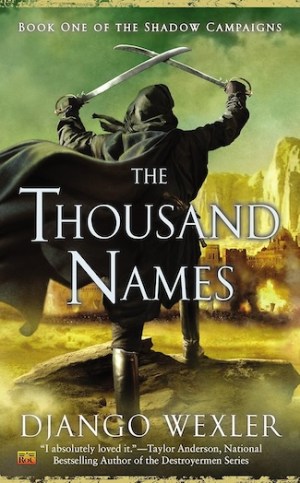
WexlerD-SC1-ThousandNamesUSI’ve been trying to remember how I first came across the name Django Wexler. It was probably via Twitter or a publisher’s catalogue. Since finding out about his next novel, The Thousand Names, I’ve had the chance to chat with Mr Wexler a good deal about fiction and more on the Twitters. With just a couple of months to go before the novel hits shelves (one of my most-anticipated novels of 2013), I thought it would be a perfect time to shoot him some questions. He agreed, so here are his responses…

Let’s start with an introduction: Who is Django Wexler?

That sounds kind of existential. Is the correct answer “I am!”?

Excellent, well done. You’ve passed the first test…

So: I’m Django Wexler, fantasy author. Until fairly recently I was Django Wexler, programmer/writer for Microsoft. I grew up in Westchester, NY and went to school at Carnegie Mellon, in Pittsburgh, where I managed to get degrees in Computer Science and Creative Writing. I moved out to Seattle about five years ago to be where the tech jobs are, which is starting to seem a little ironic now that I no longer work in tech. Continue reading