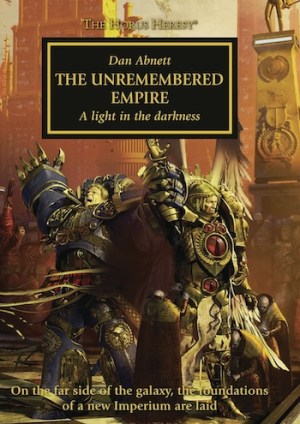
“Stormseer” by David Annandale (Black Library)

AnnandaleD-SMB-StormseerWhite Scars vs. Orks, with a dash of Eldar…

The green-skinned hordes of the Overfiend of the Octavius system have long been a thorn in the Imperium’s side – and now, with human worlds caught in the crossfire between the orks and eldar, that thorn will be removed. Temur Khan and his brotherhood descend upon Lepidus Prime to cleanse it of the green taint. The swift and brutal hammer to the Imperial Guard’s anvil, the White Scars strike hard and fast – but when the orks reveal a super-weapon, it may take more than just power to win the day?

I’m a big fan of Annandale’s Black Library fiction, and Stormseer is a great example of just why I think he’s so good. This is the first of three novellas in the Space Marine Battles series, all of which are connected to the same campaign. Fast and furious, excellently written and well-paced, this is an excellent novella. A must-read for fans of the White Scars and Warhammer 40,000 in general.

The story starts off with an excellent battle scene, which is a perfect example of the White Scars’ rather headlong approach to warfare. The action on the battlefront is only half the story, however, and we alternate between there and a lone Stormseer’s mission behind enemy lines. Accompanied by some scouts, and driven by a vague psychic vision, he infiltrates and investigates an ork manufacturing plant, joined by some mysterious Eldar. What they find explains the orks’ mysterious ability to be everywhere on the battlefield.

The story was less battle-heavy than I was expecting, but of course Annandale does not skimp on the action, which is well-presented and described (without going over the top). He does an excellent job of providing a proper story, rather than just an excuse to kill some orks in ever more brutal fashion (or “bolter-porn”, as it’s known).

There’s some mystery, and also allusion to what else is going on elsewhere in the wider campaign, with a mention of the Salamanders and Raven Guard (who, I assume, are the stars of the other two novellas). Despite the brief length, Annandale’s characters are well-rounded and believable (as super-humans and aliens go). His prose is fluid and well-constructed.

David Annandale is one of Black Library’s best new(ish) authors. If you haven’t read any of his stuff yet, you really should. Stormseer is a great place to start.

Review: BROTHERHOOD OF THE STORM by Chris Wraight (Black Library)

Wraight-HH-BrotherhoodOfTheStormA White Scars Horus Heresy Novella

As word of Horus’s treachery spreads to fully half of the Legiones Astartes, Terra looks to the remaining loyalist Space Marines to defend the Imperium. One group, however, remains curiously silent in spite of apparent efforts from both sides to contact them – the noble Vth Legion, Jaghatai Khan’s fearsome White Scars. In the ork-held territory of Chondax, a bitter war has been raging since the Triumph at Ullanor, and only now do the sons of Chogoris return their gaze to the heavens…

Originally published as a limited edition, Black Library has finally released Brotherhood of the Storm for a wider audience, in both hardcover and eBook. It’s well timed, as the characters within feature prominently in the latest full-length Horus Heresy novel, Scars. And, happily, this does not disappoint – Wraight has really upped his game with his Heresy fiction. While this novella was not quite as good as Scars, it was still a cracking story, filled with a good balance of furious action and away-from-the-battlefront context and character development. Continue reading

Mini-Review: HONOUR TO THE DEAD by Gav Thorpe (Black Library)

Thorpe-HH-HonourTheDead(eBook)The prose version of an audio-drama

As Calth burns, the Battle Titans of the Fire Masters legion take to the streets of the city of Ithraca, ready to massacre the fleeing civilian population in the name of their new, dark masters. But the remaining loyalist engines of the Legio Praesagius – the True Messengers – still stand ready to defend the Imperium, even in the face of almost certain death. With the nearby Ultramarines forces scattered and lost, the people of Ithraca must fend for themselves as gigantic war machines unleash apocalyptic weaponry across the ravaged skyline…

This is a pretty good short story. It doesn’t really require a particularly long review, however. It was nice to see Titans featured a bit more prominently, and to see first-hand their devastating, over-the-top capabilities.

Near the beginning, there were a few very sudden changes in P.O.V. or scene, without properly-delineated shifts, which threw me a couple times. I quickly dropped back into the narrative, however. I also liked the variety of perspectives, offering not only that of opposing Astartes factions (Ultramarines, for example), but also Titan crews and mere mortals and survivors of the bombed out city.

The only real weakness to the story was Princeps Tyhe (the princeps of a renegade Warhound titan), who speaks like a bad, pulp villain:

“Is it not beautiful, my sweet? … See the ants spilling from their nests to be crushed. So weak and pathetic. But kill them we must! Our comrades in the Word Bearers require deaths, and deaths we shall give them. Deaths by the dozen! Death by the hundred, by the thousand!”

He even delivers a long, Evil Villain Monologue, one page later. I couldn’t help but cringe a little, whenever he was speaking.

Overall, then, this is certainly not Thorpe’s best work. But, it is nevertheless an enjoyable, quick read for a gap between novels. It doesn’t come close to matching the quality of Deliverance Lost or any of Thorpe’s other Horus Heresy fiction.

Also on CR: Interview with Gav Thorpe (2011)

Horus Heresy Series (Novels & Anthologies): Horus Rising, False Gods, Galaxy in Flames, Flight of the Eisenstein, Fulgrim, Descent of Angels, Legion, Battle for the Abyss, Mechanicum, Tales of Heresy, Fallen Angels, A Thousand Sons, Nemesis, The First Heretic, Prospero Burns, Age of Darkness, The Outcast Dead, Deliverance Lost, Know No Fear, The Primarchs, Fear to Tread, Shadows of Treachery, Angel Exterminatus, Betrayer, Mark of Calth, Promethean Sun, Scorched Earth, Vulkan Lives, Brotherhood of the Storm, Scars (I-III, IV-IX), The Unremembered Empire, Vengeful Spirit (2014)

“Legion of the Damned” Digital Anthology (Black Library)

Various-BL-LegionOfTheDamnedCollection

A collection of short stories all focused on that enigmatic Space Marines legion, the Legion of the Damned, from some of Black Library’s best up-and-comers and a couple of not-quite-old-hands. The Legion are a peculiar addition to the WH40k lore. I remember when they first made models for them (they were a custom job by one of their professional modellers, if I remember correctly). Since then, there’s no doubt that they’ve fleshed out the background and the story of who and what the Legion is. Sadly, I haven’t been keeping up-to-date with more than the fiction set in Games Workshop’s science fiction and fantasy systems for well over a decade. As a result, these six stories contained some interesting new detail. I still don’t have a full picture of how the Legion ‘works’, but by no means does this bother me. These authors have done a great job of writing tales that tap into the horror and menace of the Legion of the Damned, and their mysterious appearances on the battlefields of the 41st millennium. I’ll deal with each of the stories individually, below…

I read the stories as individual short stories on my Kindle, so I have no idea if I read them in the order that the collection is compiled. I’ve listed them in the order I read them.

David Annandale, THE DARK HOLLOWS OF MEMORY

The sinister limbo of winter is falling on the Imperial archive world of Mnemosyne. A great fog rolls in, one that will not dissipate for months. With it comes unimaginable hell for the planet’s citizens as the Chaos Space Marines of the Company of Misery stage a brutal invasion. But as the defenders of Mnemosyne fall before the Traitors, something moves in the mist. There are phantoms abroad, warriors of darkness and flame. The Company of Misery is now confronted by the Legion of the Damned, and the terrified scribes of the Librarium find themselves caught in a war between the armies of horror and terror.

This was a really good story. It’s peculiar, atmospheric, well-paced and very well-written. I also liked the battle in the library-feel to it. Just right for a short story, I think. A tricky story to write about without ruining the ending. Needless to say, the Legion of the Damned and their aesthetic and tactics are perfectly suited to Annandale’s skills and style of writing – he does a great job of evoking the sinister-spookiness of the Legion. The author continues to impress, with each new piece of fiction. I’ll have to bump his latest Space Marine Battles novella, Stormseer, up the TBR (e-)mountain.

*

Josh Reynolds, REMORSELESS

After a gruelling siege, the Iron Warriors scent victory over their eternal enemies the Imperial Fists. Alongside their grand battalions is a host of Traitor Guardsmen – Skaranx is unique amongst their number, a killer of Angels. As he stalks his singular prey, he encounters Space Marines the likes of which he has never seen before. Remorseless, these warriors are beyond life and death. They are damned and so, he realises chillingly, is he…

This story didn’t start as slickly as I’ve come to expect from Reynolds. It certainly improved tremendously and quickly as the story unfolded, though. The antagonist, who is also the narrator, is sufficiently brutal and twisted. The near-claustrophobic urban battlefield setting is well-written and presented, and adds to the frantic combat and atmosphere of chaos. I imagined this could be filmed with close-focus handicam, all shaky and intense (like a baroque, military sci-fi version of the Jason Bourne movies). By the end of the story, this has turned into a very good, engaging cat-and-mouse battle. If the mouse was a genhanced killing machine, and the cat was just a creepier, more efficient killing machine…

*

L.J. Goulding, ANIMUS MALORUM

Fighting against ork invasion, Fourth Captain Erices and his few surviving warriors are prepared to sell their own lives dearly in the name of the Imperium. However, when dark legionnaires led by the mysterious Brother-Sergeant Centurius emerge from the catacombs to aid in the defence of the city, it becomes worryingly unclear what exactly they might expect in return…

This story takes on a very interesting aspect of the Legion of the Damned’s presence in the WH40k universe. Specifically, what happens after the battle? It’s a nice alternative approach to the Legion: after all, they are only usually presented on the field of battle. I had never read any fiction or background text that discussed what happens next. Animus Malorum is a well-written tale, with a superb, sinister twist at the very end. I didn’t see that coming. Very cool indeed.

*

Graeme Lyons, FROM THE FLAMES

Battle-brother Seoc of the Invaders is alone. With his brothers dead around him, killed by the avatar of an alien war god, he prepares to sell his life dearly and join the Emperor in eternity. Until something emerges from the flames… Spectral Space Marines, their black armour adorned with symbols of fire and death, move to engage the enemy, but can Seoc survive the battle between the bloody-handed horror and the terrible revenants?

This was more a micro-story, really, but it is nevertheless a pretty good one. It’s a very quickly-paced battle scene, which offers an interesting and inspired way to deal with a burning enemy (Eldar Avatar) and what that means for burning saviours (the Legion of the Damned squad that does the battlefield equivalent of a drive-by). It was a very good decision to keep this short, as it gave the story more punch.

*

C.Z. Dunn, SHIP OF THE DAMNED

Far from home, Sister Agentha travels aboard an ancient pilgrim vessel, providing a sacred light in the vast darkness of the void. However, on answering a mysterious distress signal, she soon finds herself with far more to contend with than the ignorance of children as plague zombies flood the decks and wreak bloody havoc on the faithful. Trapped in the belly of the ship with death on all sides, Agentha’s only hope is a mysterious black object taken from a group of refugees… but will it send help, and what will be left of them when it does?

I really liked that this story was focused on a female non-combatant: Sister Agentha, who is effectively a teacher (although, one with considerable faculty for violence, seeing as everyone from her order is still trained to battle the foes of the Emperor). She confiscated a shiny metallic ball from one of her students, something he picked up after the shuttle he was originally on was left adrift, dropped by space marines in black armour. The pilgrim vessel the characters inhabit answers a distress signal that proves to contain… plague zombies! It’s been a while since I read anything about those gribbly beasties. The story is atmospheric and tense. Good stuff.

*

Nick Kyme, VOTUM INFERNUS

Fleeing in the aftermath of a terrible defeat, troopers of the Vostroyan Firstborn are being hunted by dark eldar. A pair of wyches, a brother and sister, plan to make brutal sport of the mon’keigh. But as the mists thicken a strange figure appears on the battlefield, one clad in armour of blackest night. Who are “the Damned” and what do they want with this world and the souls upon it…?

What happens when warriors who employ and embody fear are faced with an enemy more terrifying? This is a pretty interesting story. Sometimes, the description went a bit further than necessary, creating tautologies, but it’s still a solid addition to the collection. It’s perhaps not Kyme’s best, but does the trick. In addition, the twist at the end was unexpected and pretty cool.

*

General Thoughts…

There is a slight feeling of repetition, if you read all of these stories together. This is neither the fault of the authors, nor me saying that the stories are all the same (just see what I’ve written, above). Rather, the nature of the Legion of the Damned and how they “work” in the WH40k setting means there are only a limited number of ways to describe (particulars aside) their appearance on a battlefield and also their physical aspect (for example, from Lyons’s piece, “Hulking black shadows wreathed in witchfire, they are of sinister aspect, ebon armour decorated with arcane sigils made of what looks like bone” – this tells you everything you need to know, and is a variation on what’s to be found in all these stories – and probably the Space Marine Battles: Legion of the Damned novel, too…). Overall, though, I enjoyed reading these stories. If you’re looking for short stories set in the WH40k universe, with a slightly more dark, horror-feel to them, then this collection should suit perfectly.
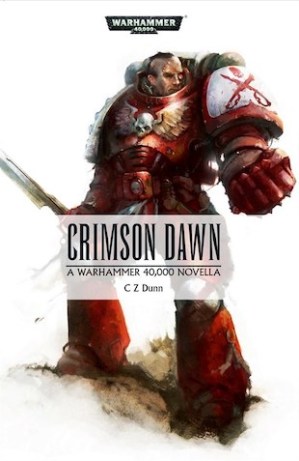
Upcoming: “Vengeful Spirit” by Graham McNeill (Black Library)

McNeill-HH-VengefulSpiritI’ve already posted the full artwork for Graham McNeill’s next Horus Heresy novel, Vengeful Spirit. Now, however, I’ve managed to dig up a synopsis, which gives me another opportunity to feature it – I’m sure everyone who reads CR is fully aware of how much I enjoy the HH series of novels and short stories. So, without further ado…

On the planet of Molech, the Titan Legions go to war against the armies of Horus.

Once the favoured son of the Emperor of Mankind, the name of Horus has become a curse to the loyal defenders of the Imperium, and a rallying call to the traitor forces tearing across the galaxy. While their allies wage war on a thousand different fronts, the XVIth Legion descend upon the Knight World of Molech – home to House Devine and their feudal levies, and a principal seat of Imperial military power. Just what could have drawn Horus to attack such a strongly defended planet, and what might he be willing to sacrifice to fulfill his own dark destiny?

I’m still not 100% sure when this is going to be released – Amazon UK has September 2014 listed as publication, but Black Library often releases things a little earlier through their own store/website. So maybe a couple months earlier? Needless to say, whenever it’s available, I can’t wait to read it.

The Horus Heresy: Horus Rising, False Gods, Galaxy in Flames, Flight of the Eisenstein, Fulgrim, Descent of Angels, Legion, Battle for the Abyss, Mechanicum, Tales of Heresy, Fallen Angels, A Thousand Sons, Nemesis, The First Heretic, Prospero Burns, Age of Darkness, The Outcast Dead, Deliverance Lost, Know No Fear, The Primarchs, Fear to Tread, Shadows of Treachery, Angel Exterminatus, Betrayer, Mark of Calth, Promethean Sun, Scorched Earth, Vulkan Lives, Scars (episodes I-III, IV-IX, X-X11), The Unremembered Empire

Short Story Reviews: RIVEN and HAND OF DUST by John French (Black Library)

Two short stories by one of Black Library’s up-and-comers

FrenchJ-Riven(HH)RIVEN (Horus Heresy)

As one of the vaunted Crusader Host, Brother Crius stood as the representative of the X Legion upon the soil of Holy Terra, but when he learns of the death of his beloved primarch Ferrus Manus at the hands of the traitors, his stoic, mechanical grief imbues him with the strength and resolve to undertake a special mission on behalf of Rogal Dorn himself. Striking out into the stars, he searches for any signs of his lost Iron Hands brethren, hoping to bring them back to Terra to aid in the final defence of the Palace. The question remains – just who has survived the slaughter on Isstvan V, and what yet remains of them?

I’m always happy when a new piece of Horus Heresy fiction is released, and this one is by an author I have not read much by, before. The story follows Brother Crius, a member of the Iron Hands, struggling with the loss of his Primarch, Ferrus Manus. He is tasked by Sigismund, the First Captain of the Imperial Fists to seek out any other survivors of the Isstvan V massacre, and bring them back to Terra to bolster the defence against the eventual attack by Horus’s forces. Heading out, with the support of an Imperial Fists captain, what Crius and his companions discover is not at all what they were expecting – nor, actually, what I was expecting.

I like what French has done with this story. While I wasn’t entirely clear as to why Crius was incarcerated at the start of the story, the author nevertheless has written a pretty great story. We see a little bit more of what makes the Iron Hands tick, and also a little bit of the psychological damage that the death of Ferrus has caused. True, it’s still a relatively short story, so there isn’t too much of this, but I would certainly like to read more about the Legion pre- and post-Ferrus’s death. The final battle is pretty intense, and not over-described (which was certainly welcome to me). Overall, this is a recommended addition to the growing Heresy story.

*

French-AhrimanHandOfDustAHRIMAN: HAND OF DUST

On Prospero, a solitary living soul walks across the shattered world. Beneath the ruined spires, Ahriman, exiled son of Magnus the Red and destroyer of his Legion, contemplates what once was, what is, and what may yet be. And amidst the dust of the long-lost paradise world, the sorcerer faces his mistakes and decides his destiny.

This (very) short story is part of Black Library’s Advent Calendar series of eBooks. It is also the second by French featuring the Thousand Sons (All is Dust, another micro-story, was released early last year). Hand of Dust follows one of the greatest sorcerers of the Thousand Sons traitor legion – Ahriam, the architect of the Rubric that ‘froze’ his fellow legionaries, in an attempt to rescue them from the fate that has plagued the sons of Magnus for centuries.

Hand of Dust is perhaps too short to really have much to write about it. The premise is interesting, and I think it could (and, perhaps, should) have been extended. It’s like a teaser for French’s writing and also his Ahriman fiction. It’s a good one, too. As with Riven, above, French’s writing is pretty solid and well-crafted. It is perhaps not as streamlined and fluid as some of the other, more-established Black Library authors, but it’s still very good. It will certainly be interesting to see how he develops over time.

French also wrote the first Ahriman novel, Ahriman: Exile (cover below), which is out now, and has now been bumped up my tottering TBR mountain. Ahriman also features in Rob Sanders’s Atlas Infernal and Graham McNeill’s superb A Thousand Sons (and a handful of other Horus Heresy novels). French will also be writing a follow-up to Exile, Sorcerer, which is due for publication in 2014.

French-AhrimanExile

“Scars”, Ep.X-XII by Chris Wraight (Black Library)

Wraight-Scars(HH)The final serial episodes of this Horus Heresy novel

Of all the Legiones Astartes, the White Scars of Jaghatai Khan remain the most enigmatic and elusive. Born of a civilisation that prizes honour, speed and fearsome loyalty, their allegiance has yet remained unclear even as the galaxy is torn apart by Horus’s treachery, and both sides have apparently counted them among their potential allies in the war to come. But when the Alpha Legion launch an unexplained and simultaneous attack against the White Scars and Space Wolves, the Khan must decide once and for all whether he will stand with the Emperor or the Warmaster… or neither.

I’m going to keep this very brief, as this review covers the final quarter of a novel. Why ruin it for everyone? The synopsis above is that for the novel as a whole. I must say it is possibly Wraight’s best so far. Everything I’ve reported on from the first nine episodes is just as evident and well-written as in the chapters that have come before. We learn more about the White Scars, and their strange place alongside the other Legiones Astartes, and the Imperium at large. Wraight sets up a lasting conflict and antagonism that (I assume) continues into the “present” Warhammer 40,000 timeline. Two Primarchs face off against each other, and the result of that exchange dictates the fate of the White Scars going forward. These three episodes pack in a lot of action, and the battle-scenes are very well-written (better, even, than Wraight’s Battle of the Fang). I particularly liked the attention paid to the Scars’ as a Legion split in two – mainly because it’s not been particularly well-addressed in other novels. Wraight’s writing is excellent throughout – clear, crisply composed, and briskly paced.

To be honest, a good amount of the story’s impact was lost as a result of the serialisation – hitting cliffhanger moments works for TV series, but not so much for a Horus Heresy novel. Even though I read them in chunks or multiple episodes, I’m used to read a novel in no more than five days (when they’re really long) and as little as one or two days. Stretching one out over a couple of months just didn’t work for me. An interesting experiment, though.

Nevertheless, with the whole novel now available, I would certainly recommend this as a must-read for all fans of the Heresy series. Wraight’s first full-length foray into the era is a triumph of military sci-fi. I certainly look forward to his next offering.

The Horus Heresy: Horus Rising, False Gods, Galaxy in Flames, Flight of the Eisenstein, Fulgrim, Descent of Angels, Legion, Battle for the Abyss, Mechanicum, Tales of Heresy, Fallen Angels, A Thousand Sons, Nemesis, The First Heretic, Prospero Burns, Age of Darkness, The Outcast Dead, Deliverance Lost, Know No Fear, The Primarchs, Fear to Tread, Shadows of Treachery, Angel Exterminatus, Betrayer, Mark of Calth, Promethean Sun, Scorched Earth, Vulkan Lives, Scars (I-III, IV-IX), The Unremembered Empire

[I’m going to work at filling in those review-blanks – some I’ve already read, but there are a couple of oversights that need addressing. As I am always thirsty for more Heresy fiction, I think I may have to catch up pretty soon. Starting with Graham McNeill’s Mechanicum. Fallen Angels is the only other I’ve never read.]

Review: THE UNREMEMBERED EMPIRE by Dan Abnett (Black Library)

AbnettD-HH27-UnrememberedEmpireIsolation, Confusion and Consolidation during the Horus Heresy

Far out on the Eastern Fringe, the realm of Ultramar stands alone. Having weathered the Word Bearers’ attack on Calth and the subsequent Shadow Crusade against the Five Hundred Worlds, the Ultramarines primarch Roboute Guilliman now draws all loyalist forces to Macragge as he contemplates a new future for mankind. With the arrival of more and more fugitives from the war that has engulfed the rest of the galaxy, all distinction between friend and foe is lost – isolated from Terra by fearsome warp storms, is Guilliman making a bid for power to rival even the renegade Warmaster Horus?

In The Unremembered Empire, Dan Abnett is firing on all creative cylinders. It’s an epic novel, in many respects – action-packed, momentous, a type of bridging point in the overall Horus Heresy series. I blitzed through this, and was left desperately wanting more at the end. A very good addition to the series. Absolutely addictive. Continue reading

“Scars” Eps.IV-IX by Chris Wraight (Black Library)

Wraight-Scars(HH)-pt4The next six parts of the serialised Horus Heresy novel

Of all the Legiones Astartes, the White Scars of Jaghatai Khan remain the most enigmatic and elusive. Born of a civilisation that prizes honour, speed and fearsome loyalty, their allegiance has yet remained unclear even as the galaxy is torn apart by Horus’s treachery, and both sides have apparently counted them among their potential allies in the war to come. But when the Alpha Legion launch an unexplained and simultaneous attack against the White Scars and Space Wolves, the Khan must decide once and for all whether he will stand with the Emperor or the Warmaster… or neither.

Originally, I was going to read this serialised novel in chunks of three ‘episodes’. However, after leaving things for a little longer than intended, I ended up blitzing though the middle six parts in one go. While I’m still not entirely sold on the serialisation-aspect of this project, I do believe Scars will shape up to be Wraight’s best Black Library work to date. This is a very good novel (so far).

I’m still not entirely sure how best to approach reviewing these episodes. As with the previous review, it’s a little difficult to decide on what is a spoiler, what isn’t, whether it should be approached as if these were a single, complete book? I’m going to try to walk a middle-ground, and just highlight some of the things I really liked about Scars so far, and some more general observations. The synopsis, above, does a good job of situating the reader, and I think only needs a little bit more for the purposes of the review.

Two of the best things about the novel are, first the plethora of Legions represented (eight with ‘proper’ characters, but another on the sidelines, referred to quite frequently), and second, the continued examination of what the new revolt and civil war has done to the Astartes – collectively and individually. Many of the characters are still struggling with the idea of open warfare between the Legions, how peculiar and abhorrent fighting their own kind, their cousins, is.

Fighting another Legion was an unsettling experience: they thought like he did, were as quick as he was and almost as familiar with the layout of his vessel. It was like fighting a mirror.

The Thousand Sons had been different. They’d already been half beaten once the Space Wolves had made planetfall, and their defence had been desperate and messily, confusedly defiant. The Alpha Legion had no such disadvantages: they were in better shape than the Wolves, better resourced and with the advantage of the initiative. They had come looking for this fight, for reasons that even Russ hadn’t fathomed with any precision.

In addition to the confusion borne of the rebellion, the machinations of the Word Bearers and their allies in the Warp has only increased the problems facing the loyalists. Communications are effectively down – messages through the Astonomican are either delayed, garbled, contradictory, or nonexistent. At one point, the White Scars Primarch’s frustrations bubble over:

“I have the strength of the Legion arrayed before me, ready to strike. The ordu has assembled, and yet none can tell me who the enemy is. Tell them if they cannot interpret correctly then I shall come up to their spires and hammer their dreams into order for them.”

And later, he reflects on the situation:

The Khan almost felt like laughing. Nothing made sense. After years insulated from the rest of the galaxy, locked in a campaign that had promised little glory and much routine hard work, every certainty seemed to have been twisted into a comical level of incongruity.

True, these have become central themes of the Horus Heresy series as a whole, but the fact that it remains interesting after so many novels, from so many authors, is a testament to the skills of the writers involved, but also the strength of the overall project. It’s no mean feat to juggle all these novels, short stories, and audio dramas and maintain the quality (in fact, as I’ve mentioned before on the blog, from Graham McNeill’s A Thousand Sons onwards, the quality has been improving).

Wraight-Scars(HH)These episodes are littered with examples that explain the White Scars’ rarefied position among the Legions. They are set very much apart from their fellows. Sure, the Alpha Legion are mysterious, but they are known. They are infamously opaque and mysterious, and yet known because of that. The White Scars have simply been… absent. Off persecuting their own part of the Crusade, away from their brother Legions, without much support. This makes them very difficult to judge. When orders do arrive for the White Scars, however, and the Emperor and Dorn order the Khan’s Legion to return to Terra, to reinforce the throneworld’s defences, the Khan does not react well:

“I will not take direction from anyone, not even the Throneworld that only now, now that its Legions are tearing one another to pieces, deigns to remember that it has eighteen warrior-sons at its service… You are nobody’s slaves… We take orders from no one. We take no one’s word. We are on our own, just as we have always been, and if there is truth to be found in this, then we will find it for ourselves.”

Jagatai Khan is a pretty interesting Primarch. He’s enigmatic, even after reading this much of the novel. But this is, really, the root of his charm and why he remains a popular figure in Warhammer 40,000 mythology. There’s a great scene in which four Primarchs are gathered, shortly after Horus’s investiture as Warmaster (at Ullanor), and we get some interesting insight into his character. For example, this shrewd observation about his brothers:

Fulgrim and the Angel looked similar in some ways. They had the same sculptural faces, the same flamboyant armour. Where Sanguinius looked as though he had been born wearing gold-rimmed pauldrons, though, the Khan had always thought Fulgrim looked to be trying a little too hard. In the end, he guessed that Sanguinius would have been happy to cast off his trappings; Fulgrim gave the impression that he would rather die.

And then, as the four of them (Mortarian is also there – another Primarch who has remained rather out-of-sight for most of the series) discuss Horus’s new position:

Sanguinius smiled. “My brother, I think you are the most inscrutable of us all. I know what Rogal wants, and I know what Roboute wants, but even after so long I have no idea what you want.”

“He wants to be left alone,” said Fulgrim. “To shoot off into the stars and hunt down xenos on those delightful jetbikes. They’re devilishly fast…”

And we get to see just how fast all of the White Scars’ vessels can be. Much to the Alpha Legion’s surprise and detriment…

Things really start to hot up near the end of Ep.V, when White Scar psyker (or “weather witch” as his fellow Astartes call him) Yesugai stumbles across a Sons of Horus ship, crewed by a small band of Salamanders and Iron Hands, who have recently escaped the massacre on Isstvan V. He learns of the betrayal, putting to rest some of the confusion that has resulted from the White Scars’ isolation. This sets into motion the events of episodes VI-IX, which sees the White Scars hurtling towards revelations upon revelations, disappointments and betrayals. The story is shaping up very nicely indeed, and I can’t wait to read the final three parts of the novel.

As well as these larger issues are unfolding, we start to see more of Shiban’s investigation into the mysterious deaths on Phemus – deaths that appear to have been caused by Legion weapons. This leads him to his Terran friend, another White Scar, who is also an active member of a Warrior’s Lodge. A Lodge who may not be working in accordance with the Khan’s wishes, and are probably being manipulated by… well, long-time readers of the series will no doubt know the answer to that.

Of the other Legions featured in the novel, the Space Wolves come out of this in a very interesting light as well. The timeline places the novel shortly after their attack on Prospero to punish Magnus and the Thousand Sons. They are uncharacteristically somber, introspective, as they see the ripple-effects of their actions (sanctioned though they were), which leaves Leman Russ, their warlike, impulsive Primarch, to lament the state of affairs in the galaxy, of which he played an instrumental part in bringing about. Speaking to Bjorn One-Hand (who is well-known to fans of the tabletop game, as the Space Wolves’ dreadnought character, Bjorn the Fell-Handed – he also featured in Wraight’s SMB novel, Battle of the Fang), he muses:

“I never asked him [the Emperor] what he had in mind for us once the Crusade was over,” Russ went on. “I never asked him if we would be needed. Hardly matters now – if this madness can’t be stopped there will never be a time when we are not needed… The irony of it. Horus has given us the purpose we were beginning to lack. He’s made us useful again… Look what a mess we have made of things – me and my beloved brothers. You will have to pick up the pieces.”

Overall, then, this is shaping up to be another superb addition to the Horus Heresy series. Wraight has really outdone himself. I’m enjoying this a great deal. [But, yes, I would have preferred to read this all in one go, rather than in weekly instalments.] Bring on the final three episodes, and the next book in the series, Dan Abnett’s The Unremembered Empire.

The Horus Heresy: Horus Rising, False Gods, Galaxy in Flames, Flight of the Eisenstein,Fulgrim, Descent of Angels, Legion, Battle for the Abyss, Mechanicum, Tales of Heresy,Fallen Angels, A Thousand Sons, Nemesis, The First Heretic, Prospero Burns, Age of Darkness, The Outcast Dead, Deliverance Lost, Know No Fear, The Primarchs, Fear to Tread, Shadows of Treachery, Angel Exterminatus, Betrayer, Mark of Calth, Promethean Sun [Stefan’s Review], Scorched Earth, Vulkan Lives, Scars (I-III), Unremembered Empire

Guest Review: PROMETHEAN SUN by Nick Kyme (Black Library)

Kyme-HH-PrometheanSunReviewed by Abhinav

The Horus Heresy series has proven to be rather spectacular, right from the very beginning with Dan Abnett’s game-changing opener, Horus Rising. As an exploration of the entire origin-mythos that defines the Warhammer 40,000 setting, the series has done well in exposing how this galactic civil war happened, and how all the players reacted to it, each in their own way. Being a multi-author series (projected to go on to roughly 50 full novels and anthologies, plus additional novellas, short stories and audio dramas), the quality hasn’t been entirely consistent, and there have been some let-downs, or books that don’t seem to fit into an ongoing arc.

Two years ago, Black Library changed the game once more, by offering direct exclusive limited-edition novellas set as interstitials within the larger narrative at work. Being limited to a select few thousand copies, these hardback stories with extra content (such as special faux-skin and illustrations) gave way to a lot of controversy with regards to pricing for the series. This was compounded last year by the publisher’s inexplicable decision to change formats mid-series and offer books in hardback and hardback-sized trade paperbacks before the regular and familiar mass market copies were made available.

As such, novellas like Promethean Sun and Brotherhood of the Storm among others have had to field quite a bit of negative criticism completely unrelated to the actual fictional content within. And that’s what I wanted to focus on in this review. Promethean Sun was re-released a few weeks ago as a non-limited hardback with an accompanying eBook, which is what I got. The two-year wait in between definitely didn’t hurt my enthusiasm.

So, on to the review itself. Here’s the synopsis…

As the Great Crusade sweeps across the galaxy, the forces of the Imperium encounter a world held in thrall by the alien eldar. While the Iron Hands of Ferrus Manus and Mortarion’s Death Guard battle against the hated xenos, it is the Salamanders who brave the deepest and most deadly jungles, encountering monstrous reptilian beasts and foul witchery along the way. Ultimately, it falls to their primarch Vulkan himself to thwart the sinister designs of the eldar, if the Legions are to liberate this world and bring illumination to its inhabitants.

Promethean Sun does one thing really, really well: it delves deeply into Vulkan’s psyche and explores his character through the present and the past alike. That’s what the entire story is about. The Primarch of the Salamanders Legion has been a fairly unknown quantity so far, outside of extremely brief cameos in other stories, most notably Graham McNeill’s Fulgrim, if I recall correctly, and so it was great to finally see more of him. Continue reading