Review: Black Library Short Stories

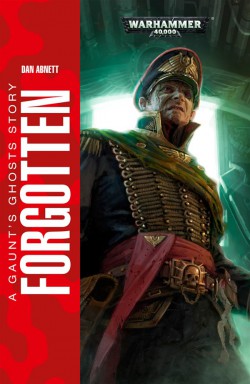
Abnett-GG-ForgottenDan Abnett, FORGOTTEN

As they travel between warzones, veterans of the Tanith First and Only gather to tell tales and remember victories past. When it comes to Scout Sergeant Mkoll, his story, reluctantly told, is of a mist-shrouded battlefield in the night and a dangerous presence that lurked in the darkness, preying on the soldiers of the regiment. But just what horror could haunt the Ghosts?

A marvellous return for Gaunt’s Ghosts. Abnett’s (sub-)genre redefining series remains one of my favourites: he managed to update and improve on the established WH40k canon expertly. This short tale reunites us with a handful of fans’ favourite Ghosts, and simultaneously reminds us of how badass Mkoll really is. Forgotten is a perfect example of Abnett’s skill. I can’t wait to read Warmaster, the next novel in the series. It feels like so very long since last we spent any time with Ibram Gaunt and his regiment — Forgotten has completely reignited my interest in and anticipation for the series.

*

LeeM-NoneMoreLoyalMike Lee, NONE MORE LOYAL

Crimson Fists Sergeant Galleas and his squad are assigned to aid an inquisitor who hunts a notorious renegade Space Marine. Setting out to entrap the traitor, the Crimson Fists soon find themselves surrounded and in danger – and their enemy may know them as well as they know themselves, as an ancient and deadly secret is revealed.

This was a pretty good short story. The plot is balanced quite well, between action and… not-action (I wouldn’t go so far as to say “peace”). It’s an interesting premise, with a couple of twists that I didn’t see coming (although, looking back on it, one thing is a bit telegraphed — unless it’s just something I missed, being less familiar now with WH40k than I am with the Horus Heresy series). The ending wasn’t bad, but it could have been better, I think. There were a few moments when the pace and momentum dipped precipitously, which ended up robbing the story of some of its impact, so I think this could have been tighter. Nevertheless, a decent read with plenty of the elements that go into a very good WH40k story (or military sci-fi story in general).

*

ThorpeG-HH-ValueOfFearGav Thorpe, THE VALUE OF FEAR

The Raven Guard under Corax continue to gather all leaderless loyalists to their banner, determined to take the fight to Horus and his heretics. In the industrial nightmare of the underhive, the XIXth Legion receive a lesson in terror tactics from the most unlikely of allies – the Night Lords…

This was a very cool short story — uncluttered, focused, and original. I enjoyed the different approach to the story, the mix of Legions involved, not to mention the duelling approaches to war that appear diametrically opposed but could work in concert rather well. Very cool indeed, I wish there was more readily-available Heresy fiction from Thorpe (he’s written a couple of the limited edition novellas, which have yet to make the transition to eBook). Definitely recommended. I’m just sad it was not longer.

*

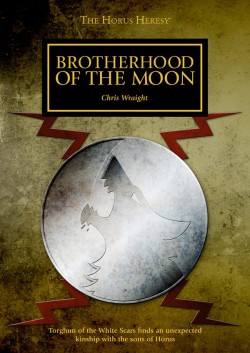
WraightC-HH-BrotherhoodOfTheMoonChris Wraight, BROTHERHOOD OF THE MOON

In the aftermath of the rebellion within his Legion, Jaghatai Khan ordered the trials of his wayward sons to determine whether or not they would atone. The proud Terran legionary Torghun Khan now stands before his accusers, and must account for the events that could have led him into outright heresy…

Picking up the story begun in Wraight’s Scars and Brotherhood of the Storm…, this is a pretty good extension. It doesn’t offer a huge amount of extra detail, nor greater understanding (it’s a little too vague and teaser-esque, really), but it is well-written and engaging throughout. If you’ve read and enjoyed Wraight’s aforementioned Horus Heresy stories, then I think you’ll enjoy this, too.

*

These short stories are currently available only through Black Library’s website: ForgottenNone More LoyalThe Value of FearBrotherhood of the Moon,

Review: TALES OF HERESY, edited by Nick Kyme & Lindsey Priestley (Black Library)

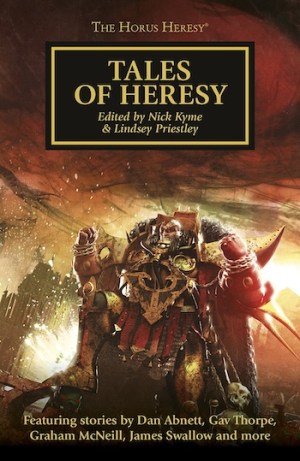
Various-HH10-TalesOfHeresyCollection of new short stories set in the time of the Horus Heresy

When Horus the Warmaster rebelled against the Emperor, the ensuing civil war nearly destroyed the Imperium. War raged across galaxy, pitting Astartes against their battle-brothers in a struggle where death was the only victor.

This collection features stories of heroism and tragedy set during this turbulent time, by Black Library’s star authors Dan Abnett, Graham McNeill, James Swallow, Mike Lee, Anthony Reynolds, Gav Thorpe, and Matthew Farrer

Black Library’s Horus Heresy series has been a huge success, adding extra layers of detail and understanding to the background of Games Workshop’s popular table-top wargaming universe. Up until now, there have been nine novels in the series, but Tales of Heresy offers up seven short stories that take a look at less grand vistas of the time. For example, Dan Abnett’s opener, “Blood Games”, introduces us to the Custodes, the elite guardians of the Emperor and his palace on Terra. This story was pretty good, and featured Abnett’s breathless action-writing as we have come to expect it. However, given the short length, and the amount that is packed in, it felt rushed (three missions are covered in just 50 pages) and there wasn’t the space for the author to flesh out his characters (something he is very good at in the Gaunt’s Ghosts series).

The other stories in this volume are a mixed bag, providing some innovative approaches to the age. There are three tales of expeditionary forces from three Space Marine legions, two loyalist and one that would eventually turn to Chaos: Mike Lee’s “Wolf at the Door” covers the Space Wolves and a mission to a newly discovered planet (it should also help whet people’s appetites for Graham McNeill’s A Thousand Sons and Dan Abnett’s Prospero Burns, which will feature the Space Wolves); Anthony Reynolds writes from the perspective of the Word Bearers in “Scions of the Storm”, as they assault an enemy bastion. Gav Thorpe’s “Call of the Lion” covers a Dark Angels attempt to being a world into compliance with the new Imperium edicts.

The remaining three stories are the ones that grabbed my attention more because of their different approach and content. “After Desh’Ea”, by Matthew Farrer (the last story in the anthology), follows the days after the discovery/reunion with the World Eaters (then known as the War Hounds) primarch, the somewhat psychotic Angron, and his integration into the rigid structure of an Astartes Legion after growing up on a savage world of battle. James Swallow’s “The Voice”, is about a group of Sisters of Silence and their hunt for a missing Black Ship (effectively Imperial prison ships for the Chaos tainted and newly found psychics).

Finally, the most interesting story in the book, “The Last Church” by Graham McNeill. This last story is very topical, as a priest is confronted by a secularist, who introduces himself as ‘Revelation’, asking questions of the priest, about

“what keeps you here when the world is abandoning beliefs in gods and divinity in the face of the advances of science and reason.”

For the chosen forum to ask such questions, McNeill has done a good job of writing an intelligent, interesting dialogue on the place of religion in modern society and life. Some of the observations aren’t new, such as Revelation’s point, “Politics has slain its thousands, yes, but religion has slain its millions”. Definitely a nice surprise to find it in this volume. The story also contains perhaps the only honest appraisal of what the Emperor’s grand vision, painting a picture of such narrow-minded arrogance and self-belief. (Like some other reviewers, I think “The Last Church” would have worked better as the last story in the anthology, much more powerful is its content and message, not to mention the strength of the McNeill’s writing.)

Overall, I would say that, if you’ve been following the Horus Heresy series, or are a fan of the Warhammer 40,000, then you will probably like some, if not all, of the stories within. The stories are all pretty good, some clearly better than others, but if nothing else, they’re really handy time-fillers if you can’t decide on what to read/review next (this is how I ended up reading them).