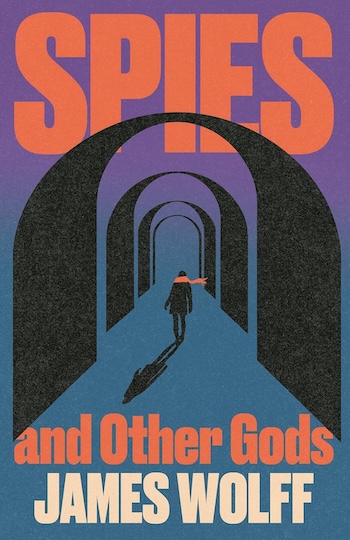
 The hunt for an assassin, an internal scandal, and a leader losing a step…
The Head of British Intelligence is having a bad day. Only six months off retirement and Sir William Rentoul is wondering if he’ll make it that far, what with the sudden descent of a brain fog dense enough to turn every day into a series of small humiliations.
To make matters worse, when parliamentary researcher Aphra McQueen is brought in to investigate an internal complaint, she discovers something horrifying: the murder of nine Iranian dissidents. The elusive assassin, nicknamed CASPIAN, kills across borders, forcing intelligence services throughout Europe into an alliance. Their only lead? An unsuspecting dentist in the UK.
Aphra McQueen seems to know more about the operation than she is letting on. What will she uncover? What is she really up to? And can she survive the unexpected events that will bounce her from London to Birmingham to Paris to Lausanne?
What happens when the head of British Intelligence starts to lose a step? This is in many ways the linchpin upon which the novel hangs, and offers some very interesting opportunities. A complaint issued by an anonymous whistleblower has put British Intelligence’s leadership on edge, launching an unwelcome and uncomfortable investigation into certain recent missions. What follows is a cat-and-mouse hunt for the truth and an assassin. Despite some minor quibbles regarding pacing, I enjoyed this.
Spies and Other Gods is an interesting take on the espionage genre, which has been enjoying quite the renaissance on the page and screen. (Not at all a complaint: I love the genre.) The main threads of the story are quickly and well-established, and Wolff wastes no time in locating the reader in his character’s world and lives.
Wolff’s novel stands out by examining what happens when spies age, and the concomitant issues that may arise. In this case, Rentoul is experiencing “brain fog”, but also some potentially-serious issues with his memory. Given his long history in the service, Rentoul’s difficulties can pose serious security concerns — especially, as in this novel, he takes it upon himself to re-enter the field. Over the course of this novel, he finds himself in some awkward, humiliating situations — forgetting where and when he is, for example. Those around him, many of whom have considerable respect for his service, are nevertheless put into situations where they have to sideline him, or even undermine his orders. There are also a few scenes in which the characters examine the intelligence services from different perspectives, which offers some interesting discussion and also a fair number of opportunities for some tongue-in-cheek commentary on British officialdom and high-intensity workplaces.
Other characters in the novel find themselves in situations that they really shouldn’t be in. They aren’t prepared, nor are they trained for some of their activities. Aphra, for example, takes what she learns (and some of what she already knew) and sets out on a rogue operation. The poor dentist, bored with his life, allows himself to be maneuvered into service. But who is he really helping, and will they be able to protect him if the situation goes tits-up? The various threads are eventually connected, and in a way that never felt ridiculously contrived.
Spies and Other Gods is well-written, and features a cast of well-drawn and engaging characters. The plot is interesting, and mostly well-executed. For the main, this is a character-driven novel, and one that does not rely on big action set-pieces to grab the reader’s attention. There are plenty of well-placed, effective, and humorous observations and asides sprinkled throughout the book that add a welcome levity. Near the end of the novel, there is also a rather moving scene between two aging spies.
The author keeps certain scenes and events a little vague, and various characters’ agendas are likewise unclear until later in the novel. There were occasional chapters when the momentum dipped or felt a bit muddled, but for the main Wolff kept me interested and invested in the fates of the characters. These strange moments might have been the result of the voice of the narrator, which is not a specific individual — it’s a usually effective device, because it means we can get into the heads of many of the characters, but at times it added to the vagueness and meant certain transitions between scenes and POVs were a little uneven.
If, like me, you’ve been enjoying the new wave of espionage fiction, then I would certainly recommend you give this novel a read. I’m also looking forward to reading Wolff’s next novel, whatever it may happen to be (hopefully another spy novel).
*
James Wolff’s Spies and Other Gods is due to be published by Atlantic Crime in North America (April 14th) and Baskerville in the UK (February 12th).
Follow the Author: Website, Goodreads
Review copy received via NetGalley
 Civilian Reader