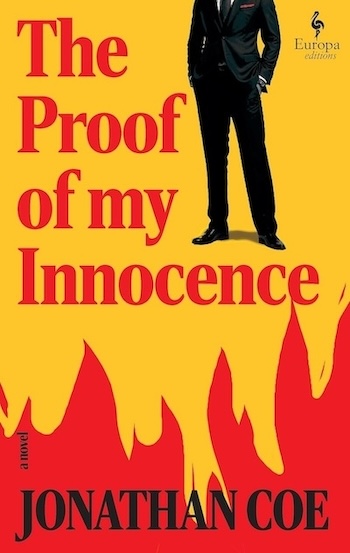
 A coming-of-age tale, wrapped up in a mystery, with a backdrop of state-of-the-nation and politics
When Phyl, a young literature graduate, moves back home with her parents, she soon finds herself frustrated by the narrow horizons of English country life. As for her plans of becoming a writer, those are going nowhere. But the chance discovery of a forgotten novelist from the 1980s stirs her into action, as does a visit from her uncle Chris — especially when he tells her that he’s working on a political story that might put his life in danger.
Chris has been following the careers of a group of students, all present at Cambridge University in the 1980s, now members of a think-tank which has been quietly pushing the British government towards extremism. And now, after years in the political wilderness, they might be in a position to put their ideas into action.
As Britain finds itself under the leadership of a new Prime Minister whose tenure will only last for seven weeks, Chris pursues his story to a mysterious conference taking place deep in the Cotswolds. When Phyl hears that one of the delegates has been murdered, she begins to wonder if real life is starting to merge with the novel she’s been trying to write. But does the explanation really lie in contemporary politics, or in a literary enigma that is almost forty years old?
Darting between decades and genres, THE PROOF OF MY INNOCENCE reimagines the coming-of-age story, the cosy crime caper and the state-of-the-nation novel with Coe’s trademark humour and warmth. From one of Britain’s finest living novelists, this is a witty, razor-sharp novel which explores how the key to understanding the present can often be found in the murkiest corners of the past.
The Proof of My Innocence is a very good read. An interesting blend of mystery, character focus and contemporary and past British politics, I was hooked from early on and read this in a couple of deep-into-the-night sittings.
Coe takes a rather playful approach to the style and structure of his novel. Early on, there’s a conversation between Phyl and her father about “cosy crime” and other genres of fiction and non-fiction. The Proof of My Innocence is split into three parts (plus an epilogue), each taking on a different style of storytelling. For some, this may be a bit annoying, but I think Coe does a great job of switching between these genres and styles to allow different parts of the novel to do different things. Each part examines the events and characters from different angles, combining to present the reader with a very satisfying read and a gripping story.
The mystery that makes up the novel’s plot was well conceived and executed, providing plenty of interesting twists, some red herrings, and some good back-and-forth between the characters’ presents and pasts. In addition to the various mysteries that comprise the plot of the novel, The Proof of My Innocence is in many ways also a novel-length examination of the conservative experiment: mostly its British version, but there’s plenty of overlap and influence from the American version. Coe’s observations (through Christopher’s investigations and writing) are pointed and interesting: how is it that, after over a decade in power, getting pretty much everything they way, conservatives are nevertheless still miserable and feel “oppressed”? This discussion of inherent conservative misery, I thought, was particularly good. The connections between politics, business, the establishment, and more are explored in the novel, and done so very well.
Despite owning most of Coe’s novels, this was (strangely) the first that I read. It will definitely not be my last. (As I start exploring his backlist, I’ll probably start with Expo 58, followed by Mr. Wilder & Me, and The Terrible Privacy of Maxwell Sim.)
Definitely recommended.
*
Jonathan Coe’s The Proof of My Innocence is out now, published by Europa Editions in North America, and Viking in the UK.
Follow the Author: Website, Goodreads, Instagram, BlueSky
Review copy received from publisher
 Civilian Reader