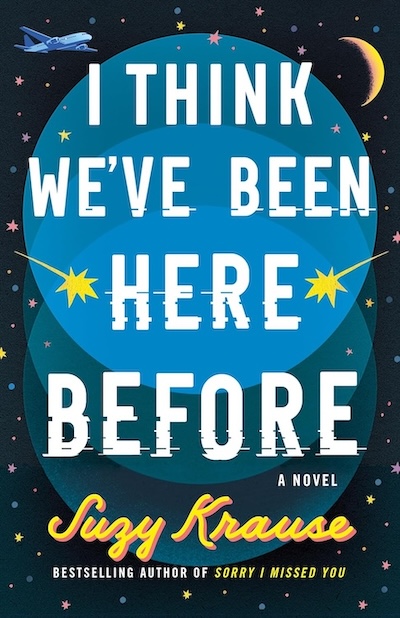
 In a couple of weeks, Radiant Press is due to publish the latest novel from Suzy Krause, I Think We’ve Been Here Before. To mark the occasion, the publisher has provided CR with an excerpt to share with readers. Before we get to it, though, here’s the synopsis…
Marlen and Hilda Jorgensen’s family has received two significant pieces of news: one, Marlen has been diagnosed with a terminal illness. Two, a cosmic blast is set to render humanity extinct within a matter of months. It seems the coming Christmas on their Saskatchewan farm will be their last.
Preparing for the inevitable, they navigate the time they have left together. Marlen and Hilda have channeled their energy into improbably prophetic works of art. Hilda’s elderly father receives a longed-for visitor from his past, her sister refuses to believe the world is ending, and her teenaged nephew is missing. All the while, her daughter struggles to find her way home from Berlin with the help of an oddly familiar stranger. For everyone, there’s an unsettling feeling that this unprecedented reality is something they remember.
*
Sometimes Iver is lonely, and sometimes he is just alone. Same as how he sometimes feels elderly, and sometimes he just feels older. Oldish. Old, as a matter of fact, but not in a way that makes him feel bad. Same realities, different emotional impacts, and he doesn’t know what makes the difference from one day to the next, why one day he’ll wake up and grief will wash over him and drown him in his bed, and the next day he’ll wake up in the same empty room and understand that this is just how it is now. He thinks of his late wife. She always used to repeat that quote about containing multitudes, and he thinks, I contain multitudes, too, but only sometimes. And sometimes I’m as empty and echoey as a Quonset.
Today is an empty day. He is aware that there is no one with him in his old, dirty house, that he’ll eat every meal alone and speak to no one if he doesn’t make the effort to venture out, to call his friend Arnold to meet him for coffee, but he’s not bothered by it at all. These days are nice, just the fact that they exist.
When you lose someone you love so much, you go through a time so low and terrible you think you’ll never feel neutral ever again, but here he is. Look at him go! Neutral as beige. He regards his wife’s reading chair with the crocheted blanket thrown over the back, the unfinished novel on the seat, untouched for years, with an almost detached appreciation for what they had, acknowledging that this is what they have now. He notes his son’s child-size baseball hat still hanging on a hook by the door, an important symbol but not a dagger to the heart, thinks of the Thanksgiving dinner with his daughters and their beautiful families without wishing they’d invite him over more often. Knows that the world will end in a matter of months without feeling shaken.
He’s known for a while now that the end is near, one way or the other. Might as well end now, before he ends up in a home or loses what’s left of his vision. Might as well fry to death; that’s fine.
What a gift, one he doesn’t take for granted, to be able to interact with reality without being hurt by it. He pours himself a cup of coffee and drinks without waiting for it to cool. It doesn’t burn his tongue, but it tastes terrible; his coffeepot has needed cleaning for years now. He dumps it down the sink and heads for the front entryway, stubbing his toe on the doorframe on his way out of the kitchen. It doesn’t hurt at all.
He will go get himself a coffee that doesn’t taste like fertilizer water.
The Pot Hole is the town’s only coffee shop. Its name is an homage to coffeepots and terrible roads, and it’s owned by a sweet silver-haired fiftysomething-year-old woman named Alfie, who for sure did not consider that this was a name more appropriate for a cannabis dispensary than a café. Alfie also owns the trading post across the street and runs the book club at the “library” that takes up one wall at the senior citizens center. She sometimes works at the grocery store when the owner has to go into the city for doctors’ appointments, and she is responsible for every single baby and wedding shower and funeral luncheon that gets thrown in the tiny Lutheran church where she also serves as piano accompanist and even preaches the odd sermon. She is never grudging about her millions of jobs, but she will look sideways at people who say they’re busy when she knows perfectly well that sometimes they have a spare moment to sit and read a book.
(She could never.)
 And yet, even in the midst of the hustle and bustle of being Alfie, the one-woman town council / preacher / welcoming committee / librarian / entrepreneur / mistress of ceremonies / whatever else she gets up to, she has always had time to make Iver feel like he is one of her top priorities. She makes him feel as though, of all the people she bakes for and plans for and takes care of and knows, he is her favorite. And it’s a long list to be at the top of.
So on a day like today, when he feels nothing, when the coffee is bad, when the house is empty, she can be counted on to make him feel—not just something, but something nice.
The Pot Hole shares a building with the gas station; it’s tucked into the back corner behind the shelves of chips. The gas station opens at 6:00 a.m., the Pot Hole at 9:00. Iver is there at 9:01—and the door is locked. The shop is dark. The street is quiet, like a high school hallway in the summer, Iver, the lonely janitor, wandering the liminal space with a bucket and a mop.
The feelings—or rather, the nonfeelings—of nothingness and neutrality are gone (if something can go that was not present in the first place). His toe throbs; his tongue feels raw where he burned it on his coffee; the end of the world feels like the awful thing that it is. Alfie has abandoned her post, and Iver had not gotten the chance to say goodbye or, more importantly, Thank you. He stands in front of the door like it has been slammed in his face, his mouth opening and closing in half-spoken objections.
“Iver!”
A thrill of hope, like in the Christmas carol. He turns, and there she is, beaming at him, like he is the one whose presence is so important.
Alfie.
Late, for the first time in her coffee shop career.
“Looks like Craig isn’t coming in to work today,” she says, looking at her bare wrist, “and I’m late, aren’t I?”
“I don’t think so!” he says. “You’re never late. Always right on time.”
“How are you doing, Iver?” She has a box in her arms of all her coffee things, and she sets it on the ground so she can access the great ring of keys in her purse. There are more keys on that ring than there are buildings in this village.
“Wonderful, under the circumstances,” he says, because he feels like he’s supposed to acknowledge them, the circumstances.
“Well, what are you doing under those?” she asks cheerfully, patting him on the shoulder.
He follows her into the coffee shop and tries to help with the various tasks involved in setting everything up for the day before pouring himself a coffee and stuffing a five-dollar bill into the money cup.
He lowers himself into a nearby chair and sighs contentedly. The coffee is warm and tastes nostalgic. The store smells like gasoline and Little Trees air fresheners. Everything is right in the world. Alfie reminds him of the woman from an Emily Dickinson poem his wife had loved so much, who feels that if she could keep only one heart from breaking, then her life will not have been in vain.
What a gift, one he doesn’t take for granted, the ability to interact with reality and actually take pleasure in it.
*
Suzy Krause’s I Think We’ve Been Here Before is due to be published by Radiant Press in Canada, and Lake Union Publishing in the US & the UK, on September 24th.
 Civilian Reader